
Tomato Stems Purple: Cool Temperatures and Phosphorus
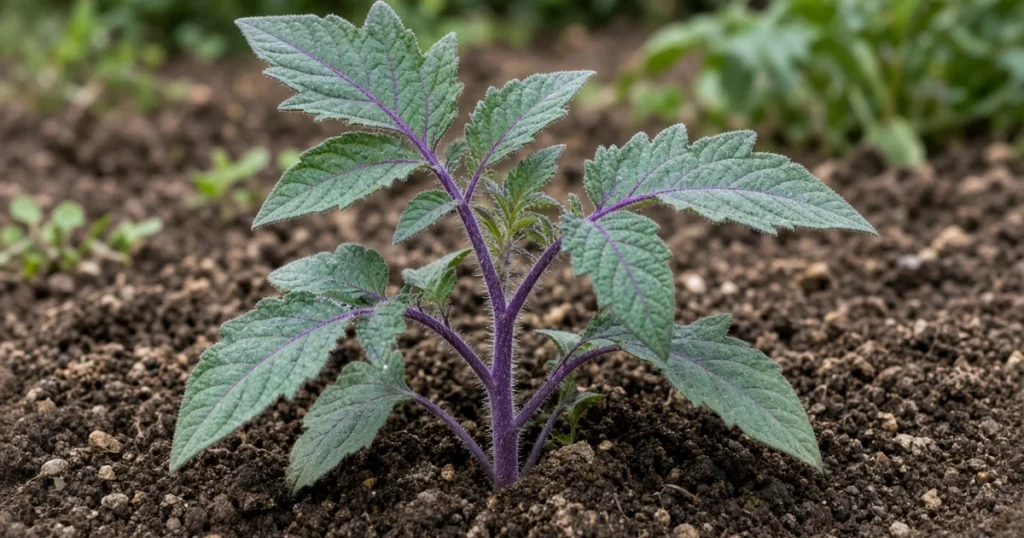
Tomato stems purple on young plants usually point to cold roots taking up phosphorus poorly. UMass Amherst Extension says the most common cause of phosphorus deficiency in tomatoes is cold soil, mostly early in the season. Texas A&M AgriLife adds that cold tomato roots take up phosphorus poorly in the greenhouse or the field.
The short answer
Purple stems and leaf undersides on tomato seedlings most often come from cold roots, not a true shortage of phosphorus. Grow tomatoes at a daytime minimum of 65°F, check that soil pH sits near 6.2 to 6.8 and feed lightly. A soil or tissue analysis confirms a real shortage.
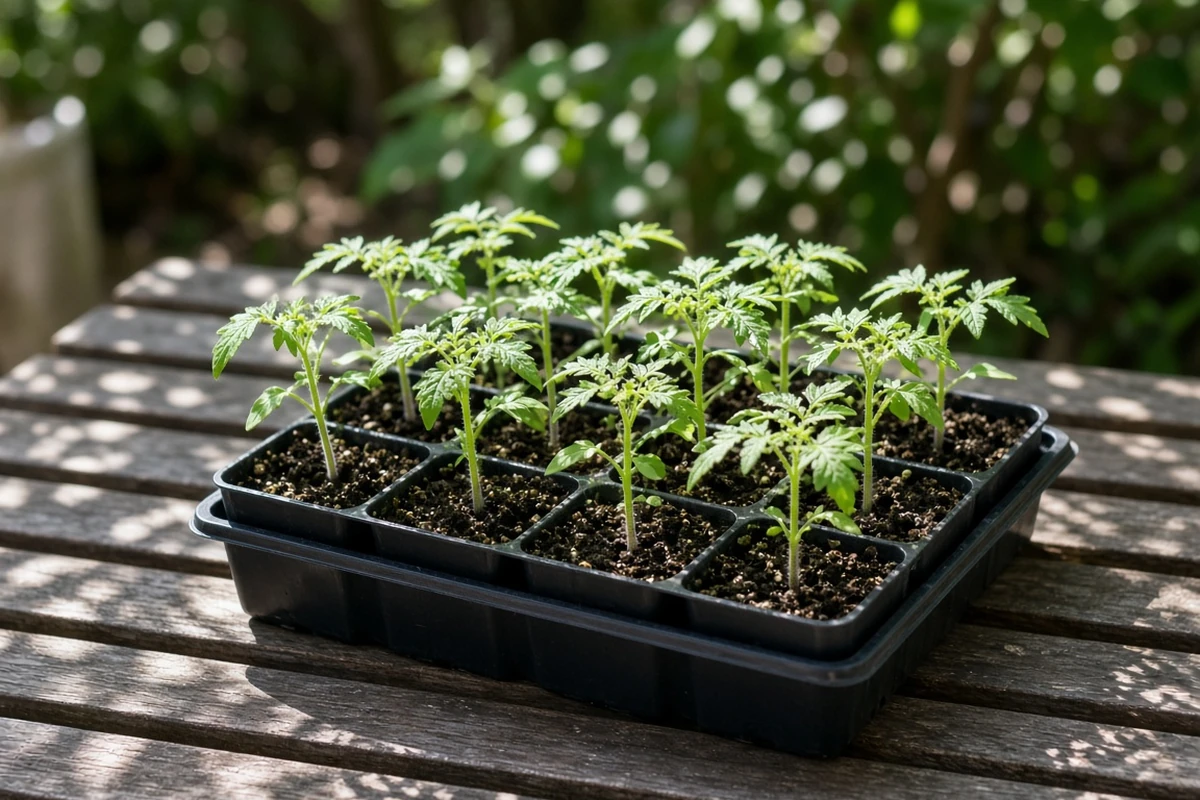
Why do tomato stems turn purple?
The University of Connecticut says lower leaves and stems may show dark green or purple red color, often on the undersides and veins. Higher levels of anthocyanins cause that color. UMass notes that root growth slows and root activity drops in cold temperatures. For more on how stress shows up in plants, see the effects of environmental stresses on weed plants.
Is it cold or a phosphorus shortage?
UConn calls cold soil the most common look alike for phosphorus deficiency. Transplant shock after a big temperature change can also purple leaves. UMass says improper pH is more often the culprit than low soil phosphorus. Below pH 6, far less phosphorus is available. Texas A&M says the problem most likely comes from cool root zones. Compare symptoms in phosphorus deficiency in cannabis plants.
How do you fix purple tomato seedlings?
| Step | Target | Source |
|---|---|---|
| Day temperature | 65°F minimum | UMass |
| Soil pH | 6.2 to 6.8 | UMass |
| Seedling nights | 55 to 60°F after germination | Maryland Extension |
| Field plantings | Plastic mulch | Texas A&M |
| Pots | Balanced liquid feed | Texas A&M |
Maryland Extension says most potting mixes hold enough fertilizer for 5 to 6 weeks and that young seedlings are easily damaged by too much fertilizer. Learn how soil warmth shapes early growth in soil temperature for planting cannabis.
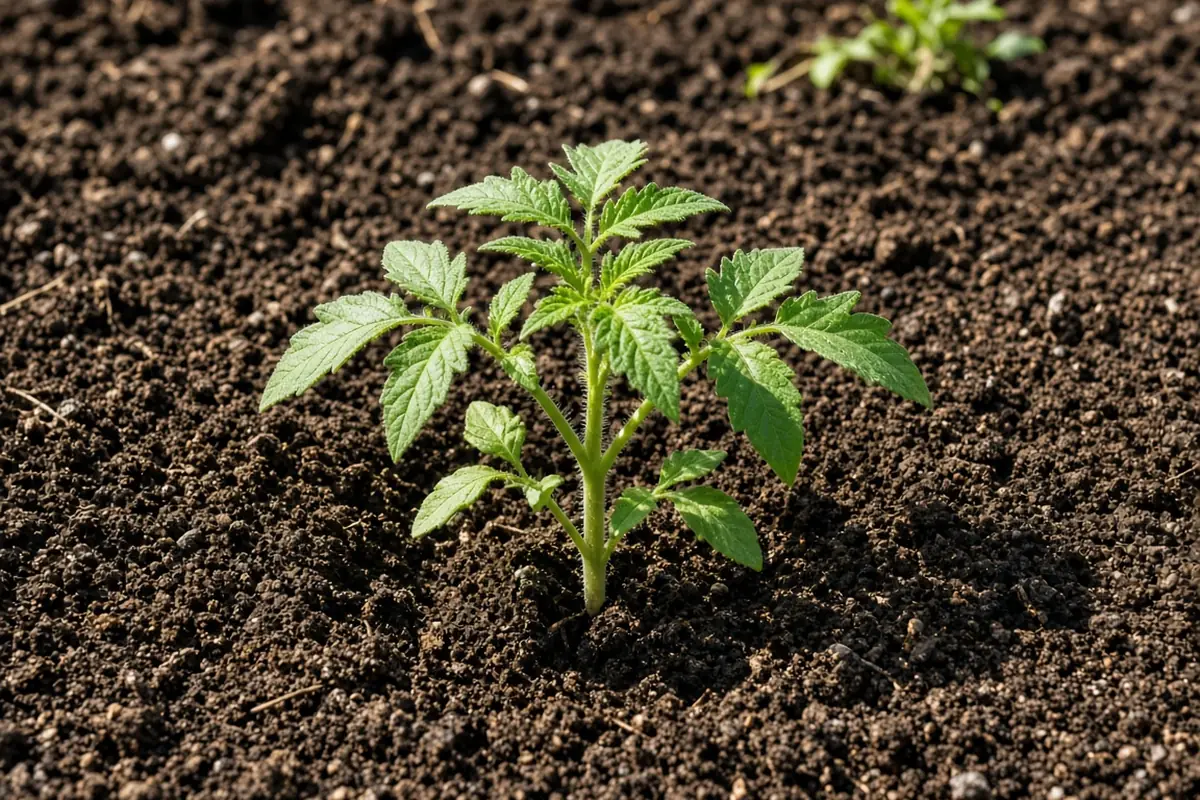
How to: step by step
- Move seedlings somewhere with days at 65°F or more.
- Check soil pH and aim for 6.2 to 6.8.
- Use plastic mulch on early field plantings.
- Give a light, balanced liquid feed to potted plants.
- Send soil or tissue for analysis if color stays.
Troubleshooting
Purple after a cold night outside: UConn names transplant shock as a cause.
Purple in warm soil: check pH before you add phosphorus.
Slow phosphorus sources: read rock phosphate for cannabis on how slow rock phosphate works.
Warm roots first
Most purple tomato stems fade once roots warm. Kind Seed Co shares more garden notes for growers who raise vegetables and cannabis side by side.
Sources
- Greenhouse updates April 16 2025: phosphorus deficiency in tomatoes, UMass Amherst Extension
- Tomato phosphorous deficiency, University of Connecticut IPM
- Tomato problem solver: phosphorus deficiency, Texas A&M AgriLife Extension
- Care of vegetable seedlings, University of Maryland Extension
FAQ
Will purple tomato stems turn green again?
Often. Texas A&M says plastic mulch eases the problem in early field plantings and a balanced liquid feed eases it in pots.
Is purple stem a sign of something else?
UConn lists cold soil and transplant shock as look alikes for phosphorus deficiency.
Should I add phosphorus right away?
Not first. UMass says improper pH is more often the cause than low soil phosphorus. UConn suggests a soil or tissue analysis to confirm.
What pH suits tomatoes?
UMass gives 6.2 to 6.8 and says phosphorus becomes much less available below pH 6.
Can fertilizer hurt seedlings?
Yes. Maryland Extension says young seedlings are easily damaged by too much fertilizer, mostly under moisture stress.



