
Corn Leaves Rolling: Water Stress in Summer
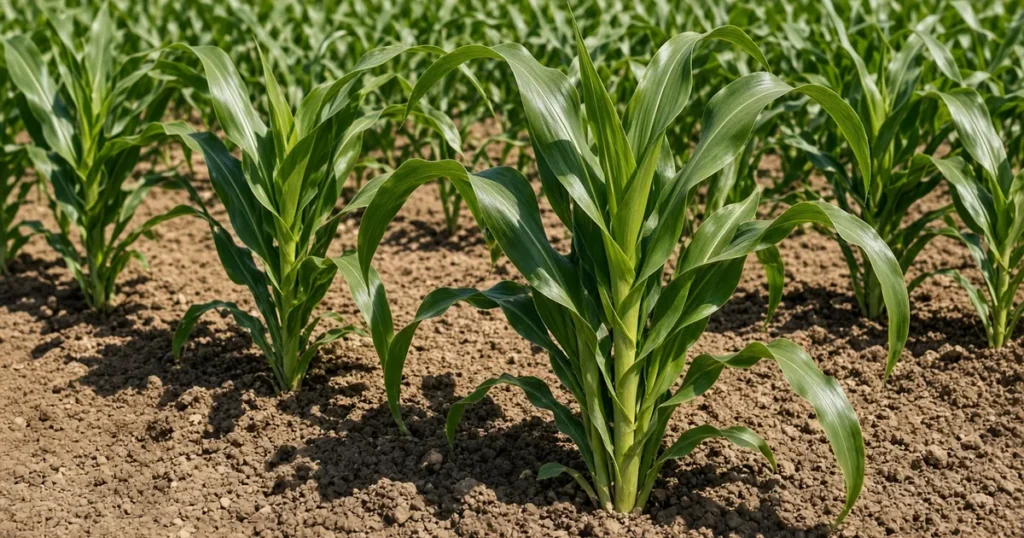
Corn leaves rolling into tight tubes on a hot day is the plant cutting its water loss. Purdue University explains that leaf rolling is an early sign of drought stress and occurs when leaf demand for water outpaces what the roots take up from the soil. A rolled leaf exposes less surface to the sun.
The short answer
Purdue says rolling that starts late morning and eases by evening isn’t serious stress. Rolling from near sunup until past dark is. Give corn about one inch of water a week and soak the soil deeply, mostly during pollination and ear fill.

Why do corn leaves roll?
Purdue says rolling reduces the leaf area exposed to sunlight, which cuts water demand but also slows photosynthesis. The University of Wisconsin notes that corn responds to water stress by leaf rolling and that highly stressed plants begin rolling early in the day. Minnesota Extension warns that sweet corn can get drought stressed in hot, dry spells without irrigation. For more on how plants answer heat and drought, see the effects of environmental stresses on weed plants.
When is leaf rolling a problem?
Timing tells the story. Midday rolling that recovers by evening is the plant coping. Purdue says rolling from near sunup until well after dark is serious stress, and severe stress can turn leaves gray. Wisconsin adds that corn yield is most sensitive to water stress during flowering and pollination. The University of Georgia names pollination and final ear filling as the most critical periods for water.
How should you water corn in summer?
Minnesota Extension says one inch of rain a week is good for corn and that sandy soil needs water more often than once a week. An inch of water wets sandy soil about ten inches deep and clay soil about six. Georgia suggests watering in the early morning or early evening so foliage dries before dark. Check moisture by hand with checking soil moisture by feel.
| Sign | What it means | Source |
|---|---|---|
| Rolling at midday, open by evening | Not serious stress | Purdue |
| Rolling from sunup past dark | Serious stress | Purdue |
| Gray leaves | Severe drought stress | Purdue |
| Rolling at pollination | Highest yield risk | Wisconsin, Georgia |
How to: step by step
- Look at your corn early in the morning and again at dusk.
- Dig a few inches to feel the soil.
- Apply about one inch of water a week, more often in sand.
- Soak deeply during tasseling, silking and ear fill.
- Water in the early morning or early evening.
Troubleshooting
Leaves rolled at breakfast: water deeply now.
Rolled leaves in sandy soil daily: split water into two or more soakings a week.
Dry roots after short showers: read underwatering cannabis for signs of a dry root zone.
Long dry spells: see watering cannabis during drought for planning water in a drought.
Water corn on time
Watch when leaves roll, not just whether. Kind Seed Co shares more garden notes for growers who raise vegetables and cannabis together.
Sources
- Growing sweet corn in home gardens, University of Minnesota Extension
- Growing sweet corn in the home garden, Iowa State University Extension
- Growing home garden sweet corn (C 905), University of Georgia Extension
- Corn responses to drought stress, Purdue University Agronomy Extension
- What happens within the corn plant when drought occurs? (A110), University of Wisconsin Corn Agronomy
FAQ
Will rolled corn leaves recover?
Usually. Purdue says corn can recover surprisingly well once soil moisture returns. Leaves that turn gray have taken severe stress.
How much water does corn need?
Minnesota Extension says one inch of rain per week is good for corn. Sandy soil needs water more often.
Does leaf rolling hurt ears?
It can when it lasts. Georgia says high temperature and poor water during tasseling can cause poor pollination and fewer kernels.
Should I water corn at night?
Georgia suggests watering in the early morning or early evening so foliage dries before dark.
Why do leaves roll in the afternoon only?
Purdue says rolling that starts late morning or midday and recovers by evening is not serious stress.



