
Riparian Buffer Planting: Native Strips Along Creeks
The short answer
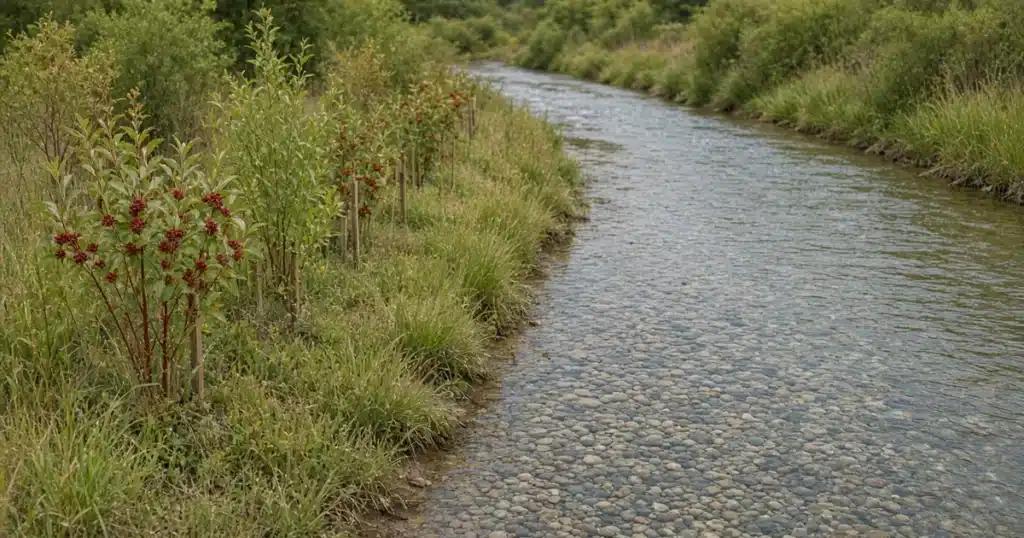
A riparian buffer is a strip of native trees, shrubs and grasses along a creek or stream. Buffers slow runoff, hold banks in place and give wildlife food and cover. Plan by site and plant natives suited to wet and dry zones. Shield young plants from browsing and weeds for the first few years.
Many rural and suburban properties border a small creek. A planted buffer turns that edge into one of the richest parts of the yard.
What is a riparian buffer?
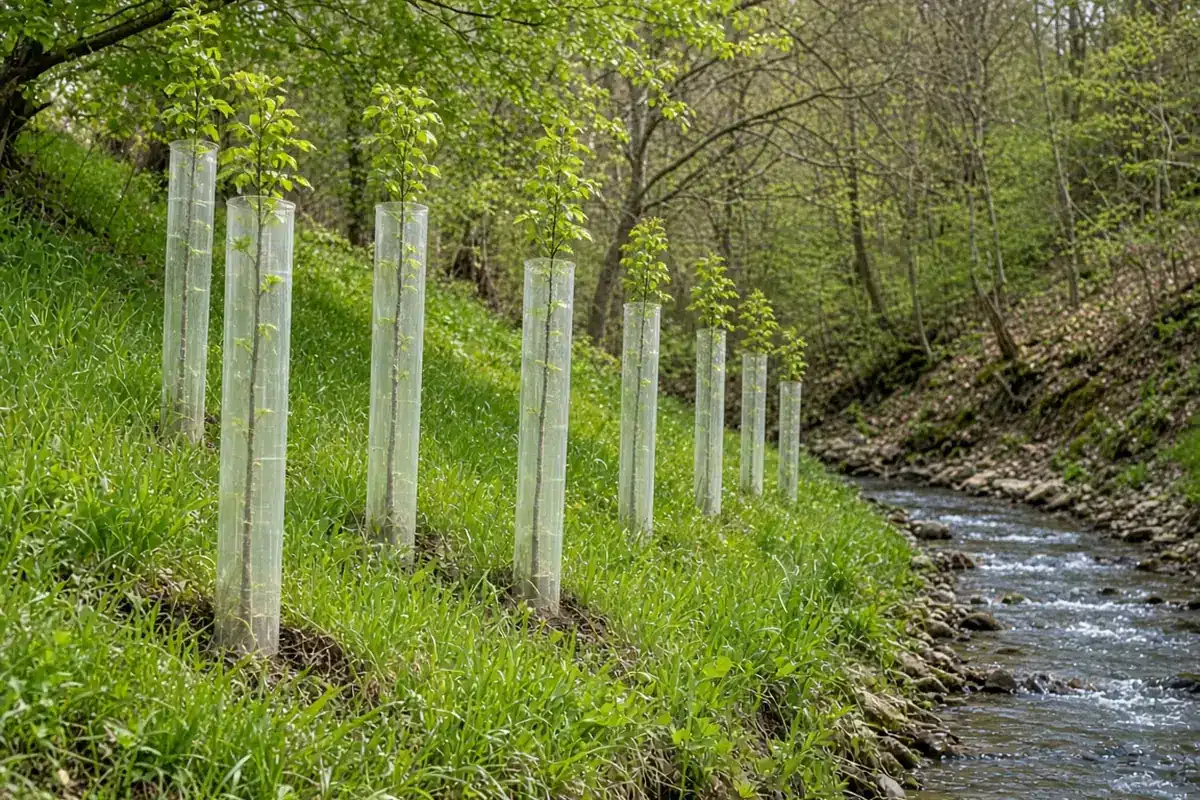
Riparian means related to the banks of a stream or river. A buffer is the band of vegetation between the water and the land use beyond it, such as lawn, pasture or crops.
Natural streams often have trees and shrubs along their banks. Where those were cleared, banks erode, water warms and wildlife loses habitat.
The Penn State Extension article on riparian buffers for wildlife explains that buffers give birds, amphibians and insects food, shelter and travel corridors. Shade from trees holds water cooler, which fish and other aquatic life need.
Roots hold banks in place, while stems and leaf litter slow runoff so sediment settles before it reaches the creek.
How do you plan a buffer?
Start by walking the stream edge. Note where soil stays wet, where it floods in spring and where it stays dry. Those zones shape plant choices.
The wettest zone sits right at the water’s edge, and plants there must handle flooding and saturated soil. Willows, dogwoods and other flood tolerant shrubs often suit this zone.
Farther up the bank, soil is drier. Trees such as oaks, maples and sycamores, depending on your region, fit here.
The outer zone often holds native grasses and wildflowers. They catch runoff from the land and slow it before it reaches the trees.
The Oregon State University Extension guide to riparian tree and shrub planting in the Willamette Valley walks through planning by zone and matching species to soil moisture. Its approach applies well beyond Oregon.
| Zone | Plants | Purpose |
|---|---|---|
| Streamside | Flood tolerant shrubs and trees | Hold banks, shade water |
| Middle | Native trees and shrubs | Habitat, filter runoff |
| Outer | Native grasses and wildflowers | Slow runoff, catch sediment |
Sources: Oregon State University Extension, University of Maryland Extension.
Our post on checking drainage in beds shows a simple way to see how fast water moves through soil, which helps sort wet zones from dry ones.
How wide should a buffer be?
Wider buffers do more. Many programs suggest at least 35 feet from the bank, though wider strips offer more wildlife value. On small properties, even a narrow strip helps compared with mowed lawn to the edge.
The University of Maryland Extension fact sheet on riparian buffer management explains how width, plant mix and upkeep shape buffer function over time.
Are there programs that help?
Yes. Many states, conservation districts and federal programs offer technical help, plant lists and sometimes cost sharing for buffer planting. Contact your local conservation district or Extension office to learn what’s available near you.
How do you care for new plantings?
Young trees and shrubs face deer, voles and weeds. Tree tubes or wire cages fend browsers off. Mats or mulch around each plant hold back grass and weeds.
Mow or cut weeds between plants for the first two to three years. Once trees and shrubs grow above the weeds, they shade them out.
Water new plants in dry spells during the first summer. Streamside soil often stays moist, but higher zones can dry out.
Replace plants that die, since some losses are normal.
How do floods affect a buffer?
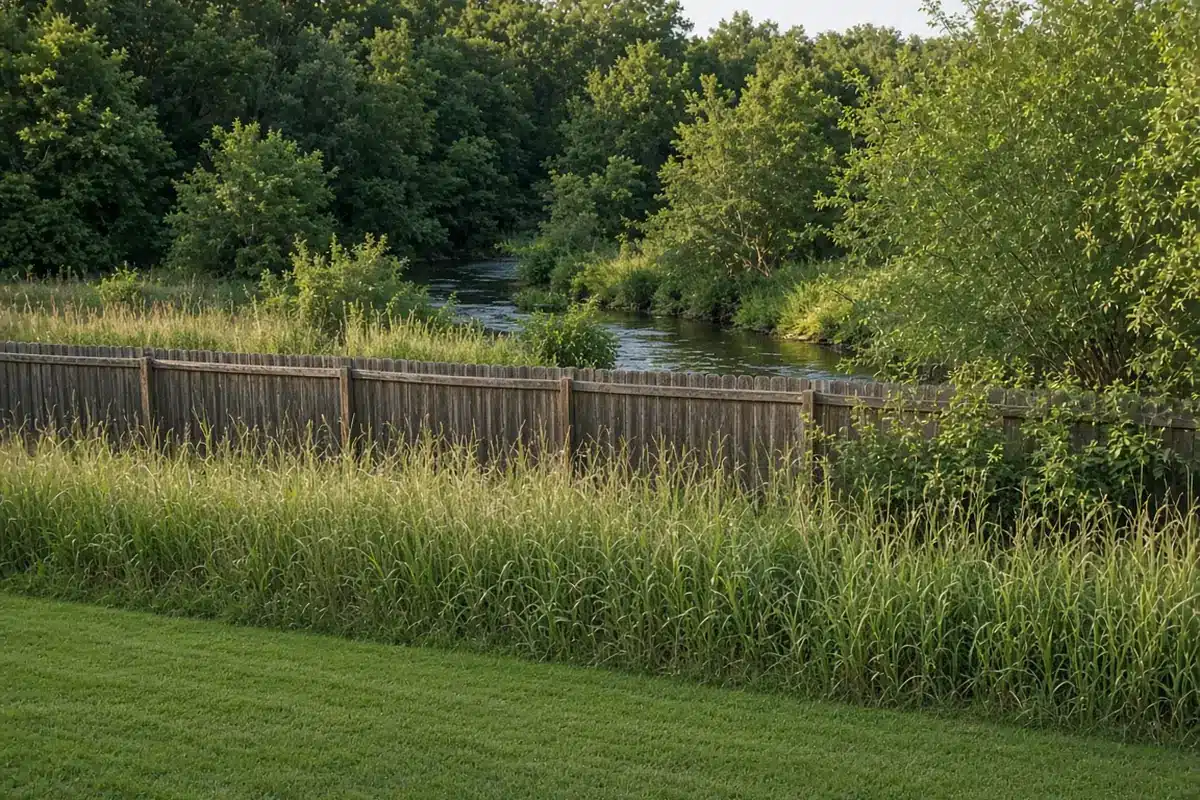
Streams rise and fall. Floods may flatten grasses, deposit sediment or wash out young plants. Flood tolerant species often recover.
Our post on a flooded cannabis garden covers recovering garden beds after high water, and the same ideas apply to buffer plants near a creek.
Can rainwater help?
Downspouts and runoff can be directed into the outer grass zone of a buffer, where it soaks in slowly. Our post on rainwater for cannabis covers ways to capture and use rainwater around a property.
Which plants grow fastest?
Willows and shrub dogwoods often root and grow fast in wet zones. Many can even be planted as live stakes, which are dormant cuttings pushed into moist soil in early spring.
Native grasses establish within a season or two in the outer zone. Trees take longer, but they add shade and deep roots once they grow.
A mix of fast and slow plants gives early cover while long lived trees mature.
How to: step by step
- Walk the stream edge and note wet and dry zones.
- Check local programs for technical help.
- Choose native trees, shrubs and grasses.
- Plant the wettest zone with flood tolerant species.
- Shield young plants with tubes or fencing.
- Control weeds for the first few years.
Plant in early spring or fall when soil is moist and plants are dormant.
Troubleshooting
Seedlings browsed. Deer are feeding. Use tree tubes.
Weeds overrun plants. Maintenance was missed. Mow or mulch around plants.
Banks erode. Cover is sparse. Add more plants.
Plants wash out. Floods were high. Replant with flood tolerant shrubs.
Slow growth. Plants are shaded by weeds. Cut weeds back.
A planted buffer grows richer every year as trees and shrubs fill in. Kind Seed Co shares more garden projects in outdoor growing.
Sources
- Riparian buffers for wildlife, Penn State Extension, Riparian buffers for wildlife
- A guide to riparian tree and shrub planting in the Willamette Valley (EM 9040), Oregon State University Extension, A guide to riparian tree and shrub planting in the Willamette Valley (EM 9040)
- Riparian buffer management (FS 725), University of Maryland Extension, Riparian buffer management (FS 725)
FAQ
How wide should a buffer be?
Many programs suggest at least 35 feet. Wider strips give more wildlife value.
Can I plant a buffer on a small creek?
Yes. Even a narrow strip helps compared with lawn to the edge.
Are there programs that help?
Yes. Conservation districts and Extension offices often offer plans, plants and advice.
Which plants grow fastest?
Willows and dogwoods often establish quickly in wet zones.
When should I plant?
Early spring or fall, when soil is moist.



