
What Is a Lignotuber? Woody Root Swellings That Resprout
The short answer
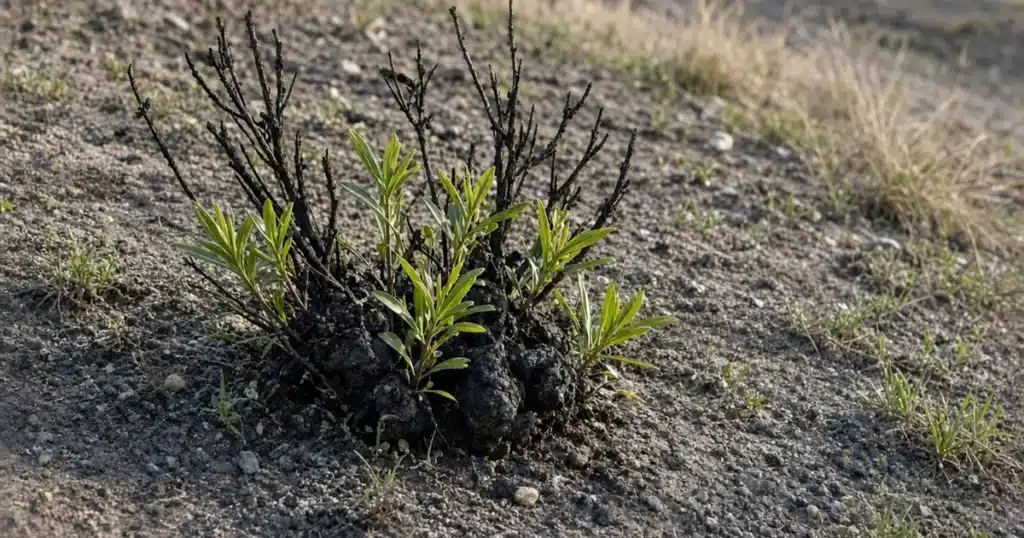
A lignotuber is a woody swelling at or just below the soil line of some shrubs and trees. It holds dormant buds and stored starch, so the plant can resprout after fire damages its shoots. Many chaparral shrubs, such as some manzanitas, have one. Not every resprouting plant has a true lignotuber.
What is a lignotuber?
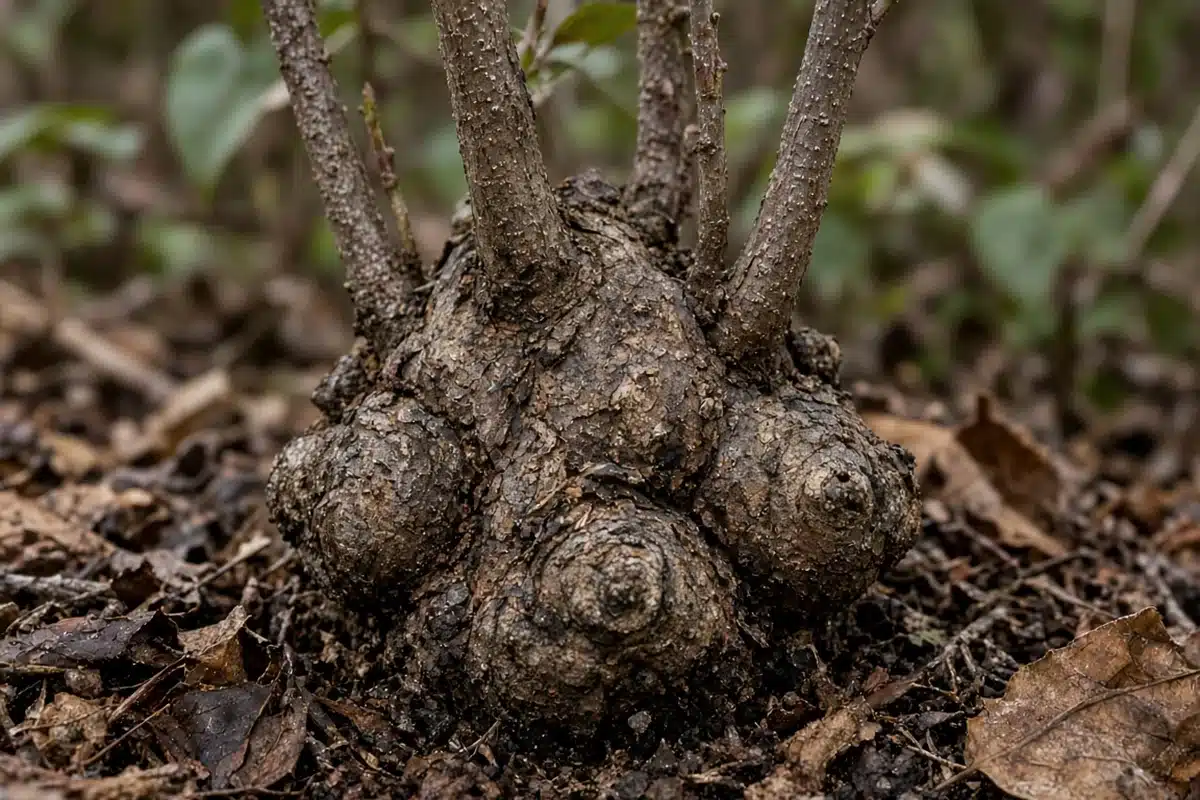
The UC Botanical Garden at Berkeley describes a lignotuber as a specialized swelling at the base of the stem that encloses dormant buds. When fire damages the shoots, those buds are stimulated to sprout, which lets the plant rebuild its aboveground shoot system quickly.
UC Agriculture and Natural Resources adds that lignotubers sit at or below ground level. They contain dormant buds plus starchy nutrients that fuel the growth of new basal shoots. So a lignotuber is both a bud bank and a food store.
The tissue that builds this woody growth is the same tissue that thickens any trunk. Utah State University Extension defines cambium as a layer of tissue one to several cells thick between the bark and the wood that divides to form new wood and bark. For a wider look at how stems move water and sugar, see cannabis xylem and phloem.
Which plants have lignotubers?
Lignotubers are common in Mediterranean climate plant communities. The Berkeley garden says this pattern is well documented. Many of its plants from Australia, such as Eucalyptus and Banksia, produce them. About half of the garden’s Banksia species do.
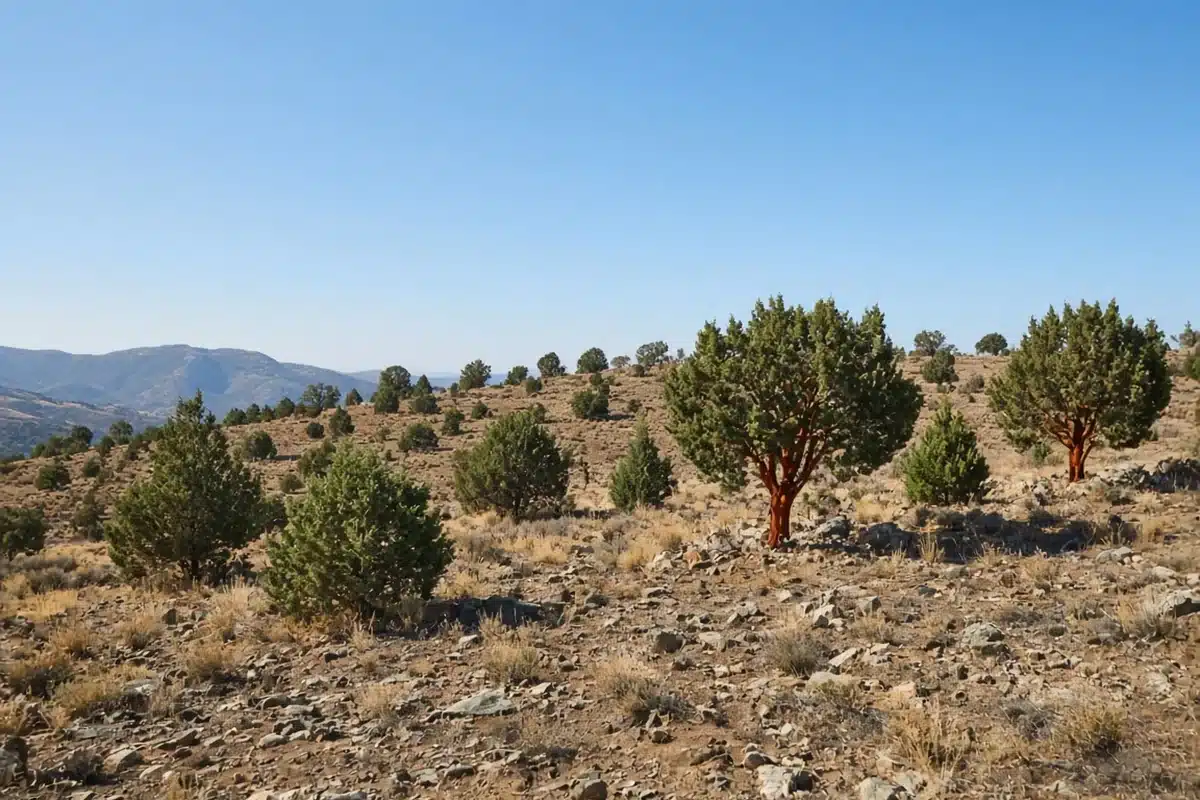
California has its own examples. The Berkeley garden notes that many California native plants produce lignotubers, sometimes called burls. They occur in some species of manzanita (Arctostaphylos), California lilac (Ceanothus) and silk tassel bush (Garrya).
| Structure | Where | Example |
|---|---|---|
| Lignotuber | Swelling at the stem base, at or below the soil line | Banksia, Eucalyptus, some manzanitas |
| Burl | Woody outgrowth on the base or trunk | Coast redwood |
| Root sprouts | Shoots from the roots | Scrub oak, chamise |
| Suckers by clonal spread | Shoots far from the parent stem | Aspen, California redwood |
| Epicormic buds | Dormant buds deep under the bark | Eucalyptus |
Sources: UC Botanical Garden at Berkeley, UC Agriculture and Natural Resources.
Not every resprouter uses a lignotuber. UC Agriculture and Natural Resources says scrub oaks and chamise resprout from their roots. Redwoods and aspens send up suckers far from the burned parent tree, a process called clonal spread. Eucalyptus can regrow from epicormic buds that lie deep under the bark.
How do lignotubers help plants resprout?
UC Agriculture and Natural Resources groups plant fire strategies into three types. Resistance relies on parts like thick bark. Recovery means sprouting after the fire passes. Recruitment means seeds that need heat or smoke to germinate. Lignotubers belong to recovery.
When the shoots are lost, the buds on the lignotuber wake up and draw on the stored starch. The Berkeley garden explains that this lets the plant reestablish its shoots fast after fire. Coast redwood burls may work in a similar way, sprouting many buds if the tree is seriously damaged.
There are limits. The Berkeley garden says lignotubers evolved to survive short, not too intense fires. After about 150 years of fire suppression, flammable material built up in many areas. That led to longer, hotter fires that can destroy the lignotuber. Roots and storage tissue work together in many plants. See the importance of cannabis roots.
How to: step by step
- Learn which local shrubs are known resprouters, such as manzanita or California lilac.
- Look for a woody swelling at the stem base above the soil surface.
- Compare it with a burl, which can sit higher on the trunk.
- Note new shoots that rise from the base after cutting or fire.
- Avoid damaging the swollen base during yard work.
- Check Extension guides for the plants in your region.
Troubleshooting
No resprouting after cutting: the plant may not have a lignotuber. Many shrubs regrow only from seed, so plan for a replacement.
Shoots rising far from the plant: this is likely clonal spread from roots, as with aspens, not a lignotuber.
Shoots from the trunk, not the base: these may come from epicormic buds under the bark.
No regrowth after a very hot fire: long, intense fires can destroy the lignotuber, according to the Berkeley garden.
A bud bank at the base
A lignotuber is a woody swelling that stores buds and starch at the stem base. It lets shrubs like manzanita and Banksia regrow after fire. For more plant structure basics, read cannabis leaf anatomy on the Kind Seed Co blog.
Sources
- Fire vs. plants: some plants win, UC Agriculture and Natural Resources
- Fire and plants, UC Botanical Garden at Berkeley
- Tree and botanical glossary, Utah State University Extension Forestry
FAQ
Is a lignotuber the same as a burl?
The terms overlap. The UC Botanical Garden at Berkeley says California native lignotubers are sometimes called burls. The word burl is also used for woody outgrowths on the base or trunks of coast redwoods, which can sprout many buds if the tree is badly damaged.
Do lignotubers grow underground?
Partly. UC Agriculture and Natural Resources says lignotubers form at or below ground level. The Berkeley garden describes them as a swelling at the base of the stem, so you can often see the top of one just above the soil surface on shrubs such as Banksia.
What is inside a lignotuber?
Dormant buds and stored food. UC Agriculture and Natural Resources says lignotubers contain dormant buds and starchy nutrients that fuel the growth of new basal shoots. The Berkeley garden says fire damage to the shoots stimulates those buds to sprout.
Which US plants form lignotubers?
The UC Botanical Garden at Berkeley lists California chaparral shrubs, including some species of manzanita, California lilac and silk tassel bush. Many Australian plants grown in California gardens, such as Eucalyptus and Banksia, also produce them.
Can a lignotuber be destroyed?
Yes. The Berkeley garden says lignotubers evolved to survive short, not too intense fires. Decades of fire suppression let flammable material build up, which led to longer and hotter fires that can destroy the lignotuber and the plant's ability to regrow.



