What Is Marcescence? Why Oaks and Beeches Hold Dead Leaves
The short answer
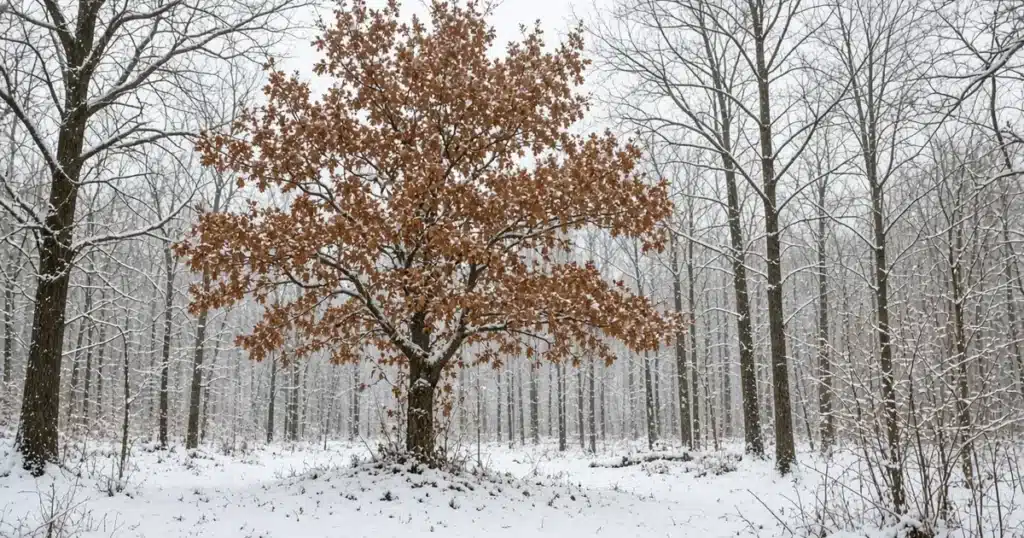
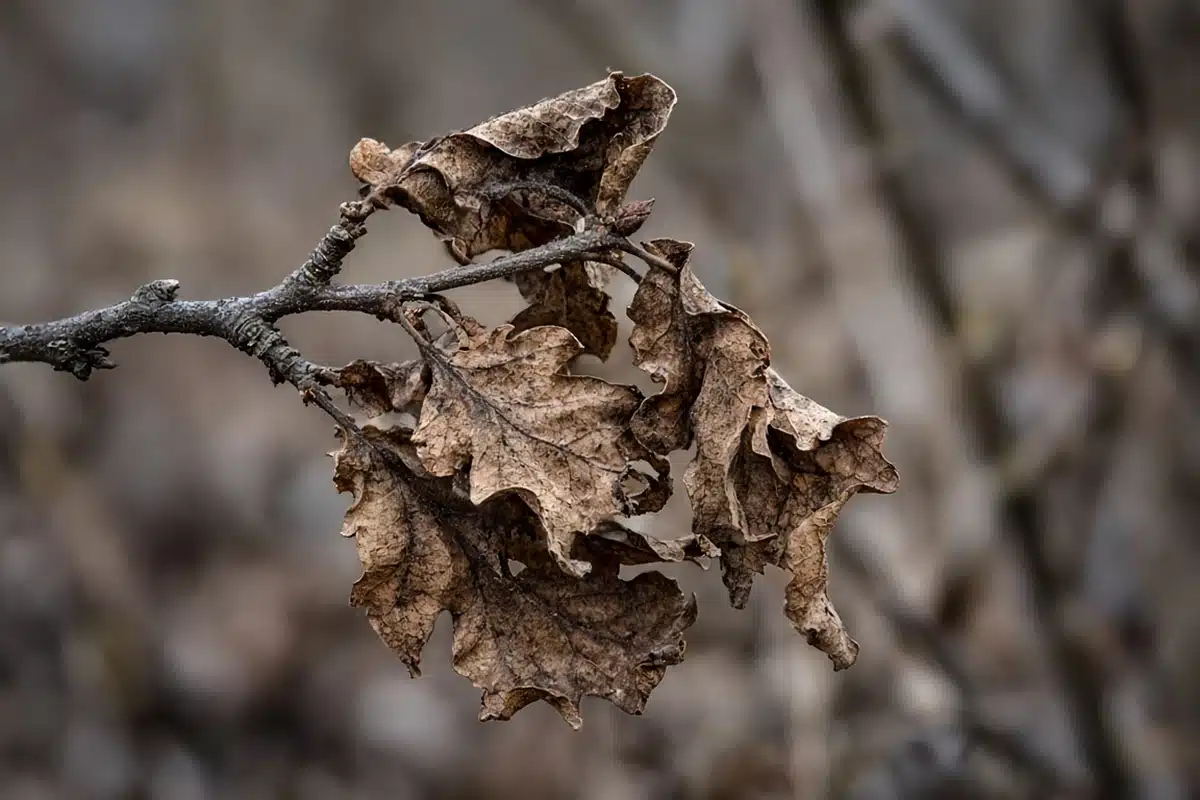
Marcescence is when a tree holds its dead, brown leaves through winter instead of dropping them in fall. Oaks and American beech are the well known examples, especially young trees and lower branches. The leaves stay attached because the layer that normally cuts them loose does not finish forming. It is normal and not a sign of a problem.
If your young oak stands brown and rattling in January while the maples are bare, it is simply doing what oaks do.
What is marcescence?
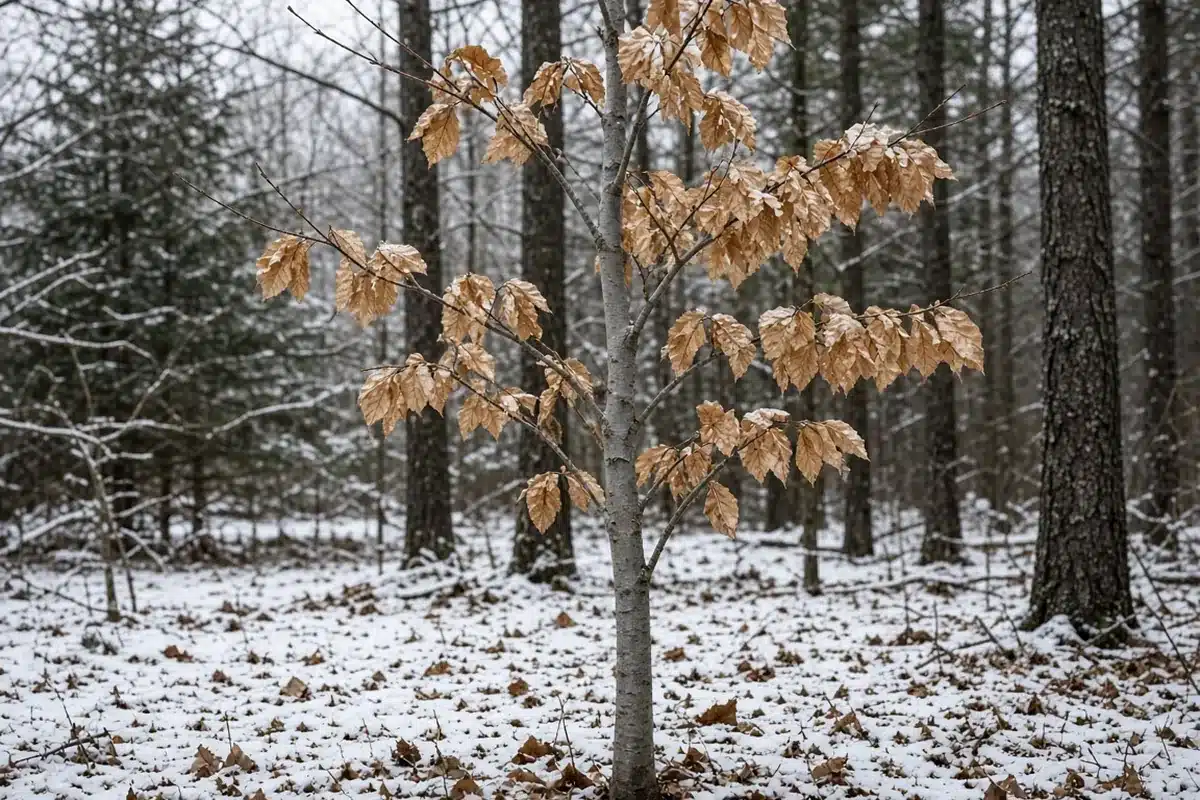
The word comes from the Latin for withering. A marcescent plant holds onto withered parts rather than shedding them. In trees, it often refers to dead leaves that cling through winter.
The Clemson Cooperative Extension HGIC article on winter leaf marcescence explains that the habit is common in oaks, beeches, hornbeams and witch hazel. The leaves finally drop in late winter or spring, often pushed off as new buds swell.
| Topic | What to know | Notes |
|---|---|---|
| Meaning | Dead leaves held through winter | From the Latin for withering |
| Common trees | Oaks, American beech, hornbeam, witch hazel | Young trees show it most |
| Where on the tree | Lower and inner branches | Upper crown often drops normally |
| Cause | Abscission layer does not finish forming | Leaves stay attached |
| When leaves drop | Late winter to spring | New buds push them off |
| Vigor | Normal habit | Not a sign of disease |
Sources: Clemson Cooperative Extension HGIC, University of Maryland Extension, Illinois Extension.
Why do some trees hold dead leaves?
In fall, most deciduous trees form an abscission layer, a band of cells at the base of each leaf stalk. The layer seals the stem and weakens the joint so the leaf falls cleanly.
In marcescent trees, that layer doesn’t finish forming before cold weather arrives. The University of Maryland Extension article on the mystery of marcescence explains that the leaves die but stay attached until spring growth or wind finally breaks them loose.
Young trees and the lower branches of older trees show it most. As a tree matures, its upper crown often drops leaves normally while the bottom holds them.
Is there a benefit?
Scientists aren’t sure why trees do it, but there are several ideas. The Illinois Extension post on the stubborn beauty of oak leaves and marcescence explained describes a few.
Dry, bitter leaves may make buds and twigs less tempting to deer and other browsers. Leaves held all winter can catch snow and drop in spring, adding mulch and nutrients right when roots need them. In windy, open sites, held leaves may shelter buds from drying winds.
None of these is proven for every tree, and more than one may be at play.
Does it mean something is wrong?
No. Marcescence is a normal habit, not a symptom. A vigorous oak or beech can hold leaves every winter for years.
Pay attention to what else you see. A tree that drops leaves early in summer, or shows dead branches without buds in spring, has a different issue. Our post on what cannabis leaves can tell you explains how leaf changes can point to a plant’s condition, which applies to trees too.
What can you do with the leaves?
Leave them. They’ll fall on their own in spring. When they do, rake them into beds or a compost pile. Oak leaves break down slowly and make good mulch and leaf mold. Our post on leaf mold for cannabis beds explains how to turn fallen leaves into a rich soil amendment.
Marcescent trees can add winter interest. The tan and copper leaves stand out against snow or a bright blue winter sky. Our post on growing cannabis near trees covers how trees and garden plants share space.
How to: step by step
- Note which trees hold leaves through winter.
- Check if they’re oaks, beeches or hornbeams.
- Look for live buds at the base of held leaves.
- Leave the leaves to drop on their own in spring.
- Rake spring leaf drop into beds or compost.
- Watch for dead branches without buds in spring.
Troubleshooting
Young oak holds all its leaves. Normal marcescence. No action needed.
Only lower branches hold leaves. Common in older trees. Normal.
Leaves still hang in late spring. New buds should push them off. Check for buds.
Branches have no buds in spring. That points to another problem. Look closer.
Leaves drop in summer. A different cause, such as drought. Check watering.
Marcescence is one of winter’s quiet curiosities. Kind Seed Co shares more tree and garden tips in outdoor growing.
Sources
- Winter leaf marcescence, Clemson Cooperative Extension HGIC, Winter leaf marcescence
- The mystery of marcescence, University of Maryland Extension, The mystery of marcescence
- The stubborn beauty of oak leaves: marcescence explained, Illinois Extension, The stubborn beauty of oak leaves
FAQ
Which trees show marcescence?
Oaks, American beech, hornbeam and witch hazel.
When do the leaves fall?
Late winter or spring, as new buds swell.
Is marcescence a disease?
No. It is a normal habit.
Should you remove the leaves?
No. They drop on their own.
Why do young trees do it more?
Their abscission layer often does not finish forming.