
Wide Row Beds: Planting in Blocks Instead of Rows

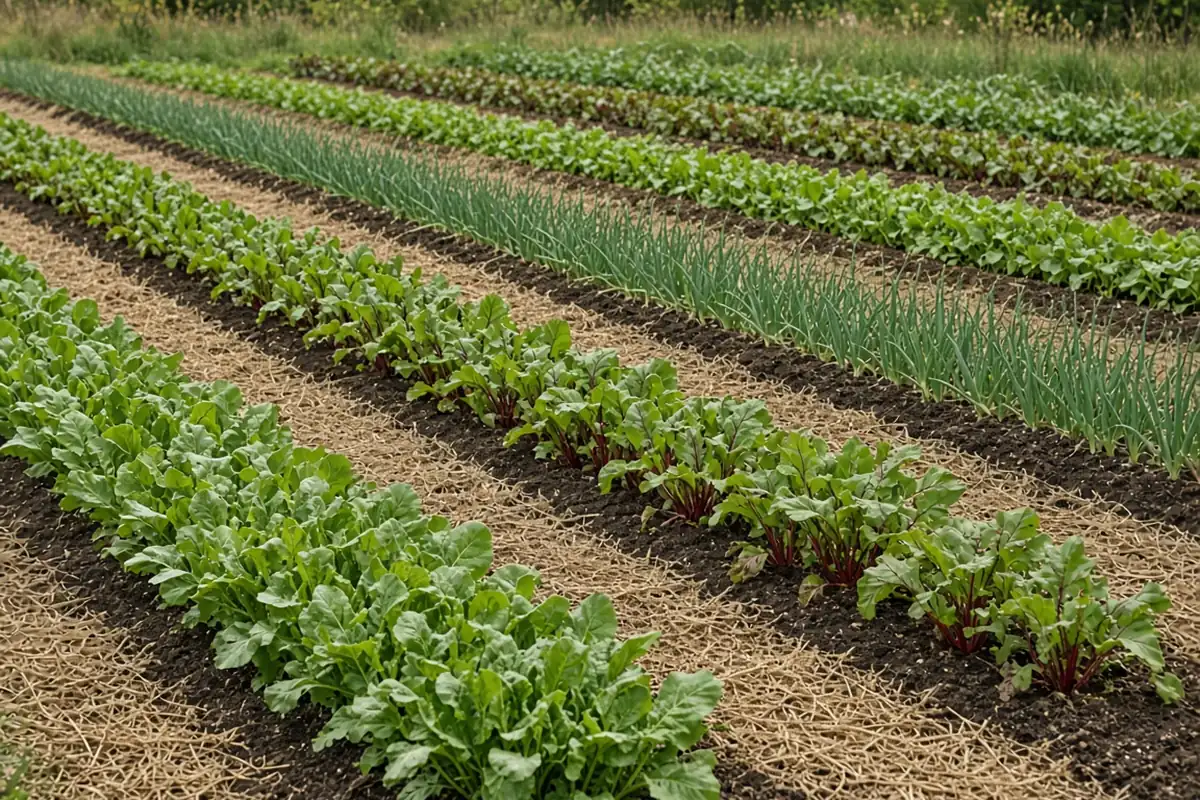
Wide row beds grow crops in a band instead of a single line. University of Wisconsin Madison Extension describes wide row planting as simply planting seeds in a band rather than a single row. The band is about 3 feet wide so you can reach the center from each side. Quick leafy crops fill the band fast.
The short answer
A wide row is a band of plants about 3 feet across, reached from both sides. University of Wisconsin Madison Extension notes quick growing leafy crops do well this way because their leaves form a canopy that competes with weeds. It notes carrots plus onions do not suit wide rows since weeding them is harder.
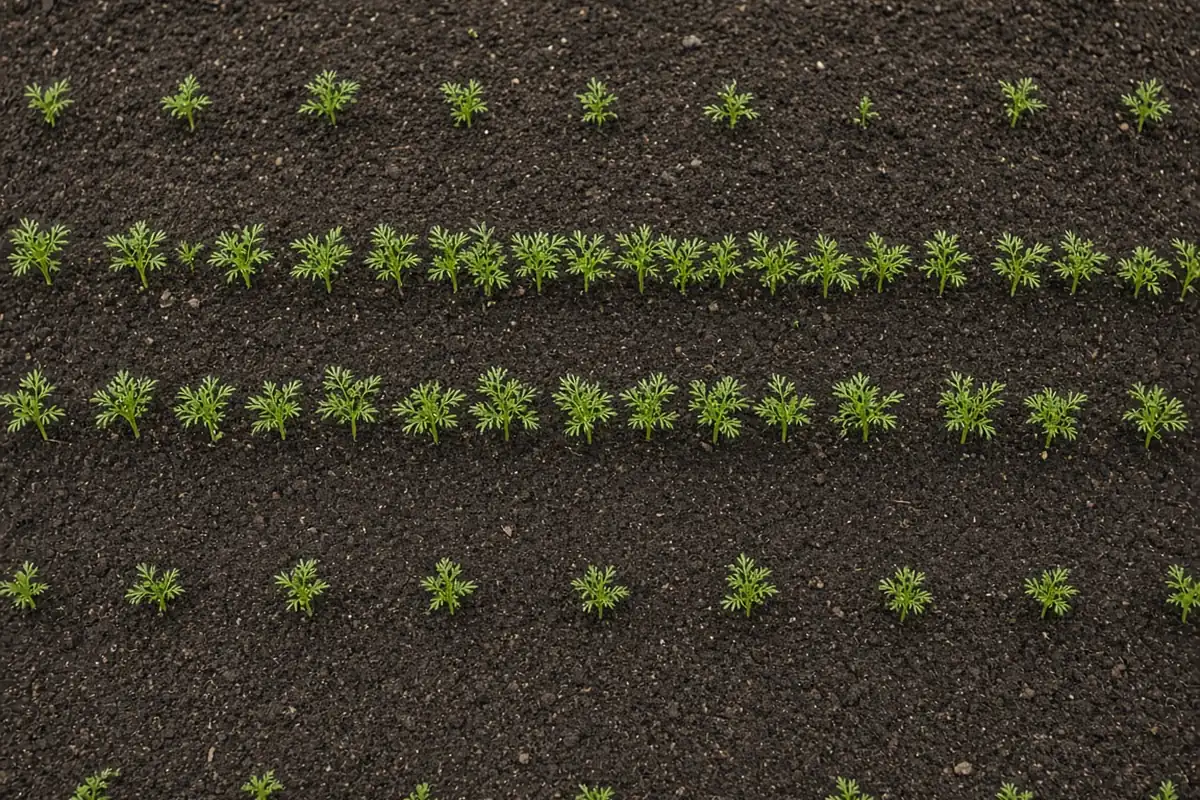
How wide should a wide row be?
University of Wisconsin Madison Extension advises a width that lets you reach the center from each side, about 3 feet. A row reached from one side only works at about half that width.
| Setup | Width | Source |
|---|---|---|
| Wide row reached from both sides | About 3 feet | Wisconsin |
| Bed reached from one side | About 1.5 to 2 feet | Wisconsin |
| Raised bed | 2 to 4 feet across | Maryland |
| Intensive bed | 4 to 5 feet | Ecology Action |
Source: University of Wisconsin Madison Extension, University of Maryland Extension plus Ecology Action.
Which crops suit wide rows?
University of Wisconsin Madison Extension lists chard, kale, leaf lettuce, mustard plus spinach as crops that do well in wide rows. These grow quickly plus form a leafy canopy. It notes poor weed competitors such as carrots plus onions do not work well since weeding is harder.
How do wide rows handle weeds?
University of Wisconsin Madison Extension notes the leaf canopy of quick crops competes with weeds. Ecology Action notes close planting limits weed growth once the plants touch. Weeds still need pulling while the plants are small, before the canopy shades the band.
How to: step by step
- Prepare the seed bed as you would for a normal row.
- Stake a band about 3 feet wide.
- Scatter seed or set seeds at equal distances.
- Cover plus water the band evenly.
- Thin seedlings so each gets room.
- Pull weeds until the canopy closes.
Troubleshooting
Small crowded plants: the band was not thinned. Thin so each plant sits an equal distance from its neighbors.
Weeds in the band: the canopy has not closed yet. Hand pull weeds while the plants are small.
Center hard to reach: the band is too wide. Narrow it to about 3 feet.
For related reading see square foot gardening for cannabis, planning an outdoor cannabis garden layout plus soil compaction in cannabis beds. Kind Seed Co also stocks cannabis seeds.
Sources
- Wide row planting, square foot gardening and raised beds (A3384), University of Wisconsin Extension
- Growing vegetables in raised beds, University of Maryland Extension
- Grow Biointensive farmer’s handbook, Ecology Action (US nonprofit)
FAQ
Do wide rows need more water?
Yes. University of Wisconsin Madison Extension notes crops need more fertilizer plus water as the distance between plants decreases. Water the whole band evenly rather than a single line. Mulch between bands helps hold moisture. Check the soil a few inches down before watering again, especially in hot weather.
Do carrots suit wide rows?
University of Wisconsin Madison Extension notes poor weed competitors such as carrots plus onions do not work well in wide rows. Weeding between thin leaves across a wide band is slow work. Grow these in single rows plus save the wide bands for leafy crops that shade out weeds faster.
Are wide rows the same as square foot gardening?
Not quite. University of Wisconsin Madison Extension describes wide rows as seeds planted in a band. It describes square foot gardening as a bed marked into 1 foot squares with a different crop in each block. Both pack plants closer than single rows plus both rely on reaching in from the sides.
Do wide rows need raised beds?
No. University of Wisconsin Madison Extension notes wide row plantings do not have to be raised beds, plus usually they are not. University of Maryland Extension notes paths beside beds give you a place to stand or kneel so the growing area is not walked on.
How should seeds be spaced in a wide row?
University of Wisconsin Madison Extension advises spacing seeds so each one is an equal distance from the others. If you dislike thinning, set one or two seeds in holes at equal distances instead of scattering. Check the seed packet for the final spacing each crop needs.


