Wild Buckwheat in Cannabis Gardens: The Twining Annual Vine
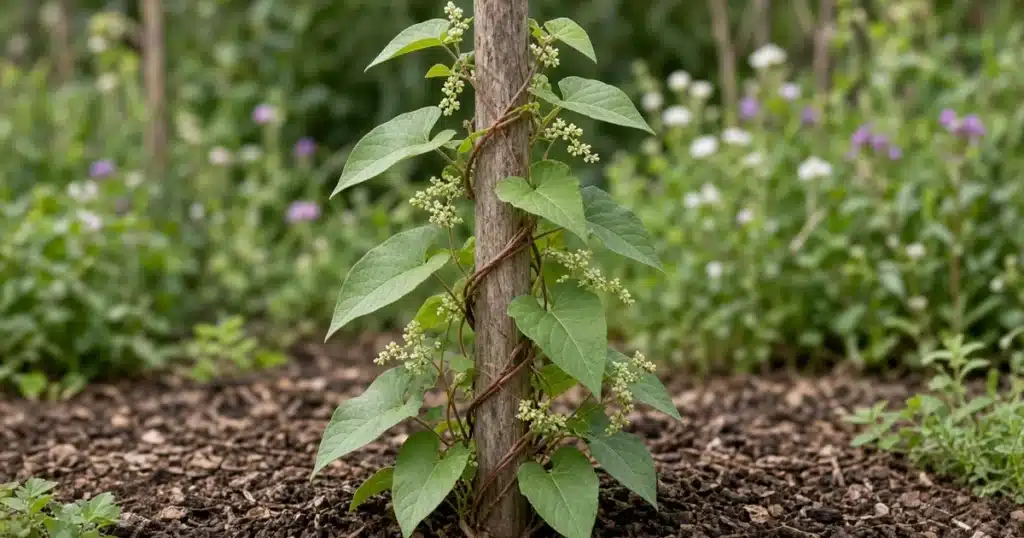
Quick answer: Wild buckwheat is a summer annual vine with arrowhead leaves, a papery sheath at each leaf base and small green flower clusters. Cornell says it does not start climbing until about a month after it emerges. Hoe or pull seedlings from early spring into summer, cut rather than dig larger plants, and mulch to cover bare soil.
What Is Wild Buckwheat?
A twining annual in the buckwheat family, not the cover crop. Cornell CALS calls wild buckwheat a twining summer annual herb, also known as black bindweed, and says it occurs throughout the US. The University of California Statewide IPM Program (UC IPM) says it grows in crop fields, gardens, landscaped areas and roadsides.
Cornell notes that domestic buckwheat, the crop, does not twine onto other plants and has more compact flower clusters and larger seeds. Our overview of weed control in outdoor cannabis covers the wider plan for garden weeds.
How Do You Identify Wild Buckwheat?
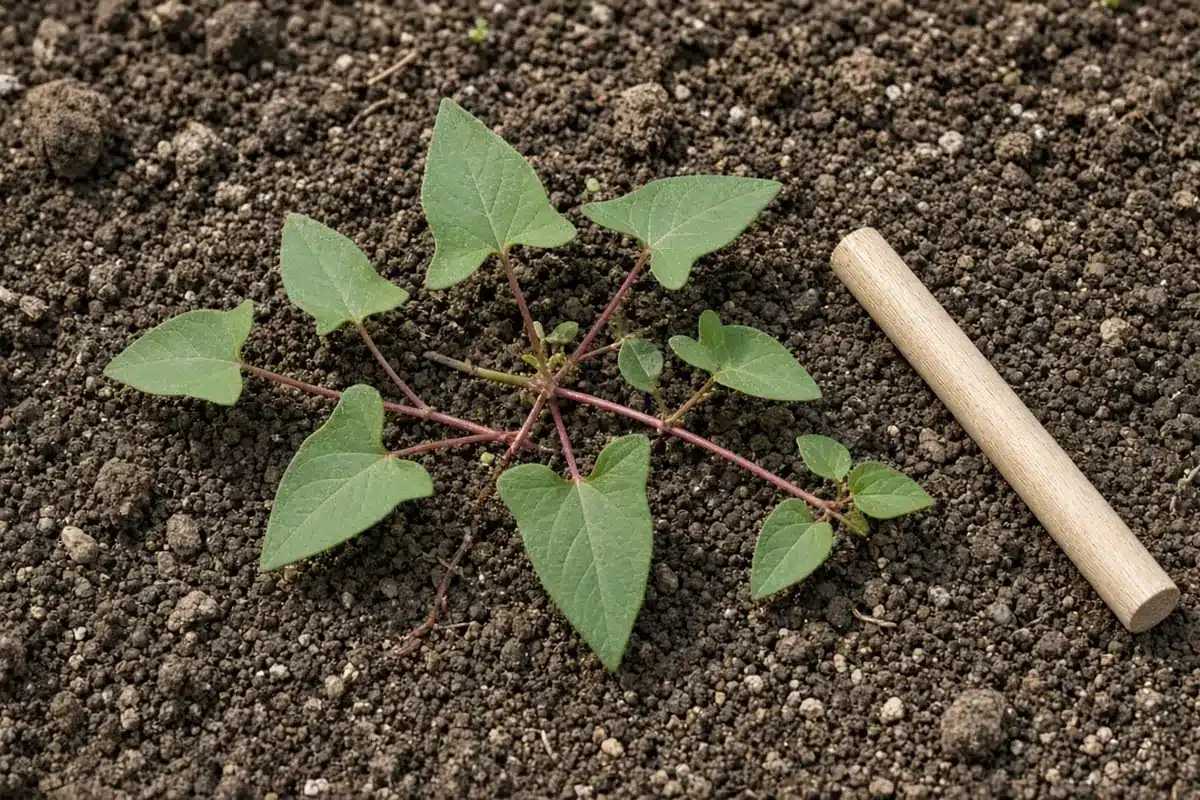
Look for the arrowhead and the sheath. Cornell describes young leaves as arrow shaped with a pointed tip and backward pointing basal lobes. Other traits from Cornell and UC IPM:
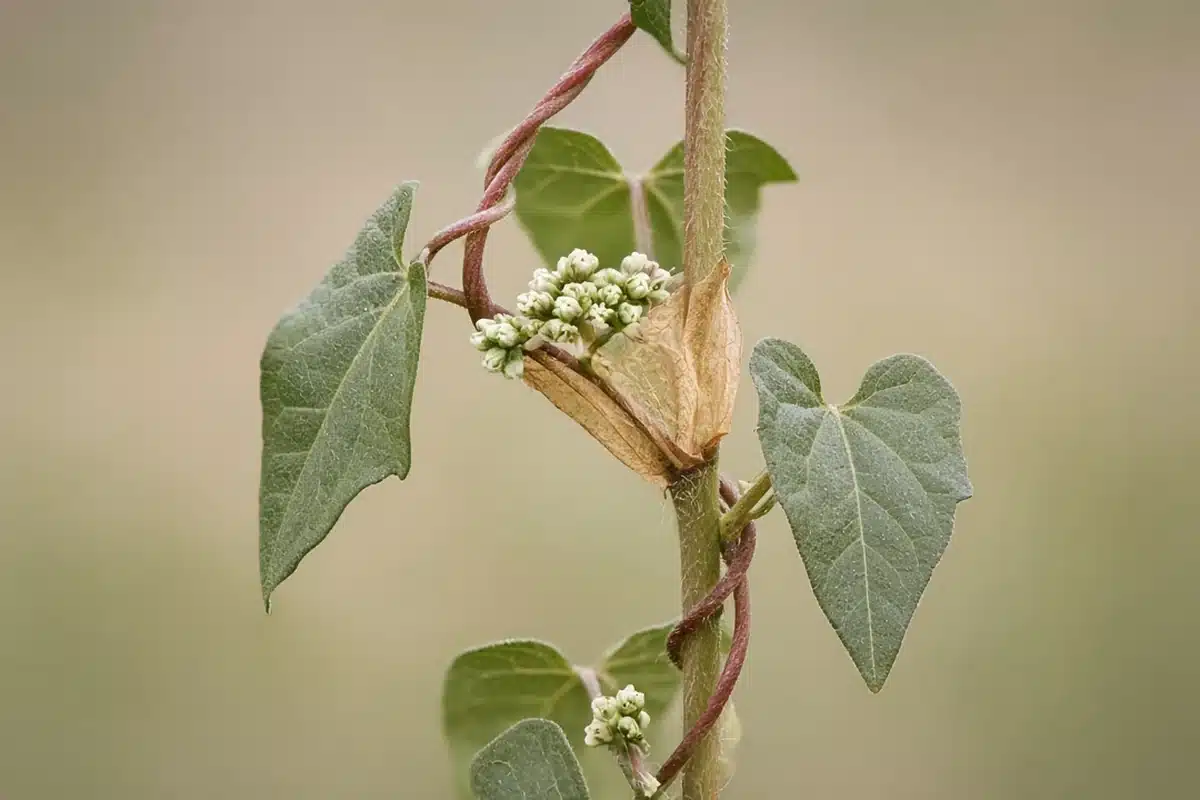
- Ocrea. Cornell says all true leaves have a thin, papery covering around the stem at the leaf base.
- Stems. Smooth, weak and twining, up to 6.5 feet long, per Cornell. UC IPM gives trailing stems of 8 to 40 inches.
- Seedlings. Cornell says seedling stems are red purple and the first leaves are blue green above and red below.
- Flowers. Small greenish pink or greenish white clusters of 2 to 6, per Cornell. UC IPM says they bloom May through September.
- Seed. Dull black and sharply three sided, Cornell says.
How Is Wild Buckwheat Different From Bindweed?
Check the root and the flowers. Cornell says hedge bindweed and field bindweed look similar but are perennials with thick spreading roots, while wild buckwheat is an annual with a fibrous root. Wild buckwheat leaves are more tapered and pointed than bindweed leaves, and UC IPM notes the same.
Flowers settle it. Cornell says bindweed flowers are large, white or pink and borne singly, while wild buckwheat flowers are small, green and clustered. The bindweeds also lack the papery ocrea. If you have dealt with morningglory in cannabis gardens, you will see the same climbing habit, but wild buckwheat’s small flowers are easy to miss.
When Does Wild Buckwheat Emerge?
Early. Cornell says most emergence happens in early spring, with some continuing into summer, and that peak emergence occurs at soil temperatures below 60 F. Most seedlings come from the top 2 inches of soil.
That timing really matters for cannabis. Seedlings can be well established in beds before transplants go in. Cornell adds that the plant does not begin climbing until about a month after emergence, which gives you a clear window to remove it before it wraps around stems.
Why Should You Cut Rather Than Dig?
Because it re roots so easily. Cornell says re rooting becomes an increasing problem as wild buckwheat grows, so tools that cut are more effective than tools that dig. A sharp hoe that slices stems at the soil line works better than a fork that loosens a plant it can then reattach.
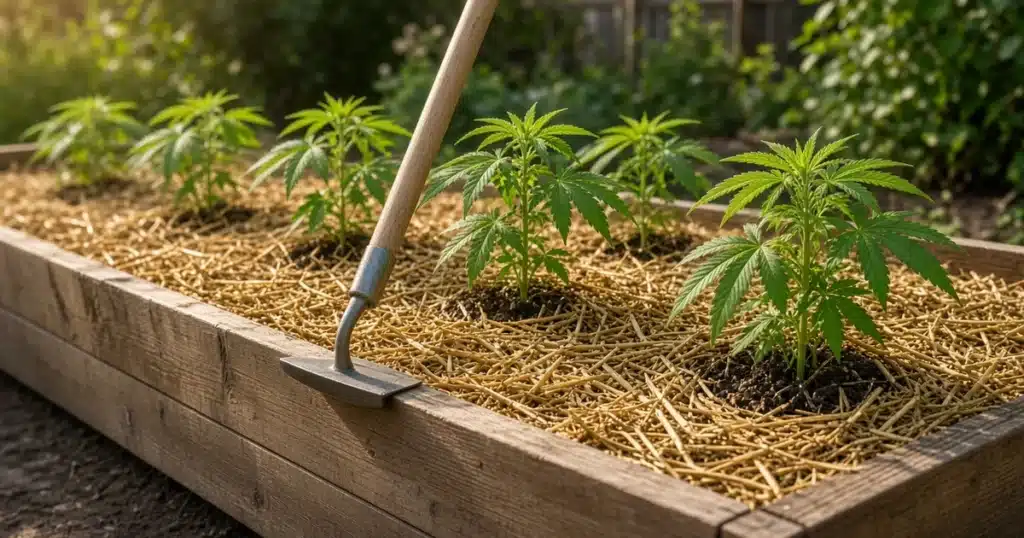
Cornell also recommends uprooting plants while they are small and burying newly emerged seedlings in the row. In a home bed, that means pulling or hoeing small plants regularly from spring into summer.
How Long Does Wild Buckwheat Seed Last?
Most of it sprouts the next year. Cornell says most viable seeds germinate the year after they are produced, but some can survive for decades deep in cool, moist soil. In stirred soil, seed numbers fell 32 to 50 percent per year. Cornell calls the seed bank moderately persistent but susceptible to management.
Cornell also says fresh seed is dormant and needs a long cold, wet period before it will sprout. Seed dropped in late summer is ready to emerge the next spring, so stopping seed this year pays off next year. Pulling the last vines during your fall garden cleanup after cannabis harvest keeps late seed out of the soil.
How to Control Wild Buckwheat in a Cannabis Garden

- Scout beds from early spring into summer. Cornell says most emergence happens in early spring, with some into summer.
- Look for the papery sheath. Cornell says every true leaf has an ocrea at its base.
- Hoe or pull seedlings while small. Cornell recommends uprooting plants while they are small.
- Use a cutting tool. Cornell says tools that cut beat tools that dig, because larger plants re root.
- Remove vines before they climb. Cornell says climbing starts about a month after emergence.
- Pull every plant before seed. Cornell says the seed bank is moderately persistent but responds to management.
- Mulch bare soil. UC IPM recommends a medium mulch 3 to 4 inches deep. Our guide to mulch for cannabis compares materials.
Wild Buckwheat at a Glance
| Subject | Extension finding | Attribution |
|---|---|---|
| Life cycle | Twining summer annual | Cornell |
| Key trait | Papery ocrea at each leaf base | Cornell |
| Stem length | Up to 6.5 feet | Cornell |
| Bloom period | May through September | UC IPM |
| Emergence | Early spring, cool soil | Cornell |
| Seed bank | Moderately persistent | Cornell |
Should You Use Herbicides Near Cannabis?
No. Pull, hoe shallowly and mulch. If herbicides ever come up for other parts of your property, follow the label exactly. Remember that EPA has not registered any herbicide for use on marijuana, and state rules vary, so check with your state agriculture department. UC IPM says home gardeners who hand weed and mulch should not need herbicides. Before you plant cannabis outdoors, check your state’s home grow law.
Troubleshooting Wild Buckwheat
Vines are wrapped around cannabis stems. Cornell says it climbs about a month after emergence. Unwind gently, cut at the base and hoe earlier next spring.
Hoed plants rerooted. Cornell says larger plants re root. Use a sharp hoe that cuts and rake up the pieces.
You are not sure if it is bindweed. Cornell says wild buckwheat has small green clustered flowers and a papery sheath. Bindweeds have large single flowers.
Seedlings appear before planting. Cornell says emergence peaks in cool spring soil. Weed beds before transplanting.
Seed came in with straw or cover crop seed. Cornell advises checking crop and cover crop seed for its three sided black seeds.
At Kind Seed Co, we hoe beds early so climbing weeds never reach our plants.
Frequently Asked Questions
Is wild buckwheat the same as buckwheat?
No. Cornell CALS says wild buckwheat is a twining summer annual weed, also called black bindweed. Domestic buckwheat, the crop, does not twine onto other plants and has more compact flower clusters and larger seeds. Both belong to the buckwheat family, but only the wild one climbs and behaves as a weed.
How do I tell wild buckwheat from field bindweed?
Cornell says field bindweed is a perennial with thick spreading roots and large white or pink single flowers. Wild buckwheat is an annual with a fibrous root, small green clustered flowers and a papery sheath at each leaf base. Its leaves are also more tapered and pointed than bindweed leaves.
When should I remove wild buckwheat?
Start in early spring and keep checking into summer. Cornell says most seedlings emerge in early spring in cool soil, and the plant does not begin climbing until about a month after emergence. Hoe or pull seedlings during that first month, before they wrap around cannabis stems and before they set seed later in the season.
Why does wild buckwheat come back after hoeing?
Cornell says re rooting becomes a bigger problem as the plant grows, so tools that cut work better than tools that dig. Use a sharp hoe to slice stems at the soil line, rake up the pieces and remove them, and hoe again while new seedlings keep emerging.
How long do wild buckwheat seeds last in soil?
Cornell says most viable seeds germinate the year after they are produced, but some can survive for several decades deep in cool, moist soil. In soil stirred four times a year, seed numbers fell 32 to 50% per year. Cornell calls the seed bank moderately persistent but susceptible to management, so stopping new seed pays off.
Sources
- Cornell CALS Weed Science, Wild buckwheat: https://cals.cornell.edu/weed-science/weed-profiles/wild-buckwheat
- UC Statewide IPM Program, Wild Buckwheat, Weed Gallery: https://ipm.ucanr.edu/weeds-identification-gallery/wild-buckwheat/
- UC Statewide IPM Program, Weed Management in Landscapes: https://ipm.ucanr.edu/home-and-landscape/weed-management-in-landscapes/