Mugwort in Cannabis Gardens: Rhizomes and How to Smother It
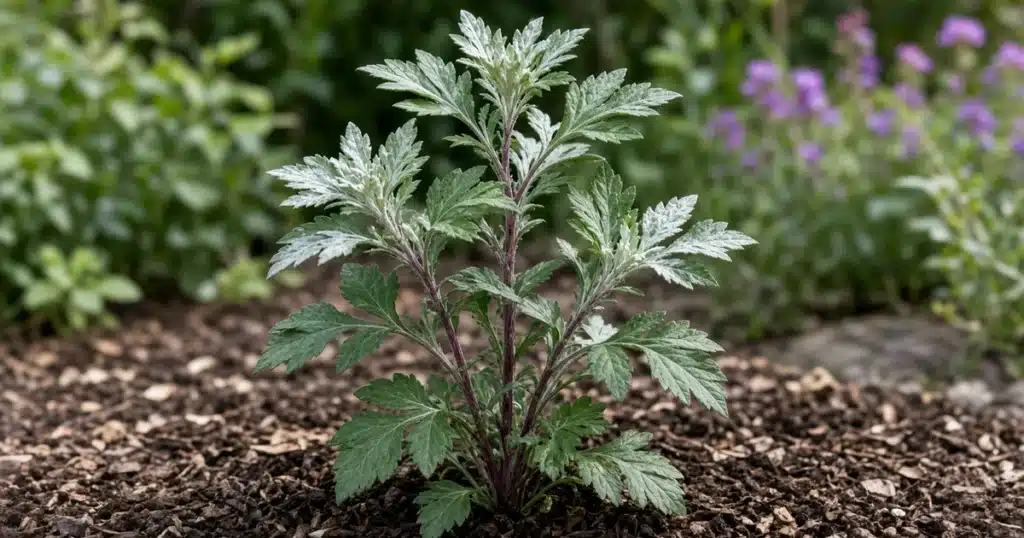
Quick answer: Mugwort is an aromatic perennial with deeply lobed, strongly scented leaves. University of Maryland Extension says it spreads by extensive rhizomes and warns never to till it, because each root piece can make a new plant. Smother patches with mulch, keep pulling new shoots, and never move infested soil.
What Is Mugwort?
A spreading perennial that is very hard to remove. University of Maryland Extension calls mugwort an herbaceous, spreading, invasive plant that tolerates mowing, grows to about 4 feet tall and is very difficult to control. Penn State’s plant identification guide lists it as a perennial that spreads by rhizomes and rarely by seed.
It is a common problem along roadsides, lawn edges and garden borders in many states. Once rhizomes reach a bed, mugwort can fill the soil with roots. Our overview of weed control in outdoor cannabis explains why perennials should be dealt with before planting.
How Do You Identify Mugwort?
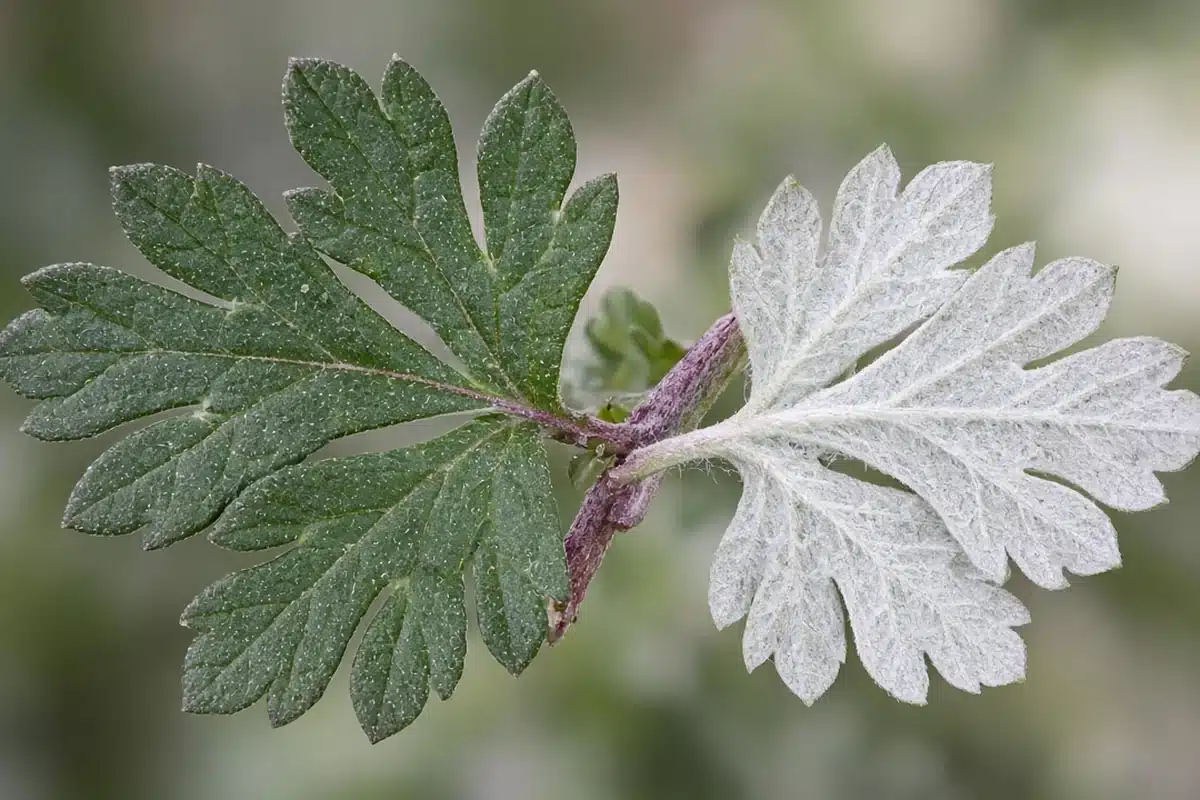
Crush a leaf. Maryland says the deeply dissected leaves look like ragweed but are strongly scented like chrysanthemum. Penn State lists these traits:
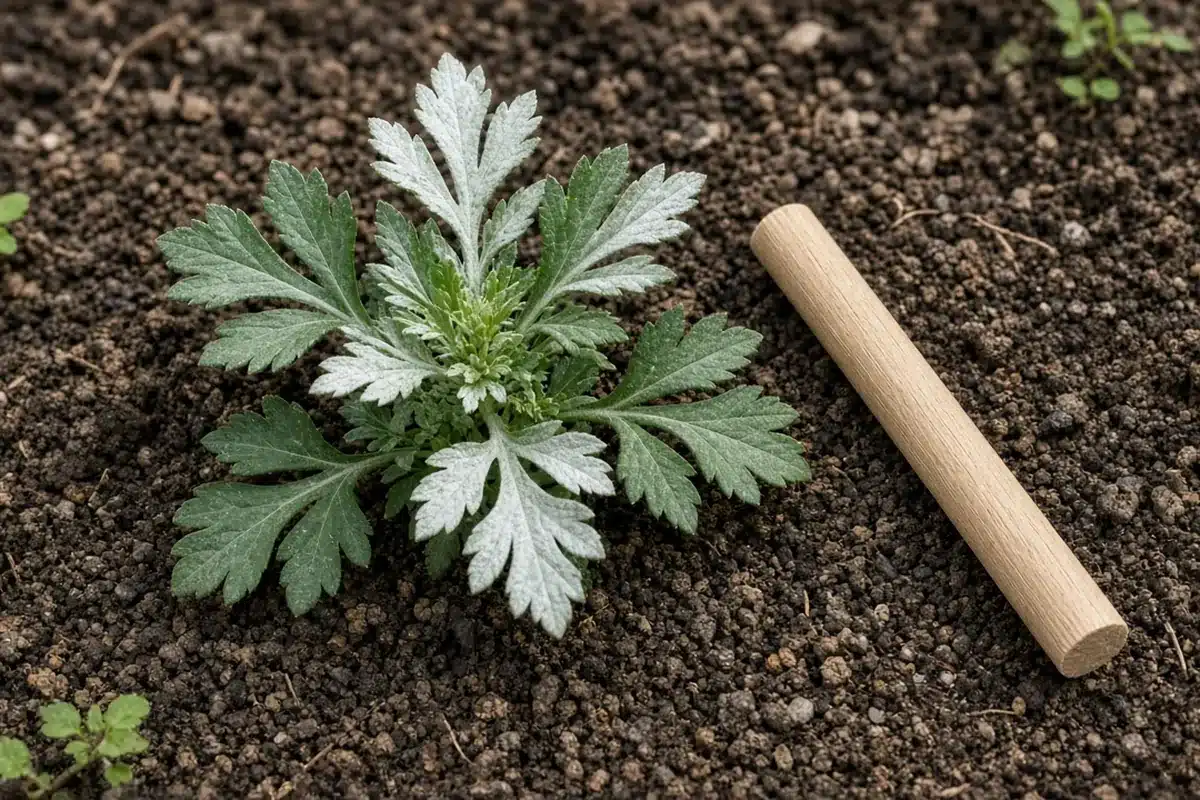
- Leaves. Deeply lobed and pointed, set alternately on the stem, and serrated near the tip.
- Leaf hairs. Slightly hairy on the upper surface.
- Growth. Upright stems from a network of rhizomes.
- Flowers. Small and yellowish.
Maryland says the flowers are small and inconspicuous at the tips of the leafy stems in July through September. Penn State lists common ragweed and marestail among similar species.
How Is Mugwort Different From Ragweed?
Smell and roots. Maryland says mugwort leaves are dissected like ragweed but carry a strong chrysanthemum scent. Mugwort is a perennial that spreads by rhizomes, while common ragweed is an annual that grows from seed each year. Our guide to common ragweed in cannabis gardens covers that weed.
If you pull a stem and find a runner heading sideways under the soil, that points to a rhizome spreading weed like mugwort. Confirm it with the chrysanthemum scent.
Why Should You Never Till Mugwort?
Tilling only plants more of it. Maryland says plainly to never till mugwort, because each root piece will generate a new plant. A rototiller can turn one patch into many new plants spread across a bed.
Avoid tilling infested soil. Leaving it unturned avoids chopping and spreading the rhizomes. For mugwort, leave the soil in place and work from the top.
Can You Smother Mugwort?
Yes, and it is one of the main options. Maryland says you can smother it with black plastic or layers of newspaper covered with mulch. A thick cover blocks light so new shoots cannot feed the rhizomes.
Smothering takes both time and patience. Keep the cover in place, check its edges and pull any shoots that sneak through. Maryland says a combination of methods works best, so pair smothering with steady pulling.
Will Pulling Mugwort Work?
Slowly. Maryland says you can exhaust the root system by continuous pulling or removal of the leaves, and admits this is difficult. Each time you remove the top growth, the rhizomes spend stored energy to send up more shoots.
The key word here is continuous. Pull new shoots as they appear through the growing season. Maryland also says mugwort tolerates mowing, so cutting the tops alone will not stop it. Bag pulled material, since root pieces can regrow, and never add rhizomes to a compost pile.
What Should You Do Before Planting Near Mugwort?
Deal with it first. The University of California Statewide IPM Program (UC IPM) says to control existing weeds, especially perennials, before any planting work starts. Its landscape guide adds that new soil should come from a reputable source, since soil can carry weed seeds and pieces.
UC IPM also describes soil solarization, which means covering moist soil with clear plastic for 4 to 6 weeks during the sunniest part of summer. Our guide to soil solarization for cannabis beds explains how to do it. Think of it as one more layer next to smothering and pulling, not a replacement for them.
Give the bed a full season if you can. A patch that is starved under cover for a summer is much weaker by the time you plant.
How to Control Mugwort Near Cannabis Beds
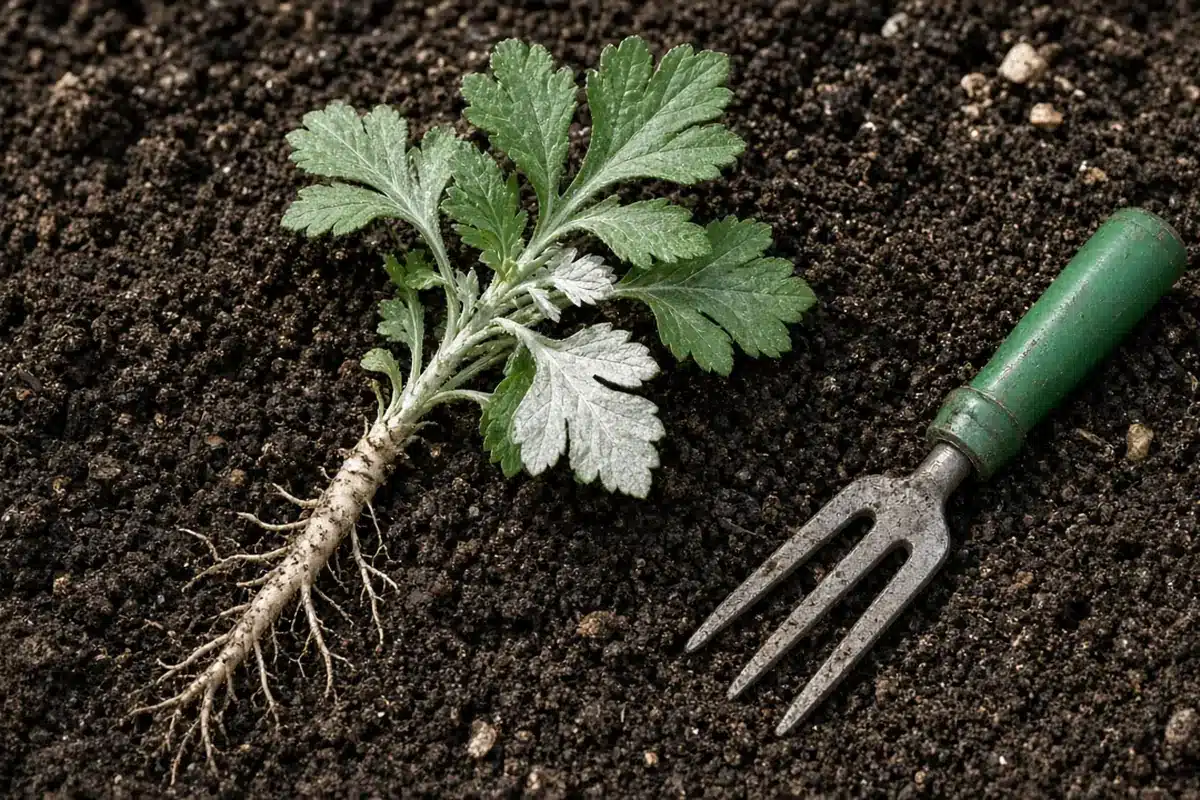
- Confirm the ID. Maryland says mugwort smells like chrysanthemum. Penn State says it spreads by rhizomes.
- Do not till. Maryland warns each root piece can make a new plant.
- Smother the patch. Maryland suggests black plastic or layered newspaper covered with mulch.
- Pull shoots continuously. Maryland says steady removal of top growth can exhaust the roots.
- Bag all pieces. Root fragments can regrow, so keep them out of compost.
- Do not move infested soil. Rhizome pieces in soil can start new patches elsewhere.
- Keep mulch deep. UC IPM recommends 3 to 4 inches of mulch over bare soil. Our guide to mulch for cannabis compares options.
Mugwort at a Glance
| Subject | Extension finding | Attribution |
|---|---|---|
| Life cycle | Perennial | Maryland, Penn State |
| Spread | Rhizomes, rarely seed | Penn State, Maryland |
| Height | Up to about 4 feet | Maryland |
| Key trait | Chrysanthemum scent | Maryland |
| Bloom period | July through September | Maryland |
| Never do this | Till it | Maryland |
Should You Use Herbicides Near Cannabis?
No. Pull, hoe shallowly and mulch. If herbicides ever come up for other parts of your property, follow the label exactly. Remember that EPA has not registered any herbicide for use on marijuana, and state rules vary, so check with your state agriculture department. UC IPM says home gardeners who hand weed and mulch should not need herbicides. Before you plant cannabis outdoors, check your state’s home grow law.
Troubleshooting Mugwort
The patch doubled after tilling. Maryland says each root piece makes a new plant. Stop tilling and smother instead.
Shoots push through mulch. Pull them as they appear. Maryland says continuous removal wears down the roots.
It came in with new soil. Rhizome pieces travel in soil. Check soil sources before you buy.
You think it is ragweed. Maryland says mugwort smells like chrysanthemum and spreads by rhizomes.
Progress is slow. Maryland calls it very difficult to control. Combine smothering and pulling and keep at it.
At Kind Seed Co, we never till a mugwort patch and we bag every root piece.
Frequently Asked Questions
Why is mugwort so hard to get rid of?
University of Maryland Extension says mugwort spreads by extensive rhizomes, and each root piece can grow into a new plant. It also tolerates mowing. That combination means cutting or tilling alone rarely works. Maryland calls it very difficult to control and says a combination of methods is the best approach.
Should I till a mugwort patch?
No. University of Maryland Extension says never to till mugwort, because each root piece will generate a new plant. Tilling chops the rhizomes into many pieces and spreads them through the soil. Smother the patch with black plastic or newspaper under mulch instead, and pull shoots that come through.
How do I identify mugwort?
Maryland says mugwort leaves are deeply dissected like ragweed but strongly scented like chrysanthemum. Penn State lists deeply lobed, pointed, alternate leaves, small yellowish flowers and spread by rhizomes. Plants can reach about 4 feet. A sideways runner under the soil, plus the scent, helps confirm it.
Can I smother mugwort with mulch?
Yes. Maryland says you can smother mugwort with black plastic or layers of newspaper covered with mulch. Keep the cover in place, check the edges and pull any shoots that push through. Maryland says a combination of methods is the best approach.
Does mugwort spread by seed?
Mostly it spreads by roots. Penn State says mugwort spreads by rhizomes and rarely by seed, and Maryland Extension describes extensive rhizomes. Maryland adds that its small flowers appear in leafy spikes from July to September. Focus on the underground runners, and remove flower stalks as a precaution.
Sources
- University of Maryland Extension, Mugwort: https://extension.umd.edu/resource/mugwort
- Penn State Department of Plant Science, Mugwort, Plant ID: https://plantscience.psu.edu/outreach/plant-id/broadleaf/mugwort
- UC Statewide IPM Program, Weed Management in Landscapes: https://ipm.ucanr.edu/home-and-landscape/weed-management-in-landscapes/