Common Burdock in Cannabis Gardens: Burs and Big Taproots
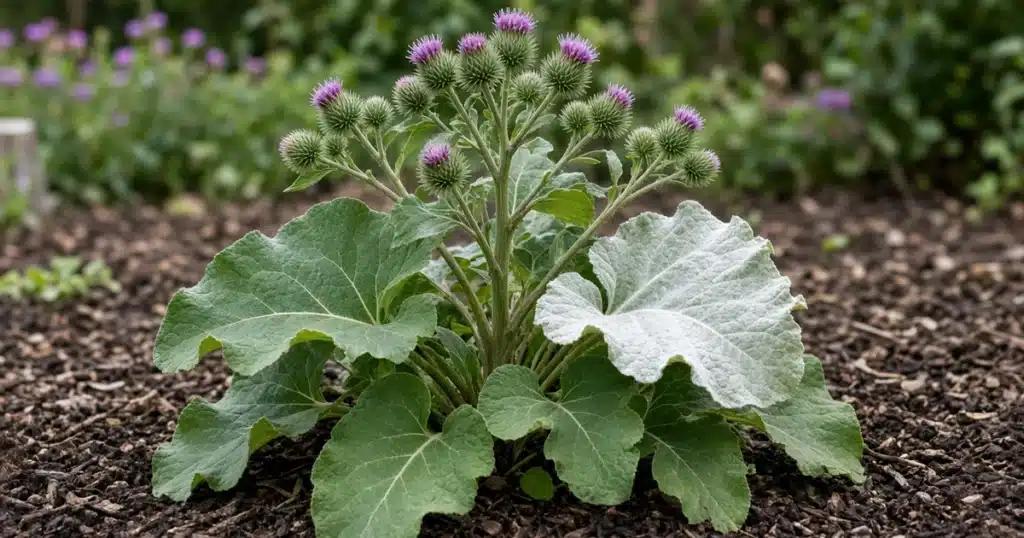
Quick answer: Common burdock is a biennial that forms a large rosette of heart shaped, woolly leaves in year one and a tall, branching, bur covered stem in year two. WSU Extension says one plant makes about 15,000 seeds. Dig out first year rosettes with the whole taproot, cut stems before burs form, and bag every seed head.
What Is Common Burdock?
A big biennial weed of field edges and gardens. Washington State University (WSU) Extension says common burdock is native to Europe and found throughout most of the US. It grows along roadsides, ditch banks, pastures and waste areas, and prefers moist, nitrogen rich soils.
Penn State’s plant identification guide lists it as a biennial with an erect growth habit that spreads by seed and grows from a large taproot. Our overview of weed control in outdoor cannabis covers the wider plan for garden edges.
How Do You Identify Common Burdock?
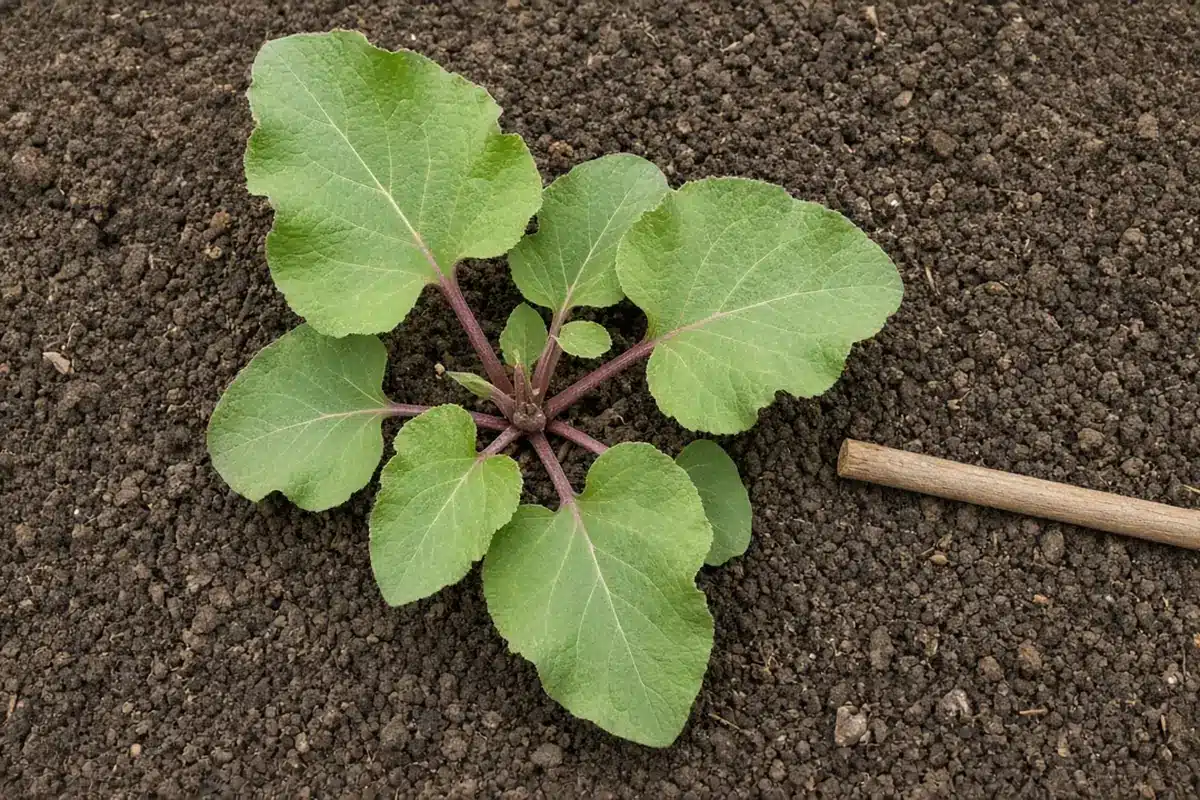
Look at the leaves first. WSU says the first year rosette resembles rhubarb and can reach 3 feet across, with large, heart shaped leaves that are woolly underneath. Other traits from WSU and Penn State:
- Second year stem. Upright, grooved and hollow, 3 to 7 feet tall with many branches, green or reddish purple.
- Leaf edges. Penn State says wavy and coarsely toothed, with a highly hairy underside and prominent veins.
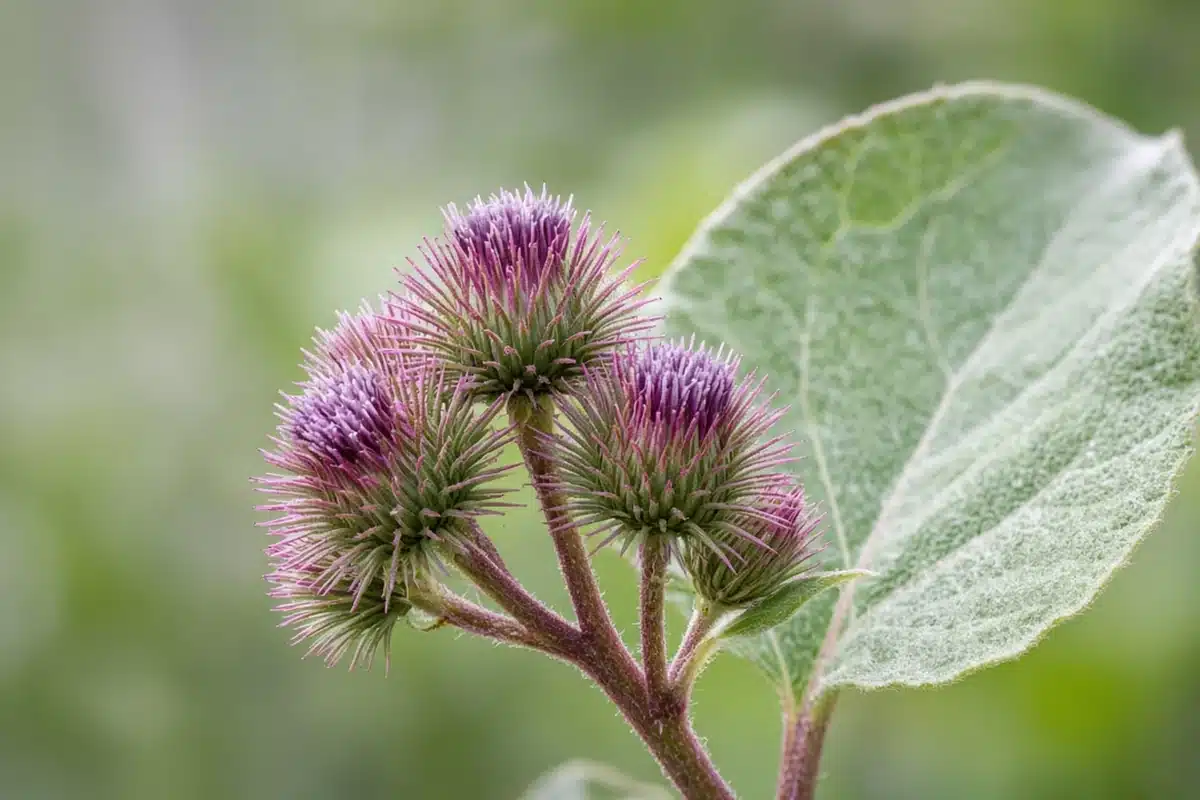
- Flowers. Purplish heads about 3/4 inch across, covered with spine tipped bracts, from July until frost, per WSU.
- Burs. Dried flower heads with hooked bristles that cling to clothing and fur.
- Root. A large, tough, fleshy taproot.
Penn State lists broadleaf dock and curly dock as similar species.
How Does Burdock Spread?
On burs. WSU says the dried flower heads become burs with hooked bristles that cling to clothing and animal hair, and that a single plant produces about 15,000 seeds on average. WSU calls preventing bur dispersal critical.
A dog running through a patch or a sleeve brushing past in fall can carry seed to a new spot. Pick off burs before you leave the area, and bag them rather than tossing them on the ground.
Why Is the Taproot a Problem?
It resprouts readily. WSU says small infestations can be pulled or hand dug, but removal may be hard because of the large, tough taproot, and that established plants will resprout if the whole root is not removed.
Dig first year rosettes, before the plant has made a flowering stem. Water the day before and use a long weeding knife or spade to get under the crown.
Does Cutting Burdock Help?
Yes, if timed before seed. WSU says mowing or other cutting before seed set will prevent seed formation. Cutting a second year plant before its flower heads form stops most burs that season, but side branches may still form new heads, so check again.
Cutting will not kill the root on its own, so follow up. WSU says the main goal for a plant that reproduces only by seed is to eliminate seed production and deplete the seed bank. Cut, then dig what remains. Repeat the cut if side branches start to form new flower heads, and keep an eye on the same spot the next spring for seedlings from older seed.
Is Common Burdock Harmful?
It can irritate skin. WSU says the leaves and stems contain lactones that may cause dermatitis in people. WSU also notes it can host powdery mildew and root rot, which can infect some crops and other plants.
Wear gloves and long sleeves when you dig or cut it. Clearing it from bed edges also removes a plant that WSU says can host diseases of some crops.
What Should You Do With Old Seed Heads?
Bag and remove them. WSU says any existing seed heads should be bagged and removed from the site. We suggest putting them in the trash rather than the compost pile. Our guide to composting cannabis garden waste explains what is safe to compost.
Late season is an especially good time to check. Since WSU says flowering runs from July until frost, your fall garden cleanup after cannabis harvest is the moment to find and bag the last burs.
How to Control Common Burdock Near Cannabis Beds

- Spot first year rosettes. WSU says they look like rhubarb and can reach 3 feet across.
- Wear gloves and sleeves. WSU says lactones in the leaves and stems may cause dermatitis.
- Dig the whole taproot. WSU says plants resprout if the whole root is not removed.
- Cut second year stems before burs. WSU says cutting before seed set prevents seed formation.
- Bag every seed head. WSU says existing seed heads should be bagged and removed.
- Pick burs off clothes and pets. WSU says burs cling to clothing and animal hair.
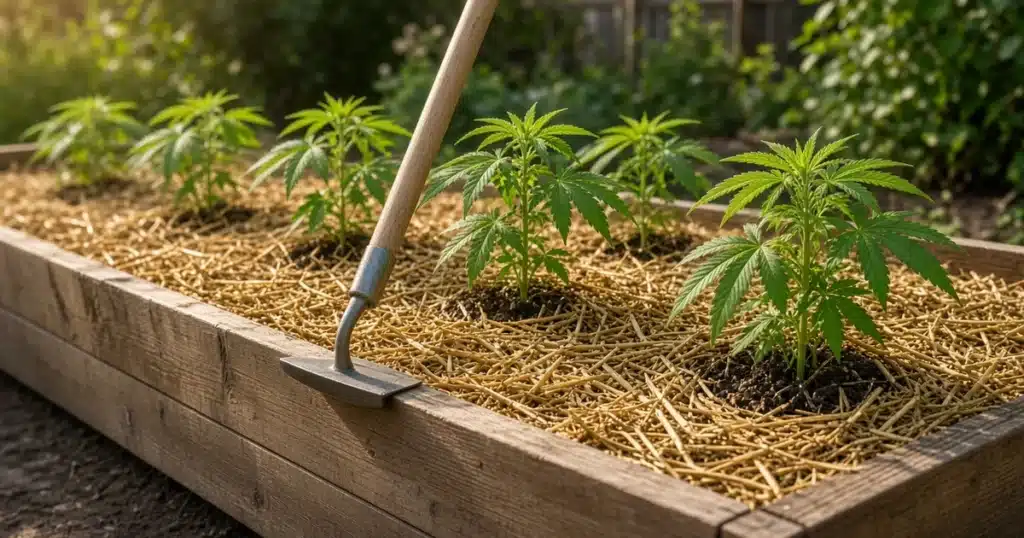
- Mulch cleared ground. UC IPM recommends a medium mulch 3 to 4 inches deep. Our guide to mulch for cannabis compares options.
Common Burdock at a Glance
| Subject | Extension finding | Attribution |
|---|---|---|
| Life cycle | Biennial | WSU, Penn State |
| First year | Rosette up to 3 feet across | WSU |
| Second year height | 3 to 7 feet | WSU |
| Root | Large, tough taproot | WSU, Penn State |
| Seed output | About 15,000 seeds per plant | WSU |
| Flowering | July until frost | WSU |
Should You Use Herbicides Near Cannabis?
No. Pull, hoe shallowly and mulch. If herbicides ever come up for other parts of your property, follow the label exactly. Remember that EPA has not registered any herbicide for use on marijuana, and state rules vary, so check with your state agriculture department. UC IPM says home gardeners who hand weed and mulch should not need herbicides. Before you plant cannabis outdoors, check your state’s home grow law.
Troubleshooting Common Burdock
It resprouted after digging. WSU says it resprouts if any root is left. Dig deeper next time.
Burs are on your clothes and pets. WSU says burs cling to clothing and hair. Clear plants near paths.
Skin is irritated after weeding. WSU says lactones may cause dermatitis. Wear gloves and sleeves.
A cut plant flowered anyway. Side branches can still form heads. Cut again and dig the root.
You think it is dock. Penn State lists docks as similar. Burdock has woolly leaf undersides and spiny flower heads.
At Kind Seed Co, we think year one is the best time to dig burdock, before it can make burs.
Frequently Asked Questions
How do I identify common burdock?
WSU Extension says common burdock forms a rhubarb like rosette up to 3 feet across in its first year, with large heart shaped leaves that are woolly underneath. In year two it sends up a hollow, branching stem 3 to 7 feet tall with purplish, spiny flower heads that dry into hooked burs.
Is burdock a biennial?
Yes. WSU Extension and Penn State both list common burdock as a biennial. It spends its first year as a large rosette with a growing taproot, then flowers, sets seed and dies in its second year. Digging the rosette in the first year is the easiest way to stop it.
How many seeds does burdock produce?
WSU Extension says a single common burdock plant produces about 15,000 seeds on average. The seeds are held in burs with hooked bristles that cling to clothing and animal hair. WSU calls preventing bur dispersal critical, so cut stems before burs form and bag any seed heads.
What is the best way to remove burdock?
WSU says small infestations can be pulled or hand dug, but the whole taproot must come out or the plant resprouts. Cut second year stems before seed sets, bag existing seed heads and remove them from the site. Wear gloves, since WSU says the plant may cause dermatitis.
Where does common burdock grow?
WSU says common burdock can be found throughout most of the United States. It occurs along roadsides and ditch banks and in pastures and waste areas, and it generally prefers moist, nitrogen rich soils. Check fence lines, ditches and unmowed edges near cannabis beds for its large first year rosettes.
Sources
- Washington State University Whitman County Extension, Common Burdock: https://wpcdn.web.wsu.edu/extension/uploads/sites/75/2013/11/CommonBurdock2009.pdf
- Penn State Department of Plant Science, Burdock, Common, Plant ID: https://plantscience.psu.edu/outreach/plant-id/broadleaf/burdock
- UC Statewide IPM Program, Weed Management in Landscapes: https://ipm.ucanr.edu/home-and-landscape/weed-management-in-landscapes/