Yew vs Boxwood: Hedge Choice Plus Shade Plus Deer
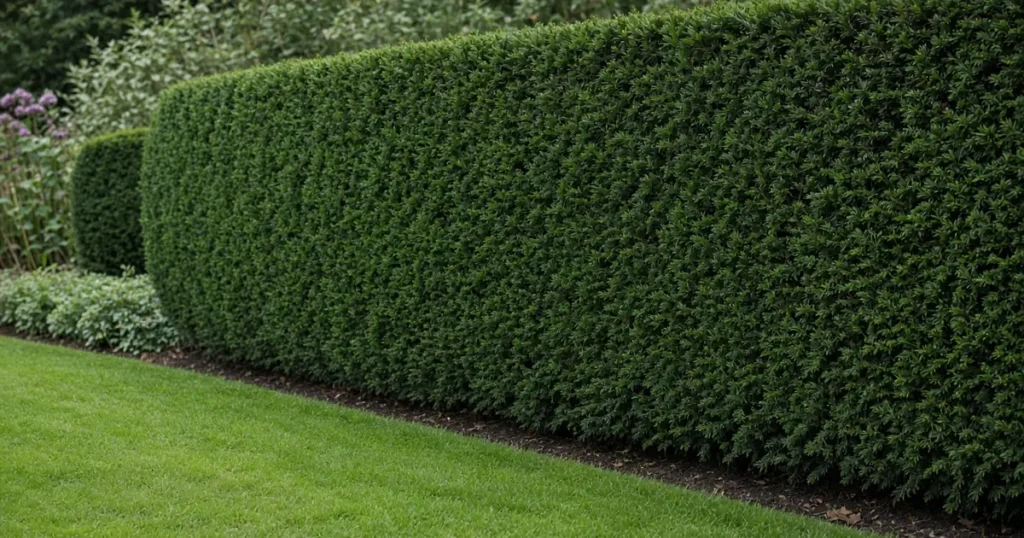
Yew vs boxwood is a frequent hedge question. NC State Extension says yews are needled evergreens that withstand heavy pruning. Boxwood is a broadleaf evergreen with small glossy leaves that Clemson Cooperative Extension calls ideal for formal hedges and topiary.
The short answer
Both form dense evergreen hedges. Yew has short linear needles and takes full sun to partial shade. Boxwood has small glossy leaves and grows well in part shade with afternoon shade. NC State Extension says common boxwood is generally tolerant of deer. Yew withstands heavy pruning, so it recovers from hard cuts.
How do yew and boxwood look different?
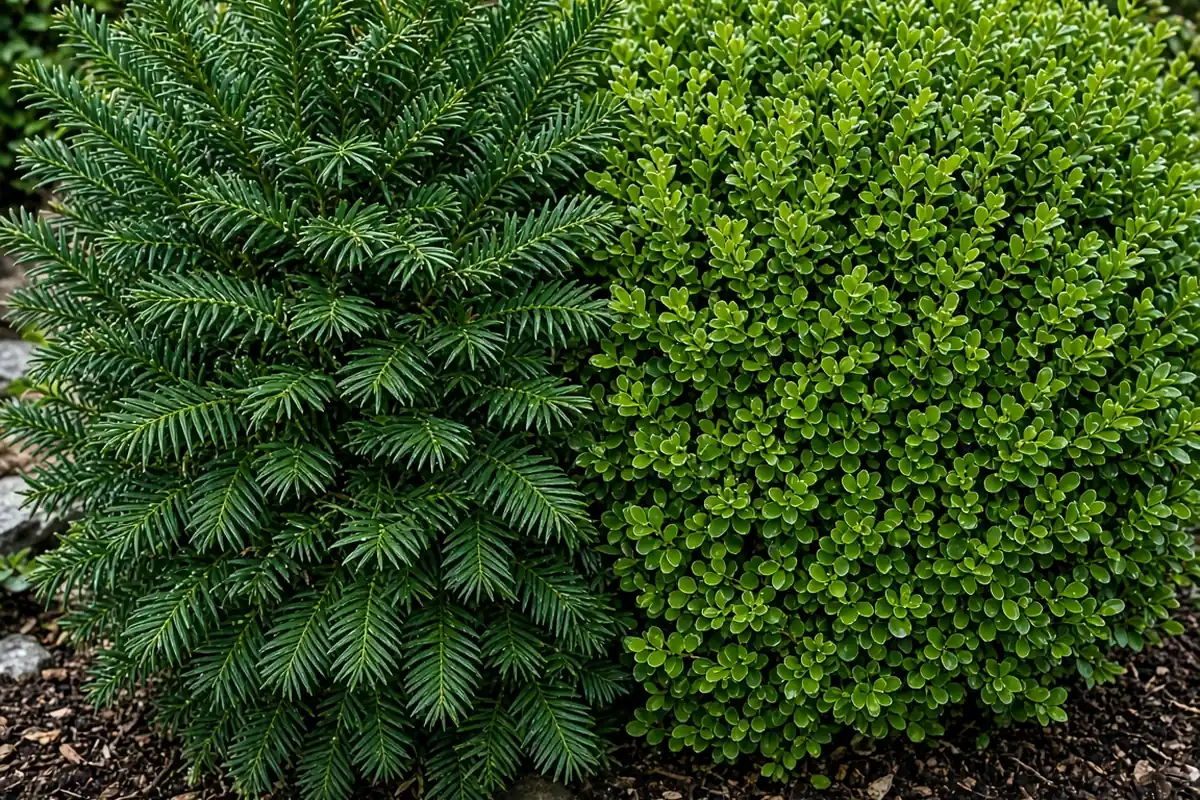
NC State Extension says yews carry short, green linear needles in two flat rows. Female plants bear red, fleshy arils if a male grows nearby.
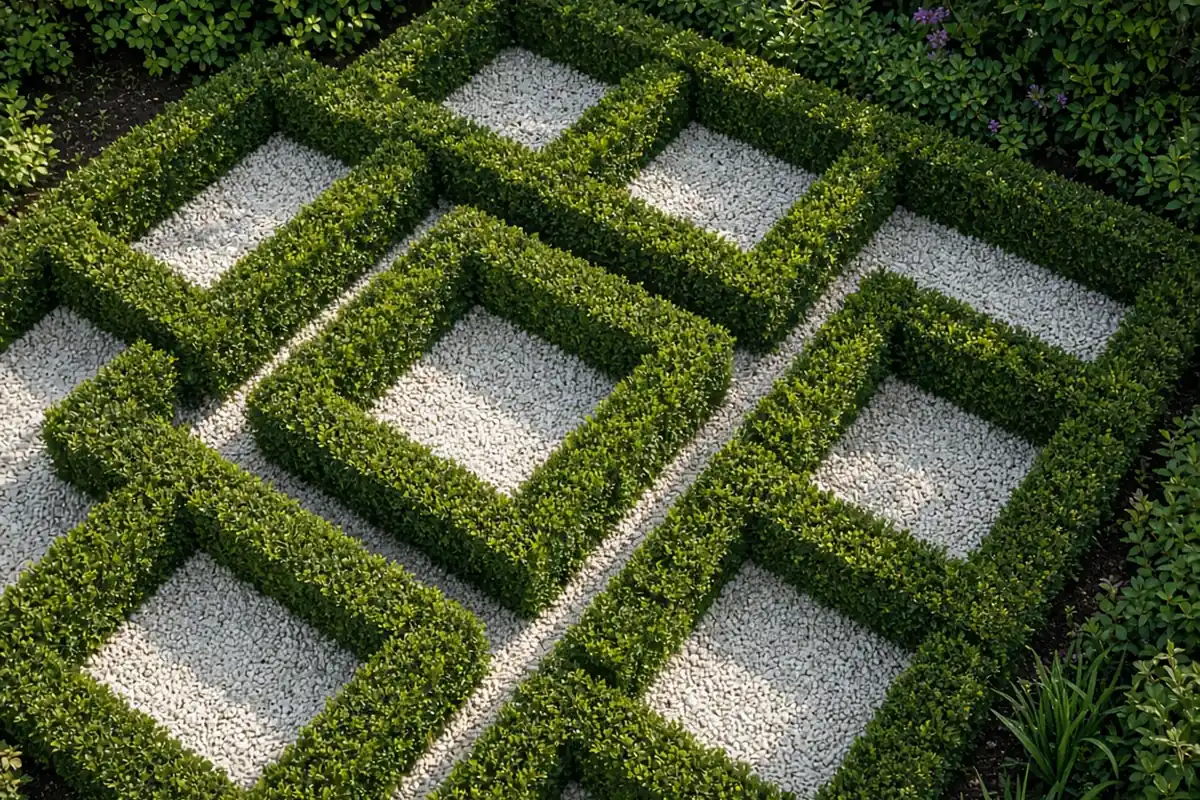
Common boxwood has dense foliage of glossy dark green leaves with a yellow green underside. NC State says the leaves are about 1 inch long and set opposite each other.
Yew bark is thin and reddish brown, becoming scaly or fibrous. New yew stems are green and turn reddish brown as they mature.
Which handles more shade?
Boxwood is the shade plant. Clemson Cooperative Extension says boxwood grows well in part shade and tolerates morning sun if it has afternoon shade.
Clemson says boxwood in full sun is more likely to suffer cold damage in winter. The most sun tolerant type is Korean boxwood.
NC State Extension says to plant yews in full sun to partial shade. Too much shade slows their growth, while too much sun can dry the plant out.
| Trait | Yew | Boxwood |
|---|---|---|
| Foliage | Short needles in flat rows | Small glossy leaves |
| Light | Full sun to partial shade | Part shade, afternoon shade |
| Deer | Not rated in source | Generally tolerant |
| Hard pruning | Withstands it | Done in two steps |
Source: NC State Extension plus Clemson Cooperative Extension.
Which do deer browse less?
NC State Extension says common boxwood is generally tolerant of rabbits and deer. That makes it a frequent choice where deer roam.
The yew source does not give a deer rating. Plan on boxwood if deer pressure is high and you need a hedge you can count on.
Siting still counts for both. NC State says to shelter boxwood from winds and full winter sun, which can cause bronzing.
How to: step by step
- Check how much sun the hedge line gets.
- Choose boxwood for afternoon shade or deer.
- Choose yew for sunnier spots plus hard cuts.
- Space yews 6 to 12 feet apart.
- Site boxwood away from downspouts.
- Prune both on a regular schedule.
Troubleshooting
Bronzed boxwood: winter wind plus sun. Move to a sheltered spot.
Thin yew: too much shade. Give more light.
Boxwood decline: wet soil. Avoid areas that stay wet.
For related reading see deer and cannabis gardens, planning an outdoor cannabis garden layout plus cannabis leaf anatomy. Kind Seed Co also stocks cannabis seeds.
Sources
- Taxus (yew), NC State Extension Gardener Plant Toolbox
- Buxus sempervirens (common boxwood), NC State Extension Gardener Plant Toolbox
- Boxwood, Clemson Cooperative Extension HGIC
- Plants rated by deer resistance, Rutgers Cooperative Extension
FAQ
How fast does boxwood grow?
It depends on the cultivar. Clemson Cooperative Extension says boxwood grows at slow, moderate or fast rates. Dwarf cultivars grow slowly and rarely need pruning. Fast cultivars reach the desired height quickly and need pruning once or twice a year. NC State says common boxwood can slowly reach 15 to 20 feet.
Can yew be cut back hard?
Yes. NC State Extension says yews can withstand heavy pruning. Regular annual pruning holds the desired shape and density. Shelter yews from winds that can push the plant out of shape over time. Yews grow in most soils, though a slightly acid soil is preferred.
Does boxwood need full sun?
No. Clemson Cooperative Extension says boxwood grows well in part shade and tolerates morning sun as long as it has afternoon shade. Plants in full sun are more likely to have cold damage in winter. Korean boxwood is the most sun tolerant boxwood.
How are both plants pruned?
Clemson Cooperative Extension says thinning reduces branches at the outer edge of boxwood so light reaches the center. For severe pruning, cut half the plant one year and the other half the next. NC State Extension says to avoid pruning boxwood too early in spring or late in summer.
What soil does boxwood need?
Clemson Cooperative Extension says the ideal soil pH for boxwood is 6.8 to 7.5, neutral to slightly alkaline. Do not plant it with acid loving plants such as azaleas, camellias and gardenias. Never plant boxwood near downspouts or in any area that stays wet.