
Bee Yard Placement: Sun, Wind and Flight Paths for Hives
The short answer
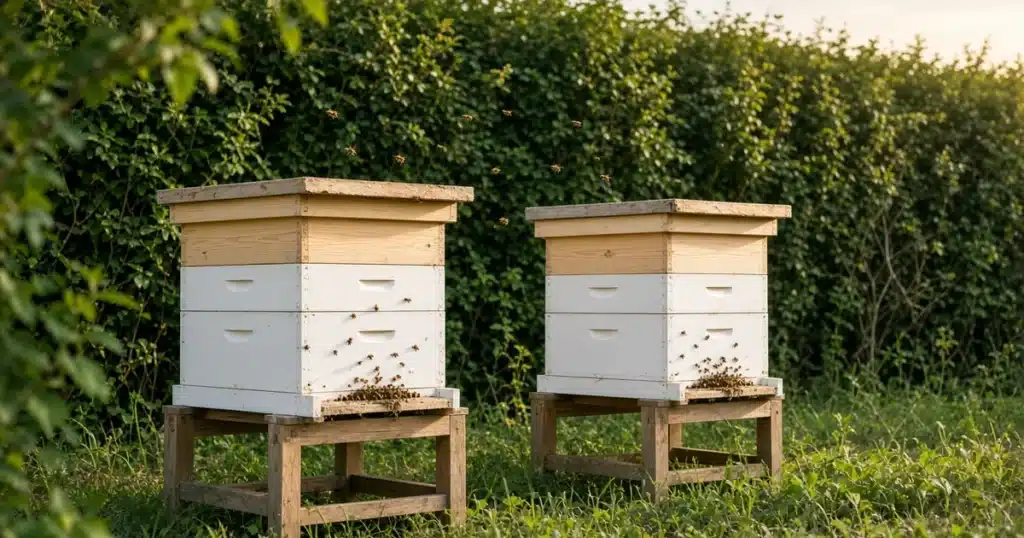
Bee yard placement comes down to sun, shelter, water and flight paths. Extension guides suggest a sunny, dry spot with entrances facing south or east, a windbreak on the north side and water nearby. Face hives away from paths and neighbors, or use a 6 foot fence or hedge to lift bees overhead.

Where should you put a backyard beehive?
Look at the ground first. The Mid Atlantic Apiculture Research and Extension Consortium (MAAREC) at the University of Delaware says an apiary needs dry ground and good air drainage. It says to avoid windy, exposed hilltops, sites near a river that might flood, heavily shaded woods and damp bottom land. Mississippi State adds to avoid spots close to drainage ditches and creeks.
Access matters. MAAREC calls accessibility perhaps the most important factor, because you must visit the hives in all kinds of weather and carry heavy supers of honey. It also says hives should be secluded from traffic, constant noise and disturbance from animals and children.
For a wider look at fitting features into a yard plan, see planning an outdoor cannabis garden layout.
How do sun and wind affect hive placement?
MAAREC says bees are less irritable and easier to handle in the open with plenty of sunshine. Shade from trees slows worker flights, and colonies kept in shade tend to be more defensive. A southern or easterly exposure gives colonies the most sunshine through the day.
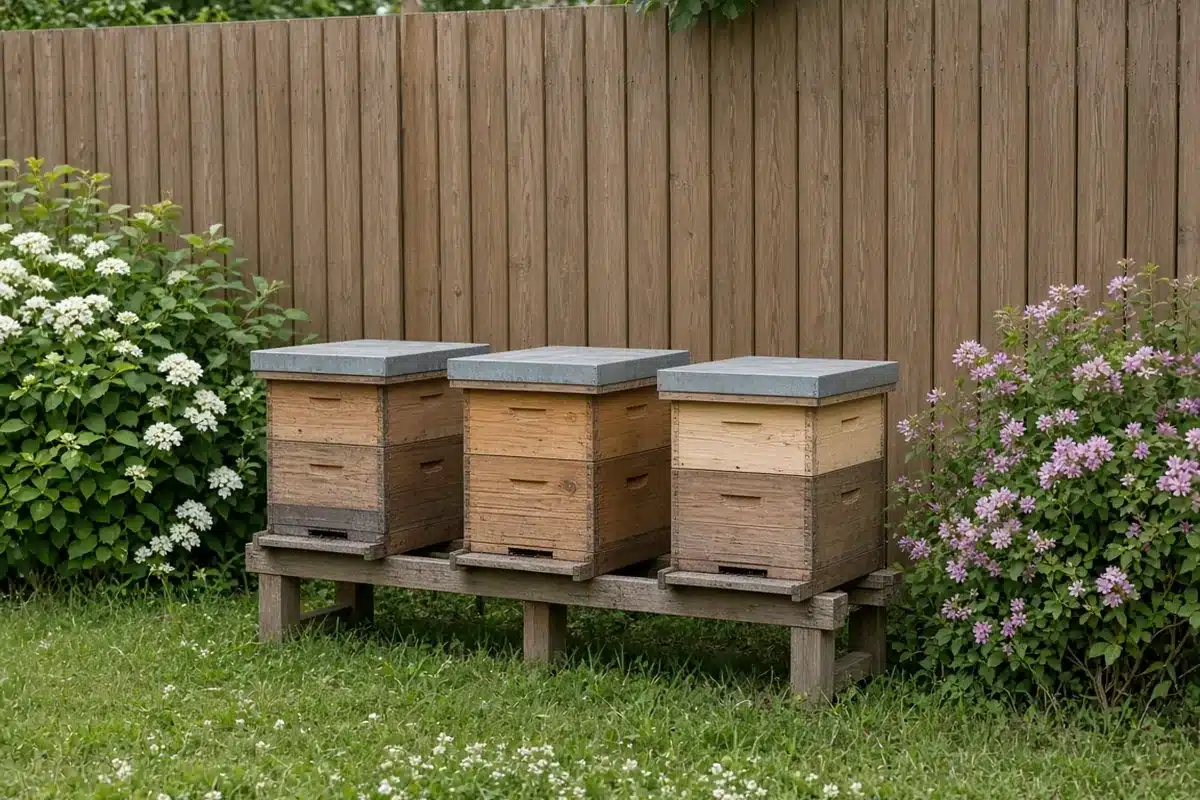
Mississippi State says entrances should ideally face between south and east. An east facing entrance means earlier foraging flights, and a south facing entrance gives longer foraging in cooler months. A line of trees, shrubs or a building on the north side gives a winter windbreak and reduces losses from chilling.
Full sun has tradeoffs in hot, humid areas. Mississippi State says full sun can slow small hive beetles and Varroa mites but makes bees work harder to cool the hive in summer. Each beekeeper has to weigh those two stresses. For how sun and shelter shift across a yard, see garden microclimates for cannabis.
| Factor | Good spot | Avoid |
|---|---|---|
| Sun | Open site, south or east exposure | Heavily shaded woods |
| Wind | Windbreak on the north side | Exposed hilltops |
| Ground | Dry ground, good air drainage | Flood plains, damp bottom land |
| Water | Steady source near the hives | Neighbors’ pools and birdbaths |
| Flight path | Barrier at least 6 feet high | Entrances facing paths or play areas |
Sources: MAAREC, University of Delaware, Mississippi State University Extension, UF/IFAS Extension.
How do you manage bee flight paths?
MAAREC says most colonies have a basic flight pattern as they leave and return, so keep people out of it. It advises not letting hives face children’s play areas, neighbors’ clotheslines or houses. A hedge or fence at least 6 feet high forces bees to fly above head level and also screens hives from view.
UF/IFAS Extension says that when hives sit within about 25 feet of a property line, a flyway barrier is advisable. The ideal barrier is at least 6 feet high, made of a solid wall, fence, dense plants or a mix, and extends 10 or more feet beyond the colonies in each direction.
Water is part of the plan. UF/IFAS says a water source should be available all year so bees don’t gather at swimming pools. Options include a tub with wood floats or a faucet left to drip steadily. Bees help gardens in many ways. See what roles do bees play in outdoor cannabis.
How to: step by step
- Plan the spot before bees arrive.
- Pick dry, open ground with sun and easy access.
- Face entrances south or east.
- Put a windbreak on the north side.
- Set up a water source before bees arrive.
- Face entrances away from paths and neighbors.
- Add a fence or hedge at least 6 feet high to lift flight paths.
Troubleshooting
Bees bothering neighbors: low flight path. Add a barrier at least 6 feet high in front of the entrance.
Damp hive: low, wet spot. Move it to drier ground with good air drainage.
Bees at a neighbor’s pool: no nearby water. Add water near the hives early. Mississippi State says once bees fixate on a pool it can be almost impossible to stop, and moving the bees may be needed.
Defensive bees: too much shade or disturbance. Move hives into the open and away from traffic.
Plan the spot before the bees
Choose dry, sunny ground with a windbreak, water and a raised flight path, and the bees and neighbors both benefit. The Kind Seed Co blog has more garden help for plants beyond cannabis.
Sources
- Choosing an apiary location, Mississippi State University Extension
- Apiary location, MAAREC, University of Delaware
- Siting honey bee colonies: good neighbor guidelines (AA137), UF/IFAS Extension
FAQ
How far should hives be from a property line?
UF/IFAS Extension says that when hives sit within about 25 feet of a property line, a flyway barrier at least 6 feet high is advisable. It should extend 10 or more feet beyond the hives in each direction.
Do hives need full sun?
Sun helps. MAAREC says bees in the open are less irritable and colonies in shade tend to be more defensive. Mississippi State notes that in hot, humid summers full sun makes bees work harder to cool the hive, so some beekeepers accept a little afternoon relief.
Which direction should a hive face?
Between south and east. Mississippi State University Extension says an east facing entrance gives earlier foraging flights and a south facing entrance gives longer foraging in cooler months. Avoid pointing entrances at paths, play areas, clotheslines or a neighbor's house.
How many hives fit a backyard?
It depends on space. UF/IFAS Extension says a typical urban or backyard beekeeper maintains one to five colonies.
Do bees need a water source near the hive?
Yes. MAAREC says bees use fresh water to dilute honey, regulate hive temperature and raise brood. A tank or pan with a floating board or crushed rock gives bees a place to land. Set it up early so bees do not adopt a neighbor's pool.


