
Marginal Pond Plants: Planting the Shallow Shelf at Pond Edges
The short answer
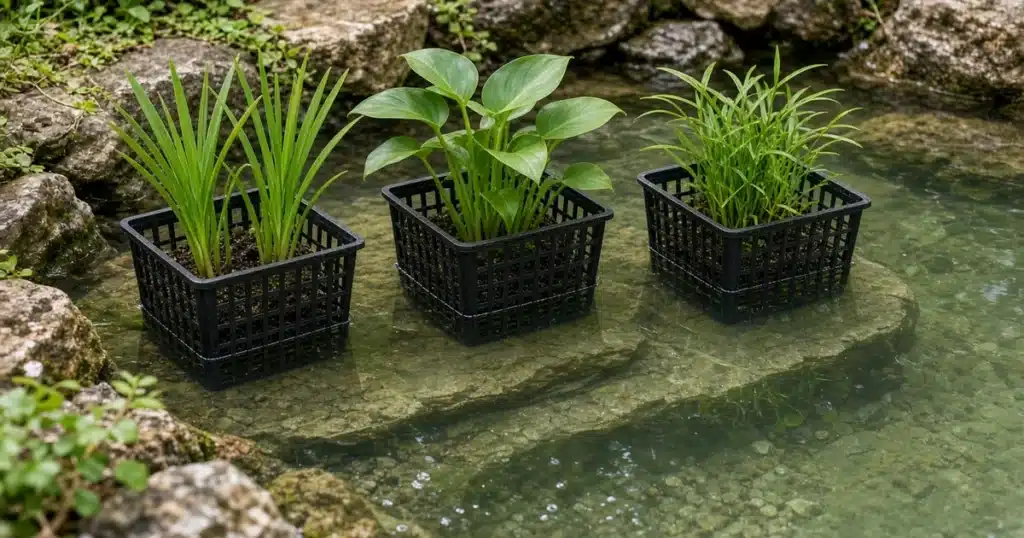
Marginal pond plants grow at the water’s edge with only a little water over their crowns. Colorado State University Extension says most marginals do well with 1 to 4 inches of water over the crown. Pot them in heavy clay loam, set them on a shallow shelf, choose native species and divide crowded plants.
What are marginal pond plants?
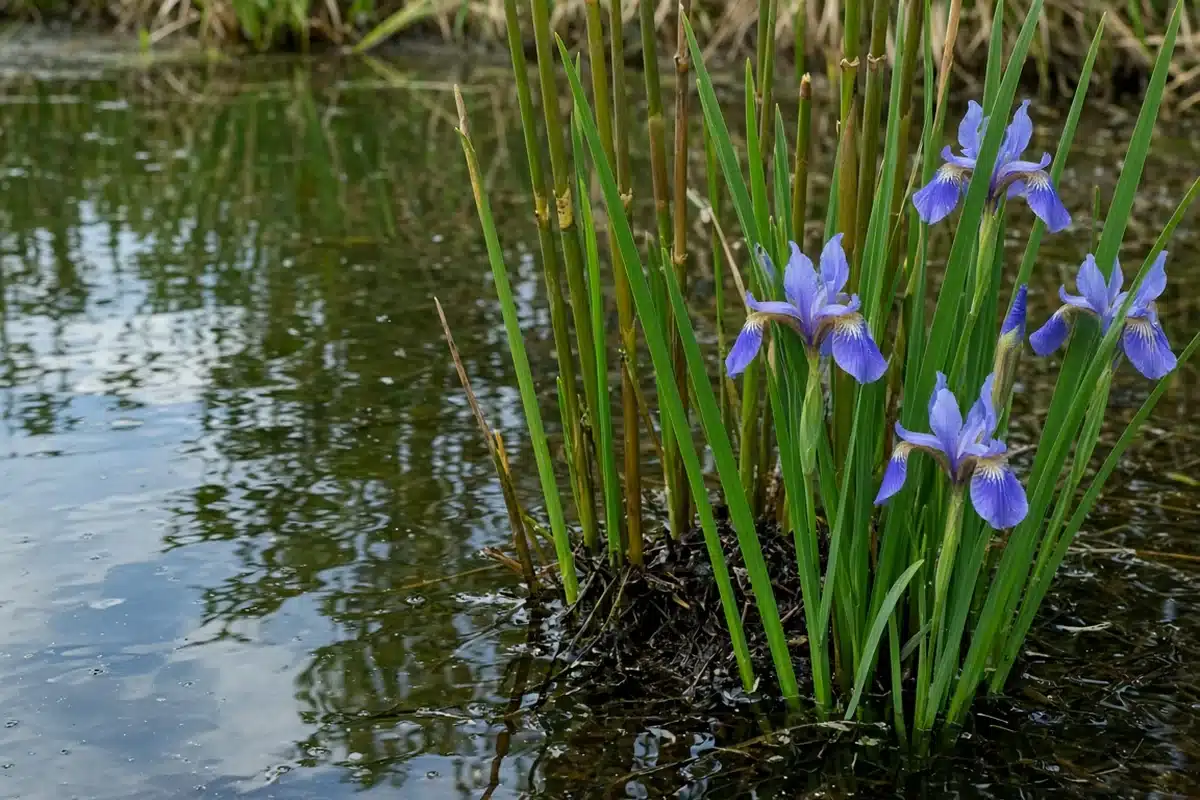
Kansas State University Research and Extension says marginal plants are planted around pond edges to naturalize borders, add texture and color and soften the look of the pond. They can go straight into gravel pockets or into pots. Kansas State lists their planting zone as the edge of the water, 1 to 8 inches deep, compared with 12 to 18 inches for shelf plants such as lotus and iris and 24 to 30 inches for water lilies.
Marginals help the pond too. Kansas State says water plants compete for nutrients that would otherwise feed algae, shade the water and provide spawning areas for fish and frogs. Other wildlife use them for cover while drinking. Clemson Cooperative Extension says plants in a wildlife pond add oxygen, shade, shelter and food and support pollinators.
How deep should marginal plants sit?
The crown sets the depth, not the pot. Colorado State says marginal plants should be planted near the center of the container with the crown just above the soil surface, and most do well with 1 to 4 inches of water over the crown. Clemson’s native plant list gives depths of 1 to 6 inches for its wildlife pond picks.
| Depth | Plant type | Notes |
|---|---|---|
| 1 to 2 inches | Dwarf crested iris, southern blue flag iris | Native picks from Clemson |
| 1 to 3 inches | Cardinal flower, golden canna, white top sedge | Native picks from Clemson |
| 1 to 6 inches | Pickerelweed, arrowhead, lizard’s tail | Native picks from Clemson |
| 1 to 8 inches | General marginal zone | Kansas State range for pond edges |
| 12 to 18 inches | Shelf plants such as lotus and iris | Deeper than most marginals |
Sources: Clemson Cooperative Extension, Kansas State University Research and Extension, Colorado State University Extension.
Kansas State notes these are general guides. Some shallow plants do fine in deeper water and some deep plants do fine in shallower water.
Which plants suit a pond shelf?
Native plants come first. Clemson says native aquatic plants benefit wildlife much more than exotic or invasive species, and warns that many aquatic plants sold for indoor aquariums should not go outdoors. Buy from a local nursery and never take plants from the wild.
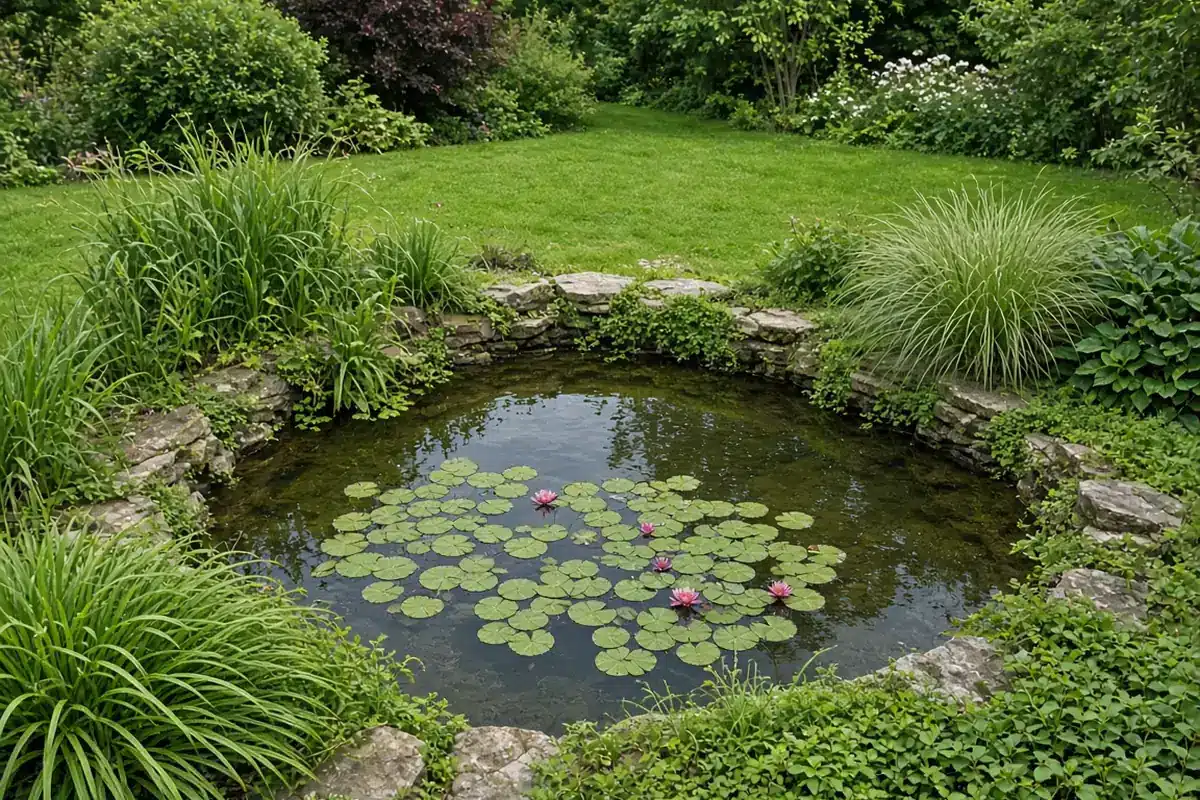
Plan for full size. Clemson says overcrowding can cause trouble in a small pond and suggests plants cover 20 to 50 percent of a wildlife pond’s surface so animals can reach the water. Clemson says wildlife ponds also do well in full sun with some midday shade. To read how sun and shade shift around a yard, see garden microclimates for cannabis.
How to: step by step
- Measure the depth of your pond shelf.
- Choose marginals suited to that depth.
- Pot plants in heavy clay loam, not light potting mix.
- Set the crown just above the soil surface.
- Place larger rocks on the soil to hold the plant in place.
- Sink the pot slowly onto the shelf.
- Divide and thin crowded plants as needed.
Colorado State says a pot 12 inches across and 10 inches deep suits most aquatics. Avoid mixes with peat, perlite or bark, which float. Clemson says fertilizer, potting mix and compost are not recommended in a wildlife pond because added nutrients can cause algae blooms. If you also use pond water on garden plants, read pond water for cannabis.
Troubleshooting
Plants floating out of pots: light mix. Repot in heavy clay loam and add larger rocks on top.
Crowns rotting or stalling: too deep. Raise the pot so only 1 to 4 inches of water covers the crown.
Algae blooms: extra nutrients. Clemson suggests flushing the pond with new water and skipping fertilizer and compost.
Plants spreading into wild areas: invasive choice. Replace with native marginals from a local nursery.
Low water in drought: Clemson says supplemental water may be needed. Harvested rainwater works well. See rainwater for cannabis.
A softer pond edge
Set marginal plants at the right depth in heavy soil, choose natives and thin them when they crowd. The Kind Seed Co blog has more garden help for plants beyond cannabis.
Sources
- Water gardening: plants for the water garden (MF2912), Kansas State University Research and Extension
- Water gardens: planting aquatic plants (PlantTalk 1026), Colorado State University Extension
- Backyard wildlife ponds, Clemson Cooperative Extension HGIC
FAQ
Do marginal plants need fertilizer?
Rarely. Kansas State University Research and Extension says most marginal plants will flourish without supplemental fertilization. Clemson Cooperative Extension advises against fertilizer, potting mix and compost in wildlife ponds because extra nutrients can cause algae blooms. Heavy clay loam is enough.
Can marginal plants overwinter in the pond?
Many hardy ones can. Clemson says some plants die back or go dormant in freezing weather, and the dead growth can stay for winter cover. Cut it back to a few inches above the soil before new growth starts in spring. Kansas State lists winter care for each plant.
Are marginal plants good for wildlife?
Yes. Kansas State says marginals give fish and frogs spawning areas and give other wildlife cover as they drink. Clemson says native aquatic plants provide food, shelter and shade and support pollinators, and native species benefit wildlife much more than exotic ones.
How do you stop marginals from spreading?
Grow them in pots and choose native species from a local nursery. Clemson says many recommended plants have rhizomes that can be divided each year, and it advises thinning to avoid overcrowding. Avoid aquarium plants outdoors, since they can spread as invasive species.
What soil should marginal plants grow in?
Heavy soil. Colorado State University Extension says heavy clay loam is the preferred medium for aquatic plants and warns against mixes with peat, perlite or bark, which float. Clemson uses sandy loam in wildlife ponds and skips potting mix and compost to limit algae.


