Black Medic in Cannabis Beds: Clover Lookalike Weed Guide
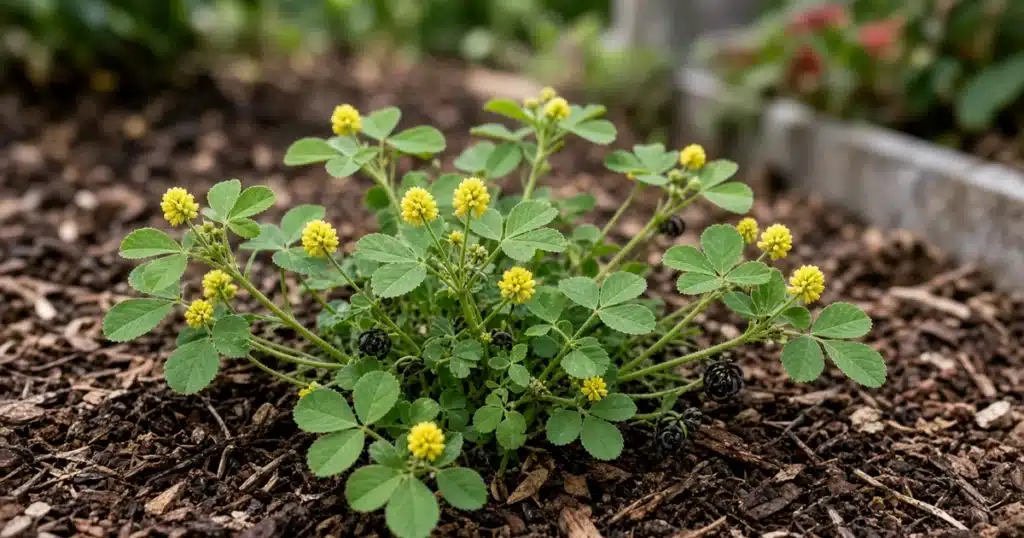
Quick answer: Black medic is a low growing legume with three leaflets, a tiny spur on the middle leaflet and round heads of small yellow flowers. NC State says it thrives in nutrient poor, dry soils. Pull or dig out its taproot before the black seed pods form, improve thin soil, and mulch bare bed edges.
What Is Black Medic?
A small legume that acts like a weed. The University of California Statewide IPM Program (UC IPM) calls black medic a low growing summer or winter annual broadleaf that sometimes behaves as a short lived perennial. It is common in turf and grows in gardens, lawns, fields, roadsides and other disturbed places.
NC State Extension places it in the bean family and says it is found in disturbed areas, lawns, fields and pastures. NC State adds that it spreads up to 2 1/2 feet across the ground. Our overview of weed control in outdoor cannabis covers the wider plan for bed edges.
How Do You Identify Black Medic?
Count the leaflets and find the spur. NC State says it has three leaflets with a spur on the center leaflet. Other traits from UC IPM and NC State:
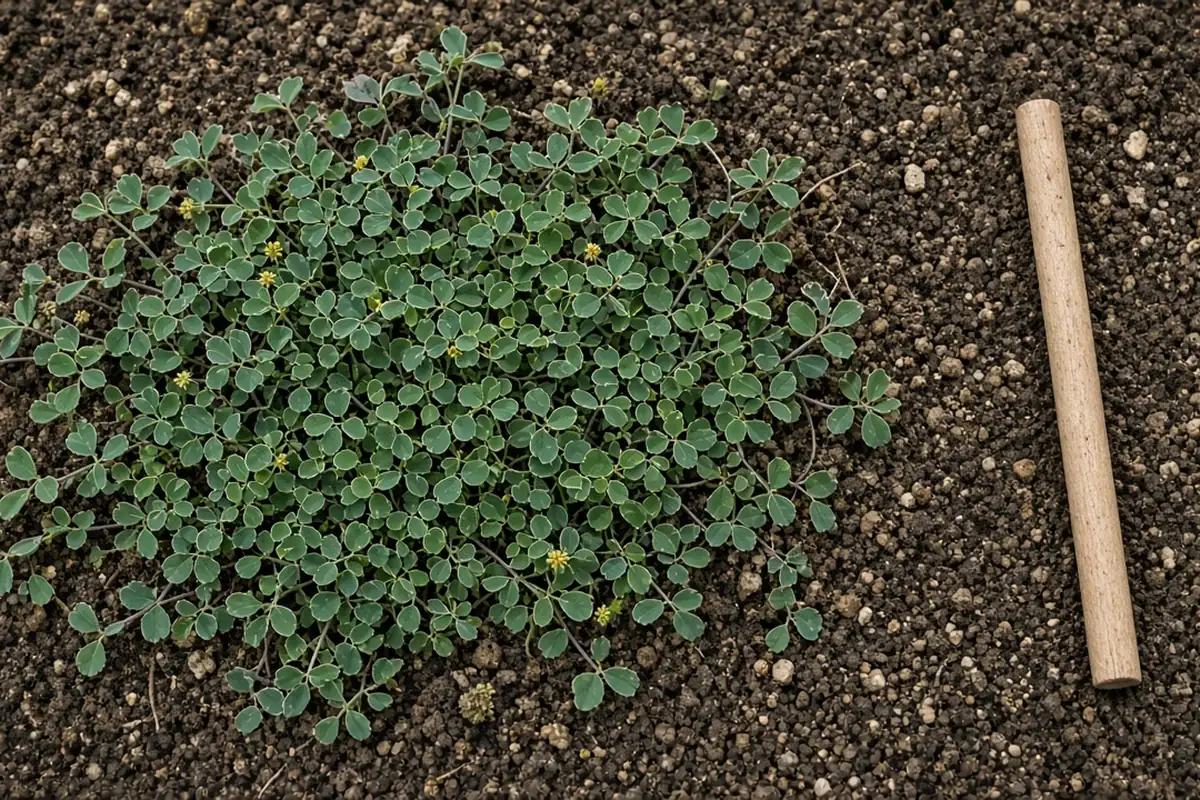
- Leaflets. Egg to heart shaped, about 2/5 to 7/10 inch long, finely toothed at the tip, per UC IPM.
- Middle leaflet. Its stalk is longer than those of the side leaflets. NC State says the outer leaflets attach directly.
- Stems. Hairy, prostrate or with upturned tips, up to about 1 1/3 feet long, per UC IPM, while NC State gives a spread of up to 2 1/2 feet.
- Flowers. Dense round heads of small yellow, pealike flowers. UC IPM says 10 to 20 per head, NC State says 15 to 50.
- Pods. Kidney shaped, strongly veined and black at maturity, each holding one seed.
UC IPM gives a bloom window of April through July.
How Is Black Medic Different From Clover?
Look at the flowers and the middle leaflet. Black medic has yellow flowers in small round heads, and its middle leaflet sits on a longer stalk than the other two, as UC IPM and NC State describe. White clover, the common lawn plant, has white flower heads.
UC IPM also compares black medic with California burclover. Black medic has hairy leaves, while burclover leaves are nearly hairless, and the small structures at the leaf stalk base are not deeply lobed on black medic. The black, kidney shaped pods give black medic its name.
What Does Black Medic Say About Your Soil?
Often, that it is low in nutrients. NC State says black medic thrives in nutrient poor and dry soils, and also lists moist to mesic conditions. A patch along a bed edge may point to thin soil, so test before amending.
Our guide to soil testing for cannabis explains how to check nutrients before you plant. NC State notes that its root system includes a coarse, branched taproot that can form nodules and add nitrogen to the soil.
Can Black Medic Arrive in Seed?
Yes. UC IPM says black medic is good forage and is sometimes grown for pasture or as a cover crop, but its seed is a common contaminant in commercial alfalfa and clover seed. If you sow legumes on empty beds over winter, buy clean, tested seed.
Our guide to cover crops for cannabis covers clover and other off season options. Checking the seed label for weed seed content is a simple way to avoid bringing black medic into clean beds.
When Should You Remove Black Medic?
Before the pods turn black. UC IPM says it flowers from April through July, and each flower head becomes a cluster of one seeded pods. NC State says the plant forms dense clusters of seed pods after flowering, which helps it spread.
UC IPM’s landscape guide says to remove young weeds by hand before they flower and set seed. For black medic, start in early spring and pull plants before the first yellow heads open, using a tool that lifts the taproot.
Does Black Medic Die Out in Summer?
It can be short lived, but do not count on it. UC IPM calls it a summer or winter annual that sometimes behaves as a short lived perennial, so its timing varies by region. NC State lists it as both annual and perennial.
That variability is exactly why steady checks matter more than timing tricks. Walk bed edges regularly in spring and early summer, and pull plants before they flower and drop seed.
How to Control Black Medic Around Cannabis Beds

- Confirm the ID. Look for three leaflets with a spur on the middle one and yellow round flower heads, as NC State describes.
- Water the day before. Moist soil makes it easier to lift the taproot.
- Lift the whole taproot. NC State says hand pulling or weeding tools that remove the large taproot are needed.
- Pull before black pods form. UC IPM says it flowers April through July, followed by black pods.
- Improve thin, dry soil. NC State says it thrives in nutrient poor, dry soil. As general garden practice, add compost and water evenly.
- Buy clean legume seed. UC IPM says black medic seed is a common contaminant in alfalfa and clover seed.
- Mulch bed edges. UC IPM recommends a medium mulch 3 to 4 inches deep. Our guide to mulch for cannabis compares options.
Black Medic at a Glance

| Subject | Extension finding | Attribution |
|---|---|---|
| Life cycle | Summer or winter annual, sometimes short lived perennial | UC IPM |
| Family | Bean family | NC State |
| Key trait | Spur on the middle leaflet | NC State |
| Flowers | Small round yellow heads | UC IPM, NC State |
| Bloom period | April through July | UC IPM |
| Favored soil | Nutrient poor, dry | NC State |
Should You Use Herbicides Near Cannabis?
No. Pull, hoe shallowly and mulch. If herbicides ever come up for other parts of your property, follow the label exactly. Remember that EPA has not registered any herbicide for use on marijuana, and state rules vary, so check with your state agriculture department. UC IPM says home gardeners who hand weed and mulch should not need herbicides. Before you plant cannabis outdoors, check your state’s home grow law.
Troubleshooting Black Medic
It breaks off at the soil. NC State notes a large taproot. Use a weeding tool and lift it from moist soil.
Patches return in the same thin strip. NC State says it thrives in nutrient poor soil. Improve the soil there.
It appeared after sowing clover. UC IPM says its seed is a common contaminant in clover and alfalfa seed. Buy tested seed.
You cannot tell it from clover. Check flower color and the middle leaflet stalk, as UC IPM describes.
Pods already turned black. Pull and bag the plant so pods do not fall on the bed.
At Kind Seed Co, we read low weeds like black medic as a sign the soil may be thin or dry, and a reason to test before amending.
Frequently Asked Questions
What does black medic look like?
NC State says black medic has three leaflets with a small spur on the center leaflet and yellow flowers in a rounded cluster. UC IPM adds that the stems are hairy and spread along the ground up to about 1 1/3 feet. The pods are kidney shaped and turn black when mature.
Is black medic a type of clover?
It is a clover lookalike in the bean family, not a true clover. NC State places it in the bean family, and UC IPM says it is sometimes grown for pasture or as a cover crop. Its yellow flower heads and the longer stalk on its middle leaflet help set it apart from white clover.
Why does black medic grow in my garden?
NC State says black medic thrives in nutrient poor and dry soils, though it also grows in moist to mesic conditions, so it often shows up along thin bed edges and paths. UC IPM says its seed is also a common contaminant in alfalfa and clover seed. Improving the soil and buying clean seed both help keep it out.
How do I remove black medic?
Pull or dig it with a tool that lifts the whole taproot, as NC State recommends. Work after watering so the root slides out. Remove plants before the black pods form, since UC IPM says flowering runs from April through July. Then mulch the bare soil and improve thin, dry spots.
Does black medic add nitrogen to the soil?
It can. NC State says black medic has a coarse, branched taproot that can form nodules and add nitrogen to the soil. That does not make it welcome in cannabis beds. UC IPM says it flowers from April through July and sets black seed pods, so pull it with its taproot before the pods form.
Sources
- UC Statewide IPM Program, Black Medic, Weed Gallery: https://ipm.ucanr.edu/weeds-identification-gallery/black-medic/
- NC State Extension Gardener Plant Toolbox, Medicago lupulina: https://plants.ces.ncsu.edu/plants/medicago-lupulina/
- UC Statewide IPM Program, Weed Management in Landscapes: https://ipm.ucanr.edu/home-and-landscape/weed-management-in-landscapes/