Jimsonweed in Cannabis Gardens: A Toxic Weed to Remove Early
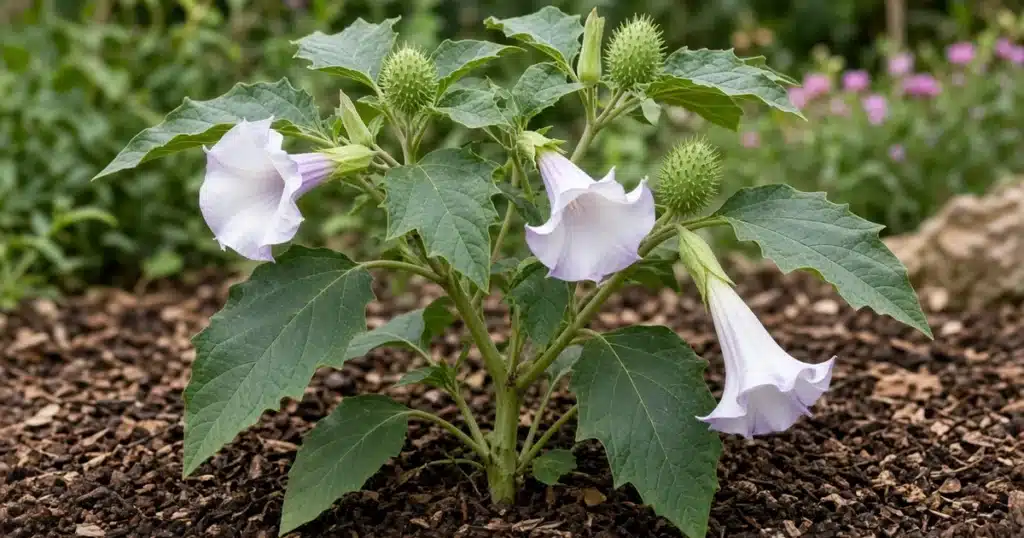
Quick answer: Jimsonweed is a summer annual with large trumpet shaped flowers, foul smelling leaves and spiny, egg shaped seed pods. UC IPM says all its parts, especially the seeds, are toxic if eaten. Wear gloves, pull or hoe young plants before they flower, remove plants before pods form, and keep children and pets away.
What Is Jimsonweed?
A fast growing, toxic annual in the nightshade family. NC State Extension says jimsonweed is among the most prevalent weeds, now widely spread across the US, and is commonly found in disturbed areas, roadsides, open fields, pastures and crop margins. The University of California Statewide IPM Program (UC IPM) calls it a summer annual broadleaf that is a strong competitor for water and grows rapidly.
University of Maryland Extension says it is mainly a weed of open fields and grows on all soils but prefers nutrient rich ones. Our overview of weed control in outdoor cannabis covers the wider plan for garden weeds.
How Do You Identify Jimsonweed?
Note the odor, but do not handle or sniff the leaves. UC IPM says leaves have an unpleasant odor when bruised, and NC State says crushed stems and leaves produce a very foul odor. Other traits:

- Height. UC IPM gives 1 3/4 to 4 feet. Maryland gives 2 to 4 feet.
- Stems. Coarse, often deep violet, with mostly forked branches, per UC IPM.
- Leaves. About 3 to 8 inches long, puckered between veins, with wavy toothed or lobed edges.
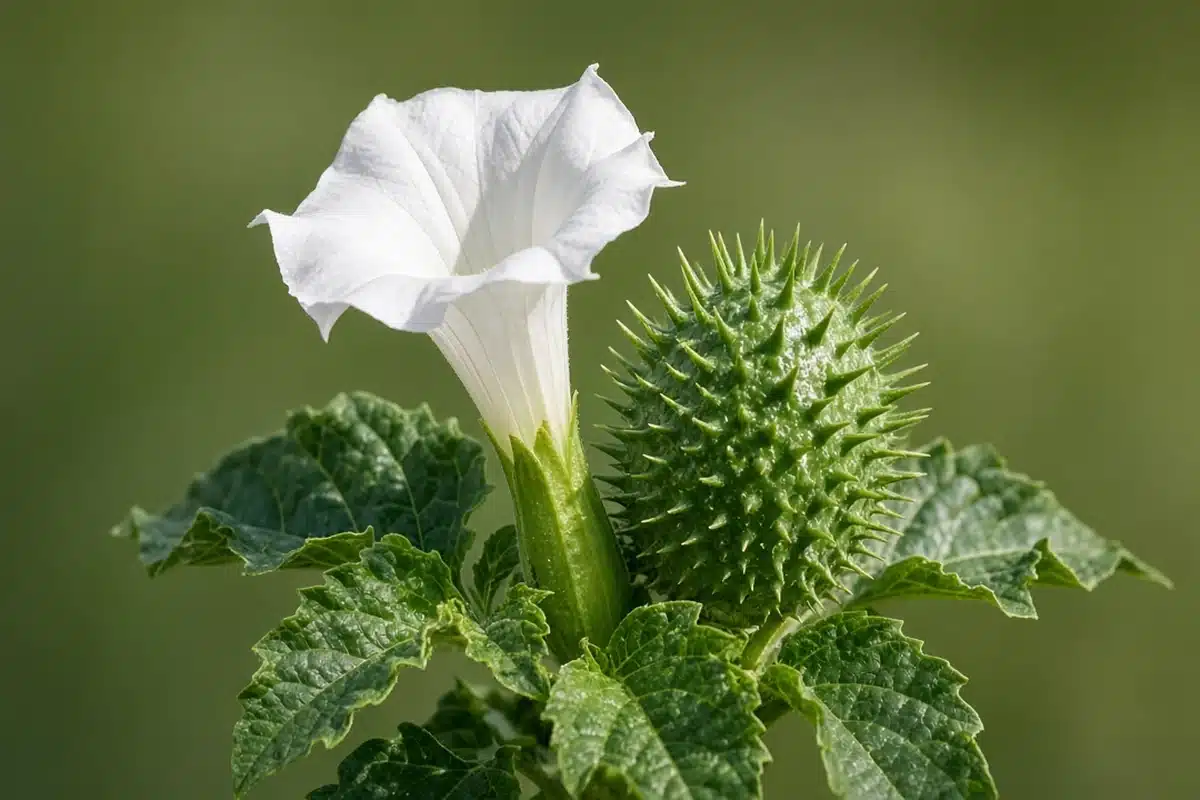
- Flowers. Single, showy, white trumpet shaped flowers 2 to 4 inches long, June through September. Maryland says they can be lavender on purple stemmed plants.
- Pods. Egg shaped, 1 1/2 to 2 inches long, covered with stout spines, opening into four sections.
NC State says the flowers bloom at night and wilt by the next day.
Why Is Jimsonweed Dangerous?
It is toxic. UC IPM says all parts of the plant, particularly the seeds, contain alkaloids and are toxic to humans and livestock when eaten. NC State says it is dangerous for humans, pets and livestock if ingested, advises keeping it away from small children and pets, and notes that the sap can cause skin irritation.
That makes jimsonweed a weed to remove early and handle carefully. NC State recommends protective clothing and gloves when handling the plant.
Why Does Jimsonweed Matter in a Cannabis Garden?
It competes and it seeds. UC IPM says jimsonweed is a strong competitor for water and grows rapidly, which puts it in direct competition with cannabis in summer. NC State says it produces many seeds that can stay viable in the soil for years.
NC State also says it has a taproot that can make large plants hard to remove by hand. Small plants pulled early come out much more easily than a 4 foot plant in August.
When Should You Remove Jimsonweed?
Before it flowers. Maryland recommends manual cultivation before flowering occurs and seeds form, and regular mowing in open areas to prevent flowering. UC IPM gives a bloom window of June through September, with spiny pods following the flowers.
Regular hoeing in late spring and early summer catches seedlings. UC IPM says seedlings have long, narrow, lance shaped seed leaves and a hairy stalk that is usually deep violet, which helps you spot them.
How Should You Dispose of Jimsonweed?
Bag it, always. UC IPM says all parts are toxic, especially the seeds. As our own practice, we suggest never leaving pods on the ground or adding them to compost. Bag plants and pods and put them out with household trash where allowed.
Wash gloves and tools afterward. Our guide to composting cannabis garden waste covers what belongs in your pile, and jimsonweed does not.
Can Jimsonweed Seed Last in the Soil?
For years. NC State says jimsonweed produces many seeds that can remain viable in the soil for years. UC IPM describes the seeds as tiny, about 1/10 inch, brown to black and kidney shaped, with a wrinkled or pitted surface under magnification.
Each spiny pod splits into four sections when ripe, so one missed plant can seed a bed for several seasons. Pull plants every year before pods form, and check the same spots each spring. Clearing late plants during your fall garden cleanup after cannabis harvest keeps the last pods of the season off the ground.
How to Remove Jimsonweed Safely

- Wear gloves and long sleeves. NC State recommends protective clothing because the sap can irritate skin.
- Keep children and pets away. UC IPM and NC State say all parts are toxic if eaten.
- Hoe seedlings early. Look for violet seedling stalks and long narrow seed leaves, as UC IPM describes.
- Pull before flowering. Maryland recommends cultivation before flowers and seed form.
- Dig larger plants. NC State says the taproot can make big plants hard to pull.
- Bag plants and pods. Never compost them or leave pods on the soil.
- Mulch and recheck. Cover cleared soil with 3 to 4 inches of mulch, as UC IPM advises. Our guide to mulch for cannabis compares options.
Jimsonweed at a Glance
| Subject | Extension finding | Attribution |
|---|---|---|
| Life cycle | Summer annual | UC IPM, Maryland |
| Height | About 1 3/4 to 4 feet | UC IPM |
| Flower | White or lavender trumpet, 2 to 4 inches | UC IPM, Maryland |
| Bloom period | June through September | UC IPM |
| Pod | Spiny, egg shaped, 1 1/2 to 2 inches | UC IPM |
| Hazard | All parts toxic if eaten | UC IPM, NC State |
Should You Use Herbicides Near Cannabis?
No. Pull, hoe shallowly and mulch. If herbicides ever come up for other parts of your property, follow the label exactly. Remember that EPA has not registered any herbicide for use on marijuana, and state rules vary, so check with your state agriculture department. UC IPM says home gardeners who hand weed and mulch should not need herbicides. Before you plant cannabis outdoors, check your state’s home grow law.
Troubleshooting Jimsonweed
Your skin itches after weeding. NC State says the sap can irritate skin. Wear gloves and sleeves and wash promptly.
A big plant will not come out. NC State notes a taproot. Dig around it after watering.
Pods already formed. Cut and bag them carefully so seed does not fall.
Seedlings return each year. NC State says seed stays viable in soil for years. Hoe every spring and never let plants seed.
Pets are near the patch. Remove the plants right away. UC IPM and NC State say all parts are toxic if eaten.
At Kind Seed Co, we wear gloves and bag every toxic weed we pull.
Frequently Asked Questions
Is jimsonweed poisonous?
Yes. UC IPM says all parts of jimsonweed, particularly the seeds, contain alkaloids and are toxic to humans and livestock when eaten. NC State says it is dangerous to people, pets and livestock if ingested and that the sap can irritate skin. Wear gloves when you handle it and keep children and pets away.
How do I identify jimsonweed?
UC IPM says it is a summer annual 1 3/4 to 4 feet tall with deep violet stems, large puckered leaves with wavy edges and single white trumpet shaped flowers 2 to 4 inches long. Its egg shaped pods are covered in stout spines. Crushed leaves have a foul odor, NC State adds.
When does jimsonweed flower?
UC IPM says jimsonweed flowers from June through September. NC State says the flowers bloom at night and wilt by the next day, so you might miss them. Spiny pods follow the flowers. Remove plants before they flower, as University of Maryland Extension recommends, to keep pods and seed out of your garden.
How should I get rid of jimsonweed?
Wear gloves, then pull or hoe young plants before they flower. Dig larger plants, since NC State says the taproot makes them hard to pull. Bag plants and pods instead of composting them, and wash tools and gloves afterward. Check again each spring, because seed can stay viable in the soil for years.
Where does jimsonweed usually grow?
NC State says jimsonweed is commonly found in disturbed areas, along roadsides, open fields, pastures and the margins of crop fields. UC IPM adds vegetable crop land, orchards, ditchbanks and livestock enclosures. In a garden, check freshly worked beds and bare edges, and wear gloves when you remove it.
Sources
- UC Statewide IPM Program, Jimsonweed, Weed Gallery: https://ipm.ucanr.edu/weeds-identification-gallery/jimsonweed/
- NC State Extension Gardener Plant Toolbox, Datura stramonium: https://plants.ces.ncsu.edu/plants/datura-stramonium/
- University of Maryland Extension, Jimsonweed: https://extension.umd.edu/resource/jimsonweed