
Garden Around a Lamp Post: Small Round Beds at the Base
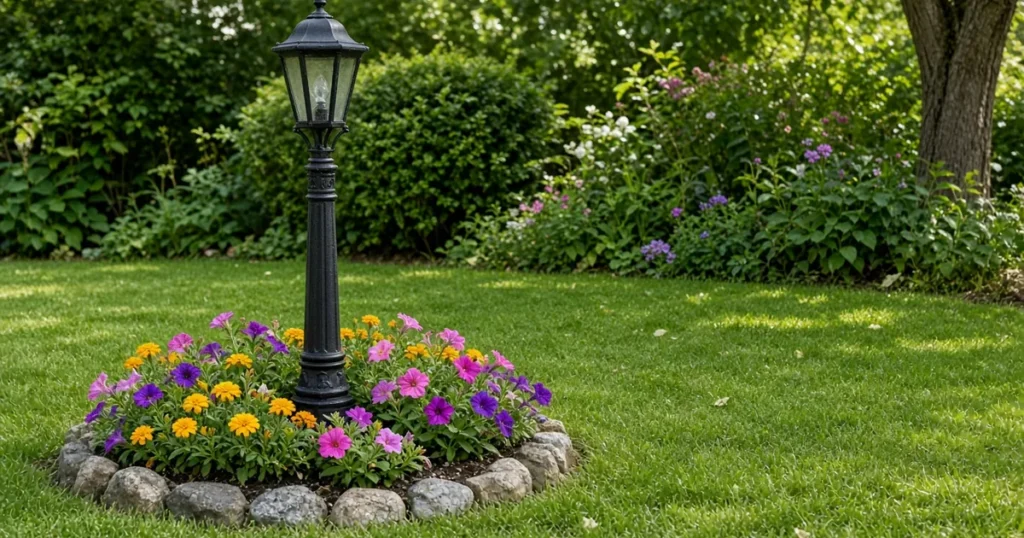
A garden around a lamp post is a small round bed that frames the post with low plants. Clemson Cooperative Extension notes plants near an entrance should be low for visibility plus look good year round, while University of Wisconsin Extension covers how deep to lay mulch.
The short answer
A garden around a lamp post works as a small round bed with low plants that stay below the lamp. Dig gently by hand near the post. UF/IFAS advises working 1 to 3 inches of compost into the top 3 to 4 inches of soil. Mulch about 3 inches deep.
Which plants suit a lamp post bed?
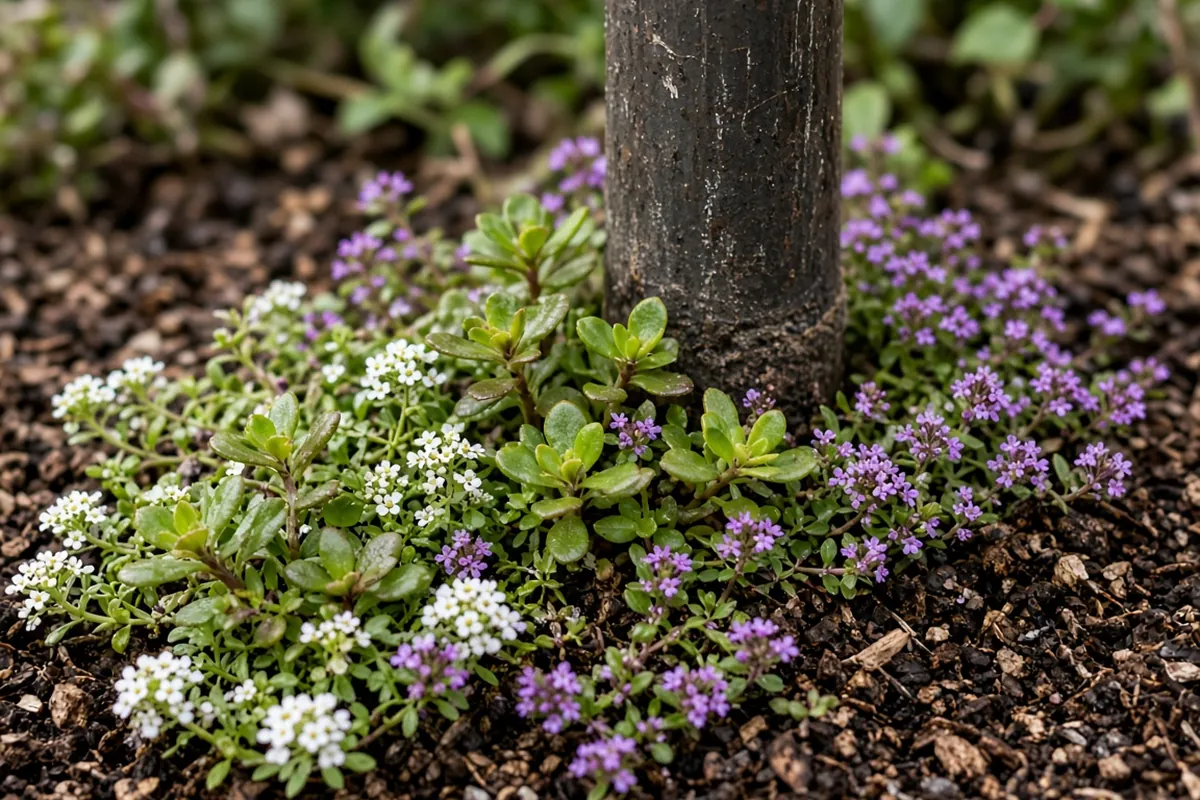
Clemson notes plants near an entrance should be low to avoid a hemmed in feeling plus to aid visibility. It also advises choosing plants that look interesting year round, since they are seen up close. Low perennials, annuals plus a few evergreens fit a small round bed.
| Factor | Choice | Why |
|---|---|---|
| Plant height | Low | Visibility near entrances, per Clemson |
| Year round look | Some evergreens | Seen up close, per Clemson |
| Compost | 1 to 3 inches worked in 3 to 4 inches | UF/IFAS |
| Mulch depth | About 3 inches | Wisconsin |
| Bed shape | Gentle curve | Curves read as restful, per Clemson |
Source: Clemson, UF/IFAS plus University of Wisconsin Extension.
How do you prepare the soil?
UF/IFAS advises applying 1 to 3 inches of compost to the soil surface plus working it in to a depth of about 3 to 4 inches before planting. Near the post, work the soil by hand.
How should the bed be shaped?
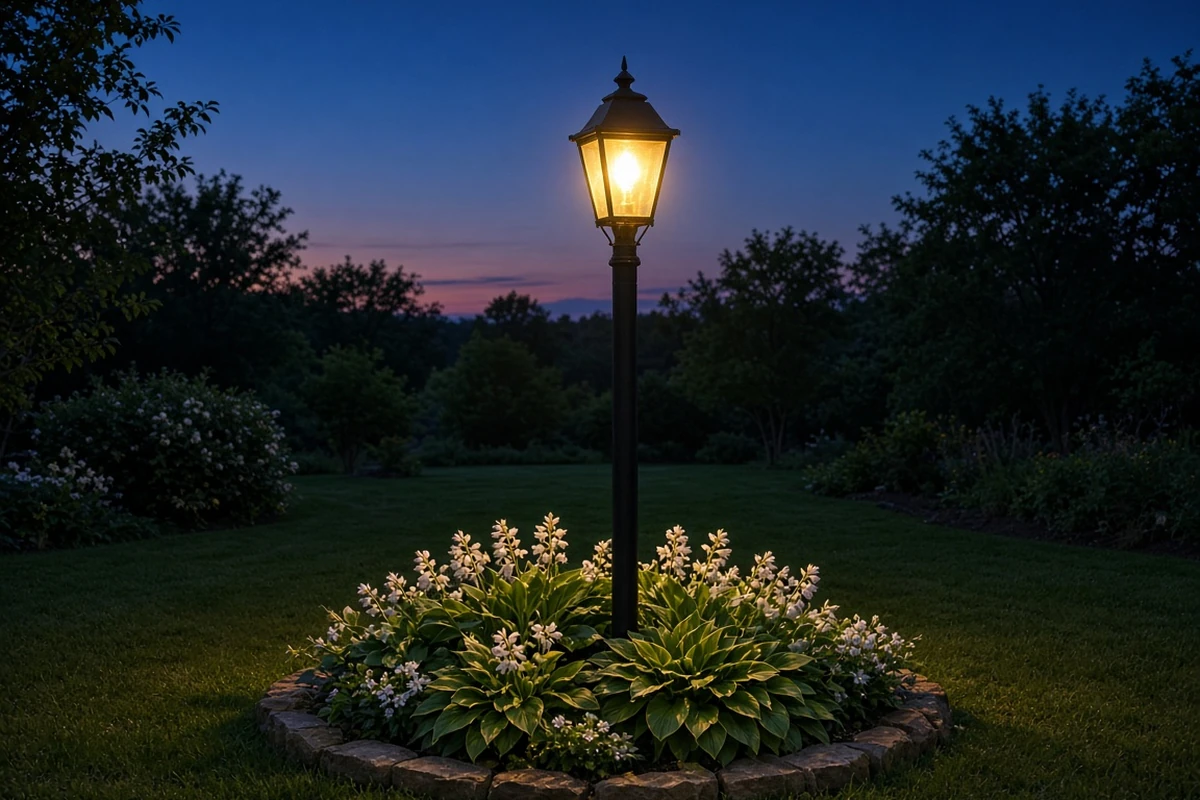
Clemson notes gentle, slow curves read as restful in a garden. A round bed echoes the post plus makes mowing around it easier. Size it to match the plants you choose.
How to: step by step
- Hand dig the ring of soil around the post.
- Mark a small round bed around the post.
- Loosen soil plus mix in compost.
- Plant low perennials or annuals.
- Choose plants that stay below the lamp.
- Mulch plus water until roots settle.
Troubleshooting
Plants block the light: too tall. Choose shorter kinds.
Plants dry fast: small bed in sun. Wisconsin notes organic mulch buffers soil temperature. Mulch plus water.
Bed looks bare in winter: annuals only. Clemson advises plants with year round interest near entrances. Add evergreens.
For outdoor planning see garden microclimates for cannabis, planning an outdoor cannabis garden layout plus mulch for cannabis. Kind Seed Co also stocks cannabis seeds.
Sources
- Foundation plantings, Clemson Cooperative Extension HGIC
- How to use compost, UF/IFAS Extension Sarasota County
- Mulches for home gardens and plantings, University of Wisconsin Extension Horticulture
- Dividing perennials, University of Minnesota Extension
FAQ
How deep should mulch go in a lamp post bed?
University of Wisconsin Extension advises applying most organic mulches about 3 inches deep over the soil. Low growing plants get a thinner layer of 1½ to 2 inches. Pull mulch back from plant stems plus from the post so water drains away from the base of the fixture.
Which mulch suits a small round bed?
Wisconsin lists bark chips, shredded leaves, compost plus pine needles among organic mulches. It notes organic mulch buffers soil temperature by holding the ground cooler by day plus warmer at night. Shredded bark or compost looks tidy in a small bed plus breaks down to feed the soil.
What shape suits a lamp post bed?
Clemson Cooperative Extension notes gentle, slow curves read as restful in a garden. A round bed echoes the shape of the post plus makes mowing around it easier. Size the bed to suit the plants you choose so low perennials or annuals fill it without crowding the post.
How much compost should go in the bed?
UF/IFAS advises applying 1 to 3 inches of compost to the soil surface plus working it in to a depth of about 3 to 4 inches before planting. Compost adds organic matter, which UF/IFAS notes is critical for plant growth. Mix it in gently by hand near the post.
When should perennials in a post bed be divided?
University of Minnesota Extension notes spring is a good time to divide plus move perennials. After a few years many perennials grow crowded, plus dividing gives roots more space plus manages plant size. Lift clumps that outgrow the small bed plus replant pieces elsewhere in the garden.


