Hosta vs Heuchera: Shade Plus Foliage Compared
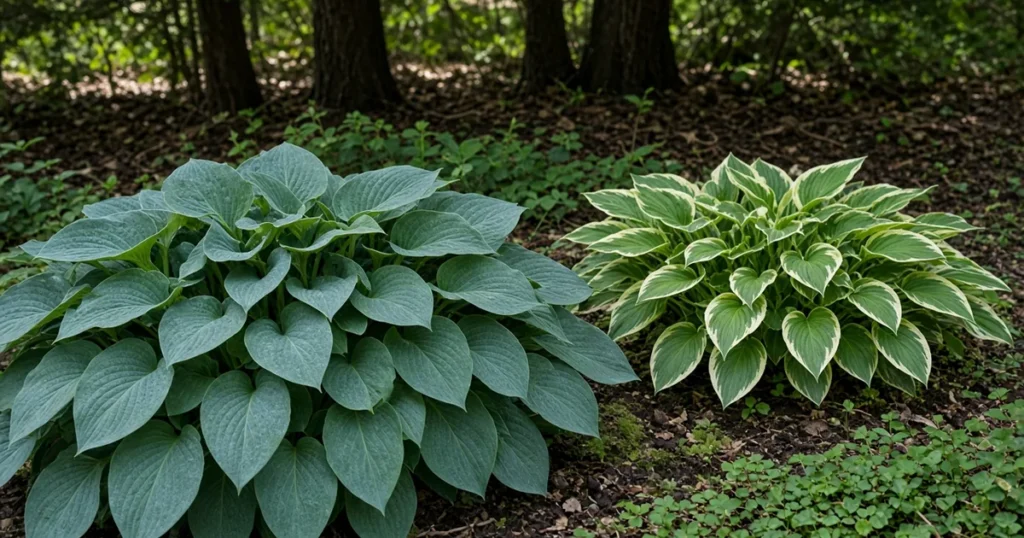
The hosta vs heuchera choice mostly comes down to light. University of Minnesota Extension notes that hostas thrive in filtered or dappled shade plus can survive deep shade. Iowa State University Extension notes that most heuchera grow well in partial shade to full sun in moist, well drained soil.
The short answer
Hostas are shade perennials with broad leaves that form mounds from a few inches to several feet across. Heuchera, also called coral bells or alumroot, is a smaller perennial grown for colorful foliage. It handles more sun. Both need well drained soil plus attract hummingbirds with their flowers.
How much sun does each need?
UMN Extension notes that hostas can survive in deep shade with less than 4 hours of sun a day. Yellow plus gold hostas gain from 2 to 3 hours of morning sun for richer leaf color.
NC State Extension notes that heuchera can be grown in sun or shade depending on the variety. Many varieties show their richest leaf color in full sun.
How do the plants differ in size plus leaves?
UMN Extension notes that hostas range from 6 inches high to 3 to 4 feet high plus 5 to 6 feet across. Leaves range from bright green to gold plus blue tones.
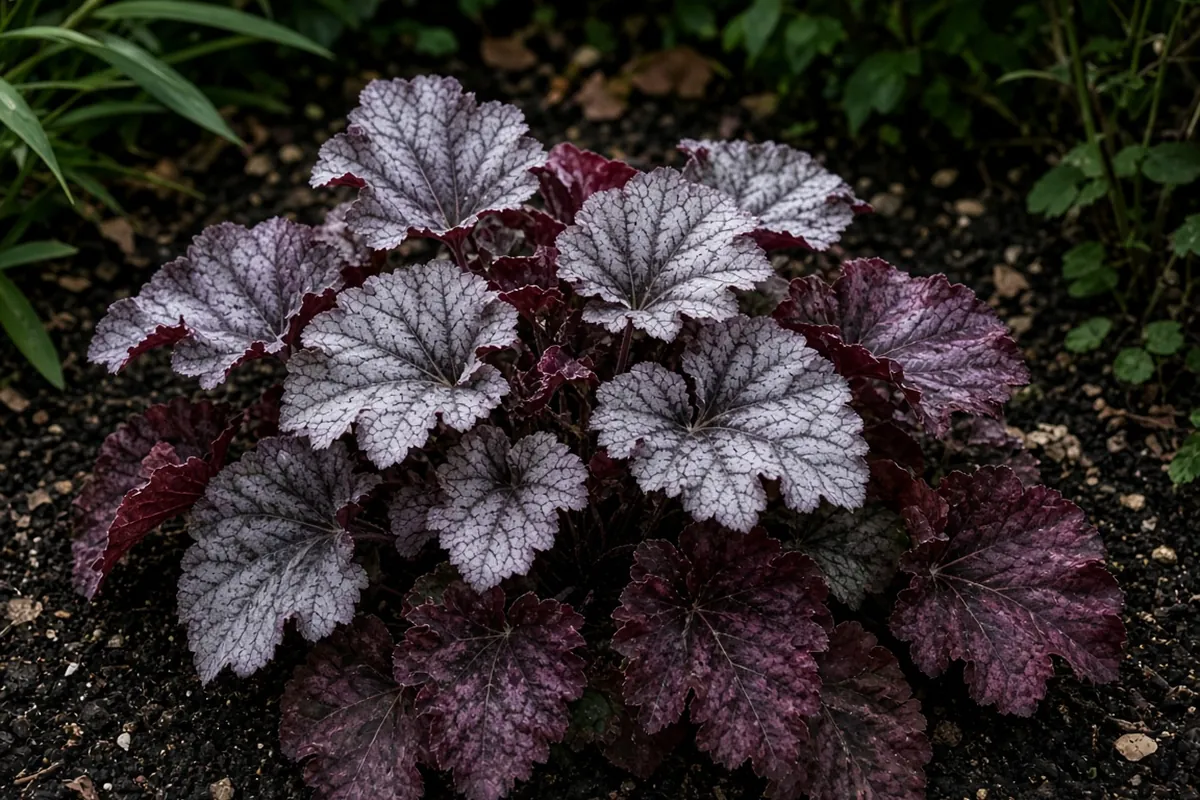
Iowa State University Extension lists heuchera species from 8 to 24 inches tall. Leaves can be green, red, orange, burgundy, silver, yellow, peach or variegated.
| Trait | Hosta | Heuchera |
|---|---|---|
| Light | Dappled to deep shade | Partial shade to full sun |
| Size | 6 inches to 4 feet high | 8 to 24 inches tall |
| Grown for | Broad leaves plus flowers | Colorful leaves plus flowers |
Source: University of Minnesota Extension plus Iowa State University Extension.
How do they handle winter?
NC State Extension notes that hostas need a dormant period below 40°F for a couple of months. They dislike soggy soil, especially in winter.
Iowa State University Extension notes that newly planted heuchera tend to frost heave their first winter. Mulching heavily after the first hard frost adds weight plus evens out soil temperature.
How to: step by step
- Fit the plant to the light in your bed.
- Amend soil with organic matter for good drainage.
- Give gold hostas 2 to 3 hours of morning sun.
- Water evenly so the soil stays moist but not soggy.
- Mulch heuchera heavily after the first hard frost.
- Divide hostas every 3 to 5 years plus heuchera every 3 or 4 years.
Troubleshooting
Hosta leaf burn: too much sun. NC State Extension suggests full or dappled shade in the South.
Heuchera pushed from the soil: frost heaving. Mulch heavily after the first hard frost.
Ragged heuchera leaves: old foliage. NC State Extension suggests removing it to stimulate new leaves.
For related reading see leaf anatomy, growing near trees plus garden layout planning. Kind Seed Co also stocks cannabis seeds.
Sources
- Hostas, University of Minnesota Extension
- Heuchera or coral bells, Iowa State University Extension plus Outreach
- Hosta, NC State Extension Gardener Plant Toolbox
- Heuchera (coral bells), NC State Extension Gardener Plant Toolbox
FAQ
Is heuchera the same as coral bells?
Yes. Heuchera is commonly called coral bells or alumroot. Iowa State University Extension notes that many garden plants are complex hybrids between several species. That gives a vast array of leaf colors plus sizes. NC State Extension describes alumroot as an evergreen to semi evergreen perennial groundcover depending on the climate.
Do hosta plus heuchera grow well together?
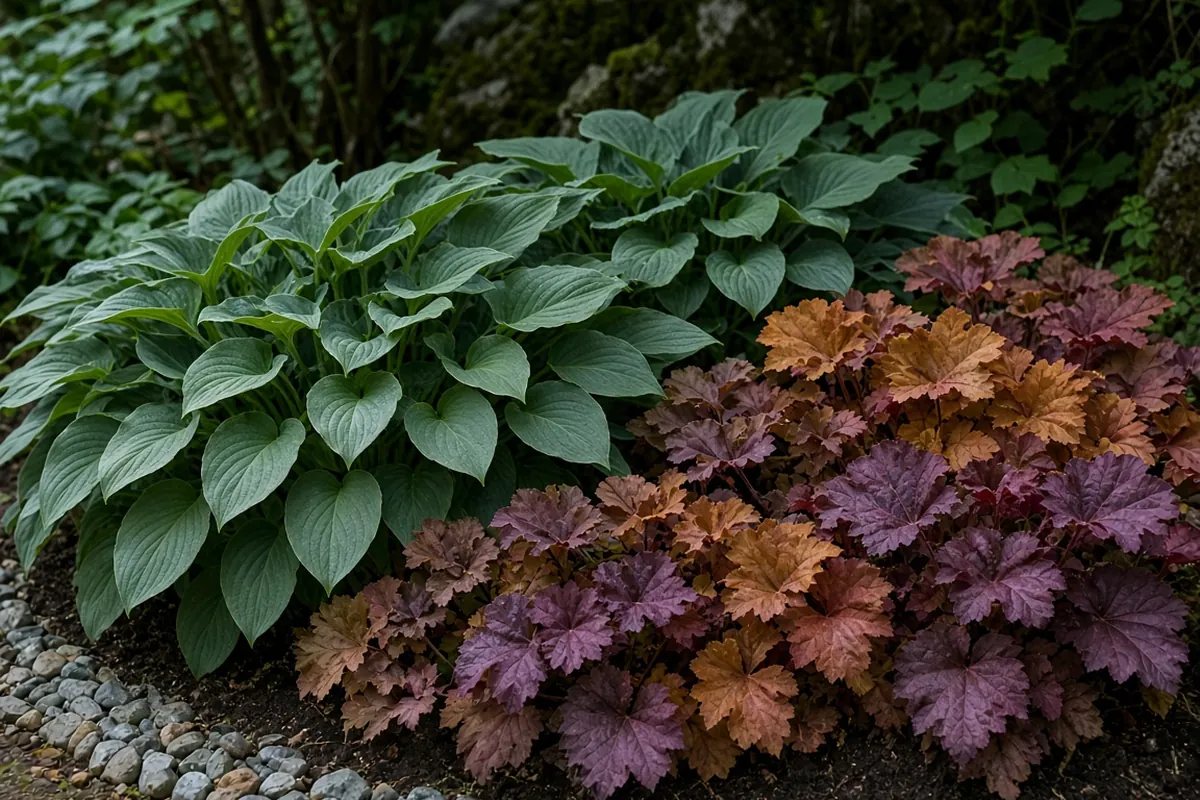
They can, where light suits both. Hostas thrive in dappled shade, while heuchera grows in partial shade to full sun. A lightly shaded bed with moist, well drained soil suits both plants. NC State Extension notes that lighter heuchera varieties stand out nicely in a lightly shaded garden.
Do both attract hummingbirds?
Yes. UMN Extension notes that some hosta flowers are very fragrant plus attractive to hummingbirds plus bees. Iowa State University Extension notes that heuchera flowers attract many pollinators, including hummingbirds. NC State Extension adds that heuchera flowering usually begins in June plus continues through the growing season.
How often should they be divided?
NC State Extension suggests dividing hostas every 3 to 5 years in early spring as leaves emerge. Heuchera are usually short lived perennials unless they are divided about every 3 or 4 years. Division refreshes older plants plus gives new plants for other parts of the garden.
Do hostas come back every year?
Yes. UMN Extension notes that hostas are herbaceous perennials hardy to Zones 3 or 4, depending on the variety. NC State Extension notes that the foliage dies back when temperatures drop to 28°F or below. Broad leaves then emerge again from the central crown each spring.