
How to Create a Shade Garden With Shade Levels plus Layers
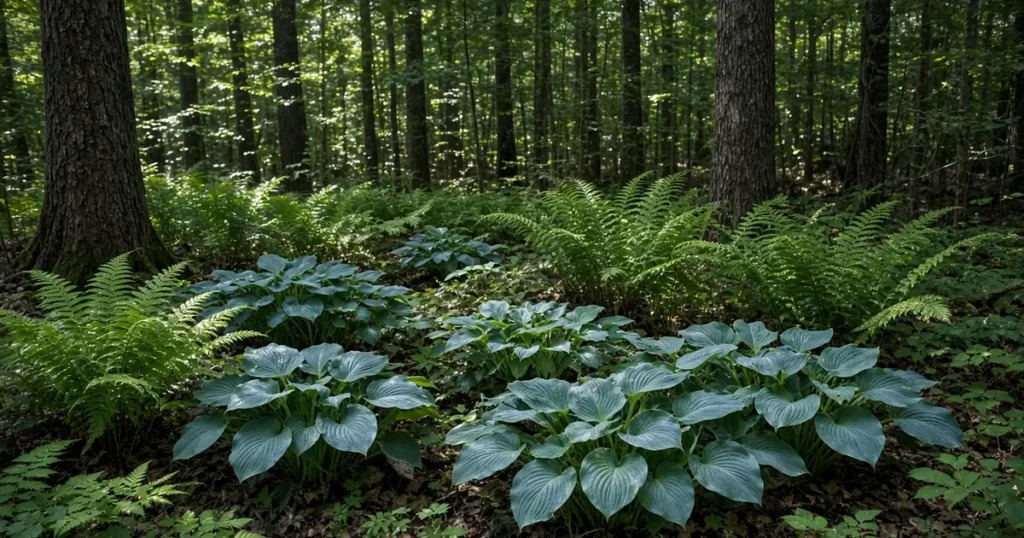
Knowing how to create a shade garden starts with judging the light. Find out how much shade the area gets, improve the soil plus plant in layers of small trees, shrubs, ferns, perennials plus ground covers. Mississippi State University Extension notes light, part plus full shade each suit different plants.
The short answer
To create a shade garden, watch how light shifts through the day plus year, then match plants to the shade level. NC State Extension suggests a soil analysis plus organic matter as needed, then layers of small trees, shrubs, ferns, perennials plus ground covers. Use foliage texture plus color where flowers are few.
How do light, part plus full shade differ?
Mississippi State University Extension notes light or filtered shade comes from high branched trees with open canopies, such as pines. Part shade gets full sun for part of the day. Full or dense shade lies under broad leaved trees such as oaks plus maples. NC State Extension defines full shade as fewer than 3 to 4 hours of direct sun.
| Shade level | Light received | Plant ideas |
|---|---|---|
| Partial shade | 4 to 6 hours of gentle morning light | Coral bells, columbine plus bleeding heart |
| Dappled shade | Light filtered through tree leaves | Ferns, woodland phlox plus wild geranium |
| Full shade | Fewer than 3 to 4 hours of direct sun | Christmas fern plus other ferns |
| Deep shade | Under one hour of direct sun | Plants listed for deep shade |
Source: NC State Extension, Sampson County.
What are shade garden layers?
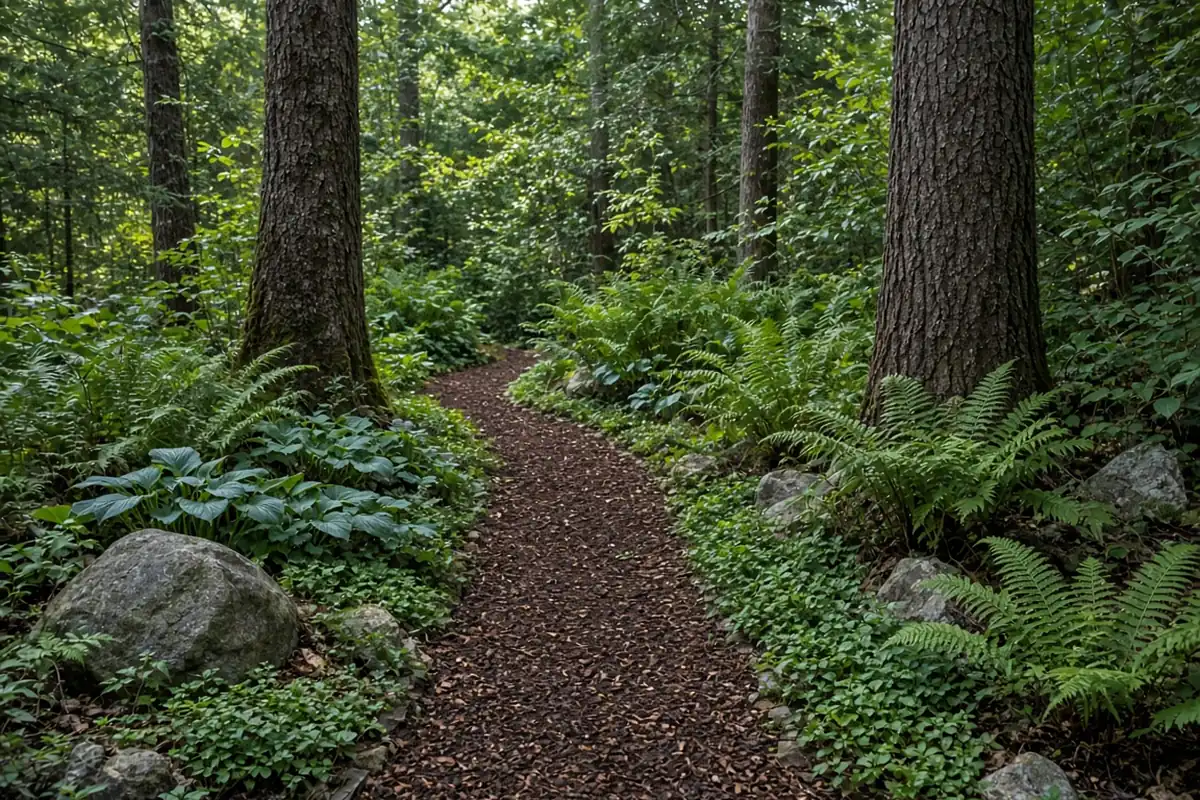
NC State Extension notes shade gardens work like a woodland. Tall trees form the canopy, understory trees plus shrubs add height plus structure, while ferns, perennials plus ground covers fill the lower levels. University of Maryland Extension adds that layering canopy, understory, shrub plus herbaceous species over leaf litter supports insect plus songbird diversity.
Why is foliage so important in shade?
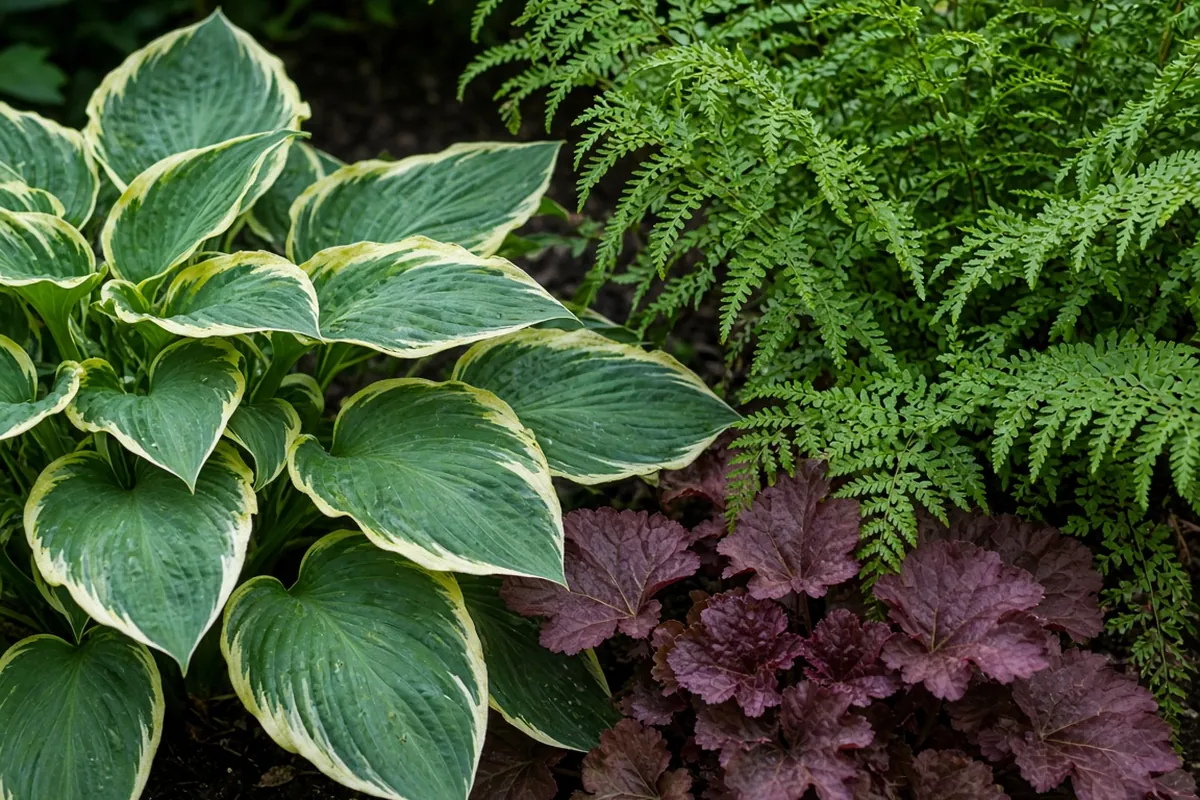
Mississippi State University Extension notes few shade plants bloom continuously, so texture, form plus foliage color carry the design. Contrasting plant shape, leaf size plus texture can make flowers unnecessary for interest. Bold leaf color from ajuga, variegated hydrangea or caladiums plus dramatic leaves of oakleaf hydrangea or fatsia add visual interest.
How to: step by step
- Observe the area across the day plus seasons to judge the shade level.
- Get the soil analyzed plus add organic matter as needed.
- Pick plants suited to that shade level plus your hardiness zone.
- Plant in layers from small trees down to ground covers.
- Vary leaf shapes, sizes plus colors.
- Mulch plus water until plants establish.
Troubleshooting
Plants flower poorly: deeper shade than expected. Mississippi State University Extension notes dense shade needs plants tolerant of continuous low light.
Dry soil under trees: root competition. NC State Extension notes trees compete for water plus nutrients, so water consistently plus mulch. UMN suggests containers under trees to avoid root competition.
Bland look: similar foliage throughout. Mississippi State University Extension suggests contrasting leaf size, shape plus texture.
For related reading see garden microclimates for cannabis, growing cannabis near trees plus leaf mold for cannabis beds. Kind Seed Co also stocks cannabis seeds.
Sources
- Successful shade gardens, Mississippi State University Extension
- Gardening in the shade, University of Minnesota Extension
- Shade gardening, beauty beyond the sun, NC State Extension, Sampson County
- Native plants for shade, University of Maryland Extension
FAQ
What plants grow in full shade?
Mississippi State University Extension notes dense shade calls for plants tolerant of continuous low light. NC State Extension suggests ferns such as Christmas fern, lady fern plus Japanese painted fern for texture. University of Maryland Extension advises choosing natives that tolerate deep shade for spots such as the north side of a building.
Can vegetables grow in shade?
Mostly they need sun. Mississippi State University Extension notes full sun plants can benefit from light afternoon shade, but they need six to eight hours of direct sun to continue blooming or fruiting. NC State Extension adds that a spot shady in the morning might get bright afternoon sun, so watch the light first.
How do I plant under trees?
University of Minnesota Extension notes containers placed under trees plus near shrubs avoid competition from their roots. NC State Extension notes trees compete for water plus nutrients, so even shade plants need consistent moisture. Mulch or ground covers conserve soil moisture, suppress weeds plus mimic a natural forest floor.
Do shade gardens need less water?
Not always. University of Minnesota Extension notes shady areas are cooler plus the soil stays moist longer. NC State Extension cautions that tree roots compete for water, so shade plants still need consistent moisture. University of Maryland Extension adds that species from moist valleys may need irrigation in dry shade.
What are spring ephemerals?
University of Maryland Extension describes spring ephemerals as woodland wildflowers that emerge before trees leaf out to catch a few weeks of sun. After the canopy fills in they finish flowering plus go dormant. Mark where they grow plus double plant with species that add interest later, such as garden phlox.



