
How to Landscape With Rocks: Boulders Plus Gravel Mulch
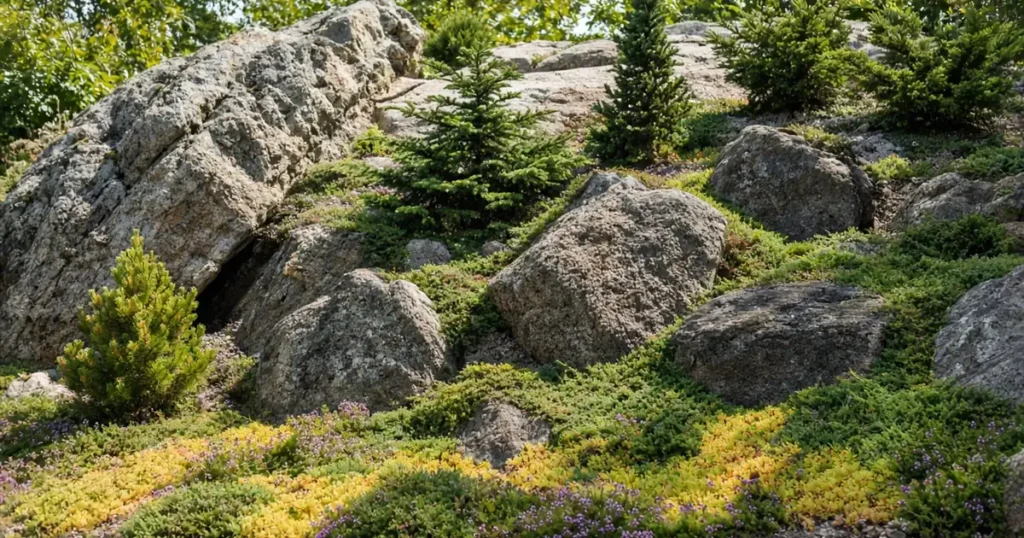
Here is how to landscape with rocks. Use boulders as accents, set them partly into the ground plus place them in beds rather than open lawn. NC State Extension says boulders should be partially buried to look natural. Oregon State University Extension lists gravel plus lava rock as inorganic mulch options.
The short answer
Use rock as an accent plus a mulch. NC State Extension notes that boulders are often used as accents but can be overused, and they should be partially buried to look natural. University of Missouri Extension advises siting boulders within planted beds, not in lawn. Oregon State University Extension lists gravel or lava rock as mulch.
How should boulders be set?
NC State Extension notes that an accent can be a garden accessory, plant specimen or water feature. Boulders are often used as accents, but they can be overused.
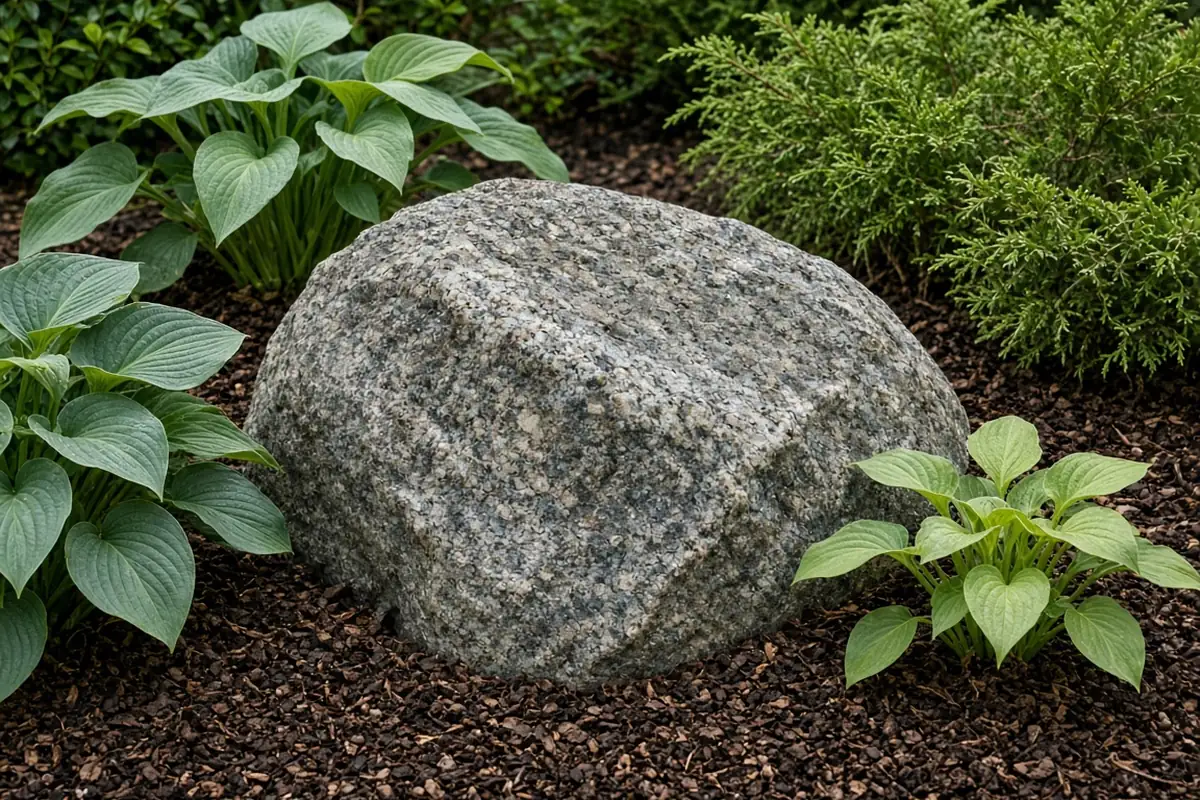
To look natural, boulders should be partially buried, the same source says. Missouri adds that a base plan should show rocks plus other existing features.
University of Missouri Extension advises a lawn as free as possible from obstacles, including boulders. Site boulders within planted beds or borders so mowing edges stay simple.
Can gravel work as mulch?
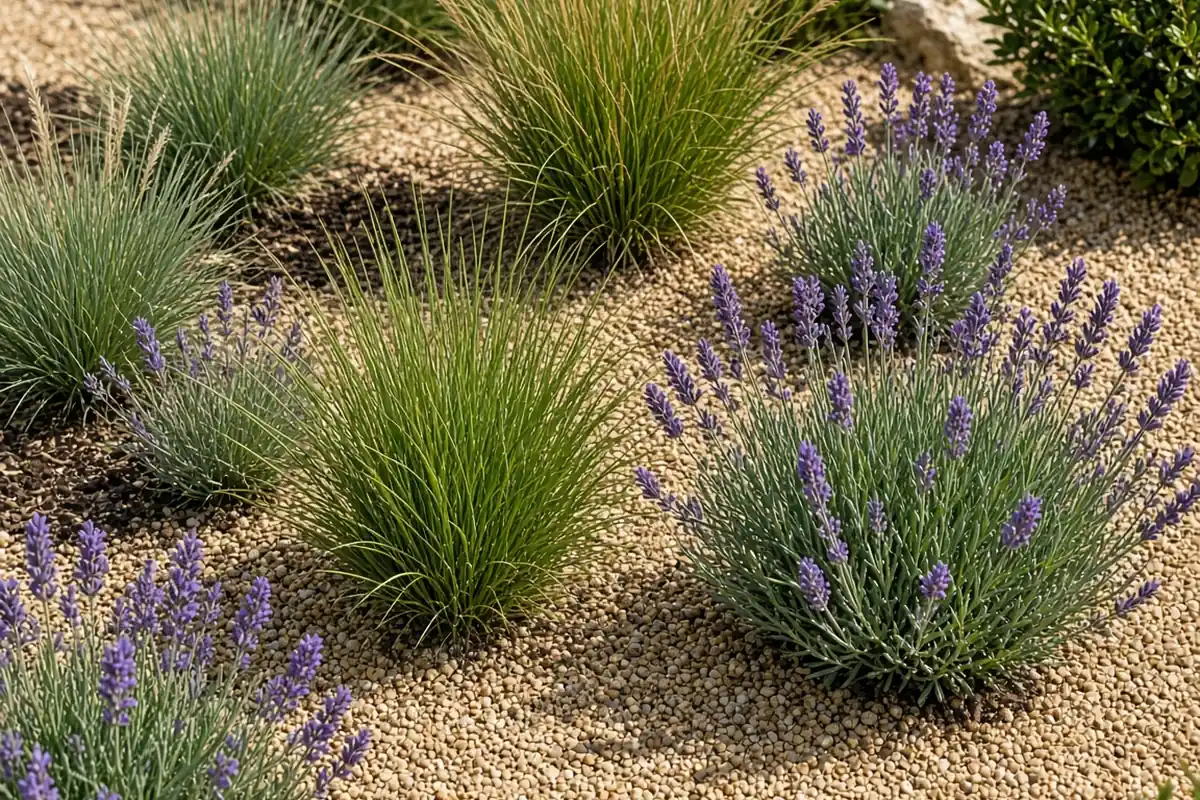
Oregon State University Extension says mulch helps with weed control in any garden, including unirrigated ones. Organic options include bark products. Inorganic options include gravel or lava rock.
Over time, Oregon State suggests planning so plant canopies cover the ground. That reduces weeds plus the need to reapply mulch.
NC State Extension lists crushed gravel among materials that define the ground plane for walking. Flagstone set in screenings is another option shown there.
| Element | Use | Source note |
|---|---|---|
| Boulders | Accent | Partially buried |
| Gravel or lava rock | Inorganic mulch | Helps with weeds |
| Crushed gravel | Walking surface | Defines the ground plane |
| Drought tolerant plants | Planting areas | Need water to establish |
Source: NC State Extension plus Oregon State University Extension.
How should a rock area be prepared?
Colorado State University Extension lists step one of a yard retrofit as removing existing plants, mulch plus old fabric. Be sure turf plus weeds are completely dead or removed before proceeding.
Step two is evaluating the soil plus amending as needed. Colorado State notes that compaction is among the largest challenges, so avoid walking on wet soil.
Oregon State University Extension adds that areas where water stands after rain will be a problem for almost all plants. Drain tile or other drainage fixes should be put in first.
How to: step by step
- Clear old plants, mulch plus fabric from the area.
- Confirm turf plus weeds are gone.
- Loosen compacted soil plus fix standing water.
- Within beds, set boulders partly into the ground.
- Plant drought tolerant plants plus water them in.
- Around the plants, spread gravel as mulch.
Troubleshooting
Boulders look placed on top: set too high. Bury partly.
Weeds in rock areas: no prep. Clear first.
Water stands after rain: poor drainage. Fix drainage first.
For related reading see planning an outdoor cannabis garden layout, soil drainage check for cannabis beds plus watering cannabis during drought. Kind Seed Co also stocks cannabis seeds.
Sources
- Xeriscaping: retrofit your yard, Colorado State University Extension
- Drought tolerant plants for western Oregon, Oregon State University Extension
- Extension Gardener Handbook, chapter 19, NC State Extension
- University of Missouri Extension MG11
FAQ
Which plants suit rock areas?
Oregon State University Extension studied plants grown without summer irrigation, including California lilac, rockrose, manzanita plus spider flower. Plants from Mediterranean climates can appreciate extra heat near walls. Colorado State University Extension notes that xeric plants still need more water while they establish.
Does rock heat up the garden?
The cited sources do not measure heat from rock itself. Oregon State University Extension notes that a south or west facing wall can increase the heat load on nearby plants. Mediterranean plants can appreciate that extra heat plus perform better there than many common garden plants.
Should fabric go under rock?
The cited sources do not call for fabric under rock. Colorado State University Extension lists removing existing plants, mulch plus old fabric as step one of a yard retrofit. It also stresses making sure turf plus weeds are completely dead or removed before proceeding.
When should drought tolerant plants go in?
Oregon State University Extension says fall plantings establish during the cool, wet season and will not need supplemental irrigation the following summer. Spring or summer plantings need supplemental irrigation through the first growing season. Plan watering for that first year either way.
Can rock replace lawn on slopes?
Colorado State University Extension suggests removing turf on slopes where water runs off or mowing is difficult. Those areas can become xeric plantings or hardscape. University of Missouri Extension adds that lawn is not a good choice on steep slopes, where ground cover looks better.



