
How to Make a Japanese Garden With Stone Moss plus Water
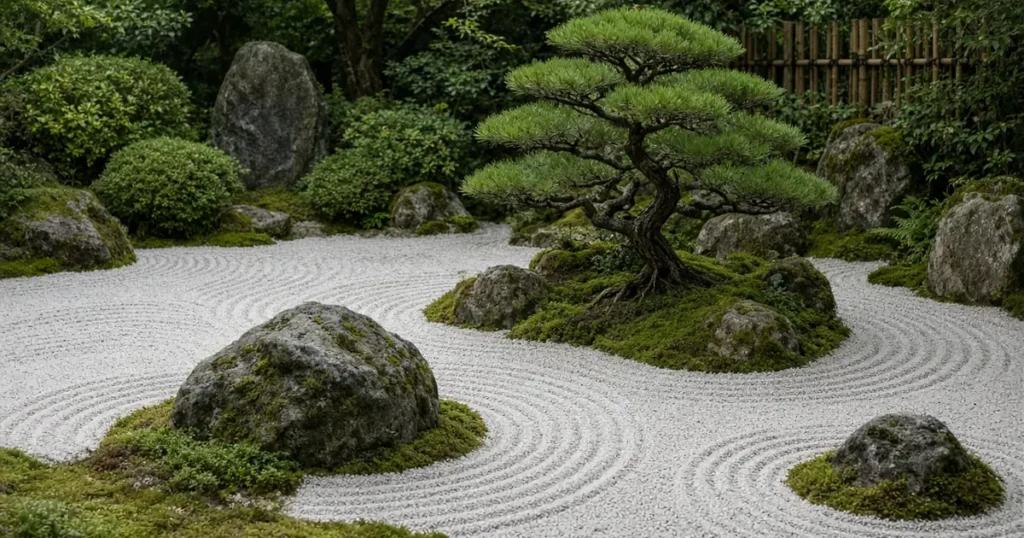
Learning how to make a Japanese garden begins with three elements. Combine stone, water or raked gravel plus a few chosen plants in a simple asymmetrical plan. Washington State University Extension notes rocks, water plus plants are the basic elements, each selected with great care. Start small plus pick a theme.
The short answer
To make a Japanese garden, combine rocks, water or raked gravel plus carefully chosen plants in a simple asymmetrical design. Washington State University Extension notes these elements often appear in uneven number sets. Leave empty areas, since they matter as much as planted ones, plus plan for year round interest.
What are the main elements of a Japanese garden?
Washington State University Extension lists rocks, which signify solidity plus permanence, water, which signifies change, plus plants, which reflect the four seasons. Each is selected with great care plus often appears in uneven number sets. Enclosures of natural materials such as bamboo, cedar or clay plaster block visual distractions.
| Element | Role | Home option |
|---|---|---|
| Rocks | Solidity plus permanence | A few large stones half buried |
| Water | Change plus impermanence | A stone basin or raked gravel |
| Plants | The four seasons | Conifers, maples, azalea plus moss |
| Paths | Guide a journey | Stones in a serpentine pattern |
| Enclosure | Blocks distractions | Bamboo, cedar or clay plaster fence |
Source: Washington State University Extension.
How is gravel used to suggest water?
Washington State University Extension notes dry gardens, sometimes called Zen gardens, use bold rocks plus raked gravel, which is easier to work with than sand. These elements represent mountains, islands plus water. Empty areas are considered as important as planted areas. Where a stream will not fit, a carved stone basin adds the sound of water.
Which plants suit a Japanese style garden?
Washington State University Extension suggests structural plants such as conifers plus broad leaved trees, chosen for leaf color, bark, stems plus branching. Irregularly shaped trees such as Japanese maples plus pines are often used. Bamboo, cherry trees, azalea, camellia, iris plus moss are other choices. Picture how the plan looks in winter as well as summer.
How to: step by step
- Sit in the space plus settle how it will be used or seen.
- Choose a theme like a dry garden, strolling path or courtyard.
- Sketch a simple asymmetrical plan joining the house plus garden.
- Set large stones first in uneven number groups, half below ground.
- Use a stone basin, a stream or raked gravel for water.
- Plant a few structural trees plus shrubs over moss or a moss like ground cover.
Troubleshooting
Space feels busy: too many features. Washington State University Extension advises a cleanly simple design where empty areas count as much as planted ones.
Stones look artificial: stones perched on the surface. WSU Extension suggests placing at least half of each stone below ground plus choosing weathered stone.
Moss thins out: the soil surface dries. Iowa State University Extension notes loosening the top one to two inches of soil promotes drying plus discourages moss, so leave moss areas undisturbed.
For related reading see garden microclimates for cannabis, planning an outdoor cannabis garden layout plus termites and garden mulch. Kind Seed Co also stocks cannabis seeds.
Sources
- Design a Japanese style garden, Washington State University Extension
- How to manage moss in the lawn plus garden, Iowa State University Extension
- Garden stoneworks, Washington State University Extension
FAQ
Can a Japanese garden fit a small yard?
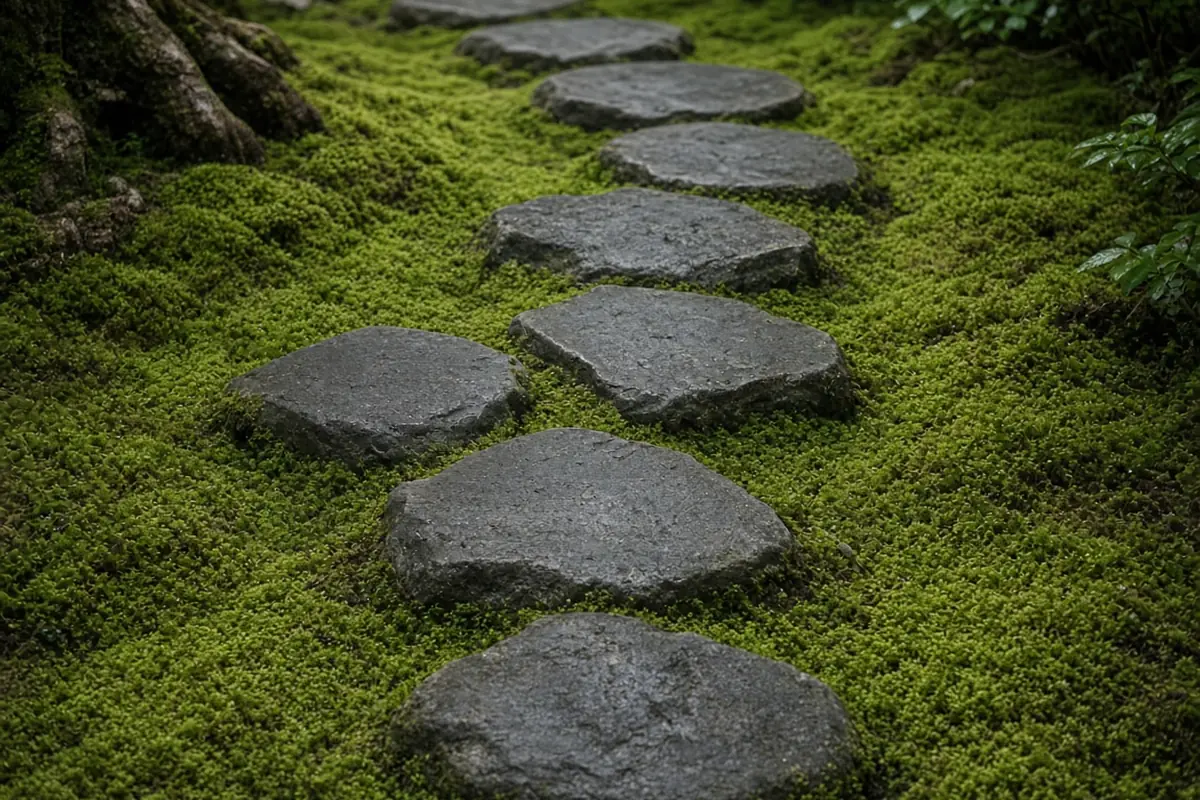
Yes. Washington State University Extension notes a Japanese garden is meant to replicate the natural world in a smaller space. Even a small yard can hold a strolling garden idea by placing stones in a serpentine pattern surrounded by a moss like ground cover, with the path curving out of sight around a corner.
What plants grow well in Japanese gardens?
Washington State University Extension suggests conifers plus broad leaved trees for structure, with irregularly shaped Japanese maples plus pines often used. Bamboo, cherry trees, azalea, camellia, iris plus moss also fit. Choose each plant for leaf color, bark, stems plus branching so the garden holds interest through all four seasons.
Do Japanese gardens need water?
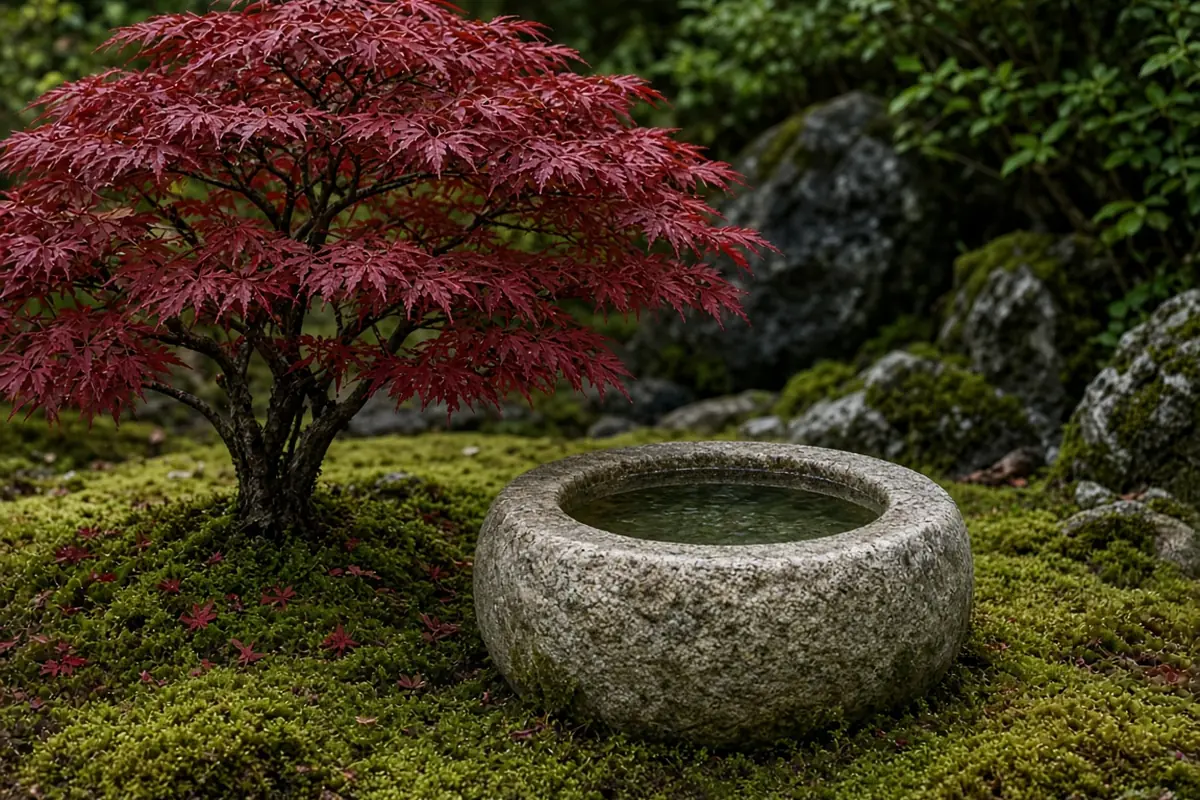
Not always as real water. Washington State University Extension notes water is often represented with raked gravel. Where space allows, a waterfall or stream can follow a slope. In a small area, a carved stone basin or a deer chaser adds the sound of water that suits a contemplative space.
How do I care for moss?
Iowa State University Extension notes moss grows where shade, poor drainage, low fertility or compacted soil limit other plants. In those spots it becomes a green, low input ground cover. Moss does not harm other plants. Avoid loosening the soil surface in moss areas, since drying the surface discourages moss.
How should stones be placed?
Washington State University Extension suggests starting with modest projects, such as one pointed stone at a path entrance or a couple of stones as focal points. Choose stones of substantial size plus set at least half of their bulk below ground. Weathered stone adds a sense of maturity plus gathers moss readily.



