
How to Plant Around a Deck: Screens Plus Soft Edges
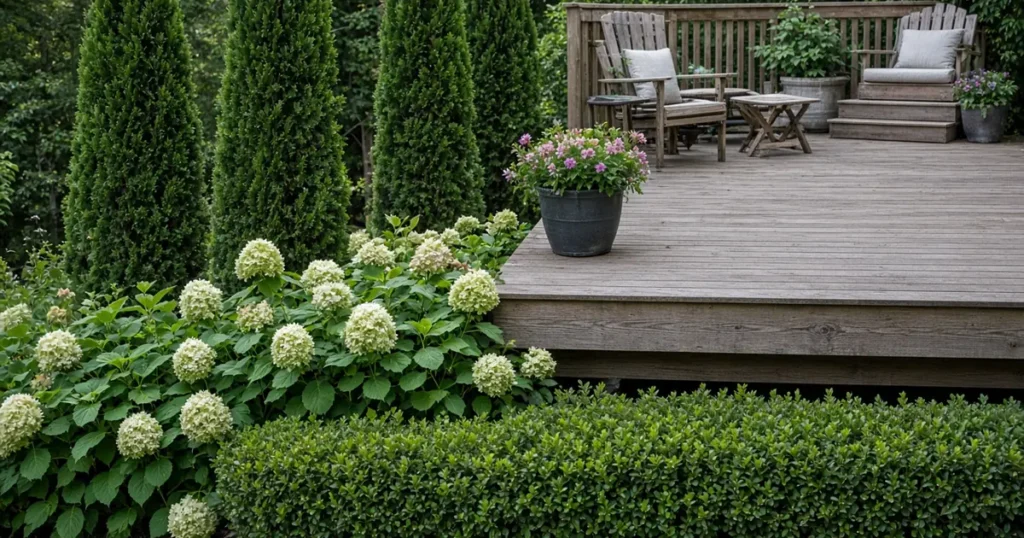
Learning how to plant around a deck starts with how the space is used. University of Missouri Extension notes that the private area behind a home often holds a patio or deck. That area needs a feeling of privacy plus enclosure.
The short answer
Use hedges, shrubs or fencing to screen views where privacy matters. Plant along the sides of the deck to create a sense of enclosure. Layer plants from tall to low. Choose each plant by its mature height plus spread so the bed does not crowd the deck.
How do plants screen a deck?
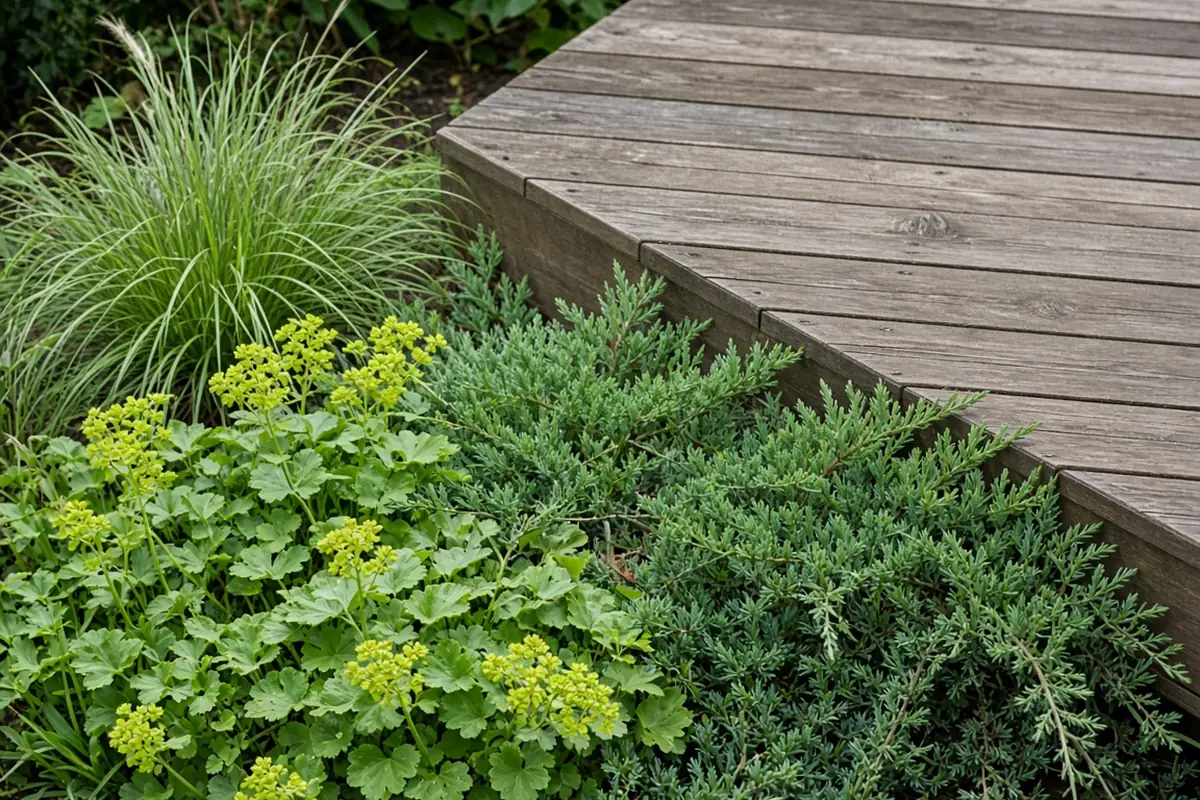
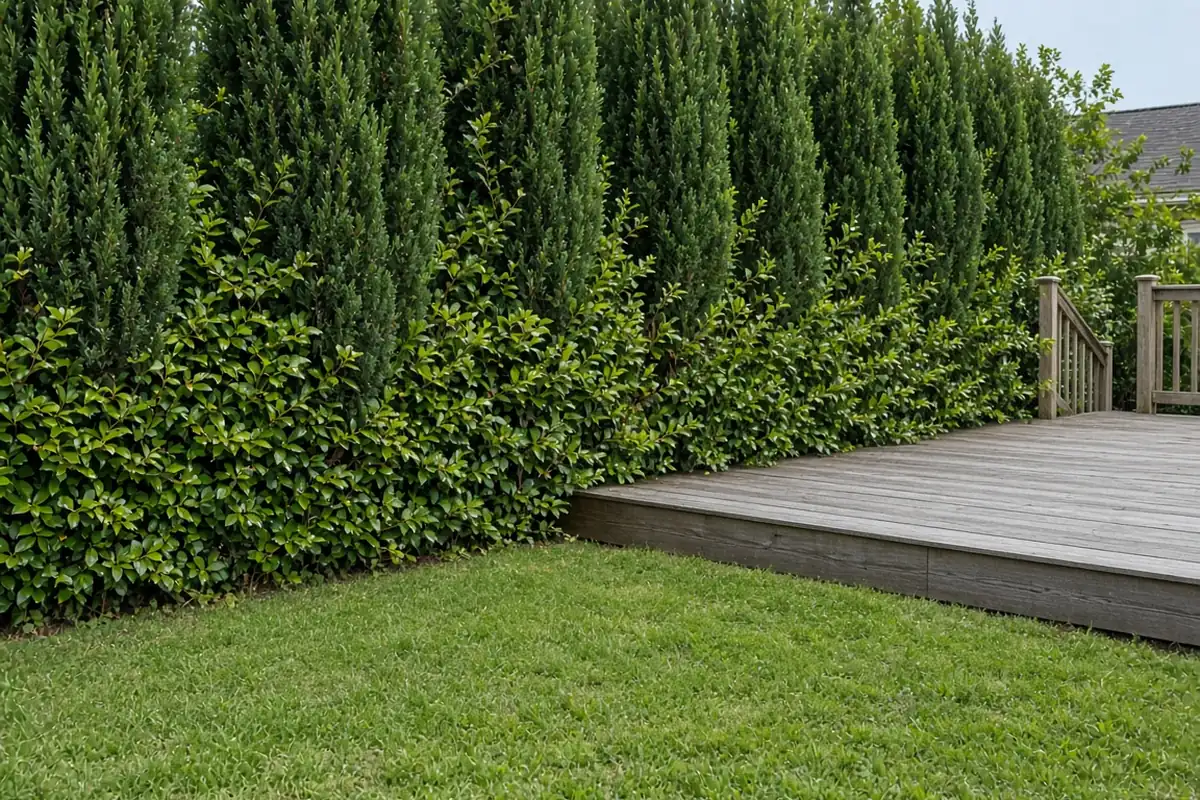
University of Missouri Extension notes that screens may be fencing, plant materials formed into hedges or a mix of both. Trees can screen unwanted views plus add shade. Hedges can mark a boundary plus give privacy.
NC State Extension describes vertical planes as the outdoor walls of a space. Shrubs plus small trees along a deck edge act as these walls.
How do you layer plants along the edge?
LSU AgCenter suggests that shrubs make up most of a bed, with a tree or two plus annual plus perennial bedding plants. A balance of evergreen plus deciduous plants stops the bed from looking bare in winter.
| Location | Purpose | Plant type |
|---|---|---|
| Property line side | Privacy | Hedges or shrubs with fencing |
| Deck edge | Enclosure | Shrubs plus small trees as outdoor walls |
| Front of bed | Seasonal color | Annual plus perennial bedding plants |
Source: University of Missouri Extension plus LSU AgCenter.
How much shade will deck beds get?
Mississippi State University Extension notes that areas next to houses or other structures that cast shadows are partly shaded. Plants that get six to eight hours of direct sun still bloom well with light afternoon shade.
How to: step by step
- List views you want to screen.
- Observe how shade falls around the deck.
- Select plants by mature height plus spread.
- Place hedges or shrubs where privacy matters.
- Set smaller plants in front.
- Leave wood mulch 1 foot from the house foundation.
Troubleshooting
Deck feels exposed: few vertical elements. Add shrubs or hedges along the sides.
Bed looks bare in winter: all deciduous plants. Add evergreens.
Shrubs crowd the deck: mature size overlooked. Choose plants that suit the space at full size.
For related reading see planning a garden layout, mulch for beds plus garden microclimates. Kind Seed Co also stocks cannabis seeds.
Sources
- Designing and planting foundation beds, LSU AgCenter
- Extension Gardener Handbook chapter 19, NC State Extension
- Residential landscaping (MG11), University of Missouri Extension
- Successful shade gardens, Mississippi State University Extension
FAQ
How far from a house should shrubs go?
LSU AgCenter advises planting large shrubs 5 to 6 feet away from the house, while smaller ones should go at least 3 to 4 feet away. This leaves room so roots do not interfere with utilities, plumbing or the foundation. The same spacing idea helps beds next to a deck attached to the house.
Why hold mulch away from the house?
LSU AgCenter advises leaving wood mulch 1 foot away from the foundation of the home to help prevent termite infestations. That strip can be filled with rock or crushed granite for a tidy look. Apply the same care where a deck meets the house wall.
What makes a deck feel enclosed?
NC State Extension notes that vertical planes create the outdoor walls that enclose a space. Overhead tree canopies or structures make a space feel more confined. The feeling of being under something creates a sense of enclosure. Use these ideas to make a deck feel open or sheltered.
Which plants suit shade beside a deck?
Mississippi State University Extension notes that light shade or half shade allows a broad range of flowering plants. Dense shade needs plants that handle continuous low light. Ferns, groundcovers plus perennials add variety, while bold foliage such as oakleaf hydrangea or caladiums gives interest when few plants bloom.
Should a deck bed be symmetrical?
University of Missouri Extension notes that symmetrical balance suits formal houses with a centered door. Asymmetrical balance uses unequal elements placed with care. NC State Extension adds that a large tree or shrub can be balanced by a cluster of smaller plants. Either approach can frame a deck.


