
Lawn Aeration Before Planting: Core Aeration and Site Prep
The short answer
Lawn aeration with a core aerator pulls small plugs of soil from a lawn. That relieves compaction and lets air, water and seed reach the soil. Hollow tine aerators work well on moist soil during active growth. Aerating right before overseeding improves seed contact. Spike tools only push soil aside and can make compaction worse.
Aeration is one of the most useful steps before reseeding a tired lawn or starting a new planting.

What is core aeration?
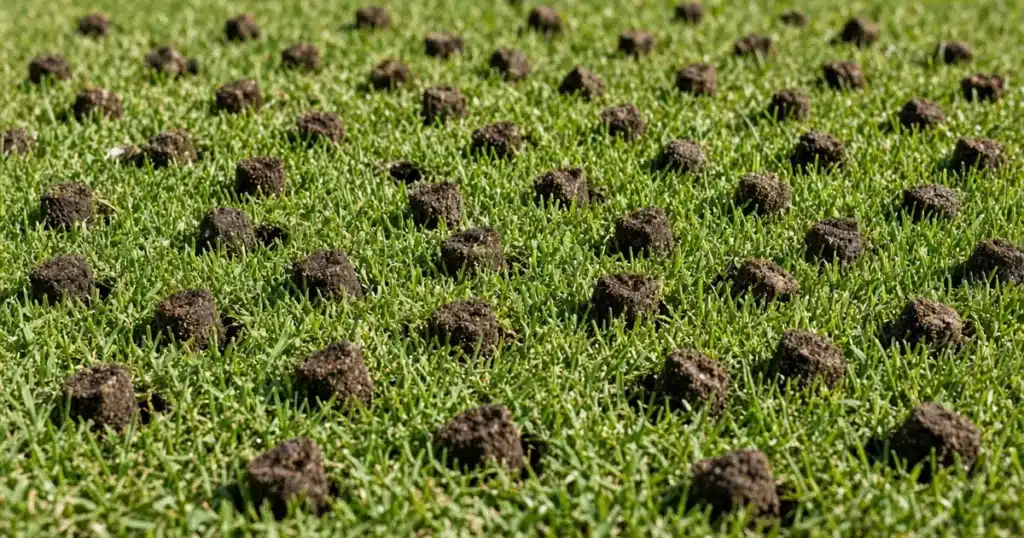
A core aerator has hollow tines that punch into the soil and pull out plugs, or cores, about the size of a finger. The machine leaves those cores on the surface and holes behind.
The holes let air reach roots, help water soak in and give seed a protected spot to sprout. The cores break down on the surface and return soil to the lawn.
The University of Wisconsin Extension publication on lawn aeration and topdressing explains how core aeration relieves compaction and thatch and why hollow tines work better than solid spikes.
Spike aerators push a solid tine into the soil. They don’t remove soil, so they press the sides of each hole tighter. On compacted ground, that can make things worse.
How do you know if a lawn is compacted?
Push a screwdriver into moist soil. If it goes in hard or stops after an inch or two, the soil is compacted.
Other signs include water pooling after rain, thin grass along paths and heavy clay soils that bake hard in summer.
Our post on soil compaction in cannabis beds explains how compaction forms and how it affects roots in any soil. For a quick way to see how water moves through your soil, see our post on checking drainage in beds.
When should you aerate?
Aerate when grass is actively growing so it can fill the holes fast. For cool season lawns, early fall is ideal, with spring as a second choice. For warm season lawns, late spring to early summer works well.
The Iowa State University Extension guide to core aeration of lawns suggests fall aeration for cool season grasses because weeds are less likely to fill open holes than in spring.
Soil moisture matters. Tines need moist soil to go in. Dry soil resists. Wet soil clogs tines and smears hole walls. Water a day or two ahead if the ground is dry.
Our post on when soil is ready to work shows how to judge soil moisture with a simple squeeze.
| Step | Purpose | Source |
|---|---|---|
| Check for compaction | Decide if aeration is needed | NDSU Extension |
| Water ahead if dry | Lets tines go in | Iowa State University Extension |
| Use hollow tines | Removes soil instead of pressing it | University of Wisconsin Extension |
| Make several passes | Spreads holes evenly | Iowa State University Extension |
| Leave cores | Return soil as they break down | University of Wisconsin Extension |
| Overseed right after | Seed lands in holes | NDSU Extension |
Sources: University of Wisconsin Extension, Iowa State University Extension, NDSU Extension.
How does aeration help planting?
Seed needs contact with soil to sprout. On a thick or compacted lawn, much of the seed sits on top of thatch and dries out.
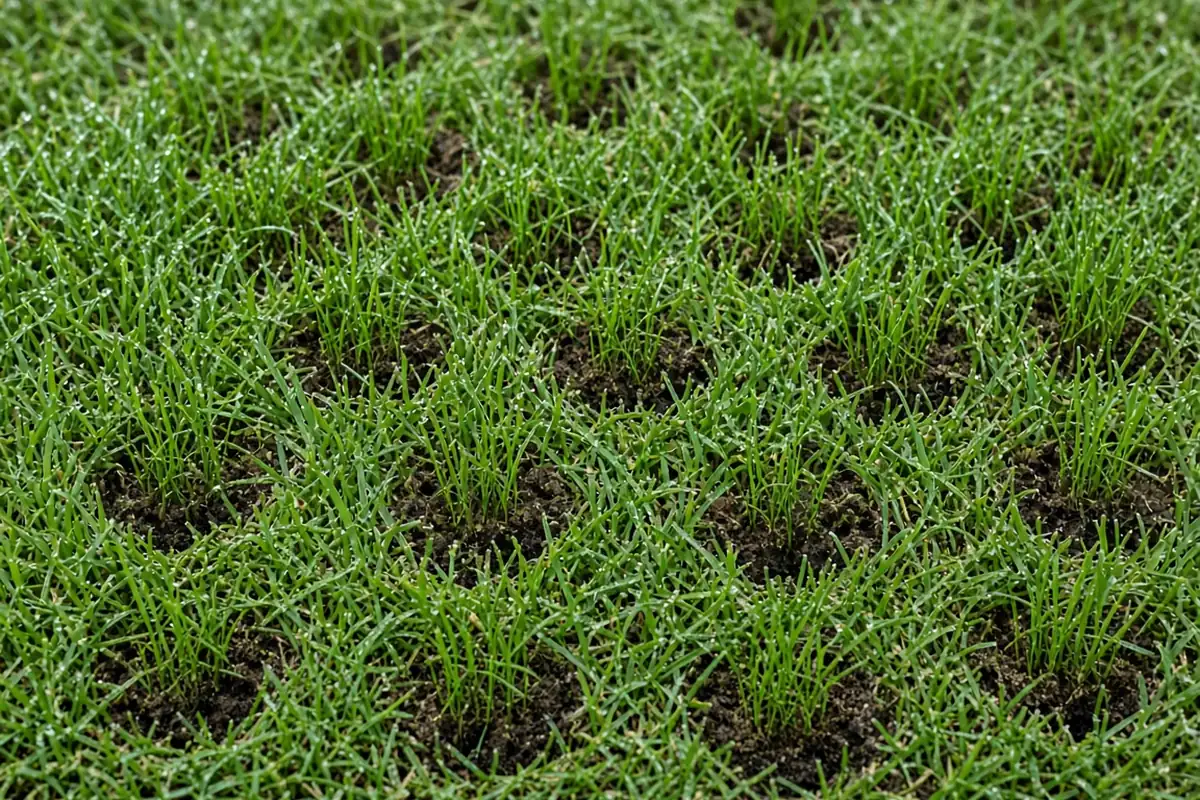
Aeration holes catch seed and give it moist soil. Seed that lands in holes sprouts well and grows roots fast.
The NDSU Extension article on lawn aeration explains that overseeding right after core aeration is an effective way to thicken a thin lawn.
Can you aerate before a garden bed?
Core aeration is mainly a lawn tool. For a new garden bed, loosening soil with a fork or broadfork and adding compost does more.
If you plan to convert lawn to a bed, aerating first can help water and amendments soak in before you smother or remove the grass.
How often should lawns be aerated?
Lawns on heavy clay or with lots of foot traffic benefit from aeration once a year. Lawns on sandy soil or with light use may need it only every few years.
Don’t aerate a new lawn in its first year. Let roots establish first.
What should you do after aerating?
Leave the cores on the lawn. They break down over time after mowing and rain.
Overseed right away. Then water lightly and often until seedlings establish.
A thin layer of compost can be applied with aeration to improve contact with the soil.
How to: step by step
- Check soil for compaction.
- Water a day or two before if soil is dry.
- Use a hollow tine core aerator.
- Make several passes for good coverage.
- Leave cores to dry and break down.
- Overseed or plant right after aerating.
Mark sprinkler heads before you start.
Rental shops and garden centers often rent core aerators by the day.
Troubleshooting
Tines won’t go in. Soil is dry. Water first.
Clogged tines. Soil is too wet. Wait to aerate.
Weeds after spring aeration. Soil is open. Aerate in fall.
Few cores pulled. Tines are worn. Rent a better machine.
Seed washed out. Watering was too heavy. Water lightly and often.
Core aeration opens compacted turf before overseeding. Kind Seed Co shares more garden projects in outdoor growing.
Sources
- Lawn aeration and topdressing (A3710), University of Wisconsin Extension, Lawn aeration and topdressing (A3710)
- Core aeration of lawns, Iowa State University Extension, Core aeration of lawns
- Should you aerate your lawn?, NDSU Extension, Should you aerate your lawn?
FAQ
Is spike aeration as good as core aeration?
No. Spikes press soil tighter. Core aeration removes soil and relieves compaction.
How often should lawns be aerated?
Once a year for clay or heavy traffic. Every few years for sandy, lightly used lawns.
Should I remove the cores?
No. Leave them to break down and return soil to the lawn.
Can I aerate before a garden bed?
It helps a little, but forking and compost do more for new beds.
When is the ideal time to aerate?
Early fall for cool season lawns. Late spring for warm season lawns.



