
Moss Lawns: Converting Shady, Damp Sites to Moss
The short answer
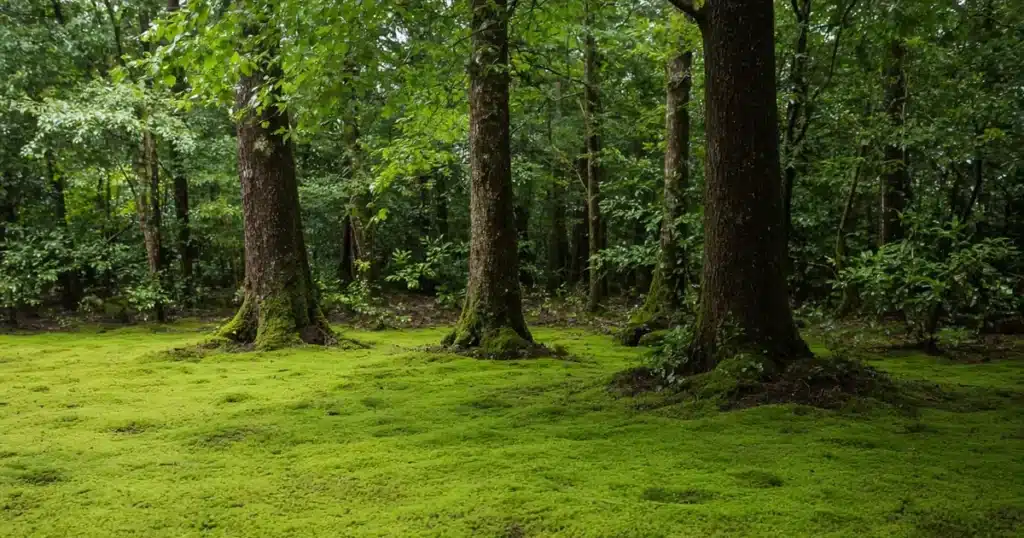
A moss lawn can replace thin grass in shady, damp spots where turf struggles. Moss needs no mowing or fertilizer and stays green much of the year. It does not take heavy foot traffic. Clear debris, hold the area moist while moss settles and add stepping stones for paths.
Many gardeners spend years fighting moss in shady lawns. Working with it instead can turn a problem spot into a soft, green carpet.

When does a moss lawn make sense?
Moss thrives where grass struggles. Shade, damp soil, acidic pH, compaction and low fertility all favor moss over lawn grass.
The Virginia Cooperative Extension publication on lawn moss explains that moss in a lawn is often a sign of conditions that suit moss better than grass. Rather than fight those conditions, some homeowners let moss take over.
A moss lawn suits areas under trees, along the north side of buildings and in low, damp corners. It suits slopes where mowing is hard.
Our post on garden microclimates for cannabis explains how shade and moisture vary across a yard. Those patterns show where moss will thrive.
| Factor | Ideal condition | Source |
|---|---|---|
| Light | Shade to part shade | Virginia Cooperative Extension |
| Moisture | Consistently damp | Clemson Cooperative Extension |
| Soil pH | Acidic | Clemson Cooperative Extension |
| Foot traffic | Light | Virginia Cooperative Extension |
| Fertility | Low | Clemson Cooperative Extension |
Sources: Virginia Cooperative Extension, Clemson Cooperative Extension, Iowa State University Extension.
How do you prepare the site?
Start by clearing the area. Pull weeds and remove thin grass. Rake off leaves, twigs and other debris.
Moss grows on the surface, not in deep soil. A firm, smooth surface helps it attach. Rake the soil level, then press it down gently.
Check soil pH. Many mosses prefer acidic soil. The Clemson Cooperative Extension HGIC fact sheet on moss and algae in lawns notes that acidic soil, shade and poor drainage all favor moss. If your soil is near neutral, moss may still grow, but more slowly.
Our post on lowering soil pH for cannabis explains how gardeners lower pH in beds. The same ideas apply if you want to tip conditions toward moss.
How do you help moss spread?
The simplest approach is letting local moss spread naturally. If moss already grows in patches, clearing grass and weeds around it gives it room.
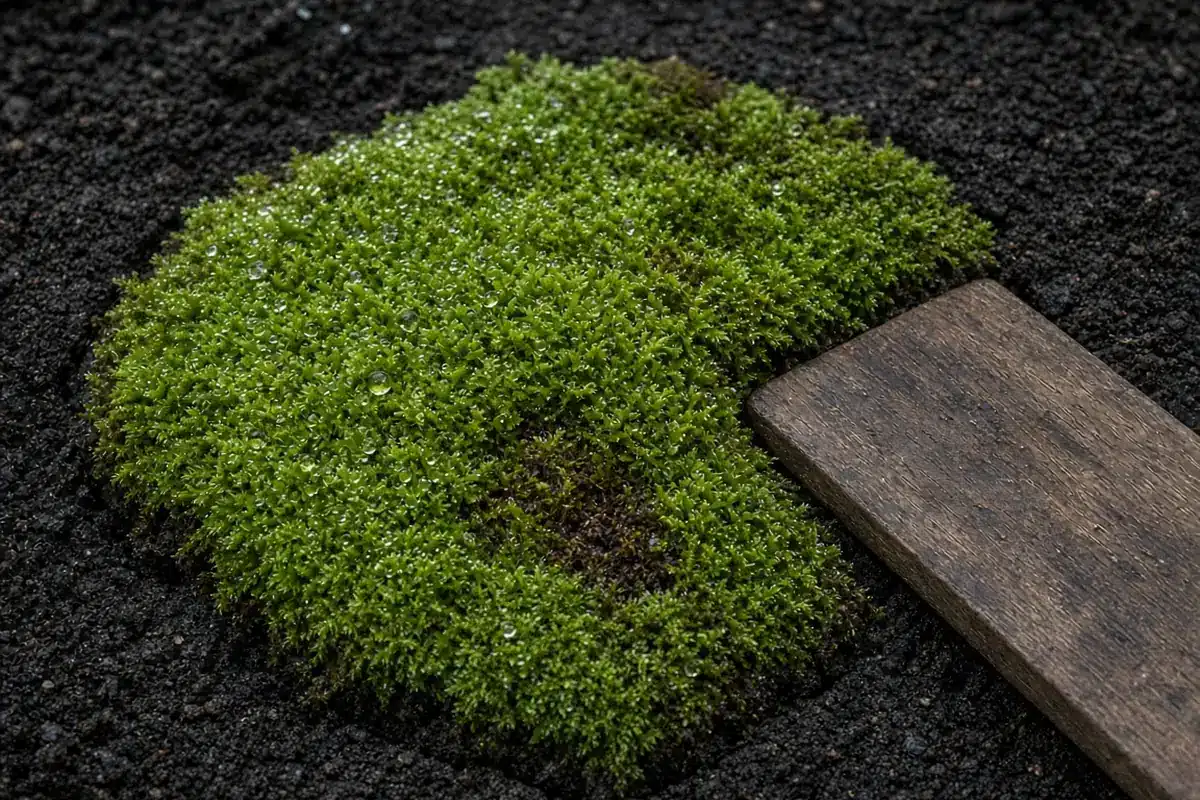
You can transplant patches. Lift moss from another part of your yard and press it firmly onto the prepared soil. Water it in. Hand sized patches set at spaced intervals grow together over time.
Some gardeners blend moss with water or buttermilk and spread the slurry on soil or rocks. Results vary, and it takes longer than transplanting.
The Iowa State University Extension guide to managing moss in the lawn and garden explains the conditions that let moss spread and why it often takes over shady lawns on its own.
How do you care for moss?
Hold moss moist while it settles in. Water whenever the surface dries out during the first year.
Once established, moss handles dry spells by going dormant and turning brown. It greens up again after rain.
Remove fallen leaves gently in fall. Thick leaf layers block light and smother moss. A leaf blower on a low setting or a soft rake works well.
Pull weeds while they’re small. Moss doesn’t compete well with fast growing weeds.
How does moss differ from algae?
Algae forms a slimy green or black film on wet soil. Moss forms a soft, leafy carpet, and both like damp, shady spots.
Our post on algae on cannabis soil explains why algae forms and how it differs from moss.
Can moss handle foot traffic?
Light traffic, yes. Regular walking will wear paths. Add stepping stones or a mulch path through the moss where people walk often.
Which mosses suit a moss lawn?
Different mosses suit different spots. Sheet mosses form flat, tight mats and spread well on soil. Cushion mosses form rounded mounds and suit rocks and edges. Hair cap mosses grow taller and handle a little more sun.
The easiest choice is often whatever already grows in your yard. Local mosses are adapted to your light, moisture and soil. Look at shady paths, old stones and the base of trees to see which kinds thrive nearby.
Mixing two or three kinds gives a varied texture and helps the lawn handle changes in light and moisture across the site.
How to: step by step
- Confirm the area is shady and stays damp.
- Remove weeds, leaves and thin grass.
- Check soil pH.
- Let local moss spread or transplant patches.
- Water often while it establishes.
- Add stepping stones for foot traffic.
Plant moss in spring or fall when weather is cool and damp.
Troubleshooting
Moss browns. There’s a dry spell. Water lightly.
Leaves smother moss. Fall leaves dropped. Blow them off gently.
Patches tear. Foot traffic is heavy. Add paths.
Weeds take over. Moss is still filling in. Pull weeds while small.
Transplants lift up. They were not pressed down. Press firmly and water.
A moss lawn turns a shady struggle into a quiet green space. Kind Seed Co shares more garden projects in outdoor growing.
Sources
- Lawn moss: friend or foe?, Virginia Cooperative Extension, Lawn moss
- Moss and algae control in lawns, Clemson Cooperative Extension HGIC, Moss and algae control in lawns
- How to manage moss in the lawn and garden, Iowa State University Extension, How to manage moss in the lawn and garden
FAQ
Does moss need sun?
Most lawn mosses prefer shade or part shade. Some handle more sun if held moist.
Can moss handle foot traffic?
Light traffic only. Add stepping stones for regular paths.
Do moss lawns attract pests?
Not usually. Moss has few pests in home gardens.
How long does a moss lawn take to fill in?
Often one to two years, depending on moisture and how much moss you start with.
Does moss need fertilizer?
No. Moss grows well in low fertility soil.



