
Rotational Grazing Small Acreage: Paddocks and Rest Periods
The short answer
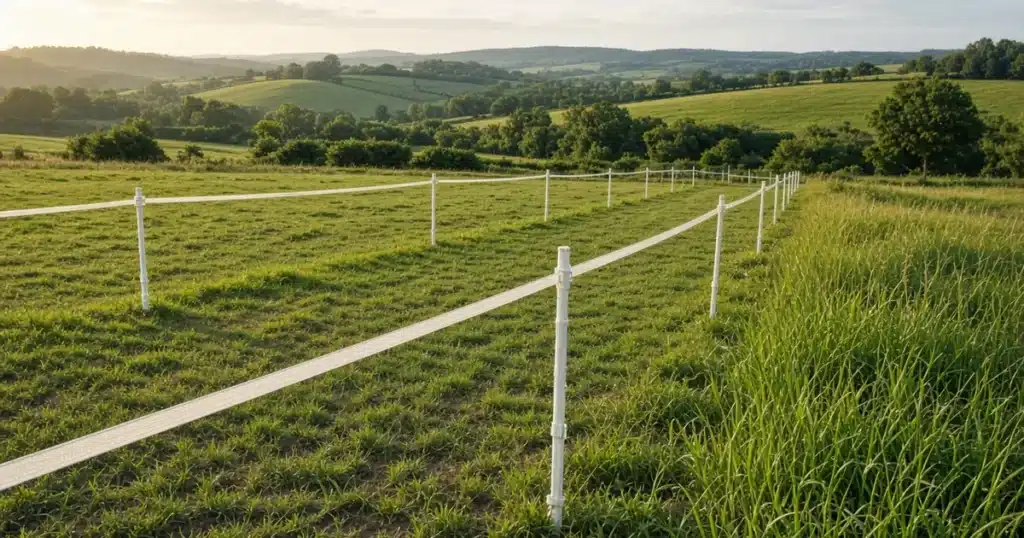
Rotational grazing small acreage pastures works by dividing land into paddocks and moving animals before grass gets too short. Penn State Extension suggests grazing when forage reaches 6 to 8 inches and moving animals when 3 to 4 inches remain. Spring regrowth may take two to three weeks, and summer regrowth six to eight.
What is rotational grazing?
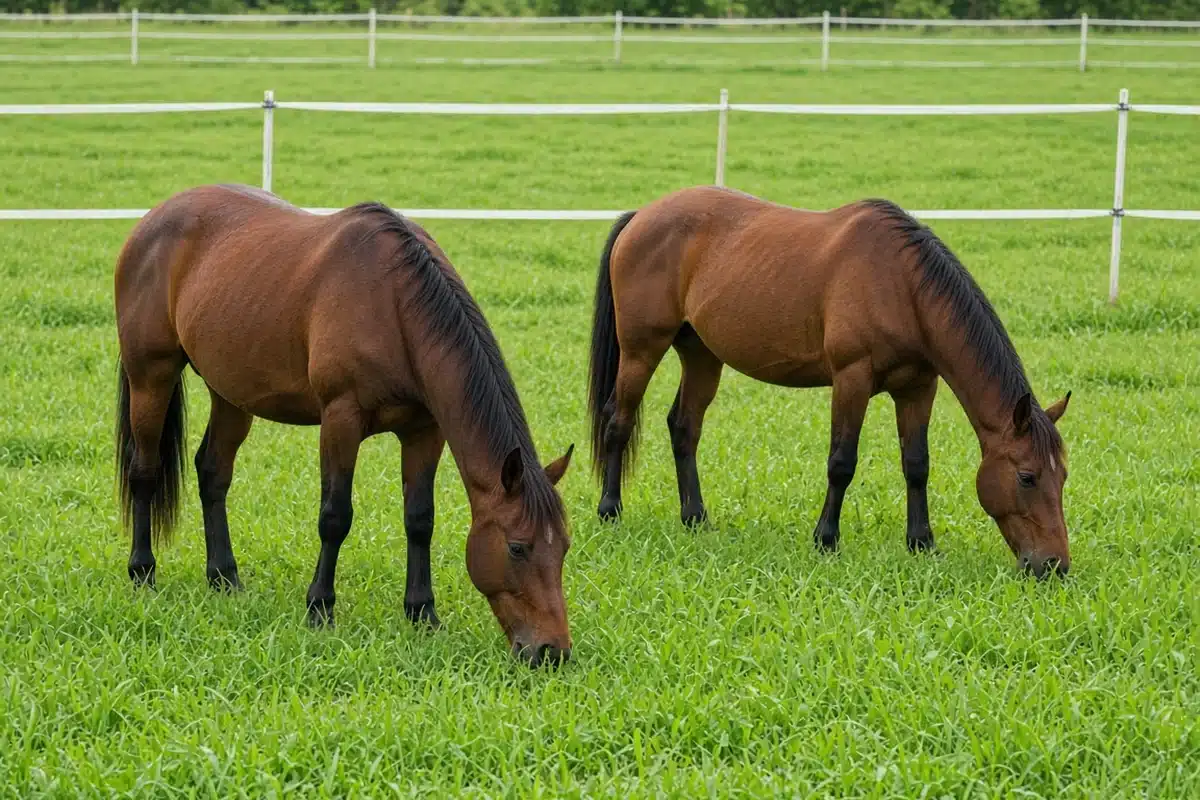
Penn State Extension describes rotational grazing as moving a group of animals between several paddocks on a regular basis. Forage is grazed once, then rested to regrow. It calls the recovery period the most important part of the system.
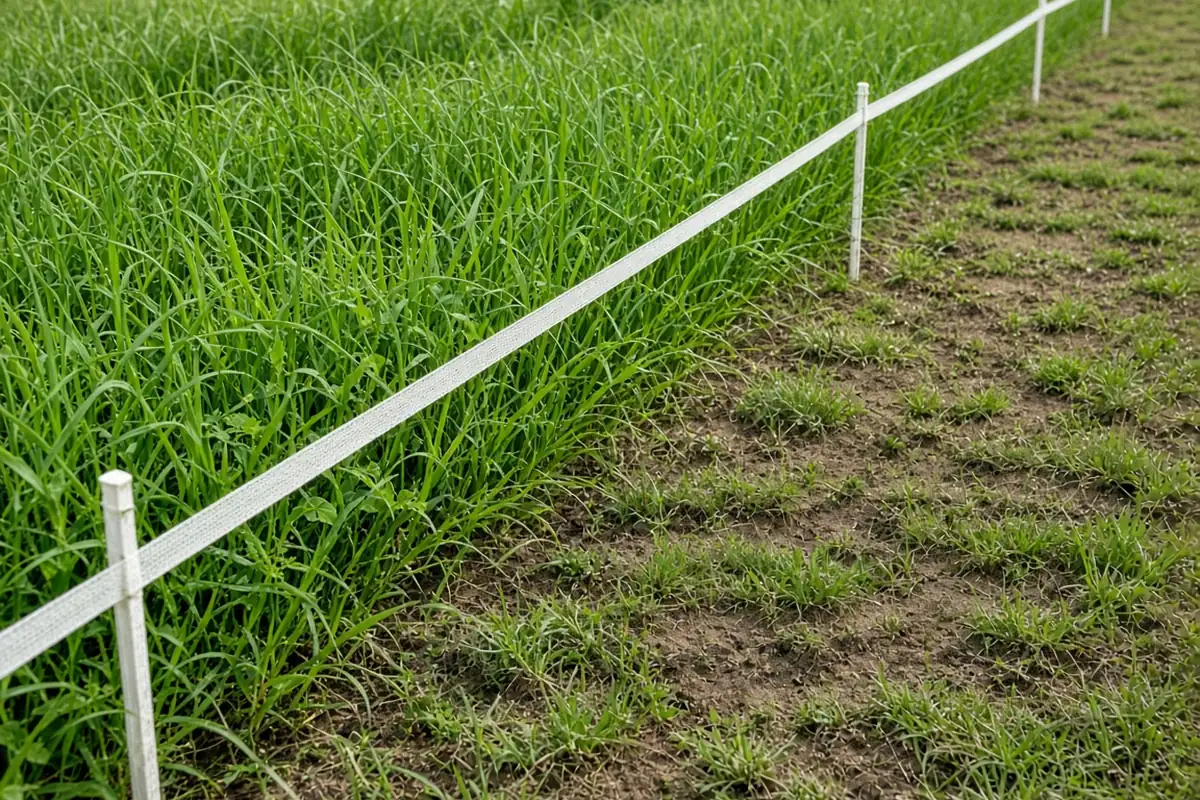
Grass feeding explains why. Washington State University Clark County Extension explains that grazing below three inches removes the leaf surface grass uses to make food. The plant draws on reserves in its roots, and with repeated close grazing those reserves run out, leaving bare spots for weeds. In one large pasture, animals graze tender grass to the ground and return to the regrowth while ignoring taller grass. Smaller paddocks spread grazing more evenly.
How many paddocks does a small farm need?
Penn State Extension says the ideal setup has at least four paddocks connected by gates to one sacrifice lot. The sacrifice lot holds the shelter and water, so each paddock does not need its own. Paddock size depends on how many animals are in the group and how often you want to rotate.
Small farms scale down fine. For a one acre pasture, Penn State Extension says splitting it in half and rotating between the two halves is better than nothing. Laneways can link a sacrifice lot near the barn to farther paddocks.
For help mapping an outdoor space, see planning an outdoor cannabis garden layout.
| Step | Purpose | Notes |
|---|---|---|
| Graze at 6 to 8 inches | Start on ready forage | Check with a yardstick |
| Move at 3 to 4 inches | Take half, leave half | Never below 3 inches |
| Graze 7 days or less | Spare new regrowth | Regrowth begins after about a week |
| Rest 2 to 3 weeks in spring | Fast regrowth | Base moves on height |
| Rest 6 to 8 weeks in summer | Slow regrowth | Use the sacrifice lot if none are ready |
Sources: Penn State Extension, Washington State University Clark County Extension.
How long should paddocks rest?
Growth sets rest, not the calendar. Penn State Extension says animals should stay in a paddock no longer than seven days, because that is about when regrowth starts. With four paddocks grazed seven days each, each gets three weeks of rest, enough for cool season grass to regrow to 6 to 8 inches in a Pennsylvania spring. Hot summers can stretch recovery to six to eight weeks.
If nothing has recovered, Penn State Extension says to confine animals to the sacrifice lot and feed hay until a paddock is ready. Washington State University Extension also recommends a sacrifice area in wet winter months, because grazing saturated soil compacts it and slows spring growth. Learn more in soil compaction in cannabis beds.
How to: step by step
- Walk each pasture and note grass, weeds, fences, gates and water.
- Divide land into several paddocks with temporary electric fence.
- Set up a sacrifice lot with shelter and water.
- Turn animals into a paddock with 6 to 8 inches of forage.
- Move them when 3 to 4 inches remain, within seven days.
- Mow the grazed paddock to an even height.
- Rest each paddock until it regrows, longer in summer.
Washington State University Extension adds that harrowing after grazing breaks up manure piles and spreads their nutrients.
Troubleshooting
Bare patches: grazing below 3 inches. Move animals sooner.
Forage not half grazed after seven days: paddocks too large. Penn State Extension suggests moving temporary fence lines to make them smaller.
Uneven grazing: normal selective grazing. Rotate when animals return to low areas, then mow after moving them.
No paddock ready: slow growth. Use the sacrifice lot and feed hay.
Mud and compaction in winter: grazing wet soil. Move animals to the sacrifice area.
Grass first
Washington State University Extension suggests thinking of pasture as grass farming, with animals harvesting the crop. Shade and slope also shape how fast paddocks recover. See garden microclimates for cannabis. The Kind Seed Co blog has more outdoor growing help.
Sources
- How to make rotational grazing work on your horse farm, Penn State Extension
- Pasture grazing management, Washington State University Clark County Extension
FAQ
Does rotational grazing work for horses?
Yes, Penn State Extension wrote its guide for horse farms. It notes horses need 2 to 4 acres each to stay out full time without overgrazing, but more intensive grazing management lets you maintain horses on fewer acres. Move them by forage height, not a strict schedule.
Can sheep and goats help in rotational grazing?
Washington State University Extension notes that sheep and goats graze some weed species, especially when the weeds are kept short and more palatable. Grass height and rest guidelines still apply. Plan paddock size around how many animals are in the group.
What fencing works for paddocks?
Penn State Extension says that with sturdy perimeter fencing in place, you can subdivide paddocks with temporary electric fencing powered by solar chargers. It's cheaper and lets you move fence lines. Washington State University Extension also says temporary electrified fencing works well for flexible layouts.
How tall should grass be before grazing?
Penn State and Washington State University Extension recommend starting grazing at 6 to 8 inches and move animals at 3 to 4 inches. Penn State calls it the take half, leave half rule. Washington State calls keeping grass at least three inches tall the golden rule of grazing.
What if I only have one acre?
Penn State Extension says that if you can split one acre in half and rotate between the two halves, that is better than nothing. A sacrifice lot gives the pasture time to recover when neither half is ready. Feed hay there until grass regrows to grazing height.


