Common Cocklebur in Cannabis Gardens: Burs and Removal
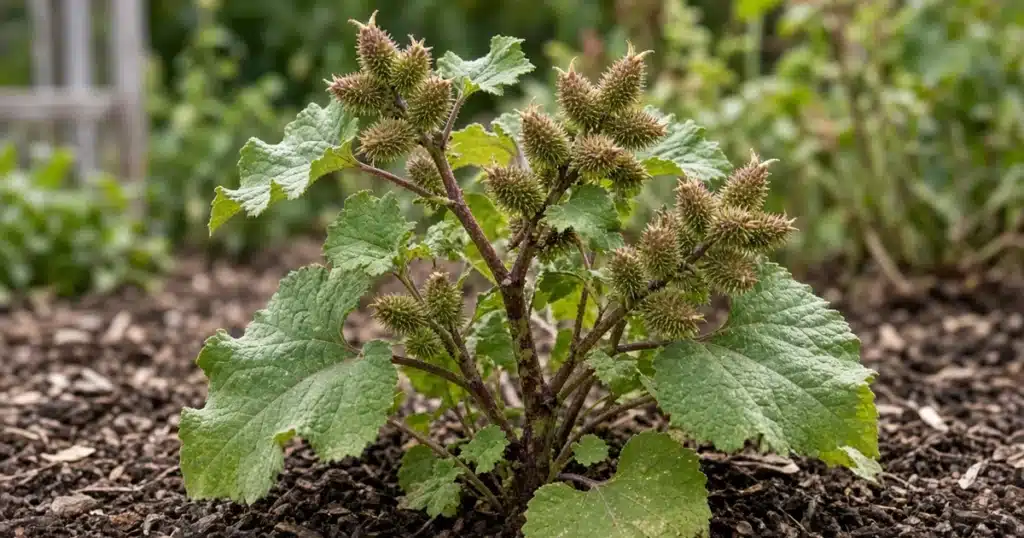
Quick answer: Common cocklebur is a coarse summer annual with rough triangular leaves, spotted stems and hooked burs that each hold two seeds. UC IPM says the seedlings and seeds are toxic to livestock. Pull or hoe young plants with gloves on, remove plants before July flowering leads to burs, and bag any burs you find.
What Is Common Cocklebur?
A coarse summer annual in the daisy family. The University of California Statewide IPM Program (UC IPM) says it inhabits open, often moist disturbed places, including roadsides, ditches, pastures, crop fields and riparian areas. NC State Extension calls it a summer annual that grows 2 to 4 feet tall and prefers moist to wet sandy loams or loams in full sun to partial shade.
NC State says it cannot grow in full shade, which helps explain why open beds and edges suit it. Our overview of weed control in outdoor cannabis covers the wider plan for summer weeds.
How Do You Identify Common Cocklebur?
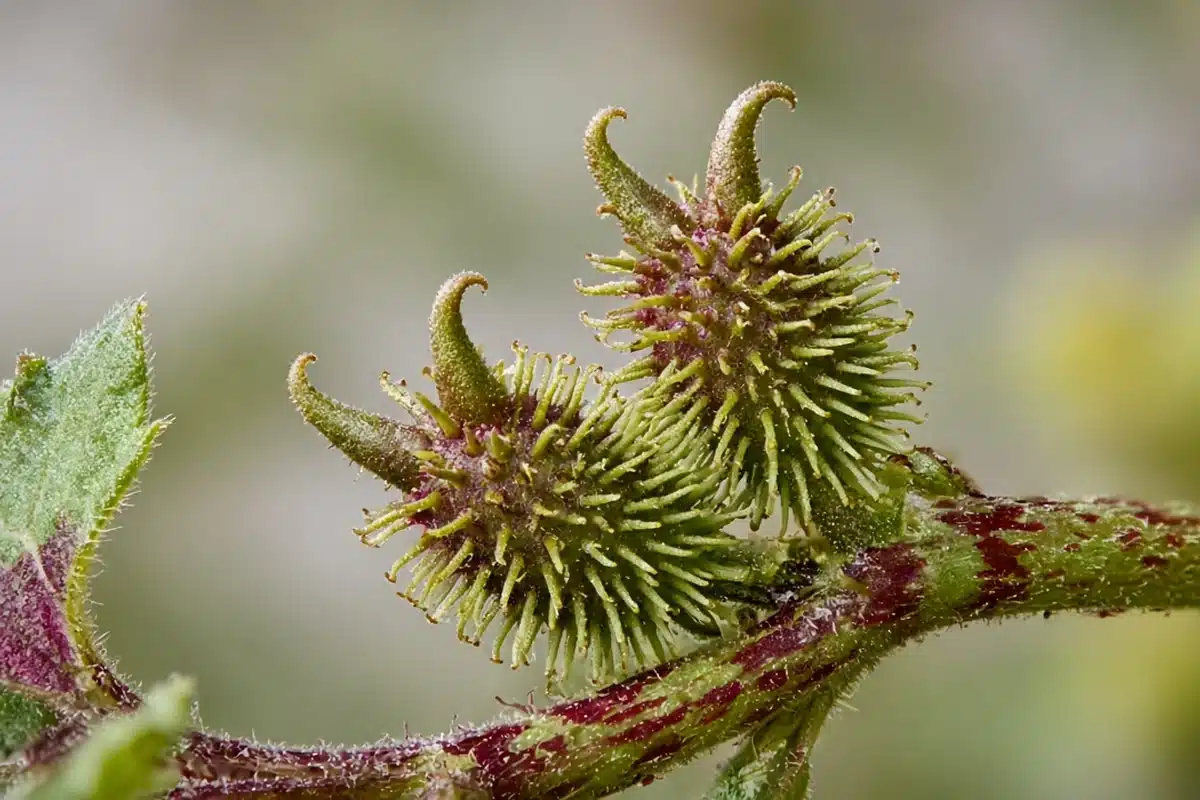
Look for spotted stems and burs. UC IPM says the stems are thick, may branch many times, and have purple or black spots. Other traits:
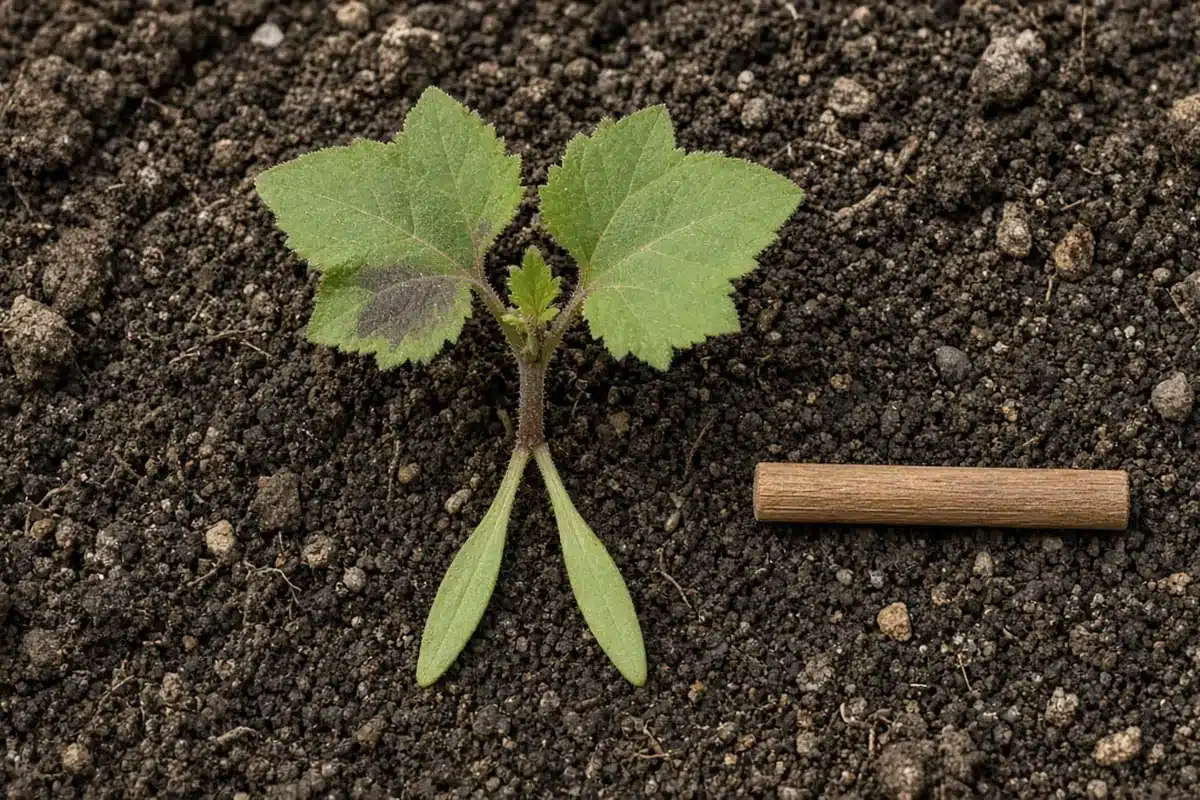
- Leaves. Lobed, triangular, coarsely toothed and long stalked, with a distinctive scent, per UC IPM.
- Seedlings. Bright green, shiny, pointed seed leaves about six times longer than wide. UC IPM says the old bur may stay attached to the base when you pull a seedling.
- Flowers. Green to rusty red male heads above female flowers in oval burs, July through October, per UC IPM.
- Burs. Football shaped and prickly, mostly 3/5 to 1 2/5 inches long, with two hooked beaks at the tip.
- Seed. Two seeds per bur, one larger than the other.
NC State says the burs are covered in short hooked prickles.
How Does Cocklebur Spread?
Mostly by hitchhiking. NC State says the burs attach to clothing and animal fur by their hooked prickles. A dog or a pant leg can carry them from a field edge into your garden.
NC State adds that pollination is by wind and reproduction by self seeding, which often leads to colonies. Once one plant drops burs, expect a cluster of seedlings nearby the next year.
Is Cocklebur Harmful?
It can be, especially to animals. UC IPM says eating cocklebur seedlings and seeds at 1 percent or more of body weight can be fatal to livestock. NC State lists the plant as having high severity poison characteristics.
Keep livestock away from patches and bag the plants you pull. Wear gloves, since the leaves are rough and the burs are prickly.
Does Cocklebur Affect Nearby Plants?
NC State says young cocklebur seedlings release chemicals that can affect the germination of surrounding plants or kill seedlings. This kind of effect is called allelopathy, and NC State tags the plant as allelopathic.
For a cannabis garden, that is one more reason to remove cocklebur early, especially in beds where you direct sow or set out young seedlings. Our guide to soil crusting and cannabis seedlings covers other early season seedling problems.
When Should You Remove Cocklebur?
Before July, ideally. UC IPM says it flowers from July through October, and burs follow the flowers. Pulling plants while they are young means no burs and no seed.
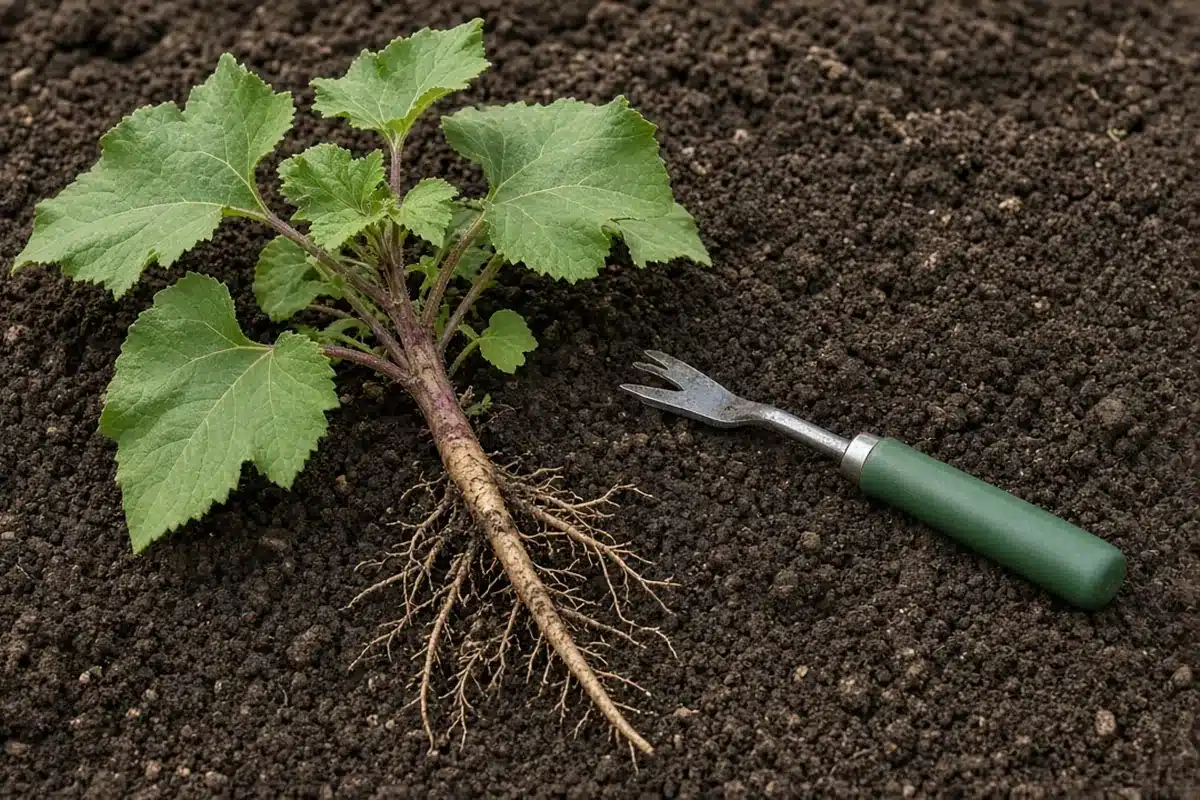
UC IPM’s landscape guide says to remove young weeds by hand before they flower and set seed, and to use shallow cultivation or hoeing for annual weeds. Moist soil helps the root come out cleanly.
Keep checking into fall. UC IPM gives flowering through October. A last walk around bed edges during your fall garden cleanup after cannabis harvest lets you find and bag any burs that formed while you were busy with harvest. Each bur you pick up is two fewer seedlings next spring, since UC IPM says every bur holds two seeds.
How to Control Common Cocklebur in a Cannabis Garden
- Put on gloves. The leaves are rough and the burs are prickly, as UC IPM describes.
- Scout from late spring. Look for shiny, pointed seed leaves, sometimes with an old bur still attached.
- Pull or hoe young plants. UC IPM’s landscape guide recommends removing young weeds before they flower.
- Remove plants before July. UC IPM says flowering starts in July, followed by burs.
- Bag every bur. NC State says burs cling to clothing and fur. Do not leave them on the ground.
- Check pets and clothing. Brush off burs before leaving the area so you do not carry them into clean beds or the house.
- Mulch cleared ground. Cover bare soil with 3 to 4 inches of mulch, as UC IPM advises. Our guide to mulch for cannabis compares options.
Common Cocklebur at a Glance
| Subject | Extension finding | Attribution |
|---|---|---|
| Life cycle | Summer annual | UC IPM, NC State |
| Height | 2 to 4 feet | NC State |
| Stem | Thick with purple or black spots | UC IPM |
| Bloom period | July through October | UC IPM |
| Bur size | About 3/5 to 1 2/5 inches | UC IPM |
| Spread | Burs cling to clothing and fur | NC State |
Should You Use Herbicides Near Cannabis?
No. Pull, hoe shallowly and mulch. If herbicides ever come up for other parts of your property, follow the label exactly. Remember that EPA has not registered any herbicide for use on marijuana, and state rules vary, so check with your state agriculture department. UC IPM says home gardeners who hand weed and mulch should not need herbicides. Before you plant cannabis outdoors, check your state’s home grow law.
Troubleshooting Common Cocklebur
Burs keep showing up on your clothes. NC State says the hooked prickles cling to fabric. Clear nearby plants and brush off clothes before you enter beds.
Seedlings cluster in one spot. NC State says it self seeds into colonies. Pull the whole cluster and mulch the area.
Cannabis seedlings struggle near cocklebur. NC State says cocklebur seedlings can affect germination of nearby plants or kill their seedlings. Remove it early.
A dog brought burs home. Check pets after walks near field edges and bag any burs.
Plants already have burs. Cut and bag them carefully so burs do not fall to the soil.
At Kind Seed Co, we bag cocklebur burs instead of letting them ride into our beds.
Frequently Asked Questions
What does common cocklebur look like?
UC IPM says it is a coarse summer annual with thick stems marked with purple or black spots and lobed, triangular, coarsely toothed leaves. It forms prickly, football shaped burs about 3/5 to 1 2/5 inches long with two hooked beaks. NC State says plants grow 2 to 4 feet tall.
Is cocklebur poisonous?
UC IPM says eating cocklebur seedlings and seeds at 1 percent or more of body weight can be fatal to livestock, and NC State lists it as having high severity poison characteristics. Keep livestock away from patches, wear gloves when you pull it, and bag the plants instead of leaving them on the ground.
How do cocklebur burs spread?
NC State says the burs attach to clothing and animal fur with short hooked prickles, so people and pets carry them into new areas. Each bur holds two seeds, UC IPM says. Brush off clothing and check pets after walking near field edges, and bag every bur you remove.
When should I pull cocklebur?
Pull it while it is young and before July. UC IPM says it flowers from July through October, and the burs follow. Removing seedlings in late spring and early summer, before flowers form, keeps new burs and seed out of your garden. Moist soil makes pulling easier.
Where does common cocklebur grow?
UC IPM lists roadsides, ditches, pastures, crop fields, orchards, seasonal wetlands and other disturbed places, often moist ones. NC State adds stream banks and poorly drained areas. Around a home garden, check low, damp spots, ditches and bare edges near cannabis beds, and pull young plants before they flower.
Sources
- UC Statewide IPM Program, Common Cocklebur, Weed Gallery: https://ipm.ucanr.edu/weeds-identification-gallery/common-cocklebur/
- NC State Extension Gardener Plant Toolbox, Xanthium strumarium: https://plants.ces.ncsu.edu/plants/xanthium-strumarium/
- UC Statewide IPM Program, Weed Management in Landscapes: https://ipm.ucanr.edu/home-and-landscape/weed-management-in-landscapes/