
Tomato Fruit Not Ripening: Heat Plus Season End
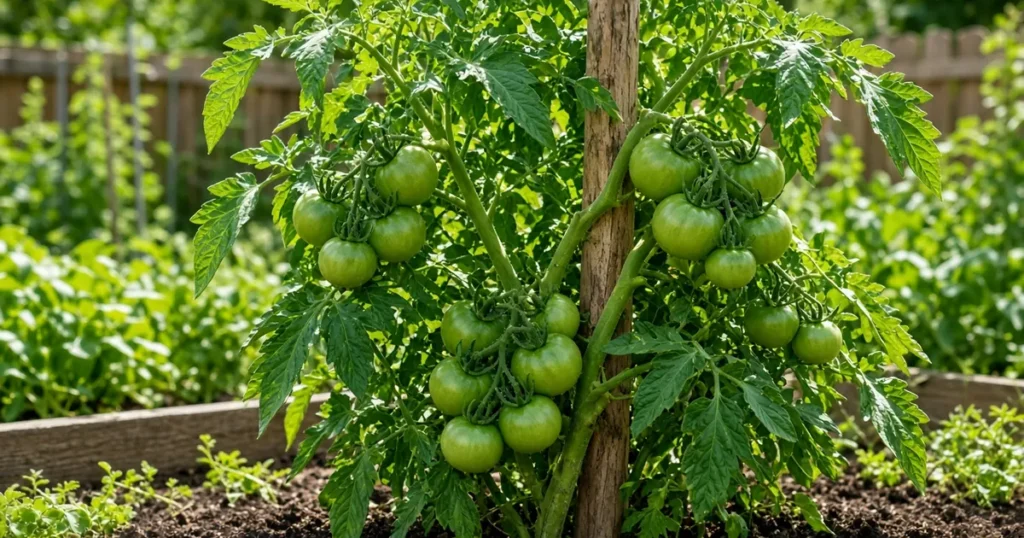
Tomato fruit not ripening usually comes down to extreme heat, cooling weather at season end or low potassium. Mississippi State University Extension notes that the red pigment lycopene is killed around 93 F. University of Minnesota Extension adds that mature green fruit picked before frost will often ripen indoors.
The short answer
Look at the weather first. UMass Amherst Extension notes that ripening disorders are most common when air temperatures fall below 60 F or rise above 90 F. Mississippi State University Extension links uneven ripening to high nitrogen plus low potassium. At season end, mature green fruit picked before frost often ripens indoors at room temperature.
How does heat slow ripening?
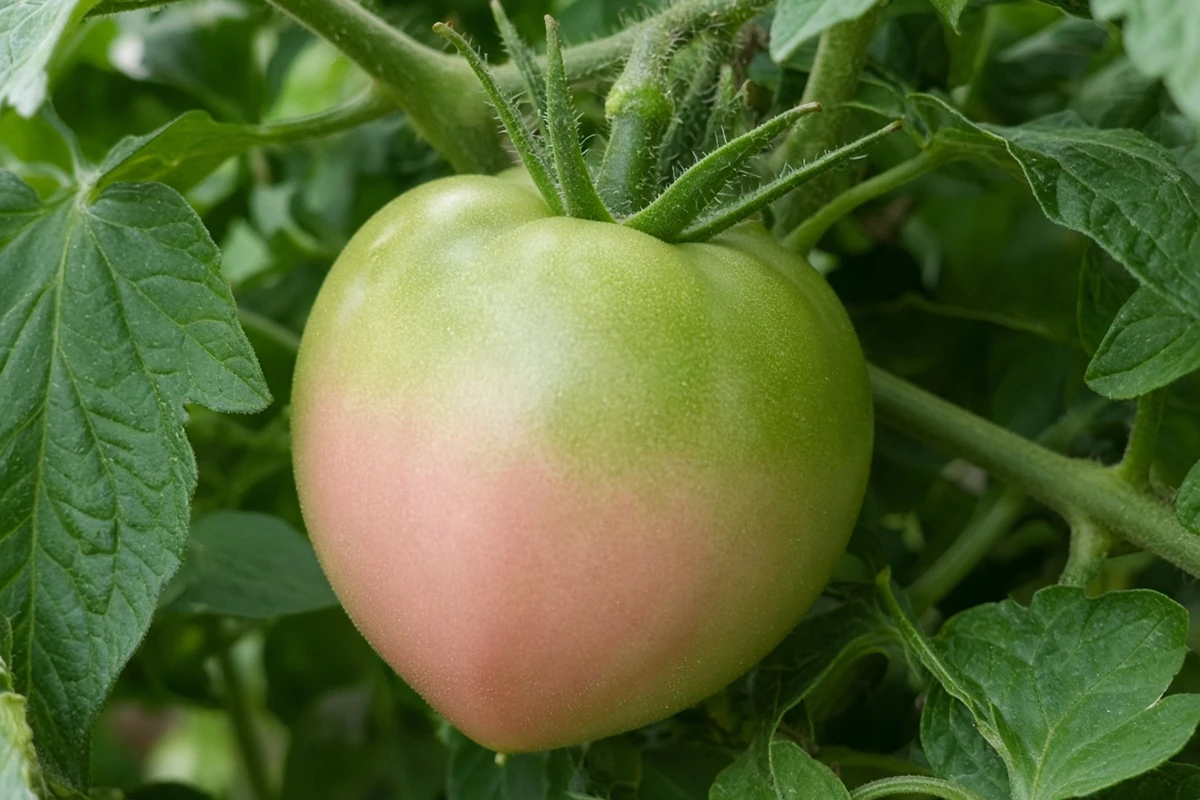
Mississippi State University Extension notes that high temperature is a cause of uneven ripening because lycopene, the red pigment, is killed around 93 F. Fruit can stay orange or blotchy in long hot spells.
UMass Amherst Extension says ripening disorders are most prevalent when air temperatures during mid to late ripening are below 60 F or above 90 F. Highly variable temperatures plus high humidity worsen the problem.
UMass adds that yellow shoulders are often found on fruit exposed directly to the sun. Loss of foliage due to disease can also expose fruit to the sun.
What happens at season end?
University of Minnesota Extension notes that vining tomato plants continue to produce flowers plus ripen fruit until the weather becomes too cold. Bush types ripen a set number of fruits within four to six weeks.
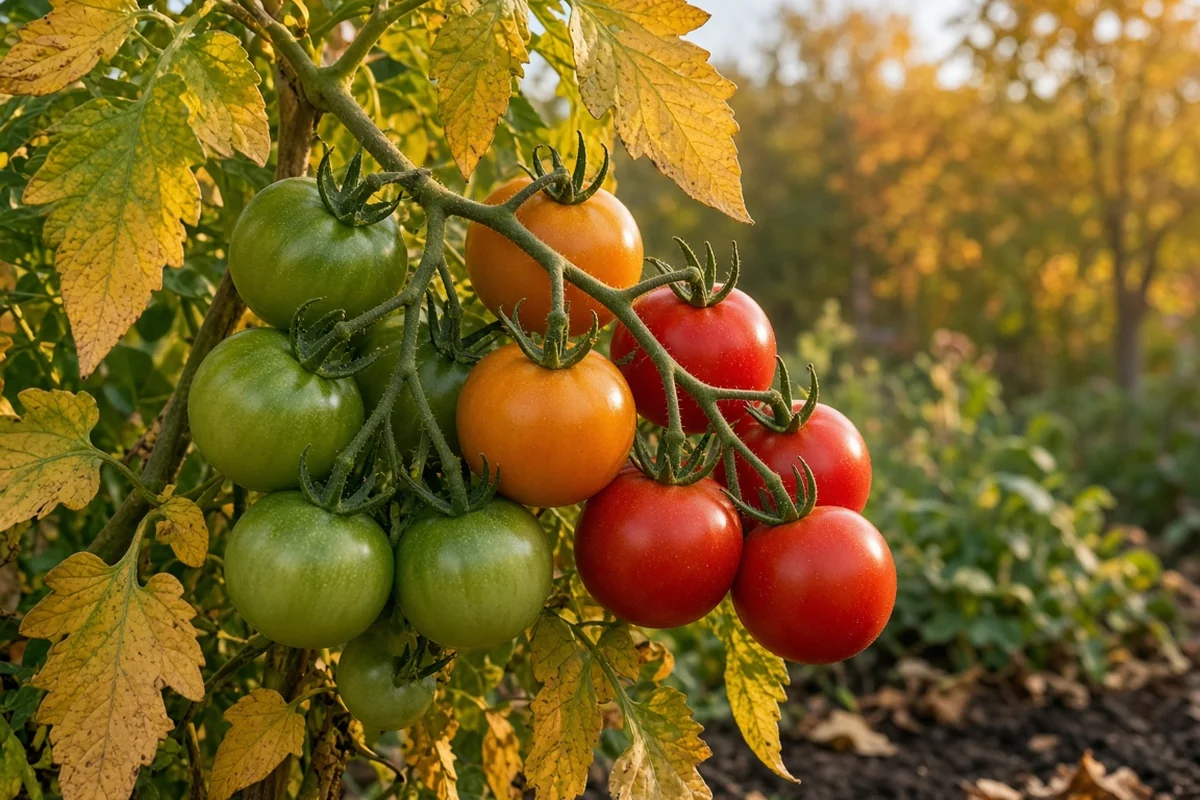
When frost threatens at the end of summer, Minnesota advises picking all the fruit plus bringing it indoors. Fruit that is mature green, fully developed in size but not color, will often ripen satisfactorily.
Fruit so unripe that the bottom is as green as the rest will not be worth ripening indoors, the same source notes. On the bottom, look for a star or streak of white.
| Sign | Likely cause | Source note |
|---|---|---|
| Orange or blotchy fruit in a heat wave | Heat | Lycopene killed around 93 F |
| Green fruit as fall cools | Season end | Pick before frost |
| Green or yellow shoulders | Low potassium or sun exposure | Common ripening disorder |
| Lush plant, uneven color | High nitrogen | Likely cause of uneven ripening |
Source: Mississippi State University Extension plus UMass Amherst Extension.
Can feeding affect ripening?
UMass Amherst Extension notes that severe blotchy ripening plus yellow shoulder are most often linked to factors that limit potassium supply to maturing fruit. Waterlogged or compacted soil plus dense canopies are among those factors.
Mississippi State University Extension says the most likely causes of uneven ripening are high fertility, usually nitrogen, plus low potassium. Green stripes, blotches plus green shoulders are typical signs.
University of Georgia Extension adds that too much nitrogen can cause excessive growth plus hinder flowering. A soil analysis guides feeding, according to University of Minnesota Extension.
How to: step by step
- During ripening, note the daytime highs.
- Look at whether shaded or sun exposed fruit lag.
- Look for green or yellow shoulders.
- Before frost, pick mature green fruit.
- Ripen fruit indoors one layer deep at room temperature.
- Before adding potassium or nitrogen, have soil analyzed.
Troubleshooting
Orange fruit in a heat wave: heat. Wait for cooler days.
Green fruit in fall: season end. Ripen indoors.
Green shoulders on lush plants: nutrient balance. Get a soil analysis.
For related reading see cannabis heat stress, when to harvest outdoor cannabis plus frost damage on cannabis. Kind Seed Co also stocks cannabis seeds.
Sources
- Growing tomatoes in home gardens, University of Minnesota Extension
- Tomato, physiological ripening disorders, UMass Amherst Extension Vegetable Program
- Troubleshooting cultural problems in tomatoes (C1089), University of Georgia Extension
- Common problems with tomatoes (P2975), Mississippi State University Extension
FAQ
Can green tomatoes ripen off the vine?
Yes, if mature. University of Minnesota Extension says fruit that is mature green, fully developed in size but not color, will often ripen satisfactorily indoors. Fruit picked when the green is fading to white or pink does well. Truly green fruit with a green bottom will not be worth ripening.
Should leaves be removed to ripen fruit?
The cited sources do not recommend stripping leaves. UMass Amherst Extension notes that yellow shoulders are often found on fruit exposed directly to the sun. Loss of foliage due to disease can also expose fruit to the sun. Extremely hot fruit may show sunscald, with white sunken skin.
How long do tomatoes take to ripen indoors?
University of Minnesota Extension says fruit stored indoors will ripen over the next few weeks. Store unripe fruits at room temperature, one layer deep, spaced apart without touching. Light is not necessary, since warm temperatures matter more than light in ripening the fruit.
Why are tomatoes ripening unevenly?
Mississippi State University Extension says uneven ripening includes green stripes, streaks, blotches plus yellow or green shoulders. The most likely causes are high nitrogen, low potassium plus high temperature. UMass Amherst Extension adds that tomato mosaic virus can cause similar symptoms and should be ruled out.
Do cool nights stop ripening?
UMass Amherst Extension notes that ripening disorders are most prevalent when air temperatures during mid to late ripening are below 60 F or above 90 F. University of Minnesota Extension says vining tomatoes ripen fruit until the weather becomes too cold. Pick mature green fruit before frost arrives.



