
Turkey in Orchard Plans: Foraging, Fencing and Rotation
The short answer
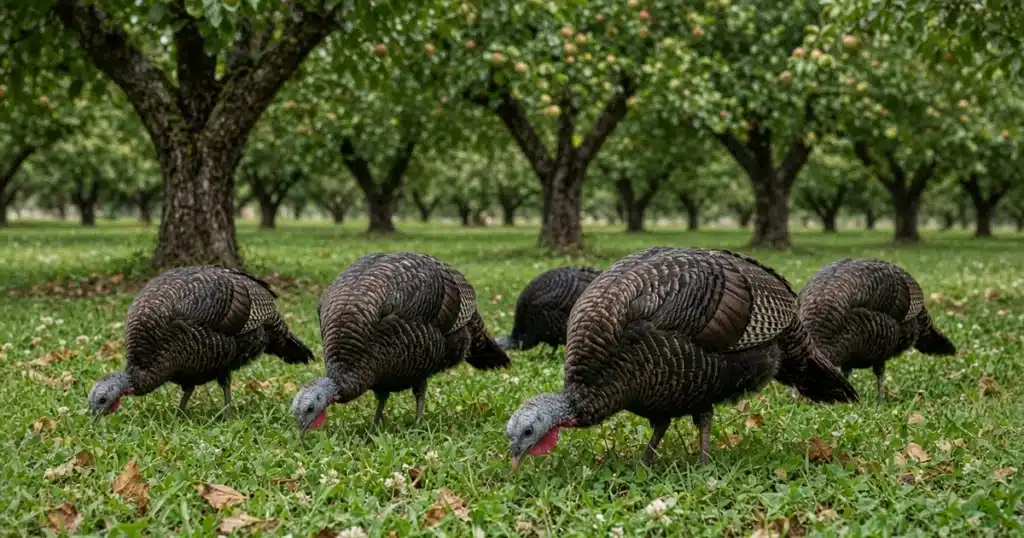
A turkey in orchard rows can forage on insects, weeds and dropped fruit, much as Oregon State University Extension found with chickens under apple trees. NCAT says turkeys are excellent foragers that add fertility through manure. They need secure fencing, a roost, fresh ground on a schedule and cages around young trees.
Can turkeys help in an orchard?
They can, if managed well. Most university orchard work has used chickens, so the turkey advice here combines that work with pastured turkey guidance.
Oregon State University Extension studied chickens in an organic apple orchard. The larvae of codling moth and apple maggot drop out of fruit onto the orchard floor to find pupation sites, and at that stage they are open to foraging birds. Oregon State found chickens, broilers in particular, were a useful way to reduce pests and weeds, though results were not as promising as hoped.
Turkeys are hard foragers. NCAT’s ATTRA program says turkeys are excellent and aggressive foragers that eat almost anything they can find, and they prefer diverse pasture with plenty of legumes. NCAT also says turkeys cannot live on insects and plants alone, so they still need feed. The USDA National Agroforestry Center adds that dropped fruit and nuts can be useful forage after harvest, and clearing fallen fruit can reduce some pests. For other ways to manage orchard and garden pests, see 7 ways to keep pests off marijuana plants.
How do you fence turkeys in an orchard?
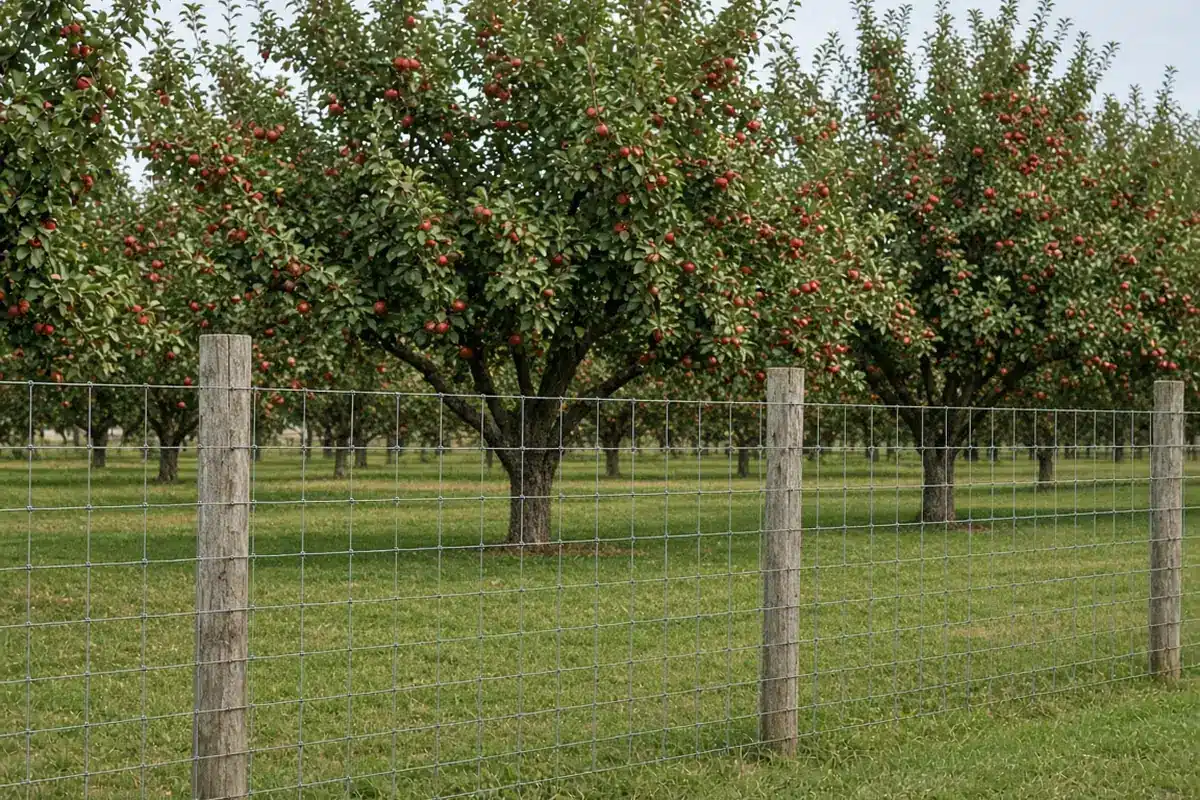
NCAT says electric net fencing 48 inches tall is an appropriate size for turkeys. A solar charger can power it, and it moves easily. The fence deters smaller predators, but NCAT notes that coyotes may jump it. Oregon State used the same 48 inch electric poultry netting to pen laying hens into a tree row.
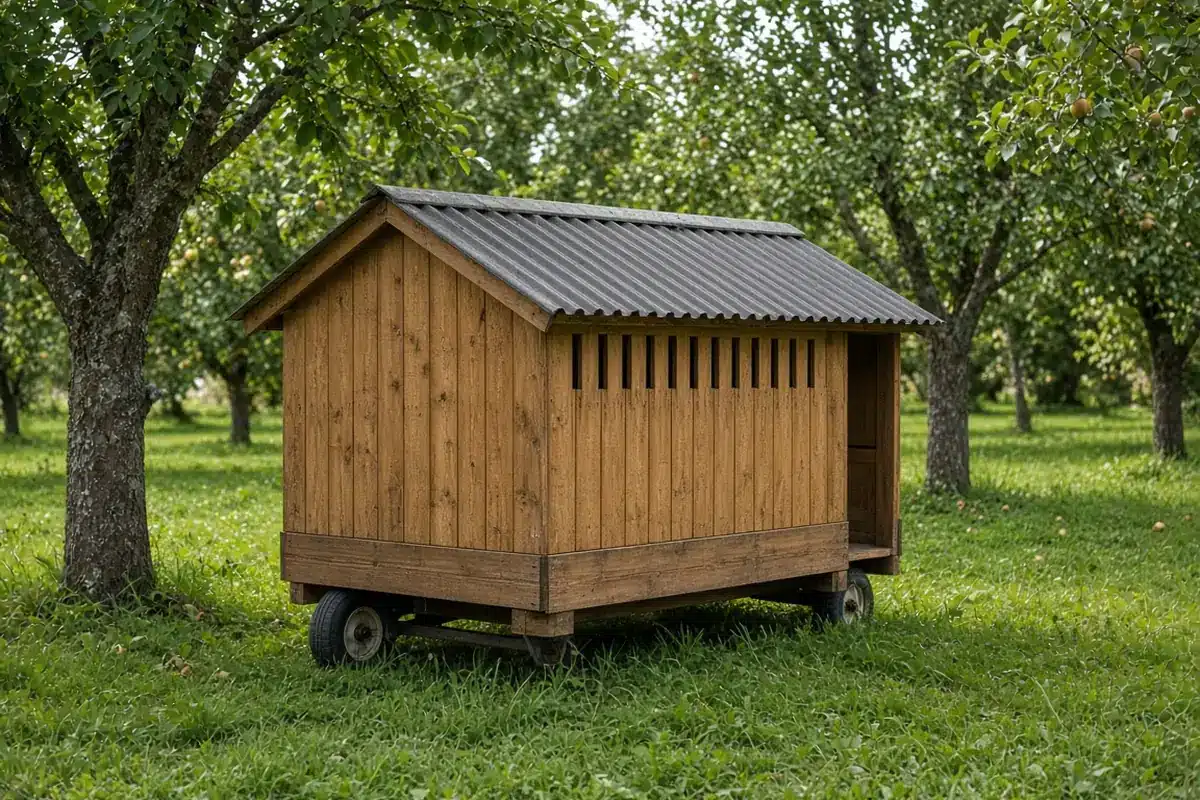
Turkeys like to fly and roost. NCAT says heritage turkeys can fly, will leave to find a tree if no roost is provided and may make a habit of flying over a fence. Plenty of fresh feed, clean water, shade and roost space make escapes less likely. Wing clipping, done correctly, can stop flying.
Cage young trees. The USDA National Agroforestry Center says young trees will likely need to be fenced or robustly caged from livestock, while mature trees need less if animals rotate often and have enough forage. For more on planting under and near trees, read growing cannabis near trees.
How do you rotate poultry under fruit trees?
Keep the flock on the move. Oregon State moved chicken tractors down an orchard row every two to three days. NCAT says turkeys forage faster than broilers and cover more ground, so they often need more acreage. As turkeys scratch and leave manure, the ground can turn bare, so move pens more often as birds grow, sometimes more than once a day.
Plan around harvest. The USDA National Agroforestry Center says most operations keep animals out of the orchard for 90 to 120 days before harvest.
| Task | Why | Notes |
|---|---|---|
| 48 inch electric net fence | Contains turkeys, deters small predators | Coyotes may jump it |
| Roost and shade | Turkeys leave to find trees otherwise | Plenty of feed and water too |
| Cage young trees | Young trees are easily damaged | Mature trees need less |
| Move pens often | Ground goes bare under birds | More often as birds grow |
| Pull birds before harvest | USDA timing | Often 90 to 120 days |
Sources: NCAT ATTRA, USDA National Agroforestry Center, Oregon State University Extension.
How to: step by step
- Choose a section of orchard with mature trees.
- Set up 48 inch electric net fencing and a shelter with roosts.
- Cage young tree trunks.
- Supply feed, water and shade.
- Move the flock to fresh ground on a schedule.
- Remove birds 90 to 120 days before harvest.
- Watch the orchard floor for bare or muddy spots.
University of Vermont Extension says chickens can clean up fallen fruit and insect pests under fruit trees, but birds also love ripening berries, so netting or portable fences can keep them off crops. For yard conditions that affect where pens go, see garden microclimates for cannabis.
Troubleshooting
Bare ground caked with manure: birds left too long. Move them sooner.
Bark damage on young trees: no cages, so add sturdy ones.
Birds roosting in trees or over the fence: no roost or low fencing. Add roosts and consider wing clipping.
Birds leaving the paddock: forage used up. NCAT says fresh feed, water, shade and roosts reduce escapes.
Losses to predators: coyotes, raccoons, hawks and dogs. Secure the house at night.
Rotate, fence and watch the calendar
Turkeys can clean up an orchard floor when they have fences, roosts and fresh ground. The Kind Seed Co blog has more on gardens beyond cannabis.
Sources
- Pastured turkey production, NCAT ATTRA
- Chicken tractors: moveable flocks help manage orchard pests (EM 9320), Oregon State University Extension
- Silvopasture scenarios for California: integrating animals into orchards, USDA National Agroforestry Center
- Chickens in the garden, University of Vermont Extension
FAQ
Do turkeys eat fallen fruit?
NCAT says turkeys eat almost anything they can find. The USDA National Agroforestry Center says dropped fruit and nuts are useful forage after harvest, and clearing fallen fruit can reduce some pests. University of Vermont Extension says chickens clean up fallen fruit under trees in a similar way.
Can turkeys and chickens share an orchard?
The sources reviewed here do not cover mixed flocks directly. Oregon State used chickens in tractors and penned rows, and NCAT describes turkeys in their own range coops or paddocks. Running separate pens and rotating each one is the approach the sources support.
How many turkeys suit a small orchard?
NCAT says turkeys forage faster and cover more ground than broilers, so they often need more acreage. In a range coop, it suggests three to four square feet per bird and 15 inches of roost space per bird. Move the pen often so ground does not go bare.
Do turkeys damage fruit trees?
Young trees are the main concern. The USDA National Agroforestry Center says young trees will likely need fencing or sturdy cages, and mature trees need less if animals rotate often and have enough forage. Birds also eat ripening fruit, so University of Vermont suggests netting.
When should turkeys leave the orchard before harvest?
The USDA National Agroforestry Center says most operations keep animals out of the orchard for 90 to 120 days before harvest. Move birds out 90 to 120 days before harvest.


