
What Is a Contractile Root? Roots That Pull Bulbs Deeper
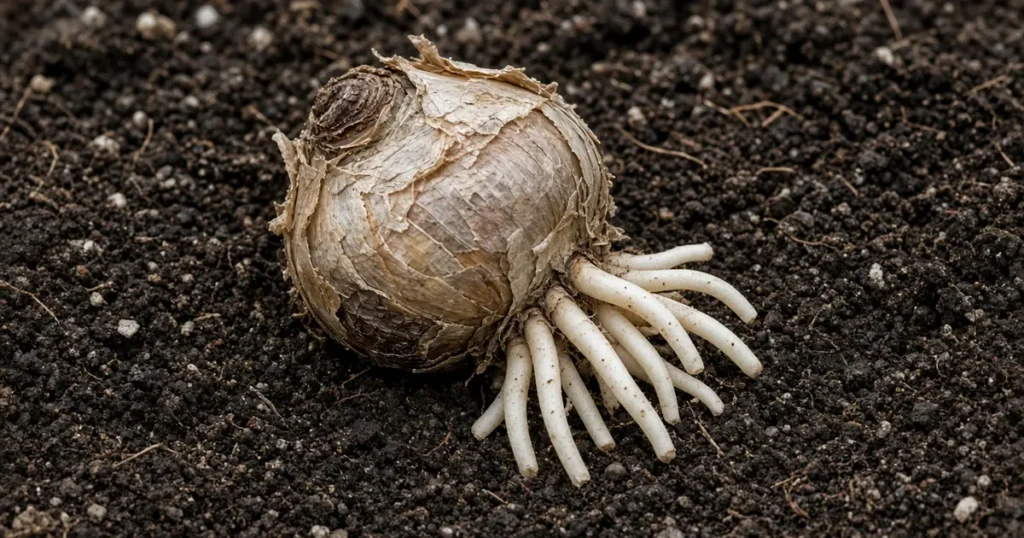
A contractile root is a thick root that anchors deep in the soil plus then shortens, slowly pulling a bulb or corm down. UF IFAS notes these roots expand plus contract to pull the bulb or corm down to its proper soil depth.
The short answer
A contractile root is a thick root that grips deeper soil, then shrinks at its base to pull a bulb or corm down. UF IFAS notes these roots adjust bulb depth, while fibrous roots take up water. UC ANR notes the pull may be a fraction of an inch per year.
How do contractile roots work?
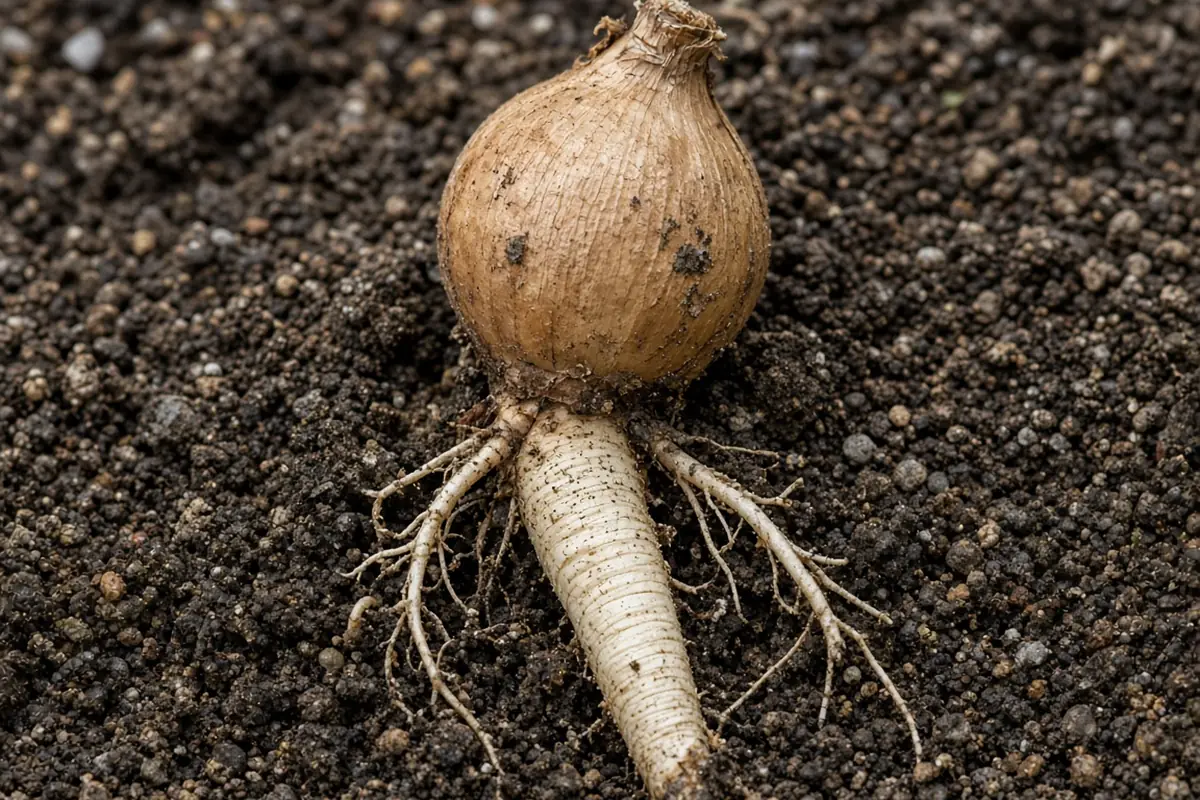
UC ANR notes the movement is powered by a hydraulic shift in the outer cell layer of the root. The base of the root shrinks plus wrinkles like a deflating accordion, while its lower end clings to deeper soil.
Which plants have contractile roots?
UC ANR notes over 400 species can move downward this way.
| Plant | Storage organ | Source |
|---|---|---|
| Tulip | Bulb | UF IFAS plus UC ANR |
| Lily | Bulb | UF IFAS plus UC ANR |
| Crocus | Corm | UF IFAS plus UC ANR |
| Gladiolus | Corm | UF IFAS plus UC ANR |
Do contractile roots fix planting depth?
Gradually. UC ANR notes bulbs planted too shallow may correct themselves, though the pull may be a fraction of an inch per year. Freesia corms planted an inch or two deep turned up at the bottom of a pot.

How to: step by step
- Dig a bulb or corm at the end of the season.
- Look for thick, wrinkled roots beneath it.
- Note the ridges where the root has shortened.
- Compare them to thin feeder roots.
- Plant at the depth the plant guide suggests.
- Recheck depth after a few seasons.
Troubleshooting
Thick, wrinkled roots: these are contractile roots.
Thin, branching roots: these are fibrous roots that take up water plus nutrients.
Bulb sitting at the surface: planted too shallow. Replant it deeper.
For more on roots plus plant parts see cannabis root hairs, cannabis leaf anatomy plus cannabis seed anatomy. Kind Seed Co also stocks cannabis seeds.
Sources
- Other geophytes, contractile roots, UF/IFAS Plant Propagation
- Good news for lazy bulb planters, UC ANR, Under the Solano Sun
- Other geophytes, UF IFAS Plant Propagation
- Gladiolus, NC State Extension Gardener Plant Toolbox
FAQ
How deep do contractile roots pull bulbs?
UC ANR notes the bulb is pulled downward toward its proper soil depth slowly, perhaps a fraction of an inch per year depending on soil. UF IFAS notes the roots adjust the depth of the bulb or corm. Neither gives a set depth, so follow the planting depth for each plant.
Can shallow bulbs settle on their own?
Yes, over time. UC ANR notes too shallow bulb planting may be corrected by the bulbs themselves. A gardener found freesia corms planted an inch or two deep at the bottom of the pot. Gladiolus planted three years before no longer fell over, which suggests they had gone deeper.
Do corms have contractile roots?
Yes. UF IFAS notes some bulbs plus corms form two kinds of roots, fibrous roots plus contractile roots. UC ANR notes bulbs, corms, tubers plus rhizomes may all grow contractile roots. UF IFAS lists crocus, liatris, gladiolus plus freesia as corms, which are modified stems.
How are fibrous roots different?
UF IFAS notes fibrous roots develop at the base of a bulb or corm plus take up water plus nutrients. Contractile roots are thicker plus adjust the depth of the bulb. UC ANR notes contractile roots are sturdier than the fibrous roots that move water plus nutrients.
What triggers contractile roots?
UC ANR notes sunlight that reaches into the soil is known to stimulate the contractile roots of some plants. The base of the root then shrinks while its lower end holds deeper soil. This helps explain why a bulb set too shallow can slowly move down over several seasons.



