
What Is a Hydathode? Leaf Pores That Release Water Drops
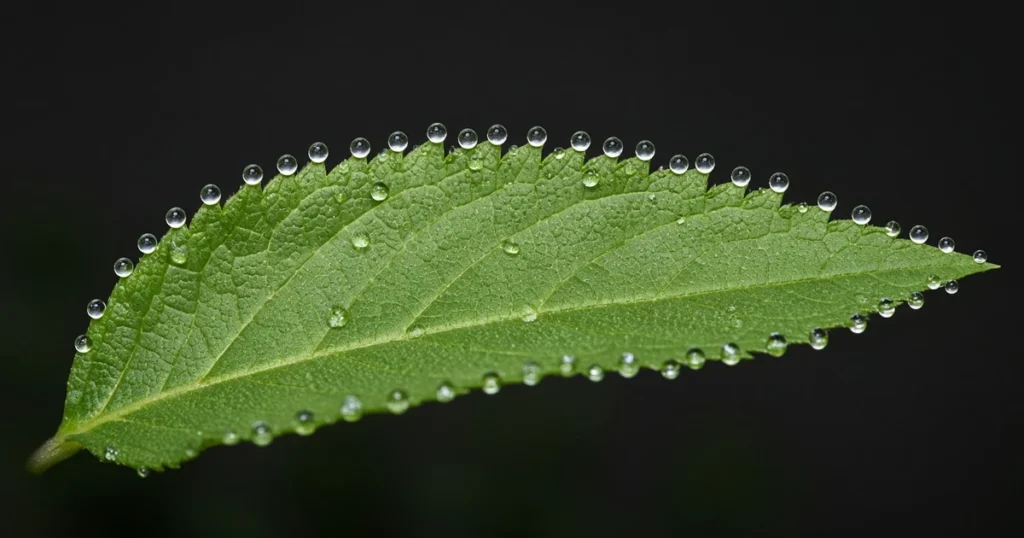
A hydathode is a pore, often along a leaf edge, that releases drops of watery liquid. The Pacific Northwest Pest Management Handbooks define guttation as the exudation of watery, sticky liquid from hydathodes, especially along leaf margins, which is why drops line some leaf edges.
The short answer
A hydathode is a leaf pore that lets out drops of liquid, a process called guttation. The Pacific Northwest Handbooks note guttation drops form along leaf margins. Transpiration is different. NC State Extension notes plants lose water mainly as vapor through stomata, which pulls more water up the xylem from the roots.
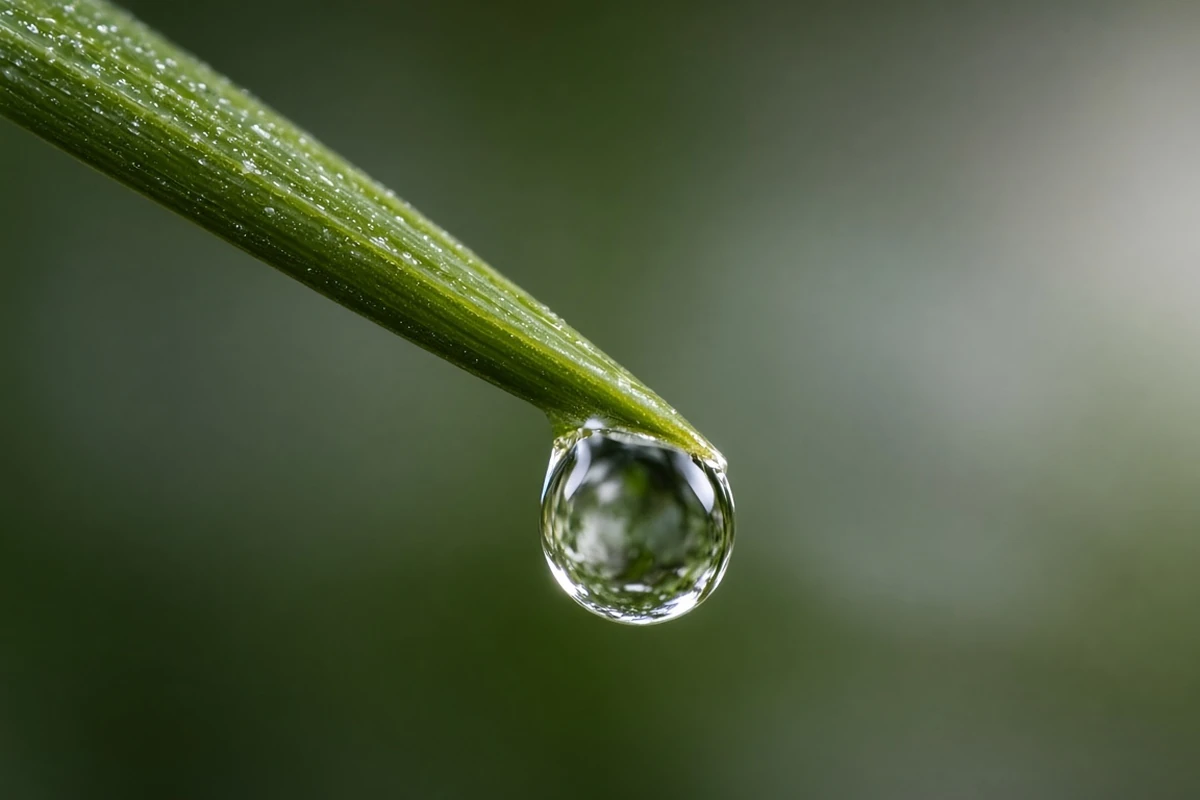
What is guttation?
The Pacific Northwest Handbooks define guttation as the exudation of watery, sticky liquid from hydathodes, especially along leaf margins. The drops you see on a leaf edge leave through these pores.
How is guttation different from transpiration?
NC State Extension notes transpiration is how a plant loses water, primarily through its stomata.
| Process | Where | Source |
|---|---|---|
| Guttation | Liquid drops from hydathodes on leaf margins | Pacific Northwest Handbooks |
| Transpiration | Water loss through stomata | NC State |
| Water transport | Xylem from roots to shoots | NC State |
| Stomata at night | Usually closed | NC State |
What do stomata do?
NC State notes guard cells open plus close stomata in response to conditions around the leaf. In mild weather stomata often stay open, while guard cells usually close them in darkness.
How to: step by step
- Check leaf edges early in the day.
- Find drops lined up on the margin.
- Note that drops sit at the edge, not across the whole leaf.
- Compare with water loss through stomata.
- Recheck the plant later in the day.
- Note whether the drops are gone.
Troubleshooting
Drops only at leaf edges: the Pacific Northwest Handbooks note guttation occurs especially along leaf margins.
Sticky residue on edges: guttation liquid is watery plus sticky, as the handbooks note.
Unsure what you see: match the drops against the photo on the Pacific Northwest guttation page.
For more on plant structure see cannabis leaf anatomy, cannabis root hairs plus cannabis nodes and internodes. Kind Seed Co also stocks cannabis seeds.
Sources
- Guttation, Pacific Northwest Pest Management Handbooks (Oregon State University)
- Extension Gardener Handbook, chapter 3: botany, NC State Extension
FAQ
Where are hydathodes found on a leaf?
The Pacific Northwest Pest Management Handbooks note guttation drops come out of hydathodes, especially along leaf margins. Its photo shows water drops lined up on the edges of leaves. That pattern helps gardeners tell guttation apart from water that has simply landed across the whole surface of a leaf.
How is guttation different from transpiration?
Guttation releases liquid drops from hydathodes, as the Pacific Northwest Handbooks note. NC State Extension notes transpiration is water loss primarily through stomata, which pulls more water up the xylem. One process leaves visible drops on leaf edges, while the other moves water out of the leaf unseen.
Do stomata close at night?
NC State Extension notes that with very few exceptions, guard cells usually close the stomata in the absence of light. In mild weather stomata often remain open during the day. Guard cells open plus close the stomata in response to conditions around the leaf, such as light plus temperature.
What does xylem carry?
NC State Extension notes xylem transports water plus minerals from the tips of roots to the tips of shoots. This water forms a continuous column that helps the plant stay firm, a state called turgor pressure. Water drops at leaf edges come from this same supply of water.
How much water do plants lose through transpiration?
NC State Extension notes about 90% of the water a plant takes up is lost through transpiration. The other 10% is used in chemical reactions plus plant tissues. Transpiration moves minerals from the soil to plant parts plus cools leaves as water evaporates from them.



