
What Is Domatia? Tiny Leaf Chambers That House Mites
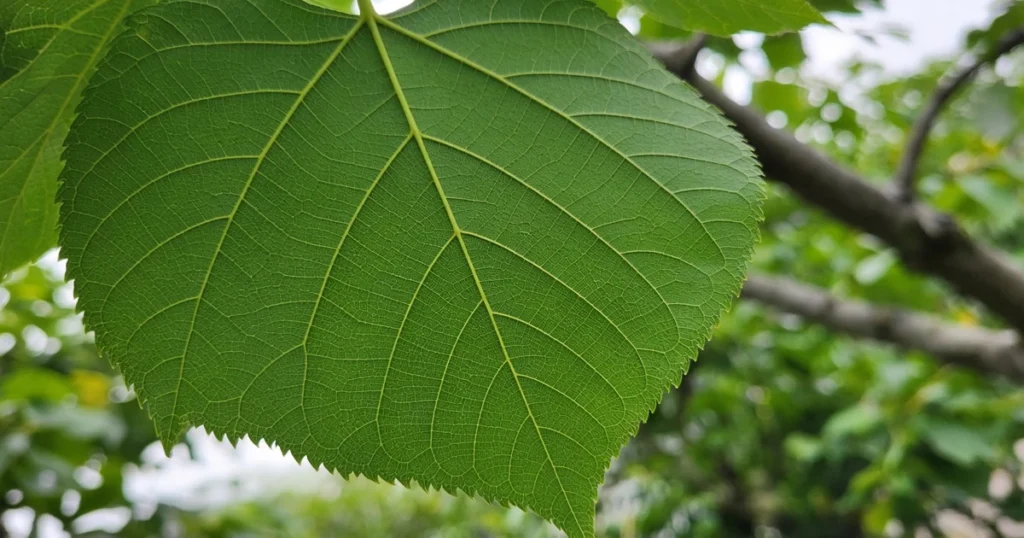
Domatia are tiny pockets or tufts of hair on the underside of some leaves, often where veins meet. A study of coast live oak in the journal Madroño notes hair tufts in leaf vein axils act as domatia for mites, which feed on leaf fungi or small plant feeding pests.
The short answer
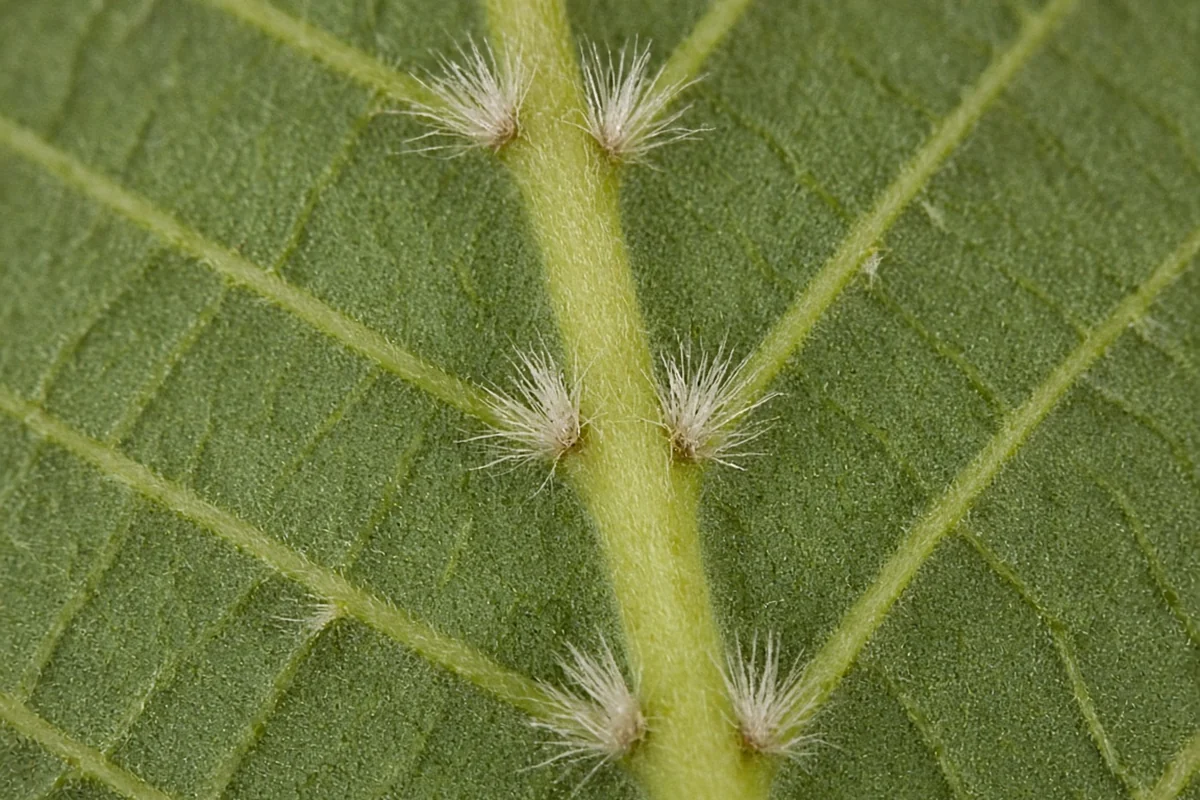
Domatia are small shelters on a leaf, most often tufts of hair in the angle where a side vein meets the midrib on the lower surface. The Madroño study found mites were more likely to sit in vein axils with hair tufts. Removing the tufts reduced mite numbers on coast live oak.
Where are domatia found?
Check the lower leaf surface. The Madroño study counted hair tufts in the vein axils of coast live oak, where side veins meet the midrib. It notes hair tufts on lower leaf surfaces are an identifying feature of that oak.
| Leaf feature | Where | Source |
|---|---|---|
| Hair tufts | Vein axils on the lower surface | Madroño study |
| Trichomes | Hairs from epidermis cells | NC State |
| Midrib plus side veins | Netted veins of dicot leaves | NC State |
| Matte gray underside | American basswood leaf | NC State |
What lives in domatia?
The Madroño study found two common mite families inside the tufts. It notes Phytoseiidae are predators of spider mites plus gall mites, while Tydeidae include fungus feeding plus predatory mites.
Do domatia help plants?
Not necessarily. The Madroño study found mites clearly gained from the tufts, yet removing tufts did not change leaf feeding damage or dead leaf tissue on coast live oak. The authors note this may be one sided rather than mutual.
How to: step by step
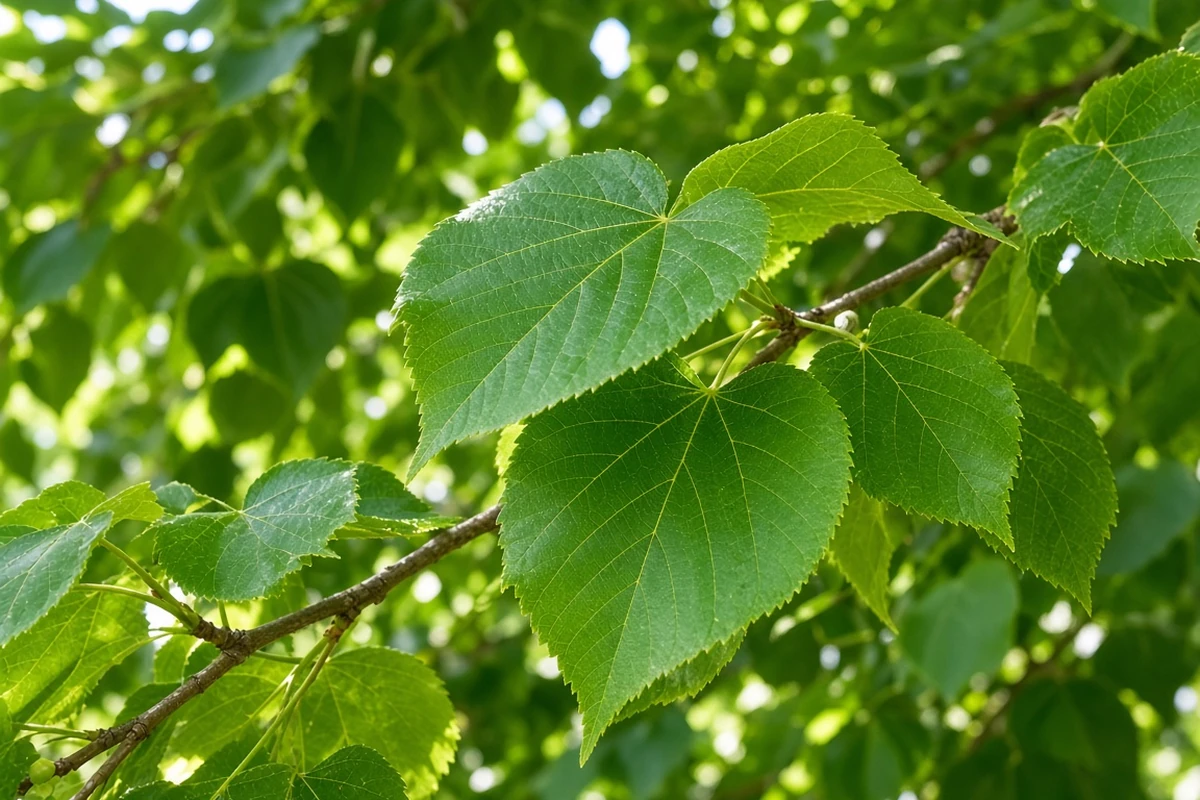
- Pick a leaf from a tree like coast live oak or basswood.
- Flip it to the lower surface.
- Look where side veins meet the midrib.
- Use a hand lens to spot hair tufts or pits.
- Note any small mites inside.
- Compare leaves from different plants.
Troubleshooting
Hair tufts in vein angles: those are domatia.
Small raised bumps all over: these are galls, not domatia.
Fine webbing: NC State notes spider mites can be a problem on basswood in hot, dry weather. Webbing is not domatia.
For more on leaves plus small garden life see cannabis leaf anatomy, useful bugs or insects for a cannabis grow plus pest control for marijuana plants. Kind Seed Co also stocks cannabis seeds.
Sources
- Tilia americana (American basswood), NC State Extension Gardener Plant Toolbox
- Extension Gardener Handbook, chapter 3: botany, NC State Extension
- Leaf hair tufts function as domatia for mites in Quercus agrifolia, Madroño, NSF Public Access Repository
FAQ
Is domatia singular or plural?
Domatia is the plural form, plus domatium is the singular. The Madroño study uses domatia for the many hair tufts found across a single leaf. Gardeners often say domatia for both, so plant guides may describe one tuft or a whole set of vein angle shelters with the same word.
Which plants have domatia?
The Madroño study notes hair tufts on lower leaf surfaces are an identifying feature of coast live oak. It also cites studies of domatia on laurustinus viburnum plus riverbank grape. Many woody plants carry them, so check the vein angles on the lower side of leaves on trees plus shrubs.
Which mites use domatia?
The Madroño study found two mite families in coast live oak tufts. It notes Phytoseiidae are predators of spider mites, gall mites plus other plant pests. Tydeidae include mites that feed on fungi plus some predatory mites. Both are tiny, so a hand lens helps you spot them.
Are domatia the same as leaf hairs?
Not exactly. NC State Extension notes some leaves have hairs called trichomes, which grow from cells of the epidermis. Domatia are a specific use of hairs or pits, where a small cluster in a vein angle forms a shelter. The Madroño study counted a cluster of three or more hairs as a tuft.
How do you count domatia on a leaf?
The Madroño study recorded the number of vein axils with hair tufts on each leaf. It defined a hair tuft as a cluster of three or more hairs. Turn the leaf over, follow each side vein to the midrib plus count the angles that hold a tuft.



