Wild Carrot in Cannabis Gardens: Taproots and Lookalikes
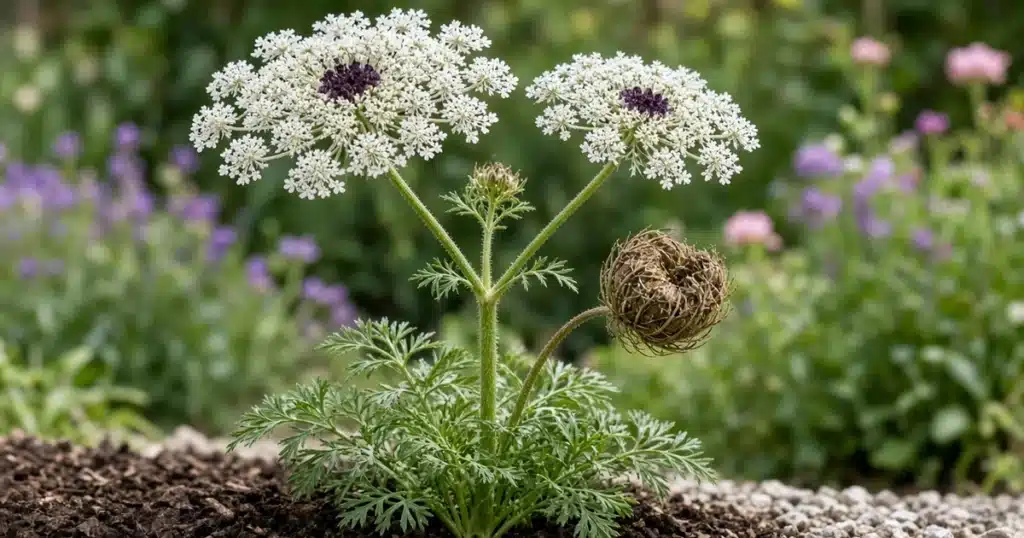
Quick answer: Wild carrot, also called Queen Anne’s lace, is a biennial in the carrot family with lacy leaves, a long taproot and flat white flower clusters. NC State says the taproot makes it hard to pull. Dig out first year rosettes, cut flower stalks before seed, wear gloves, and confirm the ID because toxic poison hemlock looks similar.
What Is Wild Carrot?
A weedy wild form of the carrot. The University of California Statewide IPM Program (UC IPM) calls wild carrot an annual, biennial or short lived perennial broadleaf that closely resembles cultivated carrot in its rosette stage. It grows in fields, pastures, vegetable crops, roadsides and other disturbed places, and is typically found in sandy or gravelly soils.
NC State Extension calls it Queen Anne’s lace, a biennial wildflower introduced from Europe that has naturalized in the lower 48 states. NC State says it can spread aggressively and does not recommend growing it in a perennial garden. Our overview of weed control in outdoor cannabis covers the wider plan for garden weeds.
How Do You Identify Wild Carrot?
Look for lace. UC IPM describes the first year plant as a rosette of fernlike leaves with long stalks, finely divided three to four times. Other features from UC IPM and NC State:
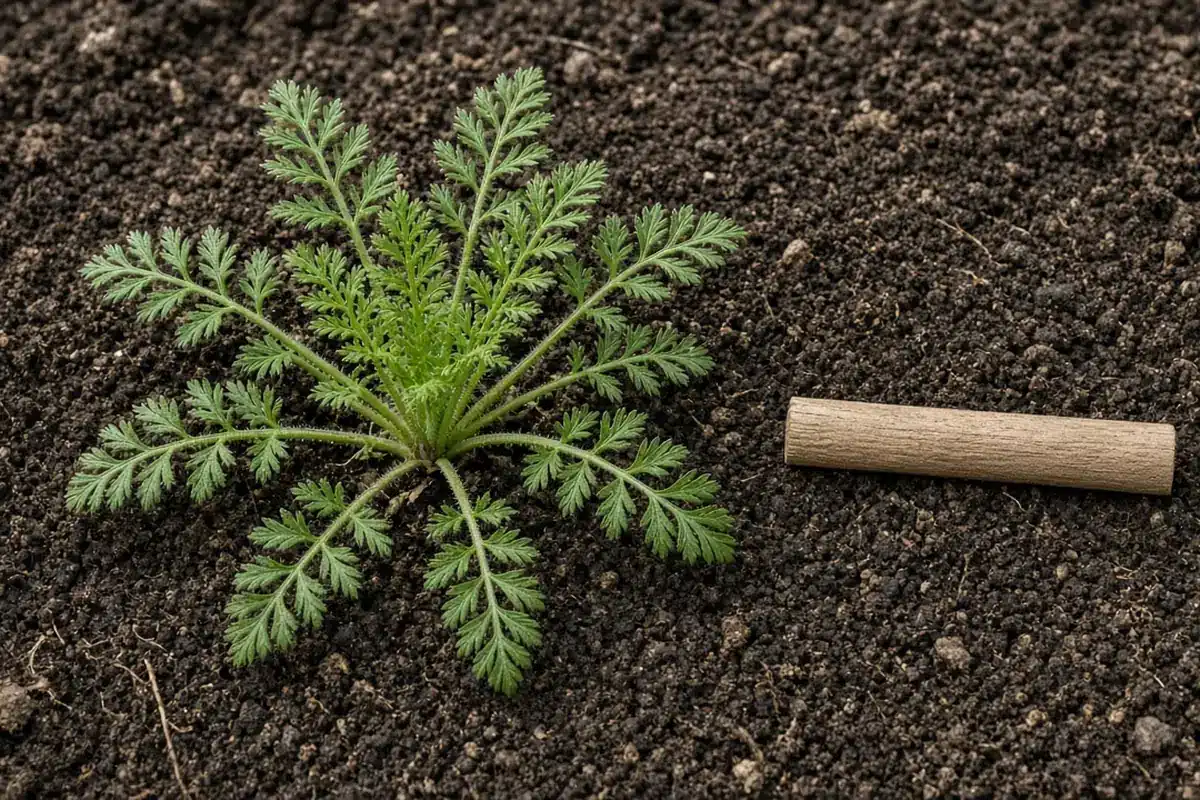
- Stem. Upright, round, ridged, bristly haired and hollow, up to 4 feet tall in the flowering year.
- Scent. UC IPM says crushed leaves and broken roots smell like carrot.
- Flowers. Many tiny white flowers in a flat umbrella shaped cluster 2 to 4 inches across. The central flower is sometimes dark red to purple.
- Bracts. Feathery, threadlike bracts sit under each flower cluster.
- Root. NC State says the long taproot makes the plant difficult to pull.
UC IPM gives a bloom window of May through September.
Which Plants Look Like Wild Carrot?
Several, and one is dangerous. UC IPM lists poison hemlock, wild celery and greater ammi as related or similar plants. Poison hemlock is highly toxic, so never assume a lacy white umbel is wild carrot. The carrot scent, the bristly hollow stem and the feathery bracts under the flower cluster are the traits UC IPM describes for wild carrot. These traits help identify wild carrot, but do not rely on them alone to rule out poison hemlock.
UC IPM also says wild carrot seedlings look like common yarrow seedlings. UC IPM says that at the rosette stage, wild carrot leaves are almost hairless or have short bristly hairs, while yarrow hairs lie flat against the leaf. When in doubt, wear gloves and remove the plant without tasting or handling it bare handed.
Is Wild Carrot Safe to Handle?
Use gloves every time. NC State lists contact dermatitis in some people as a problem with this plant. Long sleeves and gloves keep sap and leaf hairs off your skin, and they also protect you if the plant turns out to be a lookalike such as poison hemlock.
Do not add plants you are unsure of to the pile described in our guide to composting cannabis garden waste. As a precaution, bag them and remove them from the garden, then wash tools and gloves before you move on to your cannabis.
How Does Wild Carrot Spread?
By seed, and in some clever ways. UC IPM says the seed falls near the parent plant but also moves with water and mud, in feed and seed lots, and by clinging to people and animals. The fruit has bristly ribs that catch on fabric and fur.
NC State adds that the fruiting cluster folds inward into a round shape that can blow across the ground and drop seed as it rolls. That is why plants on a path edge can spread seed into a nearby bed.
When Should You Remove Wild Carrot?
In the rosette year, or before flowers open. NC State says the white umbels appear in the second year, from midsummer to midfall, while UC IPM gives May through September. A first year rosette has a smaller root and no seed, so it is the easiest stage to dig.
If plants have already bolted, cut the flower stalks before the clusters ripen and curl inward. UC IPM’s landscape guide says to remove young weeds before they flower and set seed, and to use a dandelion knife or similar tool for weeds with deep roots. A late season pass during your fall garden cleanup after cannabis harvest catches young rosettes.
How to Control Wild Carrot in a Cannabis Garden

- Confirm the ID first. UC IPM lists poison hemlock as a lookalike. Check for carrot scent and bristly hollow stems, but do not rely on them alone.
- Wear gloves and long sleeves. NC State notes contact dermatitis in some people.
- Dig first year rosettes. NC State says the long taproot makes pulling hard. Loosen the soil and lift the whole root.
- Cut flower stalks before seed. Remove umbels before they curl inward and ripen.
- Bag the seed heads. UC IPM says the bristly fruit clings to people and animals. Do not shake them over the bed.
- Clean boots and tools. UC IPM says seed moves with mud and on clothing.
- Mulch and recheck. Cover cleared soil with 3 to 4 inches of mulch, as UC IPM recommends, and check again next spring. Our guide to mulch for cannabis compares materials.
Wild Carrot at a Glance

| Subject | Extension finding | Attribution |
|---|---|---|
| Life cycle | Mostly biennial, sometimes annual or short lived perennial | UC IPM, NC State |
| Flowering height | Up to 4 feet | UC IPM |
| Flower | Flat white umbel 2 to 4 inches across | UC IPM |
| Bloom period | May through September | UC IPM |
| Root | Long taproot, hard to pull | NC State |
| Toxic lookalike | Poison hemlock | UC IPM |
Should You Use Herbicides Near Cannabis?
No. Pull, hoe shallowly and mulch. If herbicides ever come up for other parts of your property, follow the label exactly. Remember that EPA has not registered any herbicide for use on marijuana, and state rules vary, so check with your state agriculture department. UC IPM says home gardeners who hand weed and mulch should not need herbicides. Before you plant cannabis outdoors, check your state’s home grow law.
Troubleshooting Wild Carrot
The root snaps when you pull. NC State says the taproot is long. Dig instead of pulling, after rain or watering.
Seed heads stick to your clothes. UC IPM says the bristly fruit clings to people. Bag heads and brush off clothing before leaving the area.
Plants come back next year. Seed from the last season sprouts as new rosettes. Check every spring and dig them early.
You are not sure it is wild carrot. UC IPM lists poison hemlock as similar. Use gloves, do not handle bare handed and bag the plant.
Skin itches after weeding. NC State notes contact dermatitis. Wear gloves and sleeves next time and wash skin promptly.
At Kind Seed Co, we always confirm a lacy weed before pulling it bare handed.
Frequently Asked Questions
Is Queen Anne’s lace the same as wild carrot?
Yes. NC State Extension lists Queen Anne’s lace and wild carrot as common names for the same plant. UC IPM calls it wild carrot and says it closely resembles cultivated carrot through the rosette stage. It is mostly a biennial that forms a rosette the first year and white flower clusters the second.
Can wild carrot be confused with poison hemlock?
Yes. UC IPM lists poison hemlock as a related or similar plant, and poison hemlock is highly toxic. Wild carrot has a bristly, hollow stem, carrot scented leaves and roots, and feathery bracts under each flower cluster. If you are unsure, wear gloves, do not taste or handle it bare handed, and bag it.
Why is wild carrot hard to pull?
NC State says its long taproot makes it difficult to pull up. Dig first year rosettes after rain or watering, when the soil is soft, and lift the whole root with a weeding knife or fork. Older plants in their flowering year have even larger roots, so early removal saves work.
How does wild carrot spread into beds?
By seed. UC IPM says seed falls near the plant but also moves with water, mud, feed, and by clinging to people and animals. NC State adds that the dry fruit cluster can roll across the ground and drop seed. Cut and bag flower heads before they ripen to stop it.
Is wild carrot an annual or a biennial?
It can be either. UC IPM calls wild carrot an annual, biennial or short lived perennial, while NC State calls Queen Anne’s lace a summer biennial. UC IPM says young plants form a rosette of fernlike leaves during the first year or until the flowering stem develops. Dig rosettes before that stem appears.
Sources
- UC Statewide IPM Program, Wild Carrot, Weed Gallery: https://ipm.ucanr.edu/weeds-identification-gallery/wild-carrot/
- NC State Extension Gardener Plant Toolbox, Daucus carota: https://plants.ces.ncsu.edu/plants/daucus-carota/
- UC Statewide IPM Program, Weed Management in Landscapes: https://ipm.ucanr.edu/home-and-landscape/weed-management-in-landscapes/