Boxwood Blight: Leaf Drop, Sanitation and Resistant Cultivars
The short answer
Boxwood blight is a fungal disease that causes dark leaf spots, fast leaf drop and black streaks on stems. Infected shrubs can lose most of their leaves within weeks in warm, wet weather. Good sanitation, dry leaves and resistant cultivars are the main ways gardeners manage it. Spotting it early makes a big difference.
The disease spreads easily, so habits matter as much as plant choice.
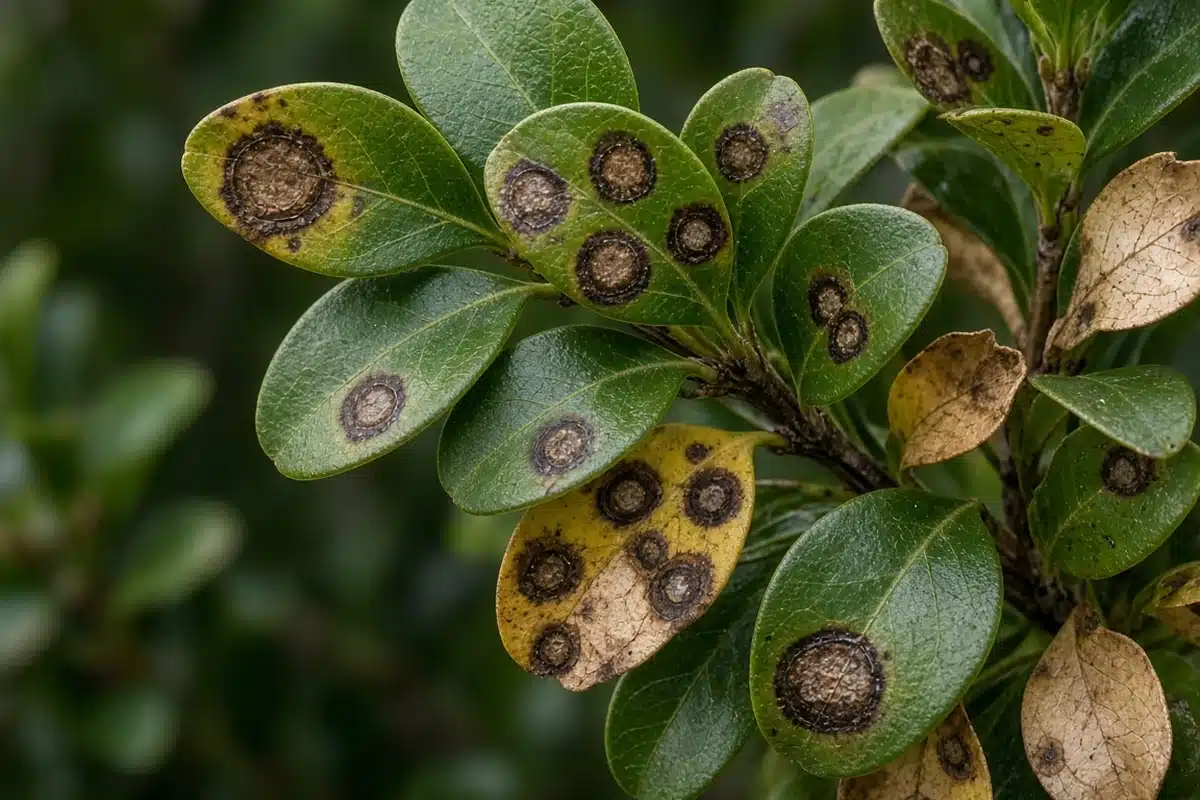
What does boxwood blight look like?
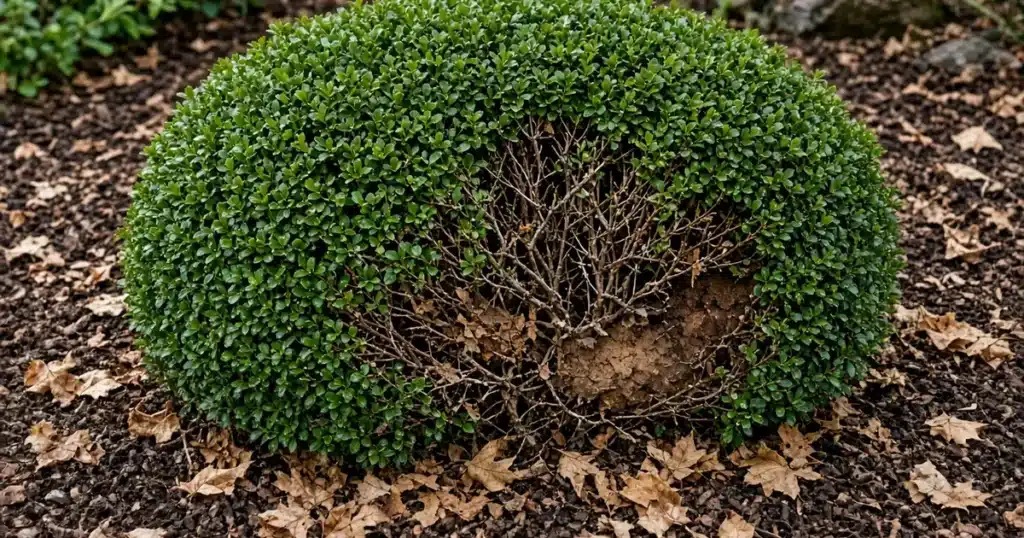
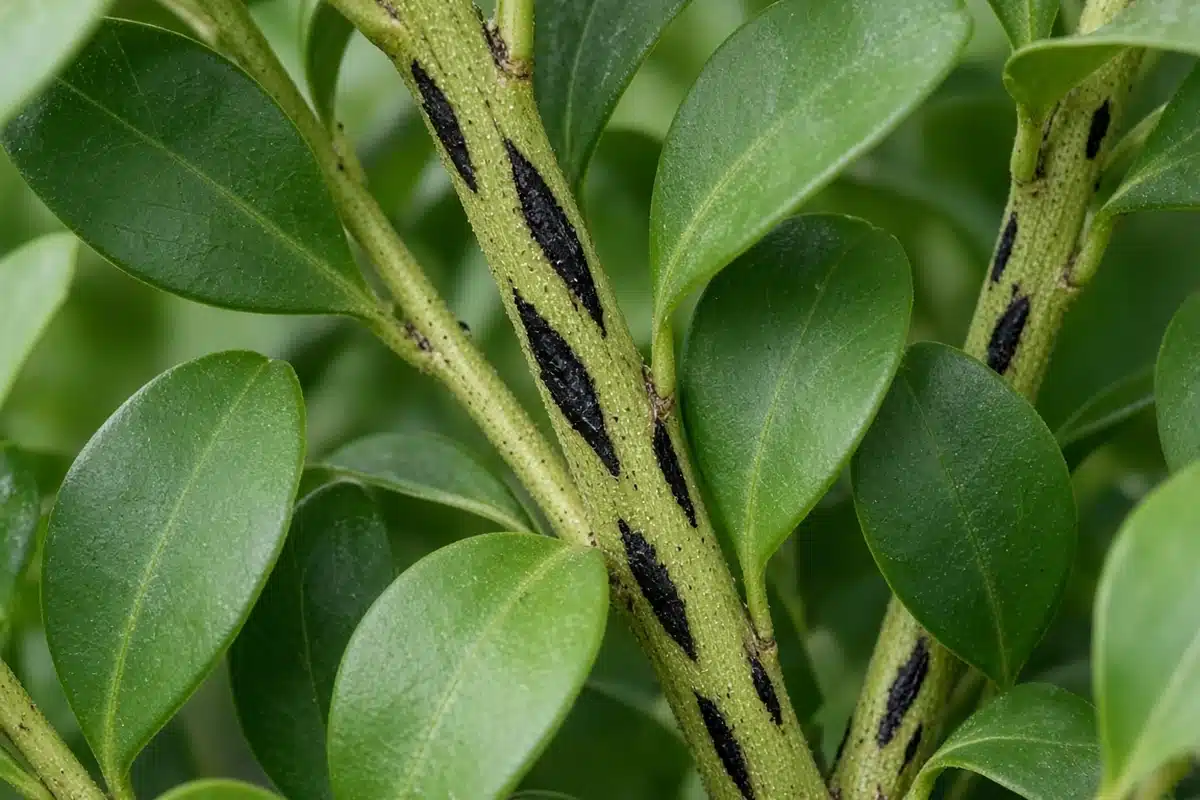
The first signs are round tan or brown spots on leaves, often with a darker edge. Leaves then turn straw colored and drop. Stems show narrow black streaks.
The University of Maryland Extension page on boxwood blight describes these signs and notes that leaf drop starts in the lower canopy and moves up. Shrubs can look bare at the base while the top stays green for a time.
| Sign | Where to look | Notes |
|---|---|---|
| Brown leaf spots | Lower leaves first | Often with a dark border |
| Fast leaf drop | Inside and base of shrub | Can happen in days |
| Black stem streaks | Green stems | Key sign that sets it apart |
| Bare lower branches | Base of the plant | Top may stay green longer |
Sources: University of Maryland Extension, Virginia Cooperative Extension, UConn Home and Garden Education Center.
Other boxwood problems can look similar. Winter burn and root issues cause browning. The black stem streaks are a key clue for blight. If you’re unsure, your local extension office can help identify it.
How does boxwood blight spread?
The fungus spreads by sticky spores, and they move on water splash, tools, clothing, shoes and new plants. Wet, warm weather helps the disease grow.
The Virginia Cooperative Extension guide to management practices for boxwood blight explains how spores move between plants and how fallen leaves can hold the fungus in the soil for years.
That means one infected plant can pass the problem to others nearby. It can come into a garden on a new shrub that looks healthy at first.
How do gardeners manage it?
Sanitation is the base of good management. Remove fallen leaves and dispose of them in the trash, not compost. Clean tools between plants. Our post on sanitizing pruning shears for cannabis explains how to clean blades.
Prune and work around boxwoods only when leaves are dry. Wet foliage spreads spores more easily.
Water at the base of the plant, not over the top. Drip lines or soaker hoses hold leaves dry.
Space shrubs for air flow. Dense hedges that stay damp inside are more prone to disease.
The UConn Home and Garden Education Center fact sheet on boxwood blight recommends inspecting new plants closely before adding them to a garden.
Our post on identifying pathogenic mold covers fungal problems in general.
Which boxwoods resist blight?
Some boxwood cultivars resist blight better than others. Many newer types were bred for resistance. Check with a local nursery or extension office for cultivars that do well in your area.
Resistance doesn’t mean immunity. Resistant plants still benefit from good sanitation and dry leaves.
If blight comes back each year, consider other shrubs that give a similar look. Holly, inkberry and some yews can form low hedges.
When should you remove a shrub?
Heavily infected shrubs may not recover. Removing them limits spread to nearby plants. Bag the whole plant and its fallen leaves and put them in the trash.
Our post on the effects of environmental stresses on weed plants explains how stress weakens plants in general, which can make diseases worse.
How do you check new plants before planting?
New boxwoods are a common way blight enters a garden. Look closely at each plant before you buy it. Part the branches and check the inner leaves and lower stems, where signs show first.
Some gardeners hold new shrubs in pots in a separate corner of the yard for several weeks before planting. Watch for leaf spots or sudden leaf drop during warm, wet spells. If the plant stays clean, it can go into the bed.
Holiday greens and wreaths made with boxwood can carry spores. Store them away from garden shrubs and bag them for the trash when the season ends.
How to: step by step
- Look for leaf spots, leaf drop and black stem streaks.
- Confirm with your local extension office if unsure.
- Remove and bag fallen leaves.
- Clean tools between plants.
- Water at the base and work only when leaves are dry.
- Choose resistant cultivars for new plantings.
Troubleshooting
Leaves dropping in summer. Look for blight signs, mainly stem streaks.
Browning after winter. This may be winter burn rather than blight.
New shrub showing spots. It may have come in infected. Isolate and inspect it.
Blight returning each year. Fallen leaves may hold the fungus. Clean the bed thoroughly.
Hedge stays wet inside. Thin it for better airflow.
Clean habits and the right cultivars help boxwood hedges look good. Kind Seed Co shares more garden ideas in outdoor growing.
Sources
- Boxwood blight, University of Maryland Extension, Boxwood blight
- Boxwood blight, UConn Home and Garden Education Center, Boxwood blight
- Best management practices for boxwood blight (PPWS-29), Virginia Cooperative Extension, Best management practices for boxwood blight (PPWS-29)
FAQ
Can boxwood recover from blight?
Lightly affected shrubs may regrow, but heavily infected plants often decline.
Should I compost blighted leaves?
No. Bag them and put them in the trash.
How do I tell blight from winter burn?
Look for black streaks on green stems. Winter burn does not cause them.
Are any boxwoods resistant?
Yes. Several newer cultivars resist blight better. Ask a local nursery.
When is the risk highest?
Warm, wet weather favors the disease.