
Growing Hydroponic Eggplant: Compact Varieties, Support and Pollination
The short answer
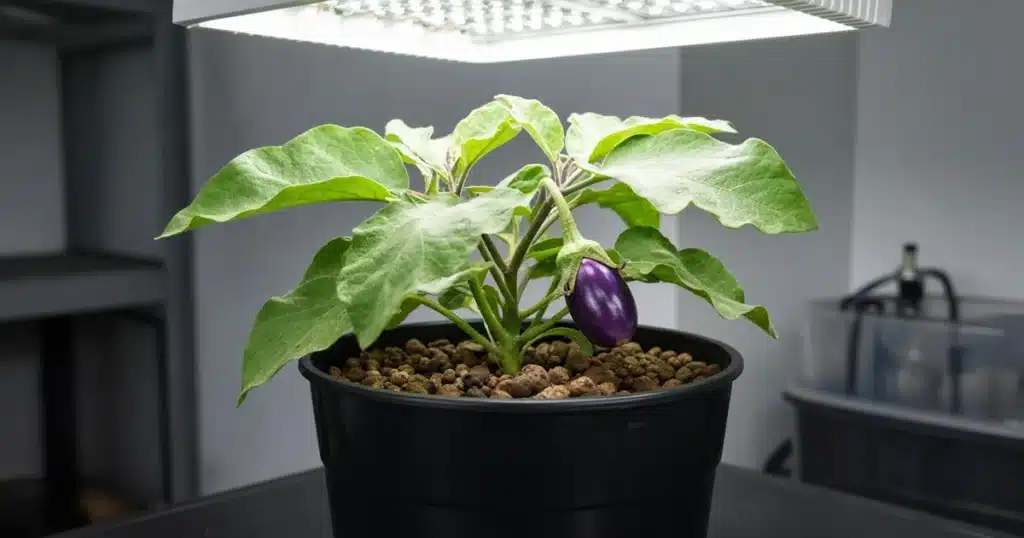
Hydroponic eggplant grows well in bucket, dutch bucket or deep water systems when you pick compact varieties and give plants sturdy support. Eggplant is a warm season fruiting crop, so it needs bright light, warm roots and steady feeding. Indoors, gently shake or brush open flowers to help pollination and pick fruit while the skin is still glossy.
Eggplant takes longer than leafy greens, but a few plants can give a long run of fruit from one system.
Can eggplant grow in hydroponics?
Yes. Eggplant belongs to the same family as tomatoes and peppers, and it grows in soilless systems in much the same way. The University of Tennessee Extension guide to tomatoes, peppers and cucumbers in small scale soilless and hydroponic systems covers the setups that suit these fruiting crops. Bucket, dutch bucket and deep water systems are options to consider for eggplant.
The plant itself stays the same in any system. It needs heat, light and time. The University of Maryland Extension page on growing eggplant describes it as a crop that needs warm conditions and suffers in cool weather. In a garden, that means waiting until nights stay warm. Indoors, it means holding the room and the root zone warm from the start.
A hydroponic system gives you control over water and nutrients. Roots never dry out, and you can feed on a steady schedule. That control helps a slow crop like eggplant continue growing without stalls.
| System | Support needed | Notes |
|---|---|---|
| Bucket | Stake or string | One plant per bucket holds roots apart |
| Dutch bucket | Overhead string or trellis | Buckets drain back to a shared tank |
| Deep water culture | Stake fixed to the lid or a frame | Large water volume buffers changes |
Sources: University of Tennessee Extension, University of Maryland Extension.
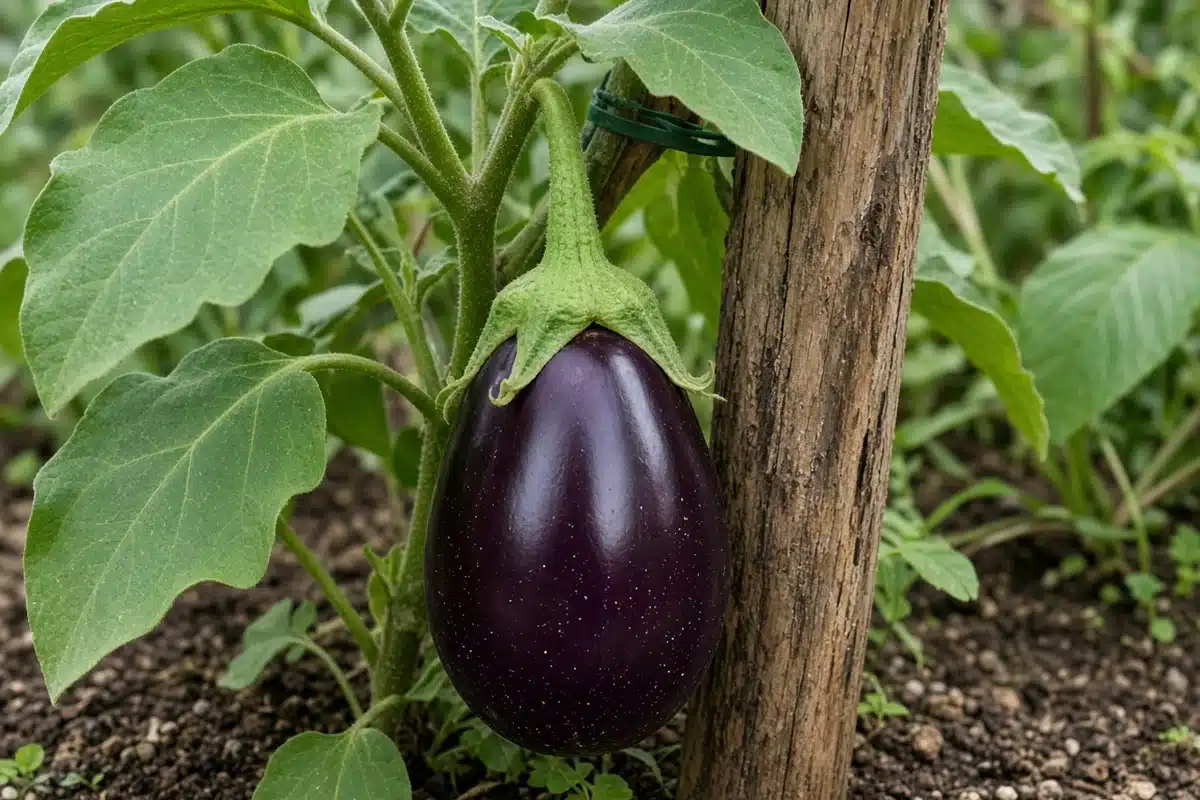
Each system needs support because eggplant fruit is heavy. Plan it before you plant, not after the stems start to bend. Our post on caring for your hydroponic system covers cleaning and water changes that apply to any of these setups.
Which eggplant varieties suit indoor systems?
Eggplant comes in many shapes and colors, and some types form large oval fruit. Others make long slim fruit or small round ones. The University of Minnesota Extension guide to growing eggplant lists several fruit types and notes that some varieties mature sooner than others.
For an indoor system, look for compact or container varieties. These stay shorter and bushier. They tend to set smaller fruit, which puts less weight on each branch.
Slim and small fruited types are a good fit for tight spaces. They often set fruit in clusters and ripen fast. Big oval types can work too, but they need more room and sturdier support.
Days to maturity matter indoors. A variety that ripens sooner frees up your system for the next crop. Check the seed packet or catalog for that number and pick the shorter end when space is limited.
Growing medium matters too. Rockwool, coco and clay pebbles all hold an eggplant root ball well. Our post on hydroponic in different mediums compares the common choices.
How do you pollinate hydroponic eggplant?
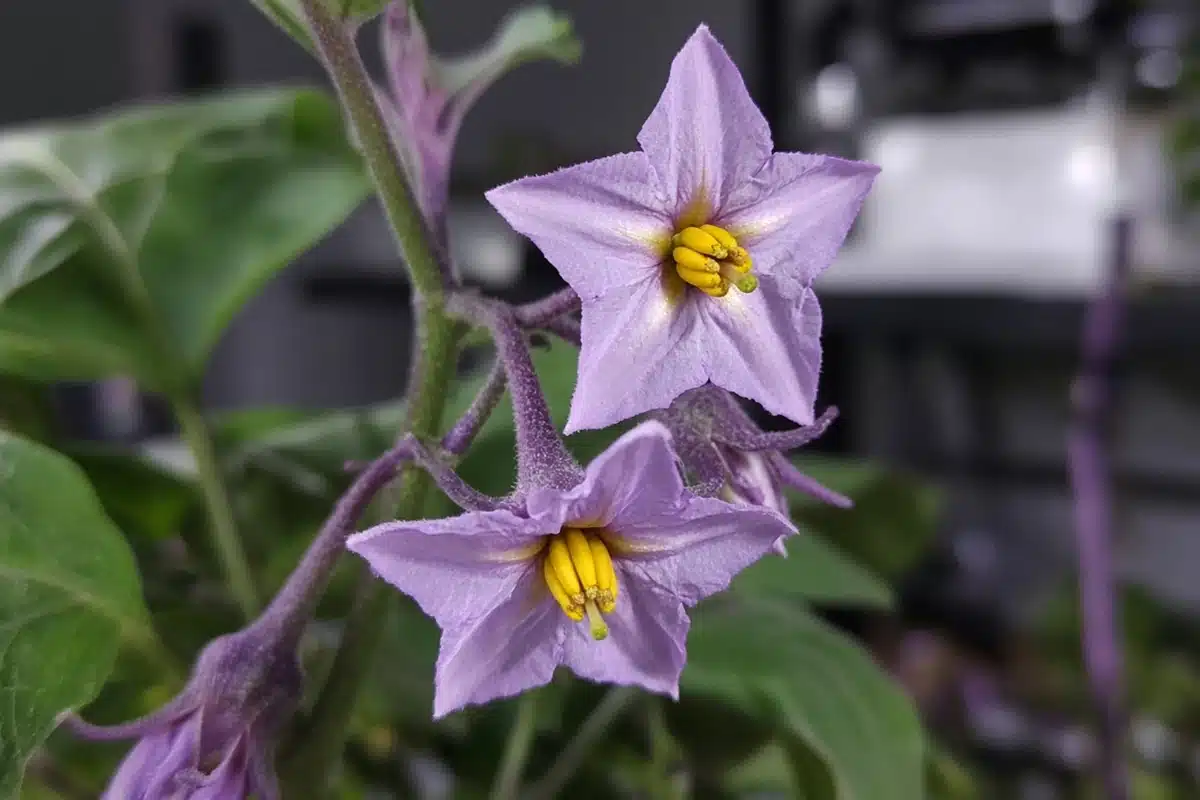
Eggplant flowers carry both male and female parts in the same bloom. Outdoors, wind and bees shake pollen loose. Indoors, there’s no wind and no bees, so you have to help.
The simplest method is a gentle shake. Tap the flower stem or the branch it sits on once a day while flowers are open. This loosens pollen inside the bloom so it can reach the stigma.
A small soft brush works too. Touch the center of each open flower and move from bloom to bloom. Some growers use an electric toothbrush held against the flower stem. The vibration mimics a bumblebee and releases pollen well.
Midday is a good time to pollinate. Flowers are fully open, and pollen tends to move more freely when the room is warm and not too humid.
A small fan running in the room helps. Moving air shakes plants a little and holds leaves dry. It can help, but you still may need to hand pollinate.
Watch the base of each flower after a few days. A swelling green fruit means pollination worked. A flower that yellows and drops didn’t set.
How to: step by step
- Choose a compact or container eggplant variety.
- Start seeds in an inert plug and hold them warm.
- Move seedlings into a bucket or deep water system.
- Add a stake or string trellis before plants get heavy.
- Shake or brush open flowers to move pollen.
- Harvest fruit while the skin is glossy and firm.
Eggplant seed is slow to sprout in cool rooms. A heat mat under the tray speeds things up. Hold plugs moist but not soaked.
Move seedlings once roots poke through the bottom of the plug. Set each one in its own net pot or bucket. Give each plant room so leaves get light on all sides.
Set up support early. A stake pushed into the medium or fixed to the lid works for small plants. A string tied to an overhead bar works for taller ones. Our post on the art of cannabis trellising shows string and net methods that also suit fruiting vegetables.
Bright light is a must. Eggplant grown under weak light stretches, flowers poorly and drops blooms. Run a full spectrum LED on a timer and hold the canopy close enough to get even coverage.
Harvest with clean pruners or a sharp knife. Cut the stem above the green cap instead of pulling the fruit. Pulling can tear the branch.
Troubleshooting
No fruit set. Flowers were not pollinated. Shake or brush open blooms each day.
Leaning plants. Heavy fruit pulls branches down. Add a stake or tie stems to a string.
Dull, seedy fruit. Fruit was picked late. Pick sooner.
Flower drop. Light is too weak or the room swings in temperature. Raise light levels and hold conditions steady.
Yellow lower leaves. Nutrients may be running low. Check EC and refresh the solution.
Eggplant rewards patience. Once the first fruit sets, a healthy plant goes on flowering for weeks. Kind Seed Co shares more garden ideas in outdoor growing.
Sources
- Growing eggplant in a home garden, University of Maryland Extension, Growing eggplant in a home garden
- Growing eggplant in home gardens, UMN Extension, Growing eggplant in home gardens
- Tomatoes, peppers and cucumbers in small scale soilless and hydroponic systems (W 844-C), University of Tennessee Extension, Tomatoes
FAQ
How big does hydroponic eggplant get?
Size depends on variety. Compact and container types stay short and bushy, which suits indoor systems. Standard types grow larger and need more room and sturdier support to carry their fruit.
Does eggplant need a lot of light?
Yes. Eggplant is a warm season fruiting crop and needs bright light to flower and set fruit. Under weak light, plants stretch and drop blooms. A full spectrum LED on a timer works well indoors.
How long until the first fruit?
It depends on the variety. Seed packets list days to maturity, and some types ripen sooner than others. Indoors, warm roots, bright light and good pollination help plants reach that window.
When is eggplant ready to pick?
Pick fruit when the skin is glossy and the flesh feels firm. Dull skin usually means the fruit is past its prime and the seeds are getting hard.
Do eggplant flowers need a partner plant?
No. Each flower carries both male and female parts. Indoors, you only need to shake or brush the bloom so pollen moves inside the same flower.



