
Outdoor Hydroponics in Summer: Heat, Rain and Shading the Reservoir
The short answer
Outdoor hydroponics works well in summer if you hold the reservoir cool, covered and out of direct sun. Warm water holds less oxygen, so shade and insulate tanks and hold them off hot pavement. Cover the solution so rain does not dilute it and sun does not feed algae. Check pH, EC and water level often.
Hot days speed up water loss, so a system that runs fine in spring may need daily checks by July.

Why does heat matter so much outdoors?
Plant roots in water need oxygen. The Penn State Extension article on hydroponics systems and principles of plant nutrition covers how nutrients and root conditions shape plant growth in soilless systems. Warm water generally holds less dissolved oxygen than cool water, and roots in warm, low oxygen water may grow slowly and turn brown.
Outdoors, the sun heats everything it touches. A dark reservoir sitting in full sun can get far warmer than the air around it. Pavement, decks and walls reflect more heat onto the tank.
The University of Minnesota Extension page on small scale hydroponics describes the simple systems many home growers use. Most of them work outdoors in summer with a few changes to hold the water cool.
How do you hold the reservoir cool?
| Problem | Fix | Notes |
|---|---|---|
| Sun on the tank | Shade it | Shade cloth, a board or a nearby wall |
| Heat from the ground | Raise the tank | Set it on blocks over soil, not pavement |
| Thin tank walls | Insulate | Wrap with foam board or reflective wrap |
| Small water volume | Use a larger tank | More water warms more slowly |
| Still water | Add aeration | An air pump adds oxygen |
Sources: Penn State Extension, University of Minnesota Extension, University of Tennessee Extension.
Shade the tank first. The plants can sit in sun while the tank stays shaded. Our post on shade cloth for cannabis covers shade cloth grades that work for tanks and plants alike.
Light colored or white tanks reflect more heat than black ones. If your tank is dark, paint it white on the outside or wrap it with reflective insulation. Hold the inside dark so light doesn’t reach the water.
Size helps. A big volume of water warms more slowly through the day. If you can, run a bigger reservoir than you would indoors.
Some growers bury part of the reservoir in the ground. Soil a foot or so down stays cooler than surface air in summer.
How do you deal with rain?
Rain falling into an open system dilutes the nutrient solution and changes pH. A heavy storm can flood a reservoir or wash media out of cups.
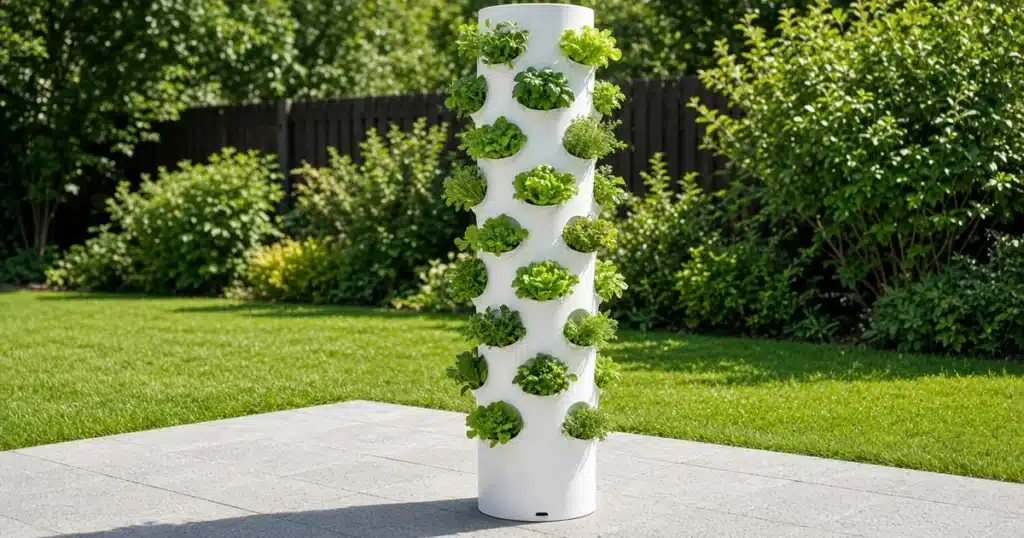
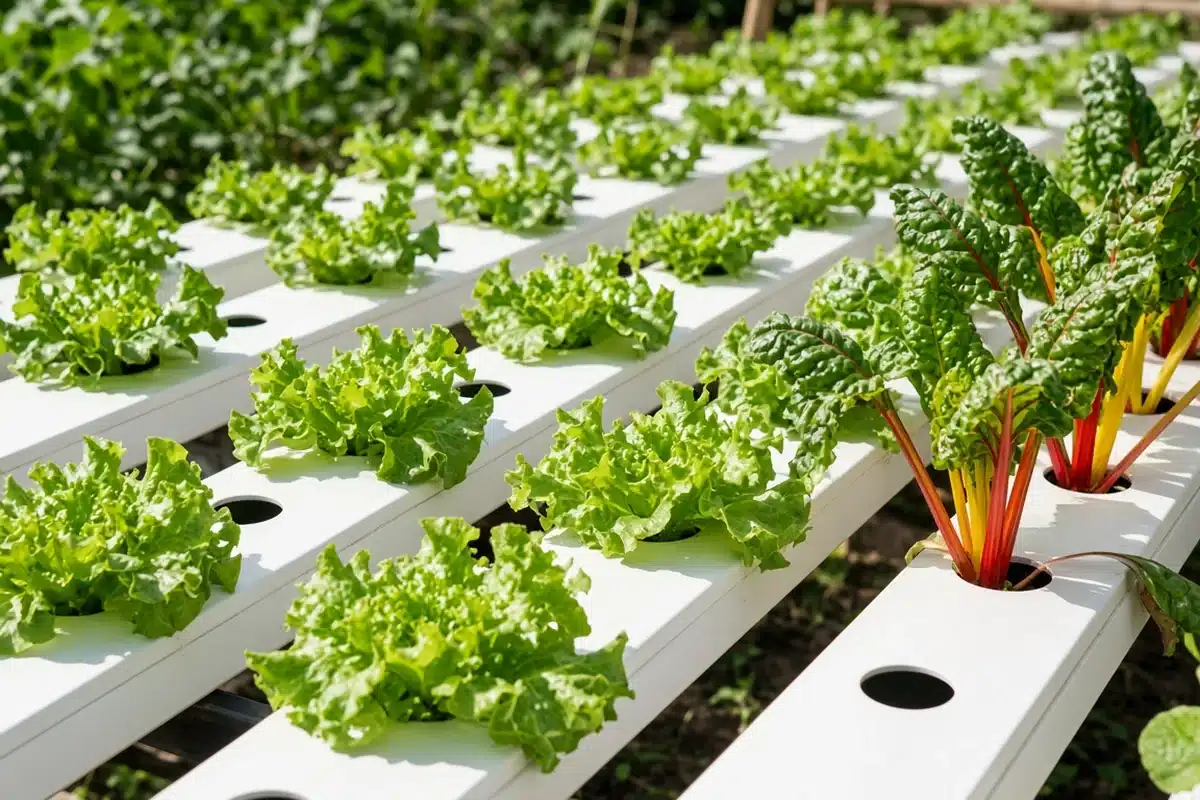
Fit a tight lid on the reservoir. Seal gaps around pipes and cables. In towers and channels, make sure lids cover all openings except the cup holes.
After a storm, check EC and pH. If the solution has been diluted, top it up with a richer mix or replace it.
How often should you check the system?
In hot weather, plants drink more, water evaporates faster and nutrient levels shift.
Check water level every day in hot weather. Top off with plain water when EC rises and with a mild solution when it falls. Check pH a few times a week.
The University of Tennessee Extension guide to leafy crop production in small scale soilless and hydroponic systems covers routine checks for small systems. These matter even more outdoors.
Our post on caring for your hydroponic system covers cleaning and upkeep. Our post on creating a good environment for your hydro setup covers temperature and airflow.
Which crops do well in summer outdoor systems?
Heat loving crops such as basil, peppers and tomatoes handle summer heat better than cool weather greens. Lettuce and spinach tend to bolt when days are long and hot.
If you want greens in summer, pick heat tolerant types and give them afternoon shade. In spring and fall, cool season crops grow well outdoors.
How to: step by step
- Place the reservoir in shade, raised off hot surfaces.
- Use a light colored or insulated tank.
- Cover the reservoir with a tight lid.
- Add an air pump for oxygen.
- Check water level daily in hot weather.
- Check pH and EC after storms and a few times a week.
Troubleshooting
Brown roots. Water is too warm. Add shade, insulation and aeration.
Green water. Light is reaching the solution. Seal the lid and darken the tank.
Wilting at midday. Plants are losing water fast. Shade plants in the afternoon and top up the reservoir.
EC jumping. Water is evaporating. Top off with plain water.
pH swinging after rain. Rain is getting in. Seal gaps and recheck after storms.
Summer outdoor systems reward daily attention. Kind Seed Co carries cannabis seeds for growers planning an outdoor hydroponic season.
Sources
- Small scale hydroponics, University of Minnesota Extension, Small scale hydroponics
- Hydroponics systems and principles of plant nutrition, Penn State Extension, Hydroponics systems and principles of plant nutrition
- Leafy crop production in small scale soilless and hydroponic systems (W 844-B), University of Tennessee Extension, Leafy crop production in small scale soilless and hydroponic systems (W 844-B)
FAQ
Can hydroponics work outside?
Yes. Many home systems run well outdoors in summer if the reservoir stays shaded, covered and cool.
What water temperature is too warm?
Many growers aim to hold reservoirs below the low 70s Fahrenheit. Warmer water holds less oxygen for roots.
How do you block rain from a system?
Use a tight lid on the reservoir and cover all openings except cup holes. Check pH and EC after storms.
Does tank color matter?
Yes. Light colored outer walls reflect heat, while a dark inside stops light from feeding algae.
Should you bury the reservoir?
Burying part of it can help. Soil below the surface stays cooler than air on hot days.



