
Hydroponic Trellis Guide: Strings, Netting and Clips for Vines

The short answer
A hydroponic trellis gives vines a string, net or frame to climb from early on, since inert media cannot anchor tall plants. Tomatoes and cucumbers are often trained up a single string with clips, while peppers do well with netting or stakes. Set supports before plants get heavy, then lower or tie vines as they grow.
Good support holds plants upright, holds fruit off the system and makes harvests easier.

Why do hydroponic plants need trellising?
In soil, roots grip the ground and help hold a plant up. In hydroponics, roots hang in water or loose media. Clay pebbles and coco don’t hold a tall plant steady once it carries fruit.
Without support, vines lean, cups tip and stems can kink or snap. The University of Tennessee Extension guide to tomatoes, peppers and cucumbers in small scale soilless and hydroponic systems covers these crops in soilless setups, where vertical support is part of the plan from the start.
Our post on the art of cannabis trellising covers support methods that carry over to vegetables too.
Which support works for which crop?
| Crop | Support | Method |
|---|---|---|
| Indeterminate tomato | Single string from above | Clip stem to string as it grows |
| Determinate tomato | Cage or stake | Tie main stems loosely |
| Cucumber | String or netting | Wrap tendrils and clip leaders |
| Pepper | Netting or short stakes | Let branches rest on the net |
| Pole bean | String or netting | Plants twine on their own |
Sources: University of Tennessee Extension, University of Wisconsin Madison Extension, Iowa State University Extension and Outreach.
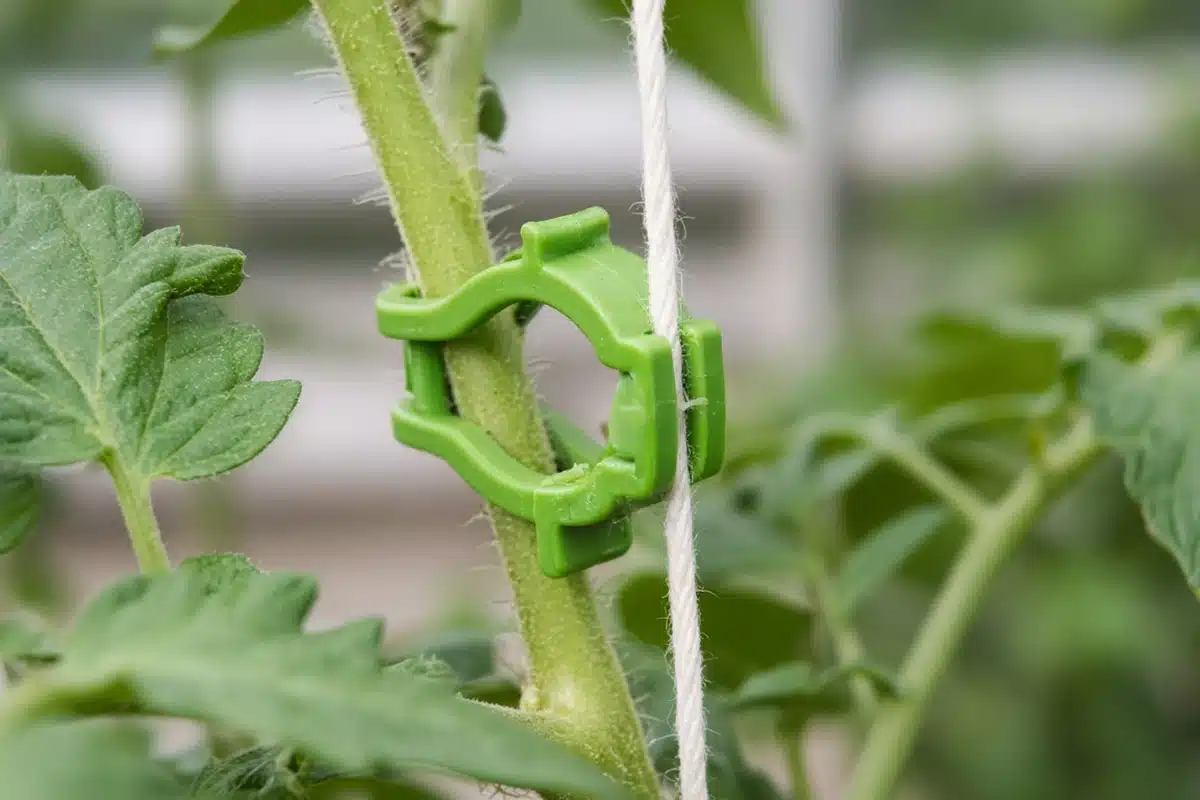
String trellising is common in greenhouses. A string runs from an overhead wire or bar down to the base of the plant. As the plant grows, you clip or twist the main stem around the string.
Netting works for bushy plants that branch a lot. Stretch it horizontally above the plants or vertically along a frame. Branches grow through and rest on it.
Stakes suit smaller plants and short seasons. Push a stake into the media or tie it to the system frame.
How do you train tomatoes on a string?
Tie a string loosely around the base of the stem or clip it to the net cup. Run the other end up to a wire or bar above the plant.
As the stem grows, twist it gently around the string or add a clip every foot or so. Always twist in the same direction.
Many growers prune indeterminate tomatoes to one or two main stems. The University of Wisconsin Madison Extension article on tomato pruning advises removing suckers on indeterminate tomatoes except the one just below the lowest flower cluster. The Iowa State University Extension and Outreach guide to pruning tomatoes in the home garden shows how to spot and pinch suckers.
When the plant reaches the top wire, you can lower it. Unspool extra string, slide the plant down and let the lower stem lay along the base. This is called lowering and leaning.
How do you train cucumbers?
Cucumber tendrils grip nearby supports, but young vines may need occasional repositioning.
Clip the main stem to a string as it grows. Pinch side shoots in the lower part of the plant so fruit forms higher up. Let a few side shoots grow near the top if you want more fruit.
Netting suits cucumbers too. Every few days, tuck stray vines back onto the net.
What should you use to build the frame?
The overhead support carries the full weight of every vine and its fruit. A single tomato plant in full crop can be surprisingly heavy, and a row of them adds up fast.
In a tent, the frame bars can hold light crops, but heavy vines may need a separate bar or a freestanding frame. In a greenhouse or yard, a pipe frame or wooden posts with a cable or pipe across the top works well. Anchor the posts firmly so they don’t lean once plants load up.
Use soft ties or plastic trellis clips on stems. Thin wire and tight twine can cut into stems as they thicken. Check ties weekly and loosen any that pinch.
Plan the height first. A wire set at about head height holds vines within easy reach for pruning, clipping and picking.
How to: step by step
- Set up overhead wires or a frame before planting.
- Tie strings or hang netting before plants get tall.
- Clip or twist main stems to the support as they grow.
- Prune side shoots on tomatoes and cucumbers.
- Lower and lean tall vines when they reach the top.
- Check ties and clips weekly so they do not cut stems.
Our post on learn how to scrog explains a horizontal netting method that works for bushy crops. Our post on caring for your hydroponic system covers cleaning the system as plants grow large.
Troubleshooting
Stem kinked at a clip. The clip is too tight. Loosen or move it.
Plant tipping out of the cup. Support was added too late. Add a string or stake now and steady the cup.
Fruit touching the system. The vine is too low. Raise it or lower the fruit cluster onto a support.
Vines tangled. Strings are too close. Space them farther apart.
Support sagging. The overhead frame cannot hold the weight. Use a sturdier bar and tie it to the frame.
Trellising is easier when planned before planting. Kind Seed Co carries cannabis seeds for growers who want to try training methods on a new crop.
Sources
- Tomatoes, peppers and cucumbers in small scale soilless and hydroponic systems (W 844-C), University of Tennessee Extension, Tomatoes
- Tomato pruning, University of Wisconsin-Madison Extension, Tomato pruning
- Pruning tomatoes in the home garden, Iowa State University Extension and Outreach, Pruning tomatoes in the home garden
FAQ
When should you add a trellis?
Before plants get tall. Set up supports at planting or soon after so stems can be trained from the start.
What string works for trellising?
Many growers use polypropylene twine or trellis string. It holds weight and does not rot quickly.
Do peppers need trellising in hydroponics?
They benefit from support. Netting or short stakes hold branches upright when they carry fruit.
What is lowering and leaning?
It is lowering a tall vine on its string and letting the lower stem lay along the base. It holds the top within reach.
Can cucumbers climb on their own?
They grab supports with tendrils, but clipping the main stem holds them on track.



