
Hydroponic Pollination Indoors: Brushes, Vibration and Airflow
The short answer
Hydroponic pollination takes a little help because indoor crops get no bees or wind. Tomatoes and peppers can be shaken or vibrated to release pollen. Squash and cucumbers with separate male and female flowers need pollen moved by brush. A fan adds gentle movement, and midday is often a good time to pollinate.
With a simple routine, fruiting crops set fruit well indoors.
Why do indoor crops need pollination help?
Outdoors, bees, other insects and wind move pollen. Indoors, none of that happens on its own, and flowers can open and drop without setting fruit.
Our post on what roles do bees play in outdoor cannabis explains how insects visit gardens outdoors. In a grow room or tent, you play the bee.
The University of Maryland Extension page on pollination problems of vegetables describes how poor pollination leads to misshapen fruit or flowers that fall off. These problems show up indoors as they can outdoors.
How do you pollinate tomatoes and peppers?
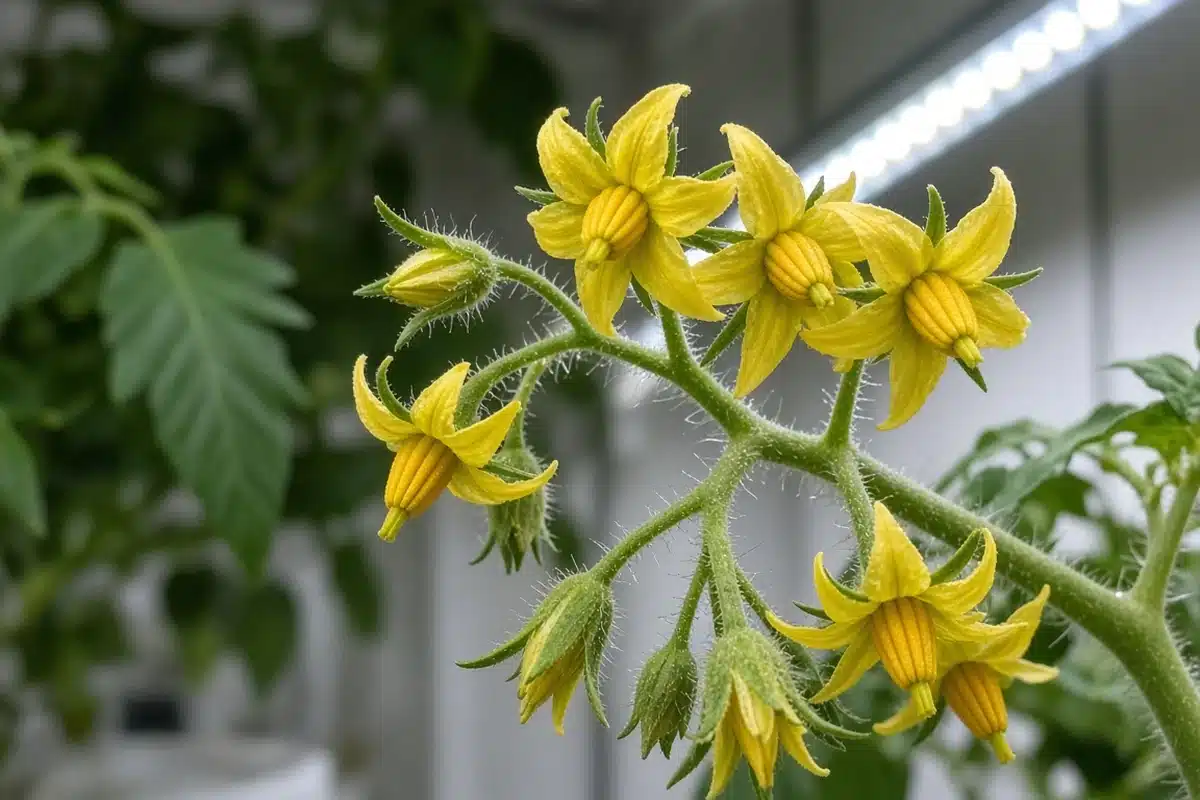
Tomatoes and peppers have perfect flowers, and each flower holds both the male and female parts. Pollen needs only to fall from one part to the other inside the same flower.
The University of Alaska Fairbanks Cooperative Extension page on pollination and fruit development in tomatoes explains that tomato flowers release pollen well when shaken. Outdoors, bumblebees do this by buzzing on the flower.
Indoors, tap the flower cluster or the stem gently. An electric toothbrush held against the stem behind the flower works well. The vibration shakes pollen loose.
| Crop | Flower type | Method |
|---|---|---|
| Tomato | Perfect | Tap or vibrate the cluster |
| Pepper | Perfect | Tap, vibrate or brush |
| Cucumber | Separate male and female | Move pollen by brush |
| Squash | Separate male and female | Move pollen by brush |
| Strawberry | Perfect | Brush each flower |
Sources: University of Maryland Extension, University of Alaska Fairbanks Cooperative Extension, UC Master Gardeners.
How do you pollinate squash and cucumbers?
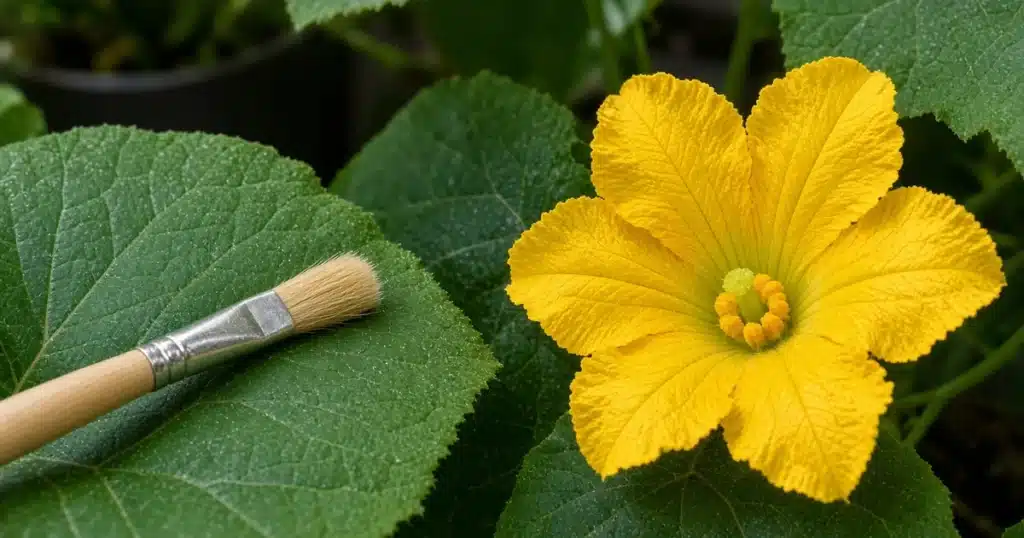
Squash and many cucumbers grow separate male and female flowers. The female flower has a small swollen fruit behind the petals. The male flower sits on a thin stem.
The UC Master Gardeners guide to hand pollinating squash plants shows how to move pollen from the male to the female flower with a small brush or the male flower itself.
Pick a male flower that has opened. Brush the center to gather pollen. Then dab the pollen onto the center of an open female flower.
Some greenhouse cucumber types set fruit without pollination. Check your seed packet. If yours is one of these, you can skip this step.
When is a good time to pollinate?
Flowers often release pollen well in the warm middle of the day. Pollen tends to be dry and loose then.
Hold humidity moderate. Very humid air makes pollen sticky. Very dry air can make it less viable.
Pollinate every day or two while plants are in bloom. New flowers open often, and each has a short window.
Does a fan help pollination?
A gentle fan maintains airflow around the leaves and may help a little with pollen release. It is not enough on its own, so continue vibrating or brushing the flowers.
A fan won’t move pollen between separate male and female flowers well. For squash and cucumbers, hand work is still needed.
Our post on caring for your hydroponic system covers airflow and room conditions that support healthy plants.
How do you pollinate strawberries indoors?
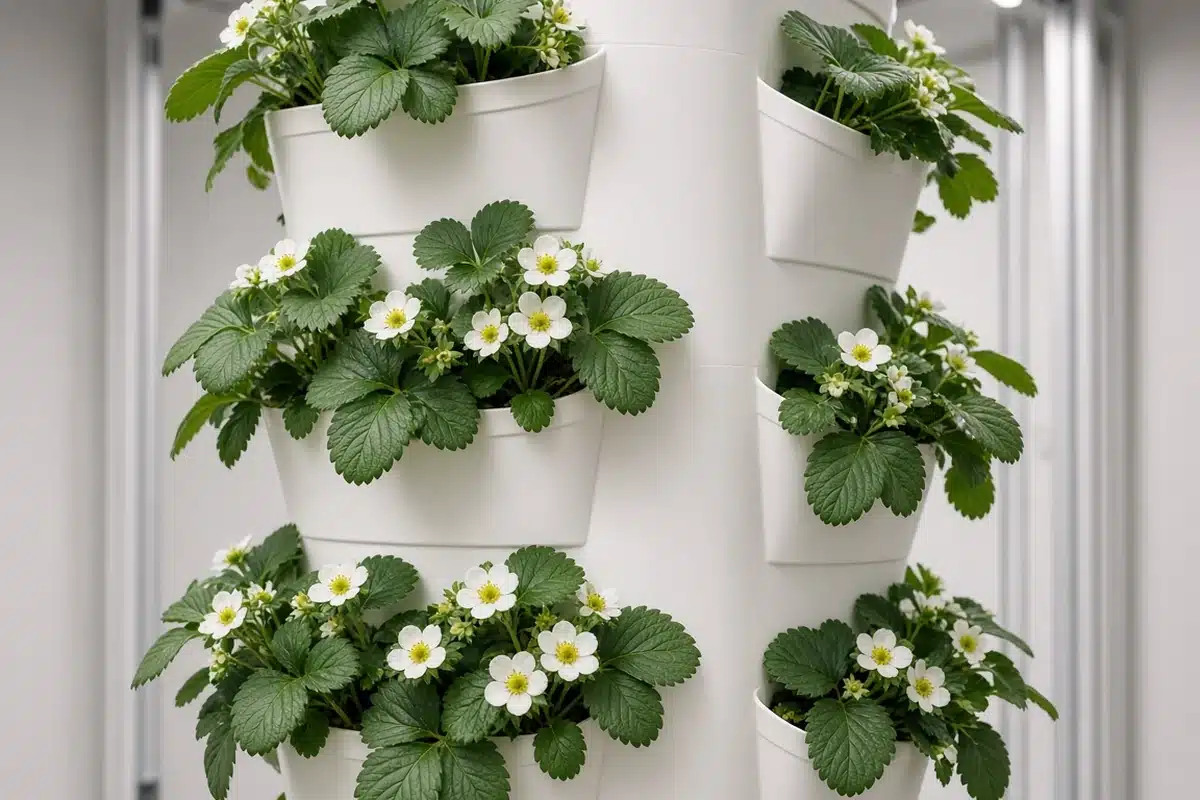
Strawberries have perfect flowers, but each flower holds many small female parts in the center. Every one of them needs pollen for the berry to form fully. Berries with missed spots grow lumpy or small.
Use a soft brush and sweep it gently around the whole center of each open flower. Move from flower to flower so pollen spreads across the plant. Do this every day or two while plants bloom.
How can you tell pollination worked?
Watch the flower after a few days. On tomatoes and peppers, the petals dry and fall while a tiny green fruit stays behind and starts to swell. On squash and cucumbers, the small fruit behind the female flower grows longer and firmer instead of turning yellow and shriveling.
If flowers continue dropping with nothing behind them, step up the routine. Pollinate more often, check humidity and make sure the plants get enough light to carry fruit.
How to: step by step
- Check which flower type your crop has.
- Pollinate at midday when pollen is loose.
- Tap or vibrate tomato and pepper clusters.
- Brush pollen from male to female flowers on squash and cucumbers.
- Repeat every day or two while plants bloom.
- Watch for small fruit swelling behind spent flowers.
Troubleshooting
Flowers drop without fruit. Pollination didn’t happen. Shake or brush more often.
Misshapen fruit. Pollination was partial. Apply more pollen and cover the whole flower center.
No male flowers on squash. Young plants sometimes make female flowers first. Wait a few days.
Sticky pollen. Humidity is too high. Lower it a little during bloom.
Fruit not swelling. The flower may not have been pollinated or the plant is stressed. Check light and nutrients.
For a related look at pollination from a different angle, see our post on how to tell if your female cannabis plant has been pollinated. Kind Seed Co shares more garden ideas in outdoor growing.
Sources
- Hand pollinating squash plants, UC Master Gardeners, Hand pollinating squash plants
- Pollination and fruit development in tomatoes, University of Alaska Fairbanks Cooperative Extension, Pollination and fruit development in tomatoes
- Pollination problems of vegetables, University of Maryland Extension, Pollination problems of vegetables
FAQ
Do hydroponic tomatoes need hand pollination?
Indoors, they often do. Tapping or vibrating the flower cluster releases pollen so fruit can set.
Can a fan pollinate plants?
A fan helps tomatoes and peppers drop pollen but does little for squash or cucumbers, which need pollen moved by hand.
What tool works for brushing pollen?
A small soft paintbrush or cotton swab works well. A picked male flower can also be used as a brush.
How often should you pollinate?
Every day or two while plants are in bloom. Each flower has a short window for pollen.
Do all cucumbers need pollination?
No. Some greenhouse types set fruit without it. Check your seed packet before you start.



