
Storing Gladiolus Corms: Lifting and Curing for Winter
The short answer
Storing gladiolus corms saves them where winters are too cold for them. Extension guides say to dig corms in fall, cut the foliage back, cure them in a warm, airy spot for 2 to 3 weeks, remove the old mother corm, then store the new corms in mesh bags. Iowa State suggests 35 to 45 degrees Fahrenheit.
When should you dig gladiolus corms?
Most garden gladiolus are tender. Washington State University Extension says big flowered hybrids are hardy in USDA zones 7 to 10, so in colder areas they must be dug and stored or grown as annuals. Gladiolus nanus hybrids are reputedly hardy to zone 5 if well mulched. NC State Extension says hardy types need a good layer of mulch.
Give corms time to mature. Washington State says to begin digging when leaves start to die back, often 6 to 8 weeks after blooming, and to let green leaves wither before cutting back. Purdue Extension says it’s critical to let corms mature as fully as possible before digging. Iowa State University Extension says to dig in late summer or early fall. Add the job to your fall garden cleanup after cannabis harvest.
Dig with care. Purdue says to use a fork or spade and avoid bruising or injuring corms. University of Wisconsin Extension says to shake off the soil but not to wash gladiolus corms, and to cut the stems back to 1 to 2 inches.
How do you cure gladiolus corms?
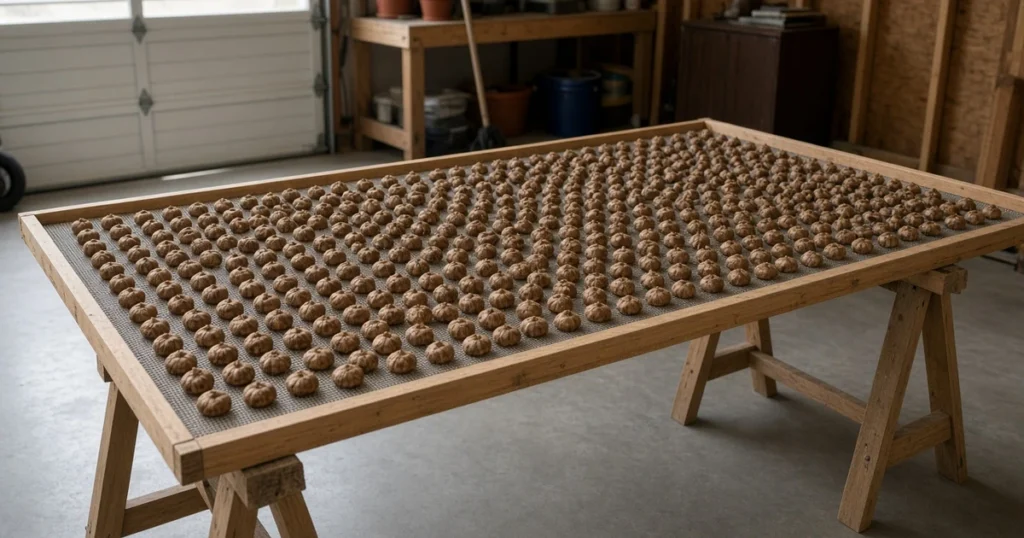
Curing readies the corms for storage. Iowa State says to dry them for 2 to 3 weeks in a warm, dry, ventilated spot. Washington State suggests a single layer on cloth, cardboard or wire mesh at 60 to 70 degrees Fahrenheit for 2 to 3 weeks. Purdue gives a warmer range of 80 to 85 degrees for the same time.
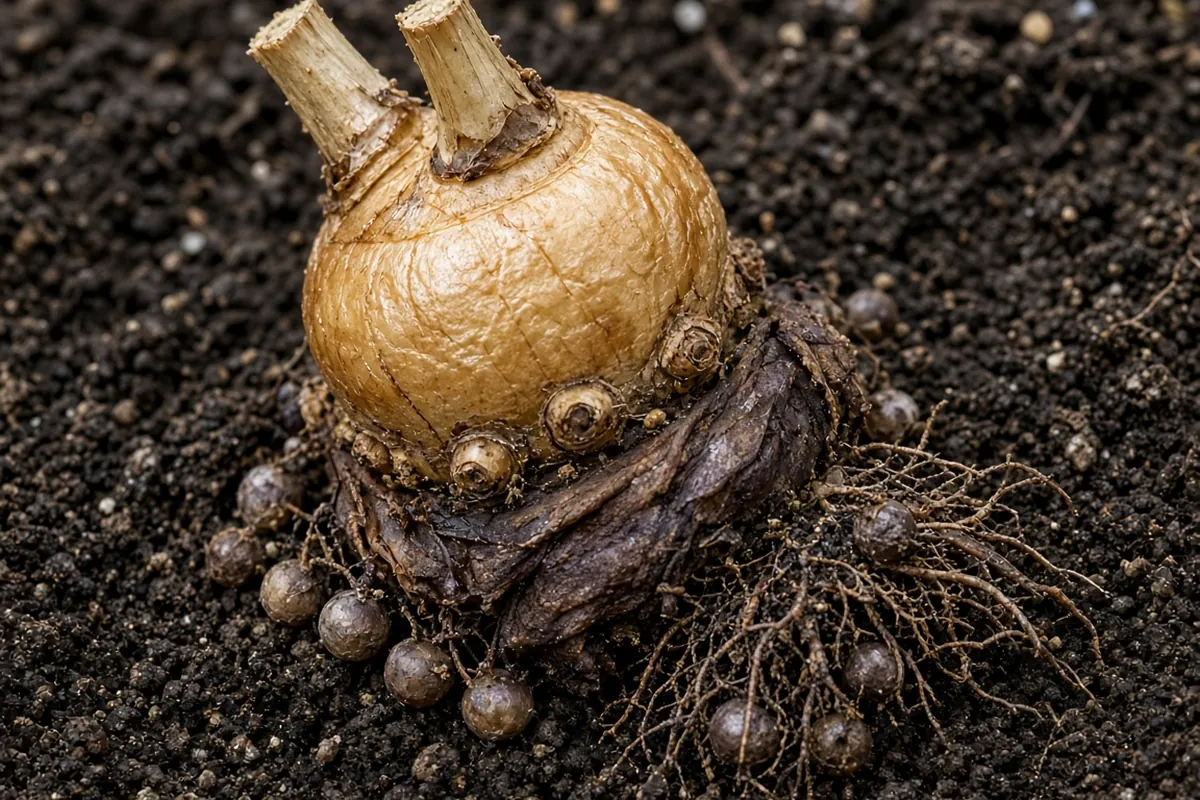
After curing, clean up each corm. Iowa State says to remove and discard the old dried mother corm at the base of each new corm. It says to remove the tiny cormels around the base and save them for propagation or discard them.
How should gladiolus corms be stored?
| Step | Why | Notes |
|---|---|---|
| Dig as leaves die back | Lets corms mature | 6 to 8 weeks after bloom |
| Cut foliage to 1 to 2 inches | Readies corms for curing | Do not wash corms |
| Cure 2 to 3 weeks | Dries corms for storage | Warm, airy spot |
| Remove mother corm | It is spent | Save cormels if wanted |
| Store at 35 to 45 °F | Holds dormancy | Mesh bags, low humidity |
Sources: Washington State University Extension, University of Wisconsin Extension, Iowa State University Extension, Purdue Extension.
Iowa State says to place corms in mesh bags or old nylon stockings and hang them in a cool, dry, ventilated spot. Purdue lists paper boxes, open paper bags, cloth bags, screen bottomed trays or old onion sacks and suggests 35 to 40 degrees in low humidity. NC State suggests mesh bags with good air circulation at 35 to 41 degrees. Washington State says to label bags so corms can be identified later.

How to: step by step
- Wait until leaves die back, about 6 to 8 weeks after bloom.
- Lift corms gently with a fork or spade.
- Shake off soil and cut foliage to 1 to 2 inches.
- Cure corms in a single layer for 2 to 3 weeks in a warm, airy spot.
- Snap off the old mother corm and collect the cormels.
- Discard soft or damaged corms.
- Store labeled mesh bags at 35 to 45 degrees Fahrenheit.
Troubleshooting
Soft or damaged corms: bruising at digging lets rot in. Discard damaged corms, as Wisconsin Extension advises.
Thrips damage last season: Washington State says thrips are the most common gladiolus pest. Look over each corm before storage.
Corms not curing: the spot is cool or crowded. Spread them in a single layer somewhere warm and airy.
Lost track of colors: Washington State suggests waterproof labels on each bag. While you are sorting, try cleaning and storing garden tools for winter.
Ready for spring
Gladiolus corms return year after year when dug at maturity, dried well and stored cool and dry. Plant again in spring, and prepare the bed with fertilizer and compost for growing outdoors from the Kind Seed Co blog.
Sources
- How do I overwinter gladiolus bulbs?, Iowa State University Extension and Outreach
- Gladiolus (C049), Washington State University Extension
- Winter storage of geranium, canna, gladiolus, caladium and begonia (HO 85), Purdue Extension
- Gladiolus, NC State Extension Gardener Plant Toolbox
- Storing tender bulbs for winter, University of Wisconsin Extension Horticulture
FAQ
Can gladiolus stay in the ground over winter?
It depends on type and zone. Washington State University Extension says large flowered hybrids are hardy in zones 7 to 10. Gladiolus nanus hybrids are reputedly hardy to zone 5 with a good mulch. In colder areas, dig and store corms each fall.
What are cormels?
Cormels are small bulblets that form between the base of a new corm and the top of the old mother corm. Washington State University Extension says that with proper care they grow into full sized replacements for older corms. Remove them in fall and store them in mesh or paper sacks.
Should corms be dusted before storage?
Purdue Extension says dusting clean corms with a bulb dust can limit disease in storage. NC State Extension suggests it mainly if thrips or fungus were a problem during the season.
When should gladiolus be replanted?
Washington State University Extension says corms can be planted as early as a month before the last average frost date. Set them pointed end up at three to four times their diameter deep and 4 to 6 inches apart, in full sun and moist, well drained soil.
Why throw away the old corm?
Each season a new corm forms on top of the old one. Iowa State University Extension says to remove and discard the old dried mother corm after curing. Purdue Extension advises breaking the old corm from the base of the new one once fully dry.



