
Fall Tree Planting: Why Autumn Works and How to Do It
The short answer
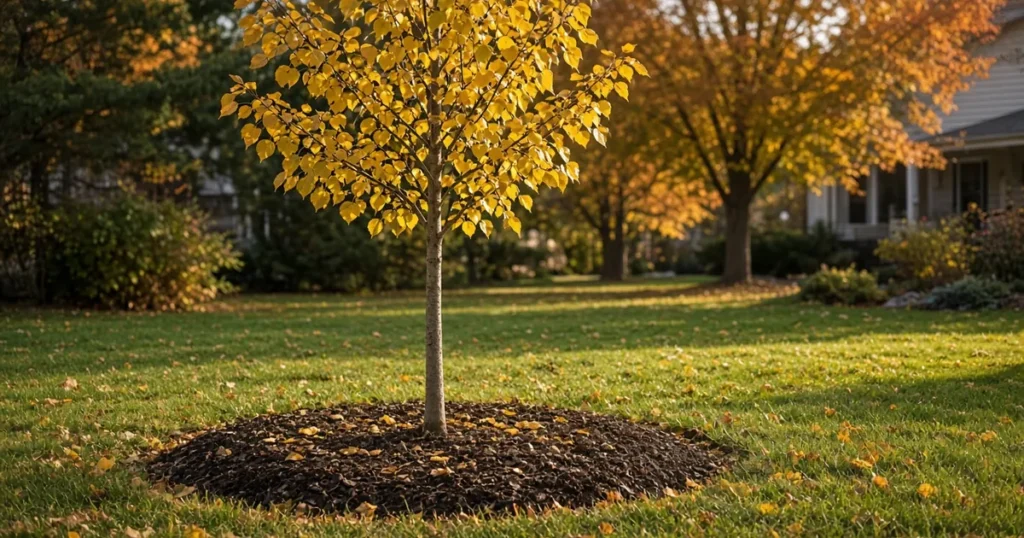
Fall tree planting gives roots a head start. Purdue Extension says cooler fall weather lowers heat stress and water loss while a deciduous tree turns its energy to roots. Nebraska Extension says root growth continues until soil drops below 40 degrees Fahrenheit. Plant from early September through October, set the flare at grade, mulch and water.
Is fall a good time to plant trees?
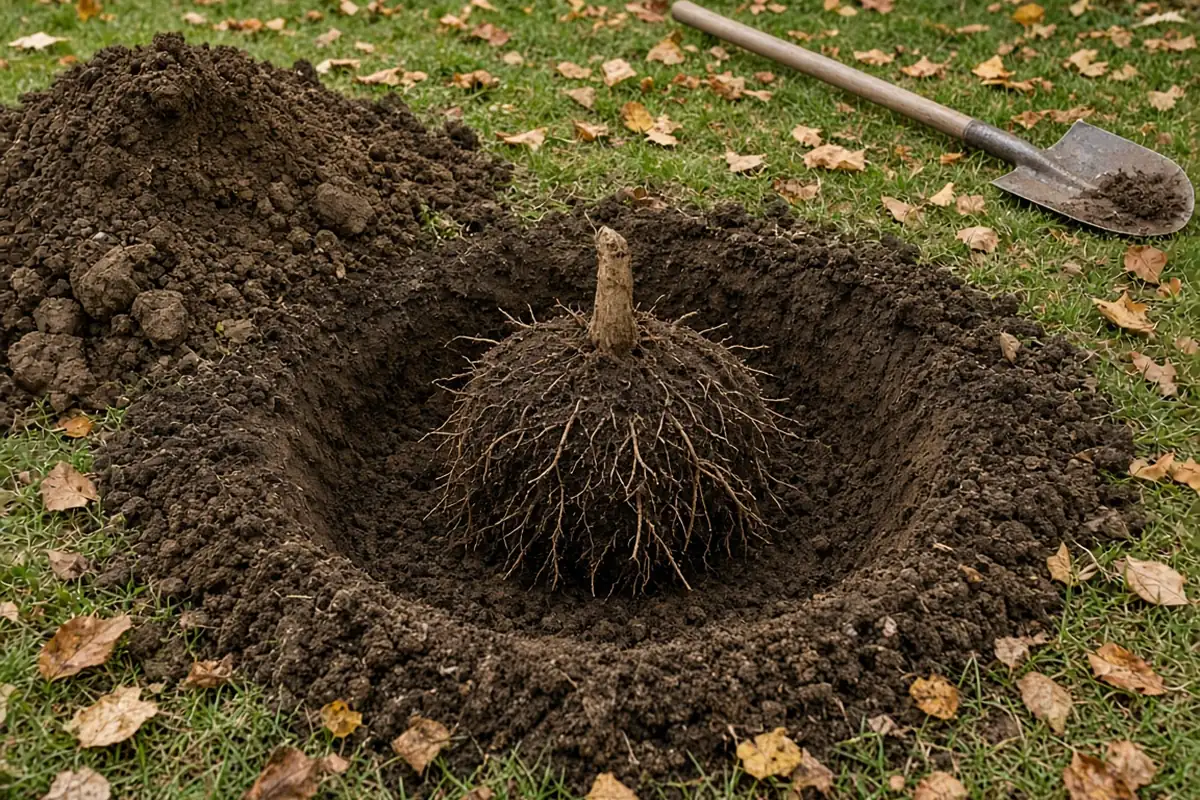
Yes, for most trees. Purdue University Forestry and Natural Resources Extension says fall can be an excellent time to add a tree. Cooler temperatures reduce heat stress and often lower the water lost from plants and soil. A deciduous tree is preparing for dormancy and still developing roots, so roots can establish before the next summer’s heat.
Kansas State Research and Extension agrees that fall roots help the plant settle in before hot, dry summer weather arrives. Nebraska Extension in Lancaster County says cooler temperatures and more rain in fall let trees establish roots fast. Think about where the tree will grow, too. If you grow nearby, read growing cannabis near trees.
How late in fall can you plant trees?
Both Nebraska and Kansas State name early September through late October as the main window. Kansas State says planting later into November reduces root growth before the soil cools. Nebraska says root growth continues late in fall until soil temperatures drop below 40 degrees Fahrenheit. To learn how soil warmth affects planting, see soil temperature for planting cannabis.
Some trees do better in spring. University of Maryland Extension says trees with fleshy roots, such as dogwoods, magnolias, willow oaks, tulip poplar and yellowwood, should be planted in spring. Broadleaf evergreens are often planted in spring too, though mountain laurel, boxwood and hollies can go in early fall if watered and mulched.
How do you care for a tree planted in fall?
| Factor | Why it matters | Notes |
|---|---|---|
| Timing | Roots grow until soil hits 40 °F | Early September to late October |
| Hole width | Loose soil speeds root growth | Two to five times the root ball |
| Hole depth | Deep holes make trees settle | No deeper than the root ball |
| Root flare | A buried flare hides girdling roots | Visible at the soil line |
| Water | Dry winter soil is a main drawback | Water until the soil freezes |
Sources: Nebraska Extension, Kansas State Research and Extension, University of Maryland Extension.
Water is the big job. Kansas State says dry winter soil is one of the main drawbacks to fall planting and that soil absorbs water unless frozen. It advises soaking deeply, then letting the soil dry before watering again. Maryland says to water when the soil below the mulch and in the root ball feels dry several inches down.
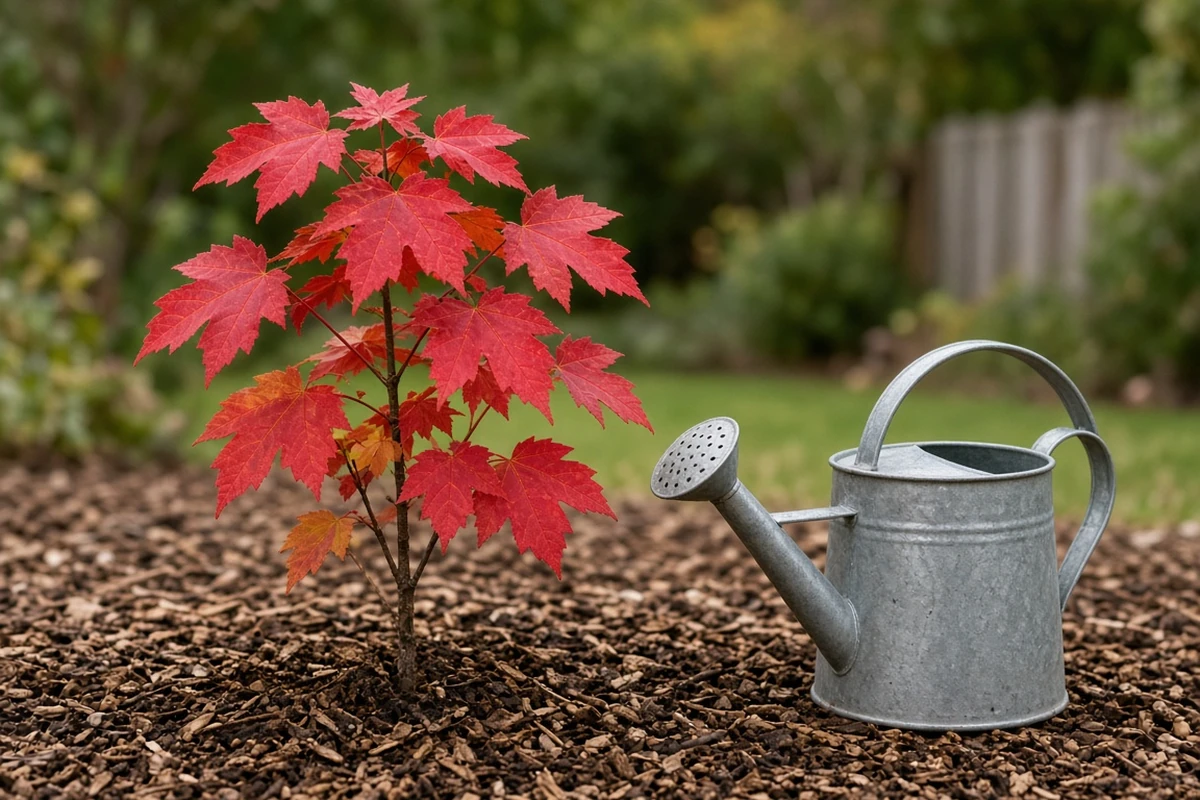
Mulch with care. Maryland notes that too much mulch makes a deep planting worse, mainly if it buries the trunk. Mulching out toward the dripline cuts grass competition for water and nutrients.
How to: step by step
- Check roots before buying and look for circling or girdling roots.
- Plant between early September and late October.
- Dig a hole two to five times the width of the root ball, but no deeper.
- Set the tree so the root flare shows at the soil line.
- Backfill without stomping, then let water settle the soil.
- Mulch wide, without burying the trunk.
- Water deeply whenever the soil is dry, until it freezes.
Troubleshooting
Tree settling too low: Kansas State says digging deeper than the root ball causes the plant to settle. Dig only as deep as the ball.
No visible root flare: Maryland says nursery trees are often sold with too much soil over the roots. Gently remove excess soil from the trunk base.
Slow root growth after planting: stomping the backfill compacts the soil. Kansas State says to lightly firm it or let water settle it.
Tree dried out over winter: fall watering stopped too early. Water through winter whenever the soil isn’t frozen.
Plant now, enjoy for years
Fall tree planting works when you choose the right tree, plant at the right depth and water steadily until freeze up. For soil building ideas, see fertilizer and compost for growing outdoors on the Kind Seed Co blog.
Sources
- Fall tree planting: avoiding common problems at planting, Nebraska Extension in Lancaster County
- Can I plant trees in the fall?, Purdue University Forestry and Natural Resources Extension
- Fall tree and shrub planting instructions, Kansas State Research and Extension, Johnson County
- Planting a tree or shrub, University of Maryland Extension
FAQ
Which trees should not be planted in fall?
University of Maryland Extension says trees with fleshy roots, including dogwoods, magnolias, willow oaks, tulip poplar and yellowwood, should be planted in spring. Kansas State Research and Extension also advises against fall planting in sites with harsh winter winds or no way to water.
Should you fertilize trees at fall planting?
Kansas State Research and Extension says young trees and shrubs are normally not fertilized at planting, with the only exception being a root starter type fertilizer. Establishing roots matters more in the early stages than top growth, so focus on depth, mulch and water.
How wide should the planting hole be?
Kansas State Research and Extension says the hole should be two to five times the diameter of the root ball. It is better to dig wider than deeper. Loose soil around the ball helps roots grow quickly into the surrounding ground.
How much water does a new tree need in fall?
Kansas State Research and Extension says to soak the soil deeply, then let it dry before watering again, and to check moisture through winter. University of Maryland Extension says to water when the soil under the mulch and in the root ball feels dry several inches down.
Why does planting depth matter so much?
Nebraska Extension says a root system buried too deeply has reduced root growth for the rest of the tree's life. The first major root should sit at the soil surface, with the root flare visible at the soil line once planting is finished.



