
Terrarium Lighting Basics: LED Strips and Heat in Closed Glass

The short answer
Terrarium lighting should give plants steady, bright light without cooking them inside the glass. Shield closed terrariums from direct sun, which can overheat them quickly. A small LED strip or fixture above the glass on a timer is a simple option, and standard white LEDs are usually enough. Watch for fog or wilting as signs of heat.
Get the light right and a terrarium can thrive for years with very little care.
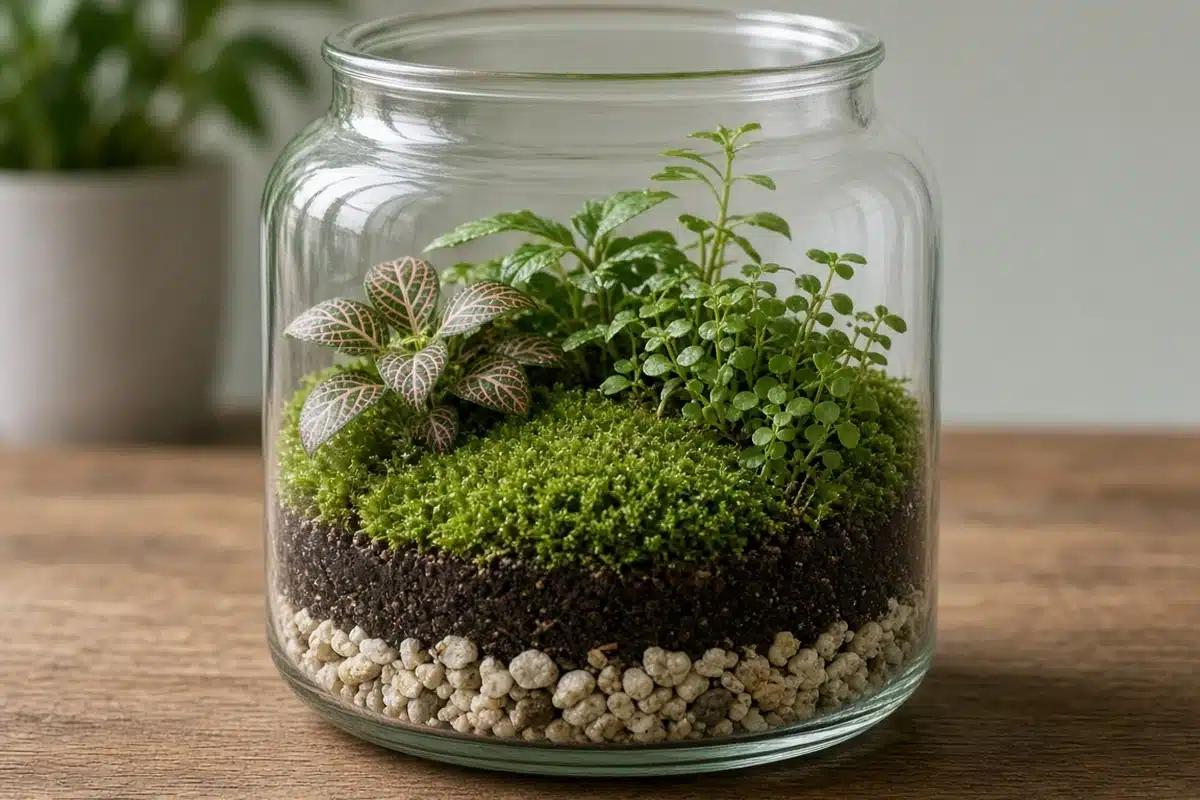
How much light does a terrarium need?
Most terrarium plants come from the forest floor. Ferns, mosses, fittonia and small begonias grow in bright shade in the wild. They need steady light but not hours of hot sun.
The University of Arizona Cooperative Extension guide The Terrarium: An Oasis of Humidity for Plants describes terrariums as small humid spaces for plants that like moisture. These plants grow well in bright indirect light.
Pick a bright spot where direct sun does not hit the glass. A north window or a few feet back from an east window is a common choice. If your space is dim, a small grow light fills the gap.
Our post on optimal lighting for growing indoors explains how light intensity changes with distance from a window or lamp.
Why is direct sun a problem for closed glass?
Glass traps heat. Sun shining through the walls warms the air and soil inside, and in a closed jar that heat has nowhere to go. Heat can climb fast.
The MU Extension guide to terrariums advises shielding terrariums from direct sun for this reason. Plants inside can wilt, scorch or rot when they overheat.
Open terrariums handle a little more light because heat escapes from the top. Still, bright indirect light suits most setups.
Which lights work for terrariums?
| Light type | Good fit | Notes |
|---|---|---|
| LED strip | Long or shallow tanks | Mount on a lid or shelf above |
| Small LED panel | Medium jars and tanks | Even coverage from above |
| Clip on LED lamp | Single jars | Easy to aim and adjust |
| Window light | Bright rooms | Avoid direct sun on the glass |
Sources: University of Arizona Cooperative Extension, MU Extension, Iowa State University Extension and Outreach.
LEDs run cool and use little power. That makes them a good match for terrariums, where extra heat is a problem. Standard white LEDs cover the light plants need. Special colored grow lights aren’t required for most foliage plants.
Mount the light above the glass rather than inside. That holds the fixture dry and lets heat escape. A few inches to a foot above the top is common.
Our post on grow light heat management covers how fixture heat builds up in small spaces.
How long should terrarium lights run?
MU Extension suggests running supplemental light 16 to 18 hours a day when a terrarium sits in a low light spot. A timer holds the schedule steady, so you don’t flip lights by hand.
Our post on grow light timers explains simple plug in timers and how to set them.
Hold a steady schedule. Plants respond better to a steady day than to random long and short stretches.
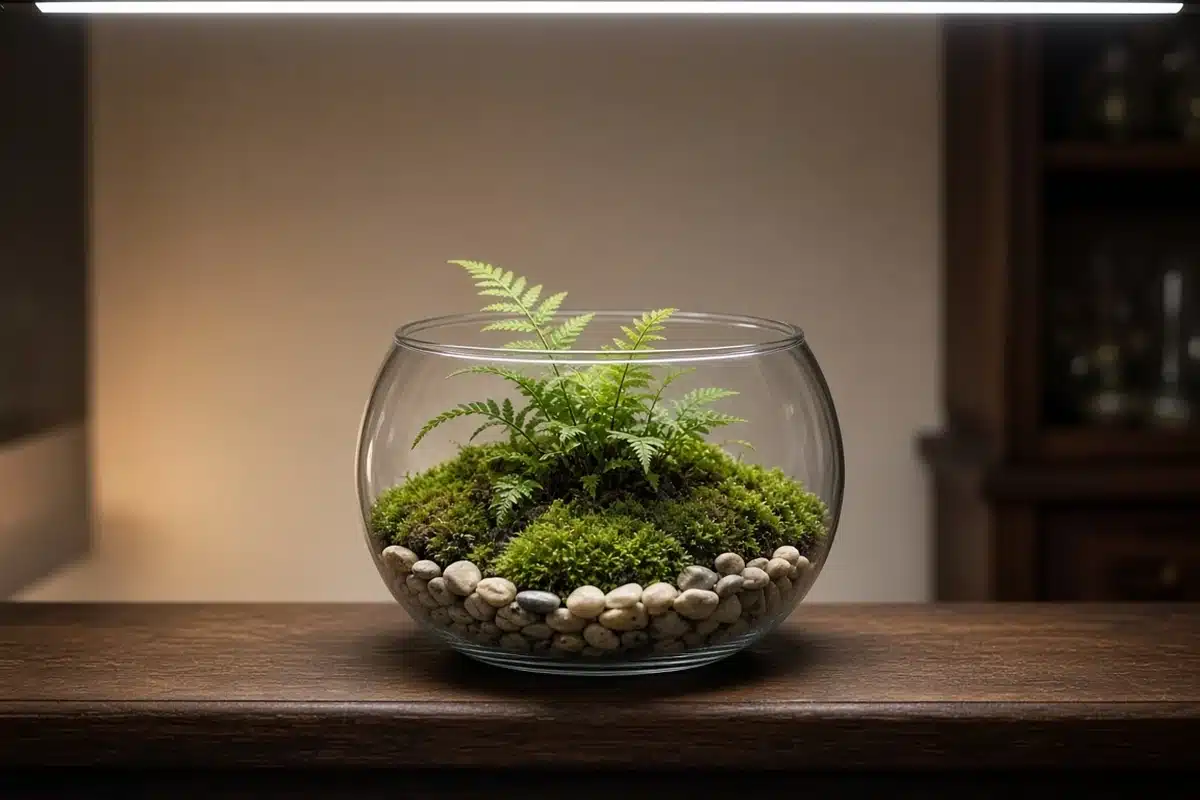
How do you tell if light is wrong?
Plants that stretch toward the glass, lose color or drop leaves may need more light. Move the terrarium closer to a window or add a lamp.
Plants that look scorched, wilt in the afternoon or sit in heavy fog may be too hot. Move the light farther away or out of sun.
The Iowa State University Extension and Outreach guide on how to create and care for a terrarium covers watching condensation. A little fog in the morning is normal. Heavy fog all day suggests too much moisture or heat.
Do different terrarium plants need different light?
Mosses and ferns are content with modest light and suit closed jars well. Fittonia and small peperomia want a little more brightness to hold their leaf color. Succulents and cacti are a different case. They need far more light and dry air, so they belong in open dishes, not closed glass.
Group plants with similar needs in the same container. Put the brightest light lovers near the top or center, where light is brightest, and tuck shade lovers lower or under taller leaves.
How to: step by step
- Place the terrarium in bright indirect light.
- Shield closed glass from direct sun.
- Add an LED strip or small fixture above if the spot is dim.
- Set a timer for 16 to 18 hours.
- Watch for stretching, scorching or heavy fog.
- Adjust light height or hours as needed.
Turn the terrarium a quarter turn every week or two so plants grow evenly. Wipe the glass if it builds up dust or water spots, since a dirty wall cuts light.
Troubleshooting
Plants leaning toward one side. Light comes from one direction. Rotate the glass or add light from above.
Moss turning brown. It may be too dry or too hot. Check moisture and move away from heat.
Heavy fog all day. The jar is too warm or too wet. Open the lid for a few hours and cut light hours.
Leggy growth. Light is too weak. Move the lamp closer or run it longer.
Algae on glass. Light and moisture are high. Wipe the glass and cut light hours a little.
A small light plus a timer can help steady growth. Kind Seed Co shares more garden ideas in outdoor growing.
Sources
- The terrarium: an oasis of humidity for plants (AZ2050), University of Arizona Cooperative Extension, The terrarium
- Terrariums (G6520), MU Extension, Terrariums (G6520)
- How to create and care for a terrarium, Iowa State University Extension and Outreach, How to create and care for a terrarium
FAQ
Can a terrarium sit in a window?
Yes, if no direct sun hits the glass. Bright indirect light from a north or east window works well.
Do terrariums need grow lights?
Not always. A bright room may be enough. In dim spots, a small LED adds the light plants need.
What color light do terrarium plants need?
Standard white LEDs work for most foliage plants. Special colored lights are not needed.
How many hours should the light run?
MU Extension suggests 16 to 18 hours a day for supplemental light. A timer holds it steady.
Why is my terrarium foggy?
Some fog is normal. Heavy fog all day often means too much heat or moisture.



