
What Is a Root Ball? Root Balls and Nursery Stock Explained
The short answer
A root ball is the mass of roots and soil or potting mix that comes with a nursery tree or shrub. Nursery stock comes as container grown, balled and burlapped or bare root. Handle plants by the root ball, not the trunk. Loosen circling roots and set the root flare at grade when planting.
How you handle the root ball at planting shapes how well a tree or shrub grows for years.
What is a root ball?
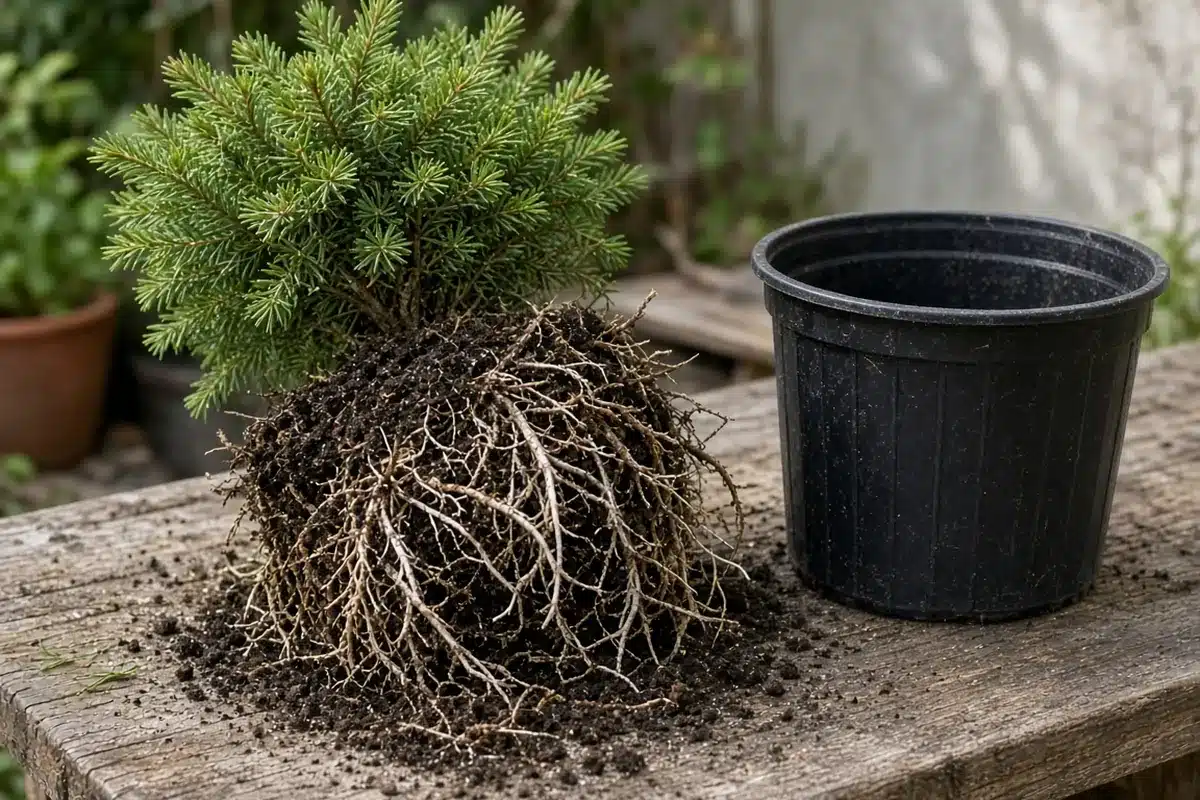
The root ball is the clump of roots and growing medium you move with a plant. It holds the fine roots that take up water and nutrients.
Damaging the root ball sets a plant back. Lifting a tree by its trunk can tear roots loose from the soil. Dropping a root ball can crack it apart.
The University of Maryland Extension guide to planting a tree or shrub explains how to carry plants by the root ball and prepare it for planting.
What types of nursery stock are there?
Container grown plants grow in pots. Their root ball is the pot full of roots and potting mix. They can be planted much of the growing season.
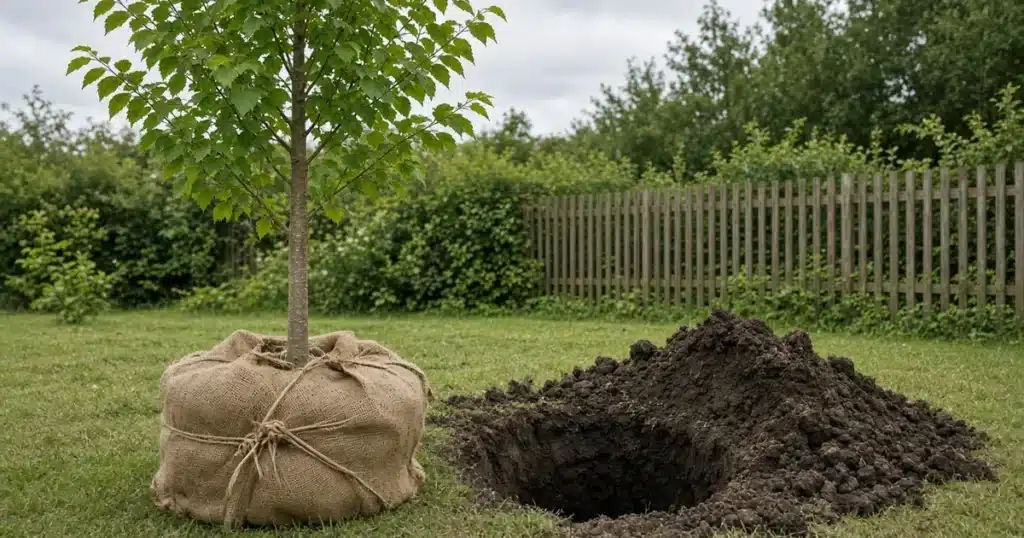
Balled and burlapped plants are dug from a field with a ball of soil around their roots. The ball is wrapped in burlap and often set in a wire basket. They’re heavy and usually larger trees.
Bare root plants are dug while dormant and sold with no soil on their roots. They’re light and cheap, but roots must stay moist until planting. Plant them in early spring.
| Type | Root ball | Notes |
|---|---|---|
| Container grown | Roots and potting mix in a pot | Check for circling roots |
| Balled and burlapped | Field soil wrapped in burlap | Heavy. Remove top wrapping |
| Bare root | No soil | Plant while dormant. Hold roots moist |
Sources: University of Maryland Extension, Colorado State University Extension, Mississippi State University Extension.
How do you handle a root ball at planting?
Carry the plant by the root ball or container, never by the trunk.
For container plants, slide the plant out of its pot. Look for roots circling the outside. Loosen them with your fingers or shave the outer edge with a sharp knife or saw so new roots grow outward.
Our post on root bound cannabis explains what circling roots do and how to fix them.
For balled and burlapped trees, set the tree in the hole first. Then cut away twine and remove burlap and wire from at least the top part of the ball. Many guides advise removing as much as practical.
The Colorado State University Extension article on the science of planting trees explains why removing wrapping, finding the root flare and planting at the right depth matter so much.
How deep should you plant?
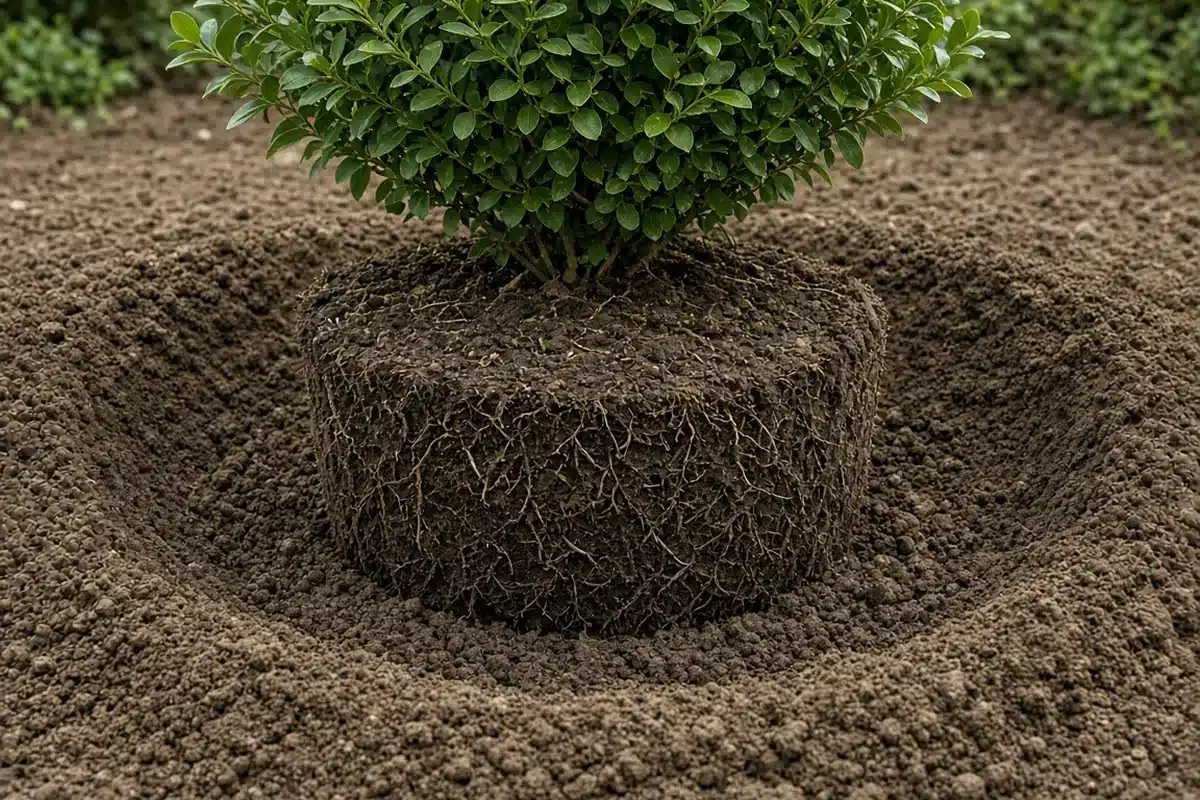
Dig the hole no deeper than the root ball and two to three times as wide. A wide hole lets roots spread into loosened soil.
Find the root flare, where the trunk widens into roots. Set it at or above the soil surface. Nursery stock is often buried too deep in its pot or ball, so you may need to remove soil from the top to find the flare.
Planting too deep is a common cause of poor growth.
The Mississippi State University Extension guide to installing trees and shrubs covers hole size, depth and backfill.
What happens after planting?
Backfill with the soil you dug out. Firm it gently to remove air pockets. Water deeply.
Spread mulch a few inches deep over the root area, pulling it back from the trunk.
Water often for the first year or two. The original root ball dries faster than the soil around it, so check it often.
Our post on transplanting marijuana plants covers ways to reduce transplant shock, and our post on potting up cannabis seedlings covers moving small plants into larger pots.
How big is a root ball?
Field dug root balls are sized by trunk thickness. Larger trees need bigger balls. Container size sets the root ball for potted plants.
How do you plant bare root stock?
Soak bare roots in water for a few hours before planting. Dig a hole wide enough to spread the roots without bending them.
Build a small cone of soil in the center of the hole. Drape the roots over it, with the root flare at grade. Backfill gradually, firming as you go, and water well.
Plant bare root stock while it’s still dormant, before buds open.
How to: step by step
- Identify the type of nursery stock.
- Carry the plant by the root ball.
- Remove pots, twine and top wrapping as guides advise.
- Loosen or trim circling roots.
- Dig no deeper than the root ball.
- Set the root flare at grade and water well.
Hold root balls moist and shaded until you plant.
Troubleshooting
Root ball falls apart. It’s dry or loose. Water before planting.
Circling roots. The plant is pot bound. Loosen or shave edges.
Plant sinks. The hole is too deep. Firm the base.
Leaves wilt after planting. The root ball dried. Water it.
Slow growth. The flare is buried. Remove extra soil.
A well handled root ball gives a new tree or shrub a good start. Kind Seed Co shares more garden projects in outdoor growing.
Sources
- Planting a tree or shrub, University of Maryland Extension, Planting a tree or shrub
- The science of planting trees, Colorado State University Extension, The science of planting trees
- Installing trees and shrubs, Mississippi State University Extension, Installing trees and shrubs
FAQ
Should burlap be removed?
Remove at least the top part, along with twine and wire. Many guides advise removing as much as practical.
What is balled and burlapped?
A field dug tree with a soil ball wrapped in burlap.
How big is a root ball?
It depends on trunk size or container size.
Can I plant root bound plants?
Yes. Loosen or shave circling roots first.
How deep should I plant?
Set the root flare at or just above grade.



