
What Is Broadcast Sowing? Scattering Seed vs Planting in Rows
The short answer
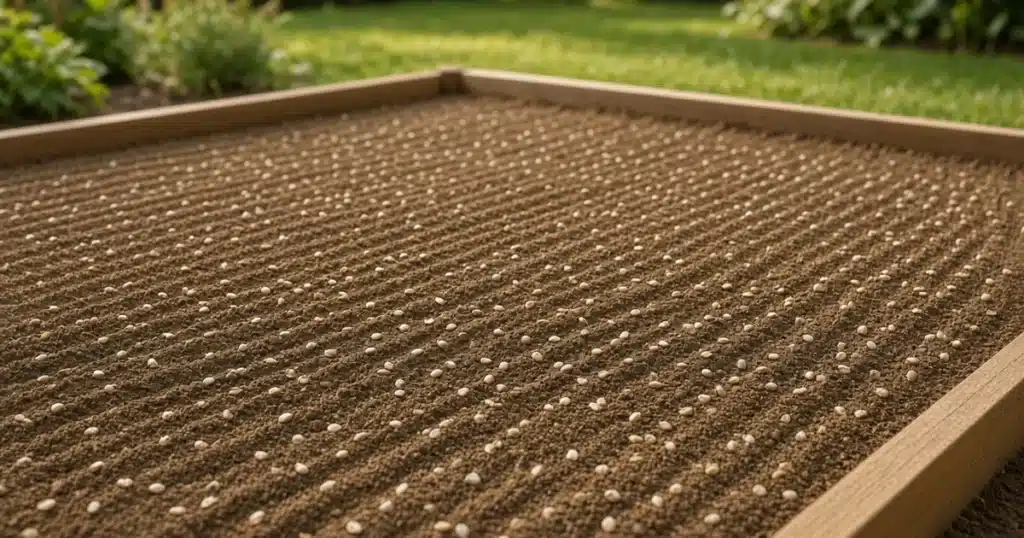
Broadcast sowing means scattering seed evenly over an area instead of placing it in rows. It suits small seeds, cover crops and wide beds of greens. Seed to soil contact matters, so rake lightly or press seed in afterward and hold the surface moist until sprouts appear.
Broadcasting is one of the oldest ways to sow. It is quick, simple and works well for the right crops.
What is broadcast sowing?
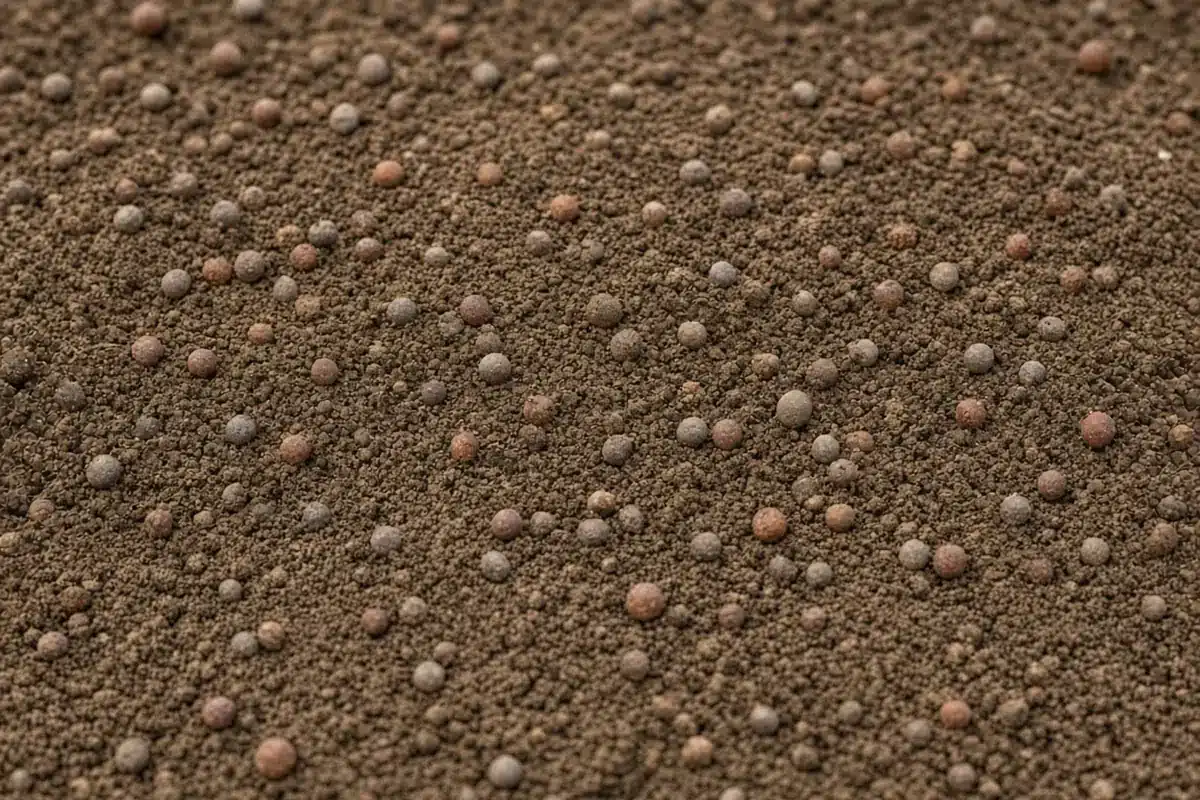
In broadcast sowing, you toss or spread seed across a whole bed or field. Seeds land at random spacing rather than in lines.
Farmers broadcast cover crops and grains with spinners, drop spreaders or by hand. Gardeners broadcast greens, carrots, radishes, wildflowers and lawn seed.
The University of Missouri Extension guide to selecting cover crop seeding machinery compares broadcasting with drilling and explains that broadcast seed needs to be worked into the soil or pressed down for good establishment.
When is broadcasting a good choice?
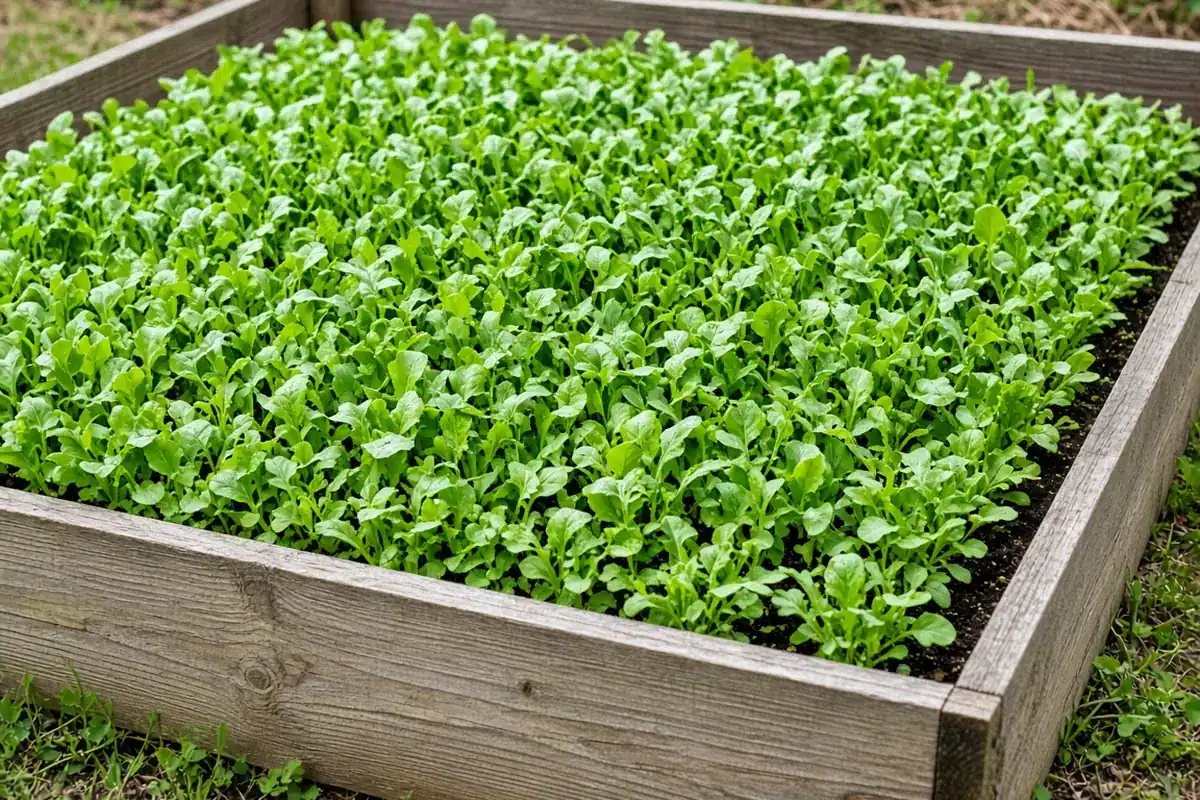
Broadcasting works well for small seeds that would be slow to place one by one. It suits crops harvested as a mass, such as baby greens, microgreens and cover crops.
A dense stand can shade the soil after it fills in, limiting space for weeds.
Rows work better for big seeds, crops that need wide spacing and crops that need hoeing between plants.
| Method | Suits | Notes |
|---|---|---|
| Broadcast | Small seeds, cover crops, greens | Fast. Needs seed to soil contact |
| Rows | Large seeds, spaced crops | Easy weeding between rows |
| Bands | Greens, carrots | A wide strip, a middle ground |
| Drilling | Cover crops, grains | Machine places seed at depth |
Sources: University of Missouri Extension, UMN Extension.
How do you get good seed to soil contact?
Seed needs moist soil around it to absorb water and sprout. Seed sitting on top of dry soil often fails.
After scattering, rake lightly so seed settles into the top layer. Or press the surface with a board or the back of a rake. For tiny seeds, a light dusting of fine soil or seed starting mix works well.
Our post on seed starting mix for cannabis explains what makes a fine, even mix.
The UMN Extension guide to starting seeds indoors covers seed depth and moisture needs that apply indoors and out.
How do you prepare the seedbed?
A smooth, loose, fine seedbed gives seed a good start. Remove rocks and clods. Rake level.
Work soil only when it is ready, since soil that is too wet clumps and crusts. Our post on when soil is ready to work shows how to judge it.
How do you spread seed evenly?
Mix tiny seeds with dry sand. The sand makes seed easier to see and spread thinly.
Divide the seed in half. Scatter one half walking one direction, then scatter the other half walking across. That evens out gaps.
Hold your hand low and toss gently. High tosses scatter seed unevenly in wind.
How do you hold the surface moist?
Water gently with a fine spray. Hard watering washes seed into clumps.
A thin crust can form on some soils, blocking sprouts. Our post on soil crusting and cannabis seedlings explains why crusts form and how to prevent them.
A light cover of row cover fabric or burlap holds moisture until sprouts appear. Remove it once seedlings emerge.
How do you weed a broadcast bed?
Weeding is harder than in rows, since you can’t hoe between lines. Start with a clean bed. Pull weeds by hand while they’re small. A dense crop shades out many weeds later.
How much seed should you use?
Seed packets often list a rate for broadcast sowing. For home beds, aim for seeds landing roughly a finger width apart for small greens and a bit wider for bigger crops.
Too much seed makes a crowded stand that needs heavy thinning. Too little leaves bare patches for weeds. Start with a little less than you think and fill gaps after you see the first sprouts.
When should you sow?
Sow cool season greens in early spring and late summer. Sow warm season crops after the soil warms. Cover crops often go in during late summer or early fall after harvest.
Sowing right before gentle rain helps seed settle and stay moist.
How to: step by step
- Prepare a smooth, loose seedbed.
- Mix tiny seed with sand for even spread.
- Scatter half one way and half across.
- Rake lightly or press seed in.
- Water gently to hold the surface moist.
- Thin seedlings once they come up.
Learning to identify your seedlings early helps you spot weeds. The Purdue Extension Master Gardener illustrated glossary of plant identification terms covers leaf shapes and terms that help with seedling identification.
Troubleshooting
Patchy stand. Scatter was uneven. Sow in two directions.
Seeds wash away. Watering was hard. Water gently.
Birds eat seed. Seed was exposed. Rake in or cover.
Crusted surface. Soil dried after rain. Water lightly or add a fine cover.
Too thick. Too much seed. Thin early.
Broadcast sowing is fast and simple once you master even spread and good contact. Kind Seed Co shares more garden projects in outdoor growing.
Sources
- Selecting cover crop seeding machinery (G1209), University of Missouri Extension, Selecting cover crop seeding machinery (G1209)
- Starting seeds indoors, UMN Extension, Starting seeds indoors
- Plant identification terminology: an illustrated glossary, Purdue Extension Master Gardener Program, Plant identification terminology
FAQ
Is broadcast sowing faster than rows?
Yes, for small seeds and wide beds.
Which crops suit broadcasting?
Greens, carrots, radishes, cover crops and wildflowers.
Do you need more seed?
Often a bit more, since some seed lands poorly.
How do you weed a broadcast bed?
Start clean and hand pull weeds while small.
Why mix seed with sand?
Sand helps spread tiny seed thinly and shows where it landed.



