
What Is Callus on Cuttings? Wound Tissue Before Roots Form
The short answer
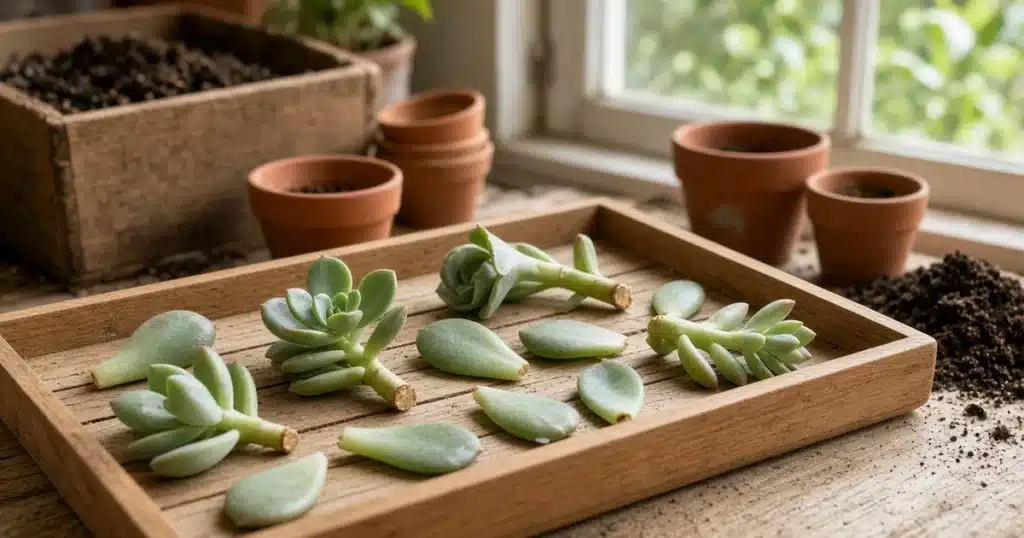
Callus on cuttings is the irregular mass of pale tissue that forms at the cut base of a stem. It grows from cells near the cambium and often appears before roots. University of California propagation notes say first roots often push through callus, but in most cases callus and roots form independently. Succulent cuttings are dried to callus first.
What is callus on a cutting?
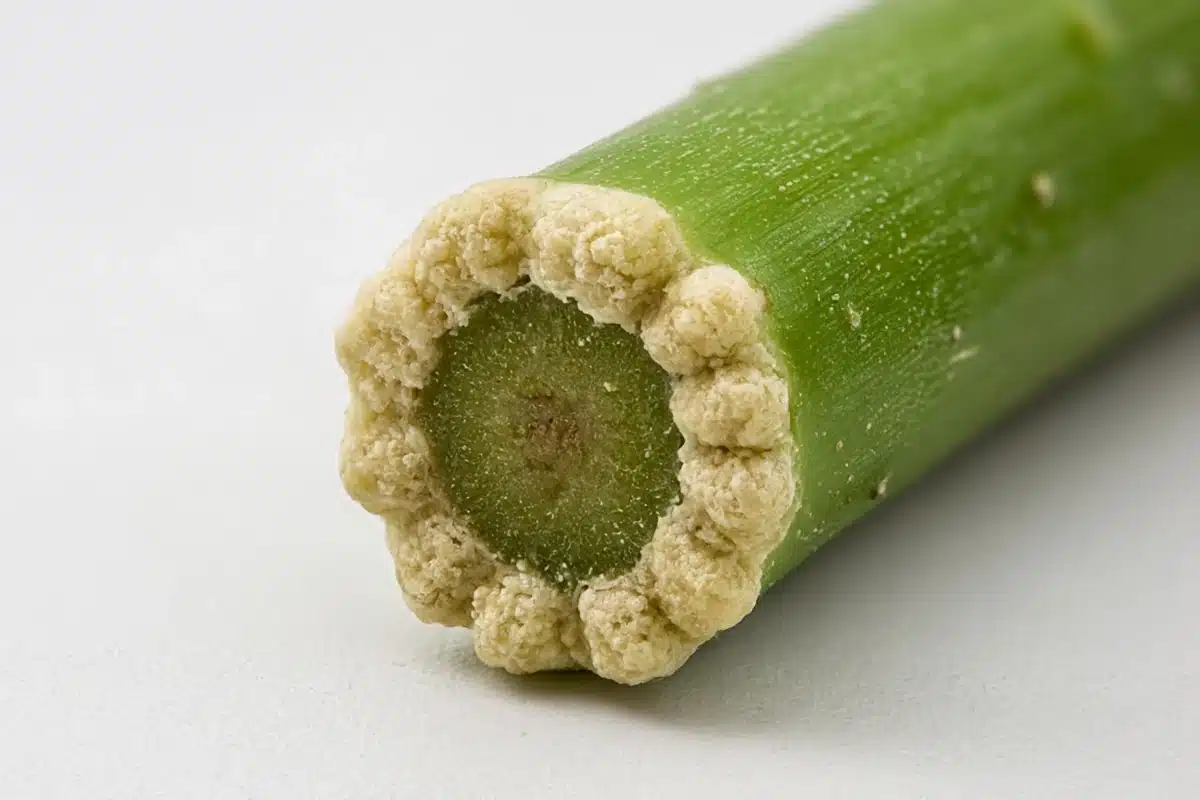
A University of California Agriculture and Natural Resources lecture on cuttings describes callus as an irregular mass of parenchyma cells. It develops at the basal end of the cutting and arises from the cambium. You will usually see it as a pale, bumpy ring or cap over the cut.
The cambium is the growing layer between bark and wood. Washington State University Extension explains that wounding a stem activates cell division in the tissue between the bark and wood. That same zone is where callus begins.
Cuttings work because a severed piece of stem can grow the parts it’s missing. North Carolina State Extension calls this asexual or vegetative propagation. For a hands on version with cannabis, see make cannabis clones.
Does callus mean roots are coming?
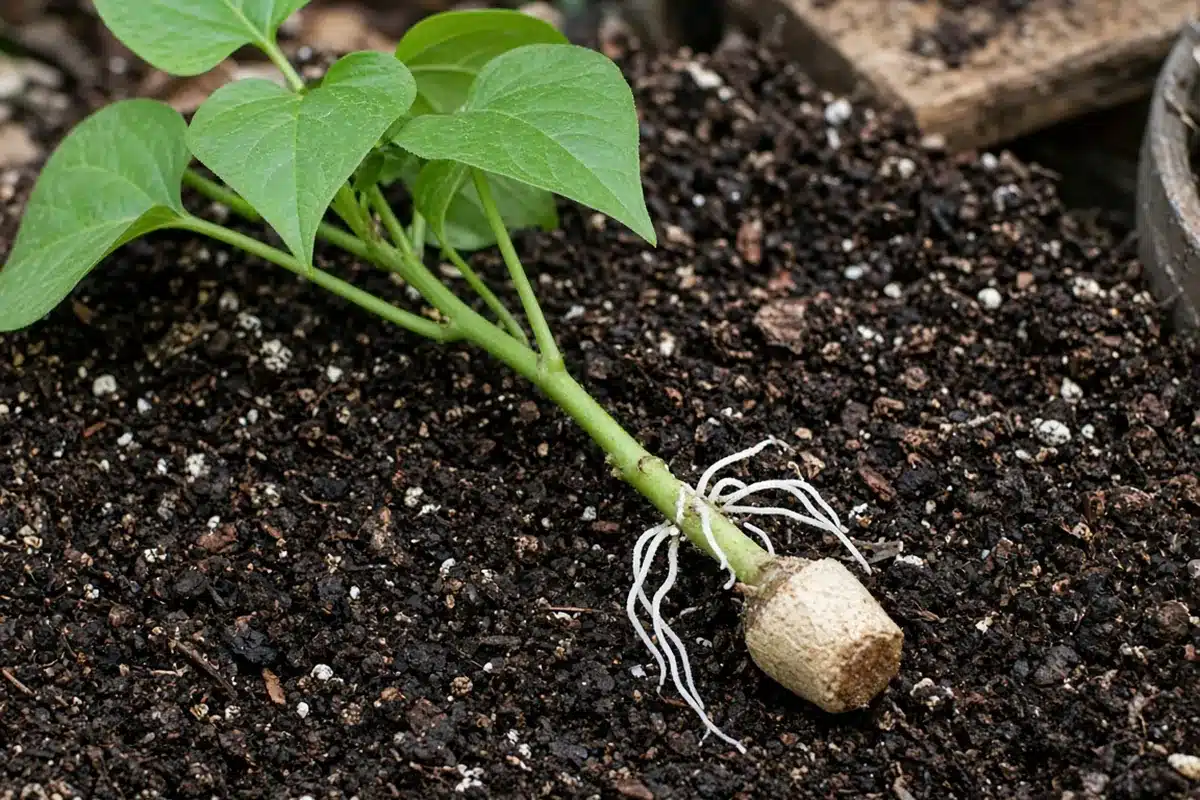
Not always. The University of California lecture says the first roots often appear through the callus. That led many growers to believe callus was needed for rooting. In most cases, though, callus formation and root formation are independent.
Too much callus can get in the way. The same lecture lists photinia, Burford holly and Leyland cypress as cases where callus can inhibit root development.
Roots come from other tissue. Iowa State University Extension says new roots form from buds on the lower portion of the stem. Washington State University Extension adds that some easy plants, such as willows, carry root initials that readily develop into roots.
| Stage | What you see | Notes |
|---|---|---|
| Fresh cut | Open, moist wound at the base | Succulents dry here first |
| Callus | Pale, irregular tissue over the cut | Forms from cells near the cambium |
| Rooting | White roots from the lower stem | Often push through the callus |
| Ready to pot | Roots about 1 inch long | Iowa State timing for houseplants |
Sources: University of California Agriculture and Natural Resources, Iowa State University Extension.
Why do succulent cuttings need to callus?
Succulent stems hold lots of water. University of Illinois Extension says the only real difference when rooting a succulent is letting the cutting callus over before it goes into moist potting mix. It suggests leaving the cutting on the counter for 4 to 7 days. The callus helps protect the cutting from rotting.
Iowa State University Extension gives the same advice. Remove leaves from the lower half of the stem. Let the cut end dry and callus for a few days on a tray, or hang it in an empty cup. Then place it in well drained media such as cactus potting soil or perlite.
Illinois Extension says rooting hormone isn’t necessary for most cacti and succulents. Iowa State notes most succulents root quickly without it. For soft stems, learn more about rooting hormone for cannabis clones.
How to: step by step
- Take cuttings from young, vigorous growth with a clean, sharp blade.
- Lay succulent cuttings on a tray for several days until the cut end calluses.
- Stick other cuttings in a sterile, well drained, moisture retentive medium.
- Cover soft cuttings with a plastic dome or loose bag to raise humidity.
- Give 4 to 6 hours of bright indirect light.
- Check the base for callus and white roots after a few weeks.
- Pot up once roots are about 1 inch long.
Troubleshooting
Large callus but no roots: callus and rooting are separate processes. Wait longer or take fresh cuttings from younger growth.
Rotting base on a succulent: it went into moist mix too soon. Let the next cutting callus for several days first.
Wilting soft cutting: cuttings without roots take up little water. Iowa State says high humidity is essential, but do not seal the bag tightly.
Slow rooting with hormone: Iowa State notes that too much rooting hormone can slow root development.
Small cut, new plant
Callus is the cut stem’s first response, and roots often follow nearby. Give cuttings the right moisture and humidity and watch the base. Build a simple humid space by making a cannabis clone box, with more propagation help on the Kind Seed Co blog.
Sources
- Cuttings lecture slides, University of California Agriculture and Natural Resources
- Propagating succulents and cacti, University of Illinois Extension
- How to propagate succulents, Iowa State University Extension and Outreach
- How to propagate houseplants by stem tip cuttings, Iowa State University Extension and Outreach
- Propagating shrubs, vines and trees from stem cuttings, Washington State University Extension
- Extension Gardener Handbook, chapter 13: Propagation, NC State Extension
FAQ
How long does callus take to form on succulent cuttings?
University of Illinois Extension suggests letting a succulent cutting sit on the counter for 4 to 7 days. Then insert it into the growing medium. Iowa State University Extension says to let the cut end dry and callus over for several days on a tray or plate.
Should you remove callus from cuttings?
Usually there is no need. A University of California lecture says first roots often appear through the callus. It also notes that heavy callus can inhibit rooting in some plants, such as photinia and Leyland cypress. Watch slow cuttings closely.
Do all cuttings need callus to root?
No. The University of California lecture says that in most cases callus formation and root formation are independent of each other. Iowa State University Extension says roots form from buds on the lower portion of the stem.
Does rooting hormone affect rooting?
Iowa State University Extension says rooting hormones promote root formation, though too much can slow root development. University of Illinois Extension says hormone is not necessary for most cacti and succulents to root well.
When is a cutting ready to pot up?
Iowa State University Extension says most houseplant stem cuttings form roots in 3 to 6 weeks and should be transplanted when roots are about 1 inch long. University of Illinois Extension says a succulent is ready when a gentle tug meets resistance and the roots hold together.



