
What Is a Monocarpic Plant? Plants That Flower Once and Die
The short answer
A monocarpic plant flowers and sets seed once in its life, then dies. Annuals and biennials follow this pattern, but the term is often used for long lived plants such as most agaves, which grow for years before a single bloom. Many leave offsets or pups at the base that carry on after the parent dies.

What is a monocarpic plant?
Monocarpic means the plant produces one round of flowers and seed, then its life ends. The word helps describe life cycles that look different on the surface.
North Carolina State Extension explains that annuals complete their whole life cycle, from seed germination to seed production, and die in one growing season. Biennials take two seasons. In the second season they flower, produce fruit and seeds, and die. Both fit the monocarpic pattern.
Perennials are different. North Carolina State Extension says perennials live for more than two growing seasons, up to several years, decades or centuries. Most flower again and again. A few long lived plants, though, spend years growing and then bloom only once. Those are the plants gardeners often mean by monocarpic. To see how a seed carries the next generation, read about cannabis seed anatomy.
Which plants are monocarpic?
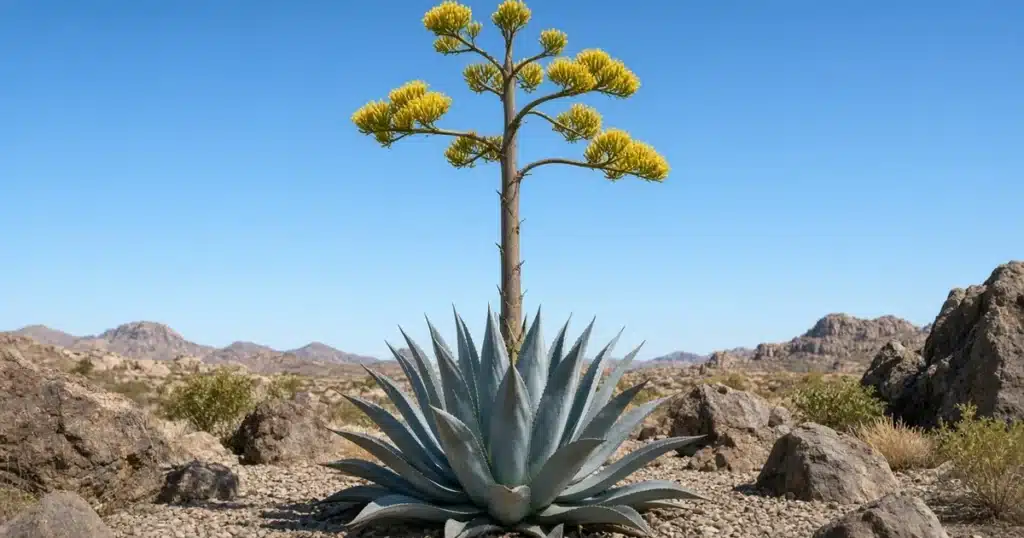
Agave is the classic example. UF/IFAS Extension says most Agave species are monocarpic, with each rosette producing one flower spike before the plant declines. It notes that some Agave species can flower multiple times in their lifespan, so not every agave fits.
Agaves are often called century plants. UF/IFAS Extension says the common belief that they flower only after 100 years is wrong. It generally takes 15 to 60 years, depending on the species. North Carolina State Extension gives a range of 5 to 60 years.
| Plant | Years to bloom | After bloom |
|---|---|---|
| Annuals | One growing season | Plant dies after setting seed |
| Biennials | Second growing season | Plant dies after setting seed |
| Most agaves | About 5 to 60 years, by species | Rosette dies, pups often remain |
Sources: North Carolina State Extension, UF/IFAS Extension.
The bloom is dramatic. UF/IFAS Extension says an agave flower spike can reach up to 20 feet, depending on species. Its tubular flowers attract pollinators and hummingbirds. North Carolina State Extension notes the flowers produce large amounts of nectar.
What happens after a monocarpic plant flowers?
The flowering rosette spends its stored energy on the bloom and seed. North Carolina State Extension says most agave species die the following season once the flower sets seed.
Life often goes on at the base. UF/IFAS Extension says agaves generally produce offshoots, or pups, which continue to grow after the main plant dies. North Carolina State Extension adds that some agaves reproduce by offsets, some by rhizomes, and they can also be started from seeds or bulbils.
Indoor growers may never see this cycle. North Carolina State Extension says agave flowering is rare indoors. Seed choice matters for any plant you grow from seed. Compare options in what is better to grow regular or feminized seeds.
How to: step by step
- Look up your plant to learn whether it is monocarpic.
- Watch for a tall stalk rising from the center of the rosette.
- Let the plant flower and set seed if you want to collect it.
- Check the base for pups or offsets.
- Remove the parent rosette after it dies.
- Replant pups, or start new plants from seed or bulbils.
Troubleshooting
Agave sending up a tall stalk: this is the once in a lifetime bloom. Plan for the parent rosette to die the following season.
No pups after bloom: some species reproduce by rhizomes, seeds or bulbils instead. Collect these to start new plants.
Parent dying after flowering: this is normal for monocarpic plants. Remove it and let the pups fill in.
Agave flowered and survived: some Agave species can flower more than once, according to UF/IFAS Extension.
One bloom, then the next generation
A monocarpic plant puts everything into a single bloom, then passes the job to its seeds and pups. Knowing the habit helps you plan ahead. For a look at the leaves that fuel all that growth, see cannabis leaf anatomy from Kind Seed Co.
Sources
- Agave spp.: agave, century plant (FP022), UF/IFAS Extension
- Agave (century plant), NC State Extension Gardener Plant Toolbox
- Extension Gardener Handbook, chapter 3: Botany, NC State Extension
FAQ
Are all agaves monocarpic?
No. UF/IFAS Extension says most Agave species are monocarpic, with each rosette producing one flower spike before it declines. It also says some Agave species can flower multiple times during their lifespan. Check your species before you plan for the parent to die.
Is a monocarpic plant the same as an annual?
An annual is one kind of monocarpic plant. North Carolina State Extension says annuals go from seed to seed and die in one growing season. Biennials flower and die in their second season. Long lived plants such as most agaves are monocarpic too, even though they take years to bloom.
Do agaves really take 100 years to flower?
No. UF/IFAS Extension says the century plant name reflects a common belief, but flowering generally takes 15 to 60 years depending on the species. North Carolina State Extension gives a range of 5 to 60 years before the tall stalk appears.
How tall is an agave flower stalk?
UF/IFAS Extension says the upright flower spike can reach up to 20 feet, depending on the species. North Carolina State Extension says the stalk rises from the center of the rosette and carries many tubular flowers that produce large amounts of nectar.
How do you get new agaves after the parent dies?
UF/IFAS Extension says agaves generally produce pups that continue growing after the main plant dies. North Carolina State Extension says some species reproduce by offsets or rhizomes, and agaves can also be started from seeds or bulbils.



