Cannabis grow tent ventilation setup explained
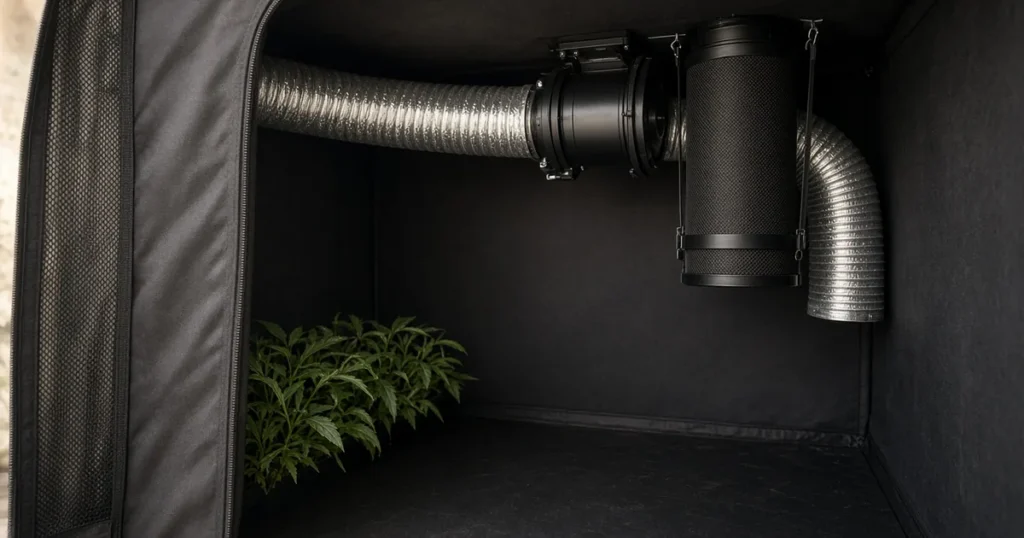
Good grow tent ventilation keeps air fresh, heat in check, humidity in range and odors under control. A complete cannabis grow tent ventilation setup has four parts: an exhaust fan, a carbon filter, an intake and circulation fans inside the tent. This hub explains how the parts work together and links to our detailed guides on each one, so you can build a system that fits your space. If you are planning an indoor grow, browse our indoor seeds collection for strains that suit tents. Kind Seed Co sells only to adults 21 and older.
Why ventilation matters
Plants use carbon dioxide from the air and release water vapor. Lights add heat. Without fresh air, a tent gets hot, humid and stale. That raises the risk of mold and pests and slows growth. Ventilation replaces old air with fresh air, removes heat and moisture, and lets you scrub odor before air leaves the tent.
The four parts of a tent ventilation system
| Part | Job | Where it goes |
|---|---|---|
| Inline exhaust fan | Pulls air out of the tent | Top of tent, near the light |
| Carbon filter | Removes odor from exhaust air | Inside tent, before the fan |
| Intake | Lets fresh air in | Low on the tent, opposite the exhaust |
| Circulation fans | Move air around plants | Inside tent, on poles or walls |
1. The exhaust fan
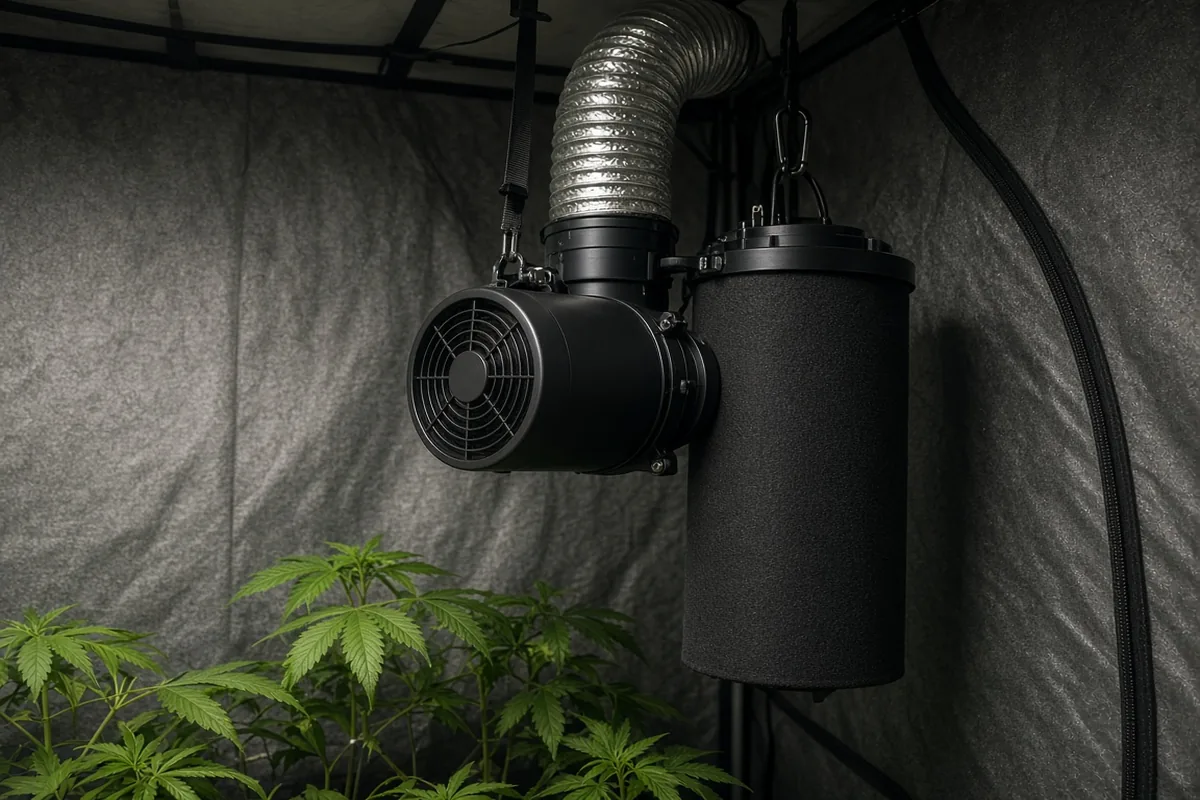
The inline exhaust fan is the engine of the system. It pulls warm, humid air out of the top of the tent, where heat collects. Most growers mount it high, near or above the light, and connect it to a carbon filter.
How to size it
Start with the tent’s volume: length times width times height. Most growers aim to exchange the air in the tent about once a minute or so, then add extra capacity to make up for the carbon filter, ducting length and bends, and heat from lights. A speed controller lets you run the fan below its maximum, which keeps noise down and gives room to adjust. Our full guide to inline fan CFM for a grow tent walks through the math.
2. The carbon filter
A carbon filter traps odor molecules before air leaves the tent. It sits inside the tent, usually hung from the top bars, with the fan pulling air through it. Match the filter’s airflow rating to your fan. Replace the carbon when odor control fades. See how to prevent weed odor and our DIY carbon filter guide.
3. The intake
Air that leaves the tent must be replaced. Most small tents use a passive intake, which means opening low vents or ports and letting the exhaust fan pull fresh air in. The tent walls should pull in slightly, which shows negative pressure, keeping odors inside. Our detailed guide to passive intake for grow tents covers port sizing and light proofing.
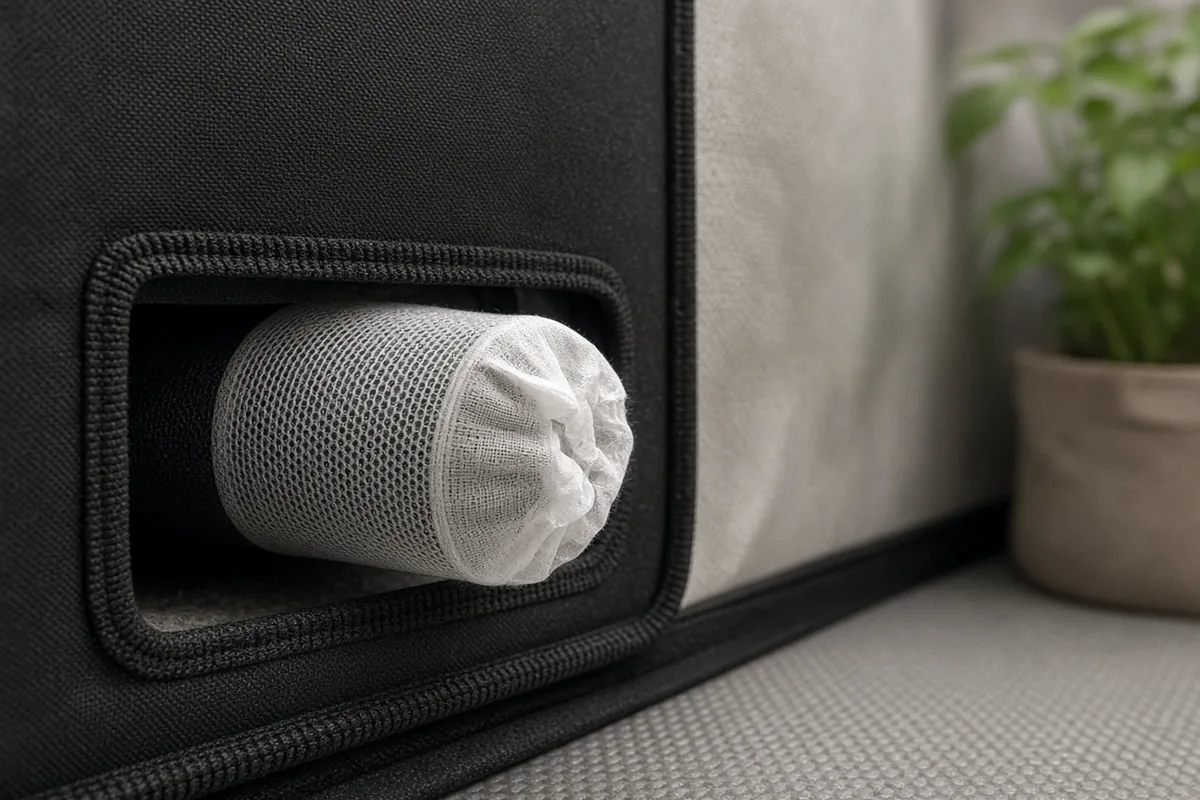
Larger tents or hot setups may need an active intake fan. If you add one, make it weaker than the exhaust so the tent stays under slight negative pressure.
4. Circulation fans
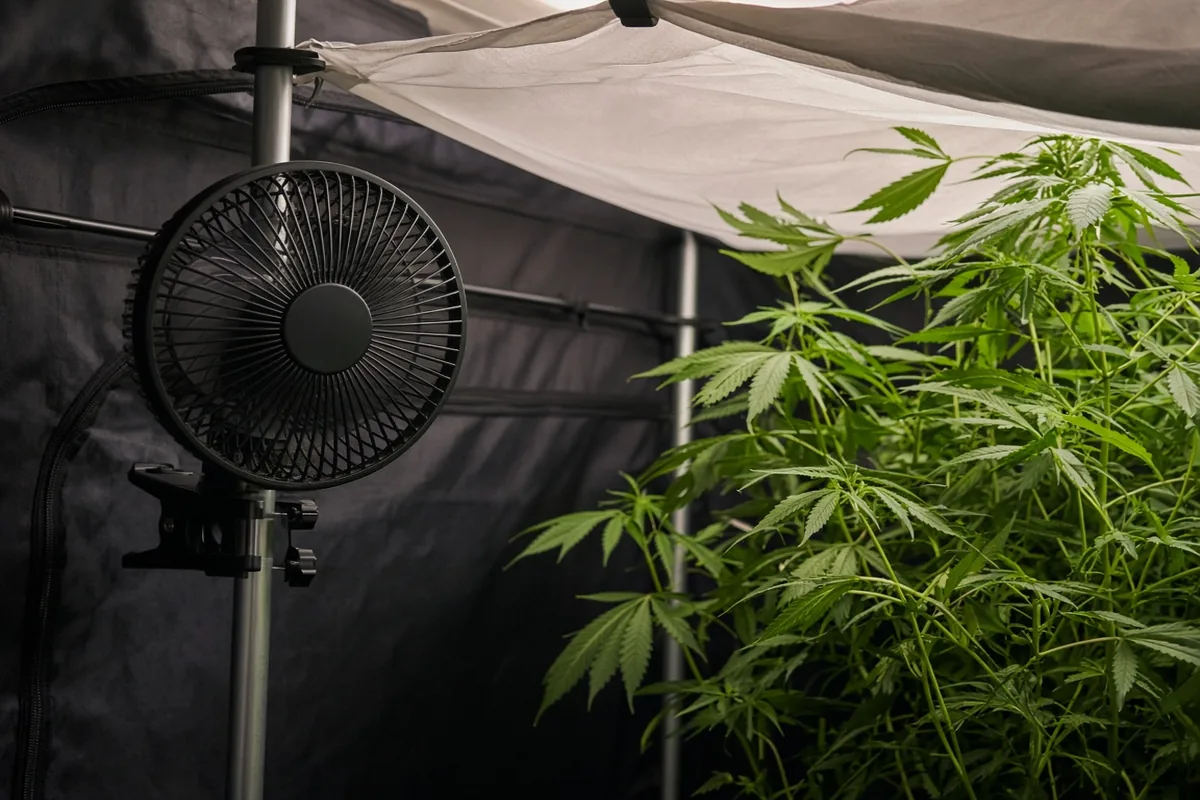
Inside the tent, small clip or oscillating fans keep air moving around the plants. This evens out temperature, strengthens stems and reduces damp pockets where mold can start. Aim fans to create gentle movement across and under the canopy, not a strong blast directly on leaves. See our guide to the oscillating fan in a grow tent.
Ducting basics
Ducting connects the filter, fan and exhaust outlet. Keep runs as short and straight as possible, because every bend and extra length reduces airflow. Use rigid or semi rigid ducting where you can, and seal joints with clamps or tape. Our guide to grow room ducting basics explains duct sizes, bends and insulation.
Where to send the exhaust
Exhaust air can go into the surrounding room, out a window, or into an attic or another space. Venting into the room is simplest, but it puts heat and humidity into your living space. Venting outside removes them, but think about odor, neighbors and local rules. Never vent into a wall cavity or anywhere moisture can cause damage.
Controlling heat
Heat is the most common ventilation problem. If your tent runs hot, raise fan speed, check intake size, shorten ducting, or move heat sources outside the tent. LED lights produce less heat than HPS, which helps. Our guides to grow light heat management and air cooled grow light hoods go deeper.
Controlling humidity
Plants release moisture, especially in late veg and flowering. Ventilation removes some of it, but in damp climates a dehumidifier may be needed in the room outside the tent. In dry climates, you may need a humidifier. See humidifiers for grow tents and grow tent condensation.
Controlling noise
Fans make noise. Choose a fan with a speed controller, hang it from straps rather than mounting it to a hard surface, and use insulated or longer ducting to soften sound. Our guide to grow tent noise reduction has more tips.
Day and night settings
During lights off, temperature drops and humidity can rise. Many growers lower fan speed at night to keep temperature stable, but keep enough airflow to prevent damp air. An environmental controller can automate fan speed based on temperature and humidity.
Winter and summer adjustments
In winter, cold intake air can chill plants, so you may run fans slower or add a small heater. See heating a grow tent in winter. In summer, you may need faster fans, cooler intake air or air conditioning in the room.
Common ventilation mistakes
- Fan too small for the tent, filter and ducting
- No intake, so the fan struggles and the tent walls collapse
- Long, crushed or kinked ducting
- Circulation fans blowing hard on leaves
- Forgetting to replace an old carbon filter
- No thermometer at canopy height
Safety
Fans and controllers run for long hours. Use quality cords and outlets, keep connections off the floor, and do not overload power strips. Our grow tent fire safety guide covers the essentials.
A simple starter setup
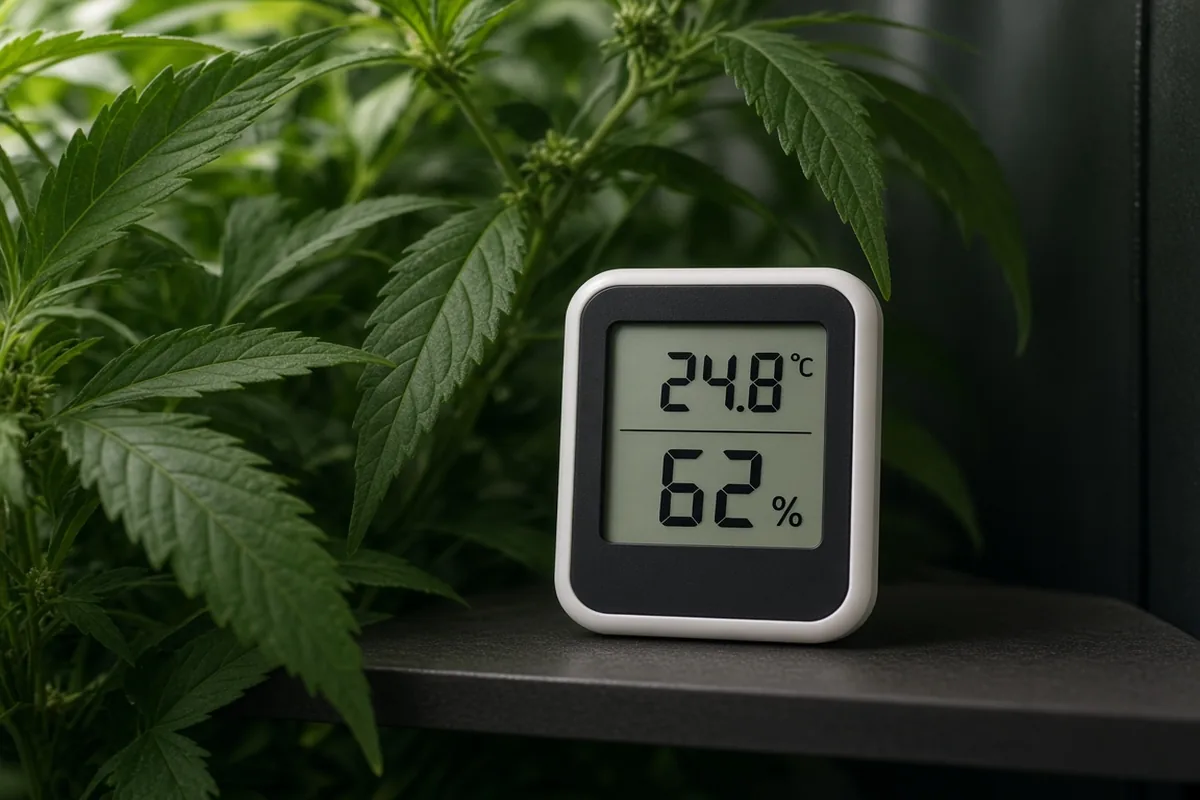
For a small tent, a common starting point is an inline fan with a speed controller, a matching carbon filter hung from the top bars, one or two open lower ports for passive intake and a clip fan or two inside. Add a thermometer and hygrometer at canopy height and adjust from there. Our grow tent setup guide shows how everything fits together.
Frequently asked questions
Does a grow tent need ventilation?
Yes. Without ventilation, heat and humidity build up, which can stress plants and lead to mold.
Should the exhaust fan be at the top or bottom of the tent?
At the top, because warm air rises. Intake should be low on the opposite side.
Do I need an intake fan?
Small tents usually do fine with a passive intake. Larger or hotter setups may need an active intake that is weaker than the exhaust.
How do I stop my tent from smelling?
Use a carbon filter matched to your fan, keep the tent under slight negative pressure and seal gaps.
The bottom line
A complete cannabis grow tent ventilation setup combines an exhaust fan, carbon filter, intake and circulation fans. Size the fan to your tent, keep ducting short and monitor conditions at canopy height. Pair your setup with strong genetics from our indoor seeds or visit the Kind Seed Co shop. Kind Seed Co sells only to adults 21 and older. Always follow the home grow laws where you live.