
Central Leader vs Open Center: Fruit Tree Training Forms Explained
The short answer
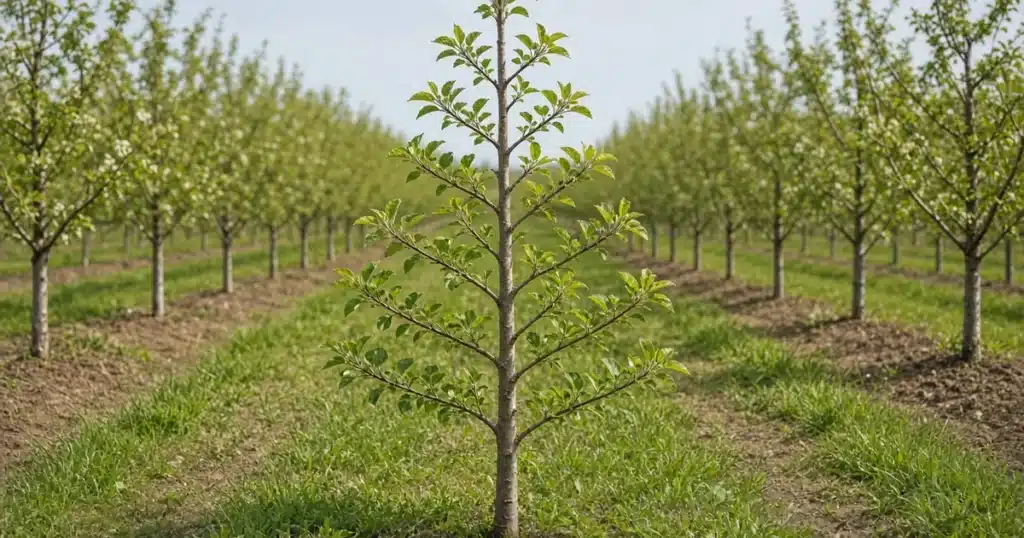
Central leader and open center are two common ways to train fruit trees. A central leader tree has one main upright trunk with tiers of side branches and suits apples and pears. Open center, or vase, removes the leader to leave three or four main limbs and suits peaches and plums.
Choosing the right form early shapes a tree for decades. Each form supports a sturdy framework and helps light reach fruit.
What is a central leader tree?
A central leader tree has one main trunk that grows straight up through the center. Side branches, called scaffolds, grow out in tiers around it. Lower tiers are longer, and upper tiers shorter, giving the tree a cone or Christmas tree shape.
This shape lets light reach all tiers. Apples and pears naturally grow with a dominant leader, so this form suits them.
The UC ANR publication on training and pruning deciduous fruit trees describes central leader training step by step, from heading the young tree at planting to selecting scaffold tiers.
What is a modified central leader?
A modified central leader starts as a central leader. After a few tiers form, the leader is cut back to a side branch. That stops upward growth and holds the tree shorter while retaining its sturdy central trunk.
What is an open center tree?
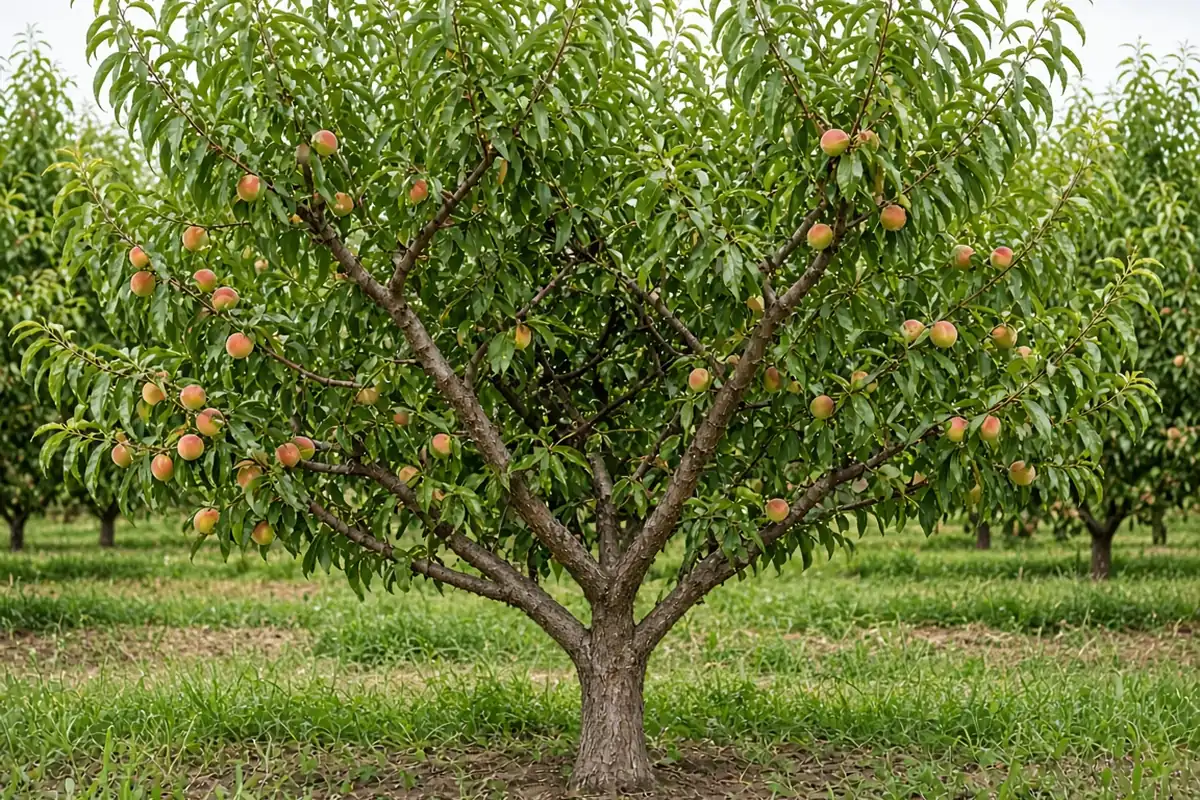
An open center tree has no central leader. At planting or soon after, the top is cut off. Three or four main limbs grow outward at wide angles, forming a vase shape with an open middle.
The open center lets light into the middle of the tree. Peaches, nectarines, plums and apricots are commonly trained this way so sunlight reaches the lower fruiting wood.
The Oregon State University Extension guide to training and pruning your home orchard covers open center training for stone fruit and explains how to pick well spaced main limbs.
| Form | Shape | Suits |
|---|---|---|
| Central leader | One trunk with tiers of branches | Apples, pears |
| Modified central leader | Leader cut back after a few tiers | Apples, pears, sweet cherries |
| Open center | Three or four limbs in a vase | Peaches, nectarines, plums, apricots |
Sources: UC ANR, Oregon State University Extension.
Which form suits which fruit?
Apples and pears suit central leader or modified central leader. Peaches, nectarines and Japanese plums suit open center. Sweet cherries can go either way, often modified central leader.
Dwarf and semi dwarf trees need training too. Their small size makes them easy to shape.
How do you choose main branches?
Pick branches with crotch angles of about 45 to 60 degrees. Narrow crotches trap bark between limbs and split easily.
Space scaffolds around the trunk, not stacked on one side. Space them vertically by several inches.
The Purdue Extension Master Gardener illustrated glossary of plant identification terms helps with terms like node, internode and lateral that come up when choosing branches.
Our post on low stress training for cannabis shows how bending and tying shoots shapes plants, which also helps widen narrow branch angles on young trees.
How do you maintain the form?
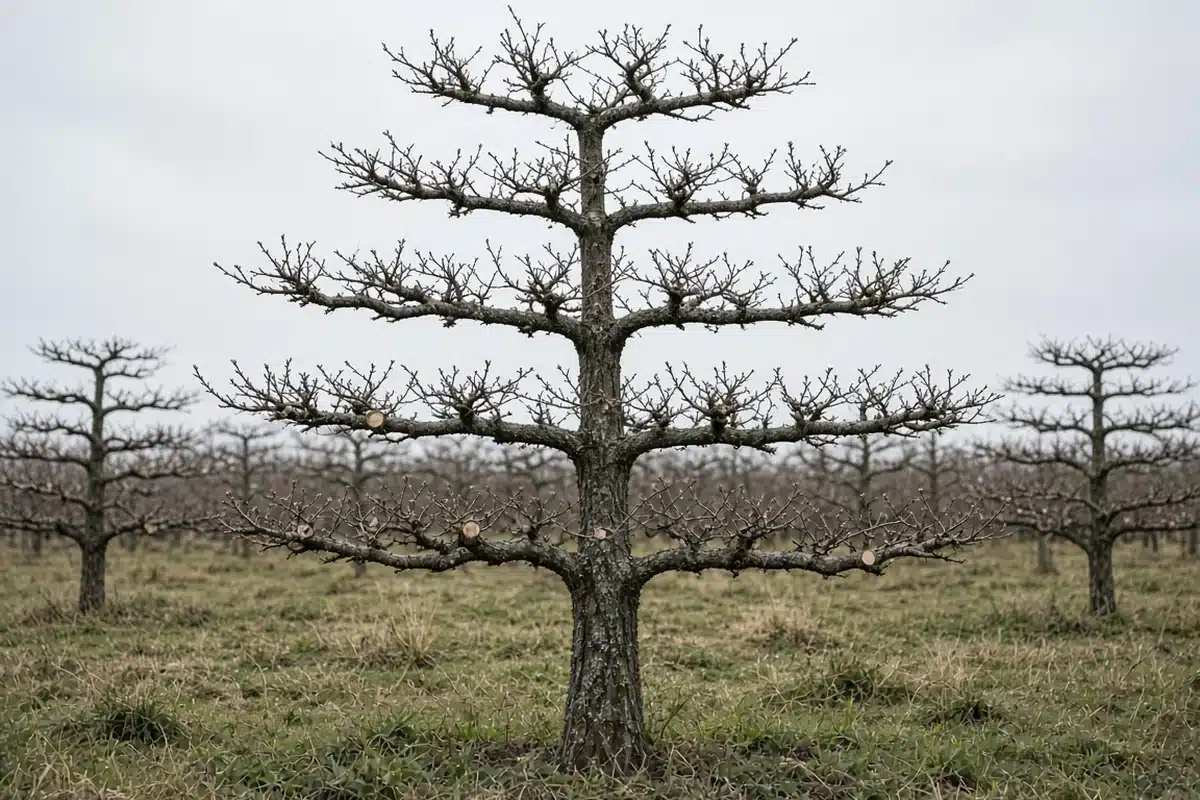
Prune each year. Remove shoots that compete with the leader on central leader trees. On open center trees, remove upright shoots that fill the middle.
Thin crowded growth so light reaches fruiting wood.
Our post on pruning marijuana plants covers thinning and heading cuts. Our post on sanitizing pruning shears for cannabis explains how to clean tools.
Which form is easier to harvest?
Open center trees are often shorter and easier to reach. Central leader trees can grow tall, but modified central leader holds them lower.
Can I switch forms later?
It is possible but hard. Converting a mature central leader to an open center means removing a big trunk, which triggers many sprouts. It’s easiest to choose the form when the tree is young.
How do you start a young tree?
At planting, follow guidance for your tree type when heading a young whip. That cut prompts side shoots to grow below it.
For a central leader, save the most vigorous upright shoot as the leader and pick well spaced side shoots as the first tier. For an open center, pick three or four outward shoots as main limbs and remove the rest.
Repeat each dormant season for the first several years until the frame is set.
How to: step by step
- Identify your tree type.
- Choose central leader for apples and pears.
- Choose open center for peaches and plums.
- Select main branches at planting or early on.
- Remove competing shoots.
- Maintain the form with yearly pruning.
Prune young trees every dormant season to set the form fast.
Troubleshooting
Two competing tops. There’s no single leader. Pick one.
Shaded center. The vase is crowded. Thin inner growth.
Weak crotches. Angles are narrow. Pick wide angled limbs.
Tree too tall. The leader continued growing. Use a modified central leader.
Limbs on one side. Scaffolds are uneven. Choose better spaced branches.
The right training form gives a fruit tree a sound shape for life. Kind Seed Co shares more garden projects in outdoor growing.
Sources
- Fruit trees: training and pruning deciduous trees (Pub 8057), UC ANR, Fruit trees
- Training and pruning your home orchard (PNW 400), Oregon State University Extension, Training and pruning your home orchard (PNW 400)
- Plant identification terminology: an illustrated glossary, Purdue Extension Master Gardener Program, Plant identification terminology
FAQ
What is a modified central leader?
A central leader cut back to a side branch after a few tiers, which holds the tree shorter.
Can I switch forms later?
It is possible but hard. Choose the form when the tree is young.
Which form is easier to harvest?
Open center trees are often shorter and easier to reach.
Do dwarf trees need training?
Yes. Training sets their structure early.
Which form suits sweet cherries?
Often modified central leader.



