
What Are Fruiting Spurs? Spur Bearing Apples and Pears
The short answer
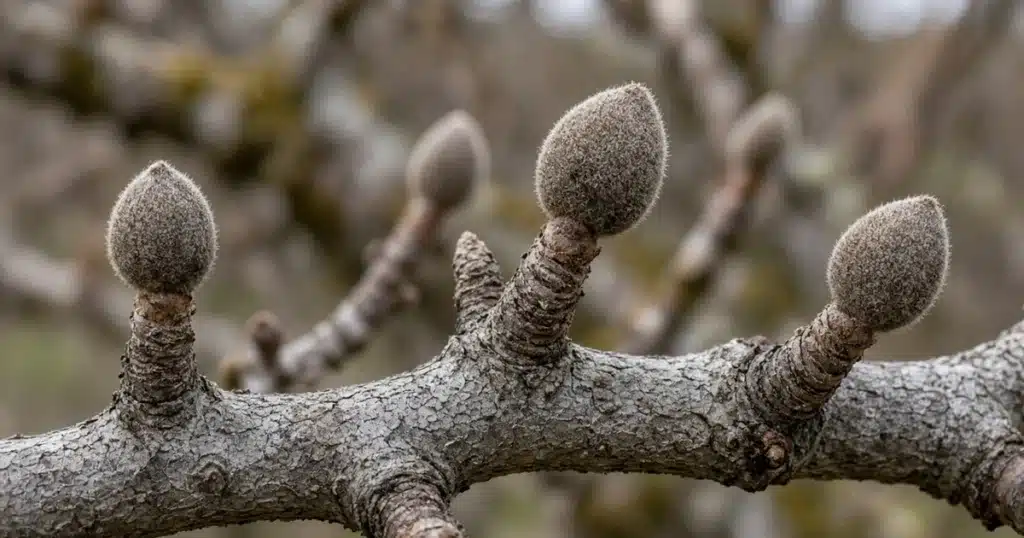
Fruiting spurs are short, slow growing shoots on apple, pear and some other fruit trees where flower buds and fruit form year after year. Spurs can bear for several years, so pruning should save healthy spurs. Spur type varieties form many spurs and stay more compact than standard trees.
Spurs are the fruit factory of many trees. Spotting them changes how you prune.
What are fruiting spurs?
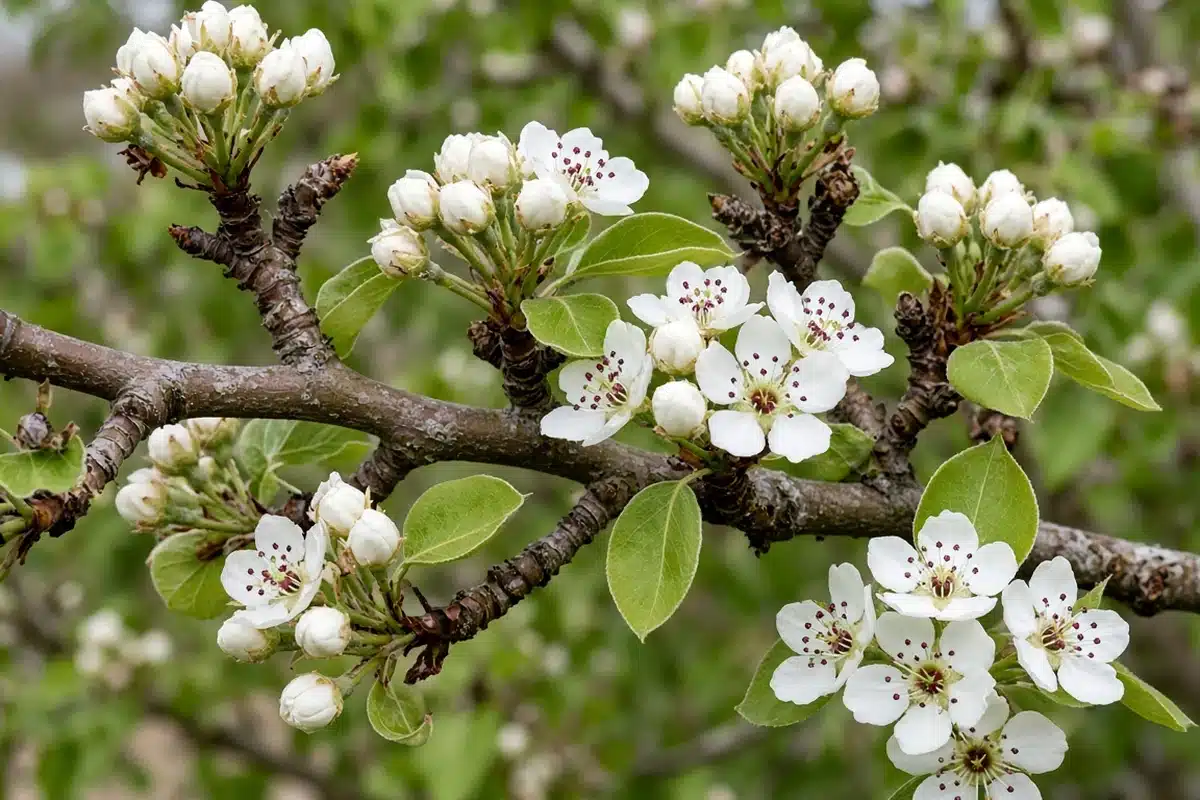
A spur is a short, compressed shoot that grows very little each year. It forms on wood two or more years old. Over time, a spur becomes wrinkled and ringed with old bud scars.
At the tip of a spur sits a flower bud. That bud opens into a cluster of blossoms in spring. After fruit sets, the spur forms a new bud for the following year, often on a short side branch.
The UC ANR publication on training and pruning deciduous fruit trees explains that apples and pears bear mainly on spurs and that spurs stay productive for several years with good light.
How do you recognize spurs?
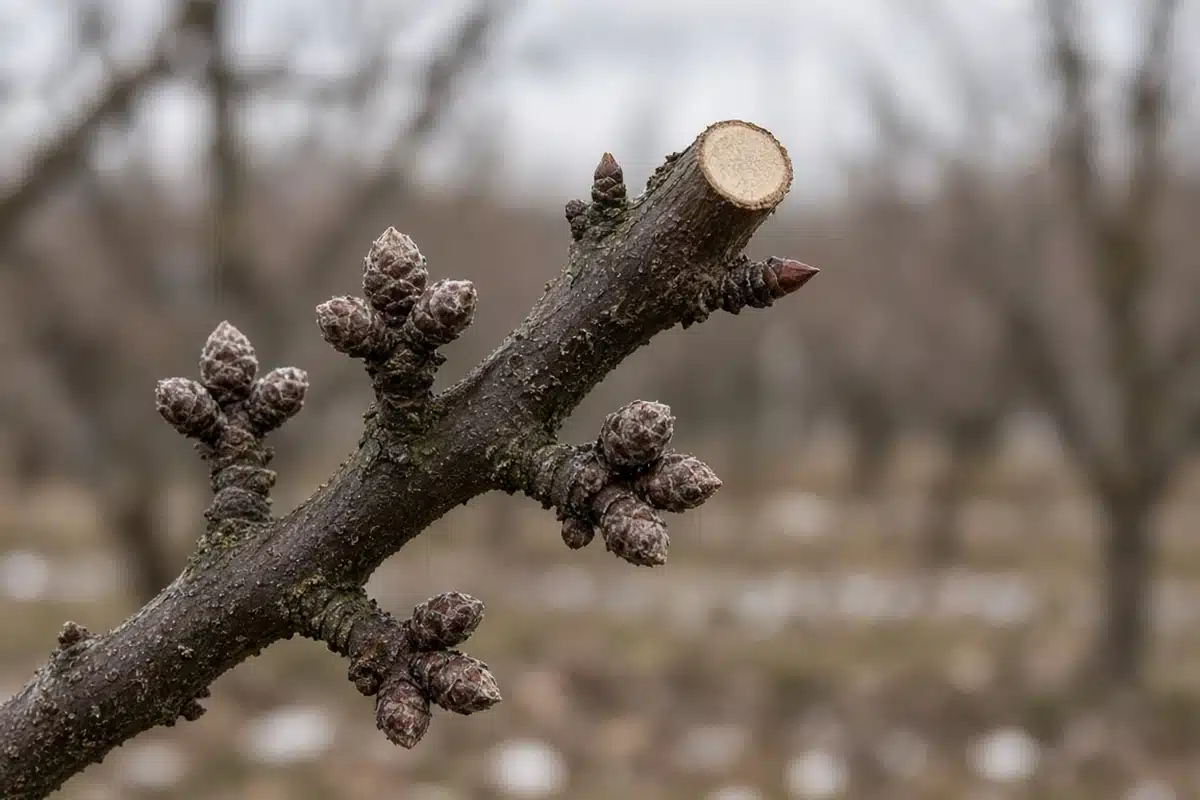
Look on older branches for short, knobby shoots a few inches long, with closely spaced rings and wrinkles.
Flower buds are plump and round. Leaf buds are slim and pointed. A spur with a plump bud at its tip will flower the next spring.
The Colorado State University Extension botany notes describe buds, nodes and shoot structure, which helps when telling flower buds from leaf buds.
Our post on how cannabis buds form explains how flowering sites develop in another plant, a useful comparison.
| Type | Where fruit forms | Examples |
|---|---|---|
| Spur bearing | Short spurs on older wood | Most apples, pears, sweet cherries |
| Spur type | Many spurs, compact tree | Some apple varieties |
| Tip bearing | Ends of last season’s shoots | Some apple varieties |
| One year wood | Shoots grown the year before | Peaches, nectarines |
Sources: UC ANR, Oregon State University Extension.
How do you prune spur bearing trees?
Save healthy spurs, and each one can bear for several years. Prune so light reaches spurs throughout the canopy, since spurs in deep shade weaken and stop flowering.
Thin crowded spur clusters on older trees. Remove some of the oldest, weakest spurs to make room for younger ones.
Cut out shaded, weak spurs in the inner canopy.
The Oregon State University Extension guide to training and pruning your home orchard covers how to hold spur systems productive by thinning and opening the canopy.
Use clean, sharp tools. Our post on sanitizing pruning shears for cannabis explains simple cleaning. Our post on pruning marijuana plants covers basic cuts.
What is a tip bearing tree?
Some apple varieties bear much of their fruit at the tips of shoots grown the previous year. Heavy heading cuts on those trees remove the fruit buds.
Prune tip bearers with thinning cuts and leave many shoot tips intact.
How long do spurs last?
Apple and pear spurs can bear for many years with good light. Over time, they become crowded and less productive, which is when thinning helps.
Do peaches have spurs?
No. Peaches and nectarines bear on one year old wood. They need different pruning, with more shoots renewed each year.
What about spur type varieties?
Spur type varieties form spurs closer together and grow more compact. They suit small yards and high density plantings.
How does light help spurs produce?
Spurs need sun to set next year’s flower buds, and a spur in deep shade may leaf out but not flower. After a few shaded years, it often dies.
That’s why spur bearing trees need an open canopy. Thinning cuts that remove whole branches let light into the middle of the tree. Water sprouts and crowded shoots block light, so removing them helps spurs.
Check the inner canopy in midsummer. If it looks dark, plan thinning cuts for the dormant season.
How does crop load affect spurs?
In some varieties, a spur that carries a heavy load of fruit may not form a flower bud for the next year. Some apple varieties fall into a cycle of heavy crops one year and light crops the next.
Thinning fruit early, soon after bloom, breaks that cycle. Leave one fruit per spur cluster and space fruit several inches apart along branches. Spurs then have energy to set buds for the following spring.
How do spurs form on young trees?
Young trees grow long shoots first. Spurs begin to form on wood that’s two or more years old. Bending young branches toward horizontal slows shoot growth and encourages earlier spur formation.
How to: step by step
- Look for short, wrinkled shoots on older wood.
- Note plump flower buds on spurs.
- Save healthy spurs when pruning.
- Thin crowded old spurs.
- Remove shaded, weak spurs.
- Learn whether your variety is spur type or tip bearing.
Look closely at buds in late winter before pruning.
Troubleshooting
Few fruit after pruning. Spurs were removed. Prune carefully.
Small fruit. Spurs are crowded. Thin spur clusters.
Spurs die. Shade is deep. Open the canopy.
No flower buds. The tree is young. Wait a few years.
Fruit every other year. Crop load was heavy. Thin fruit early.
Healthy spurs in good light help apples and pears bear year after year. Kind Seed Co shares more garden projects in outdoor growing.
Sources
- Fruit trees: training and pruning deciduous trees (Pub 8057), UC ANR, Fruit trees
- Training and pruning your home orchard (PNW 400), Oregon State University Extension, Training and pruning your home orchard (PNW 400)
- Botany (CMG GardenNotes 120), Colorado State University Extension, Botany (CMG GardenNotes 120)
FAQ
Do all apples bear on spurs?
Most do. Some varieties bear mainly at shoot tips.
How long do spurs last?
Many years with good light. Thin old ones over time.
What is a tip bearing tree?
A tree that bears much of its fruit at the tips of last year's shoots.
Do peaches have spurs?
No. They bear on one year old wood.
How do I tell flower buds from leaf buds?
Flower buds are plump and round. Leaf buds are slim and pointed.



