
Soil to Hydro Transfer: Root Washing and Acclimation
The short answer
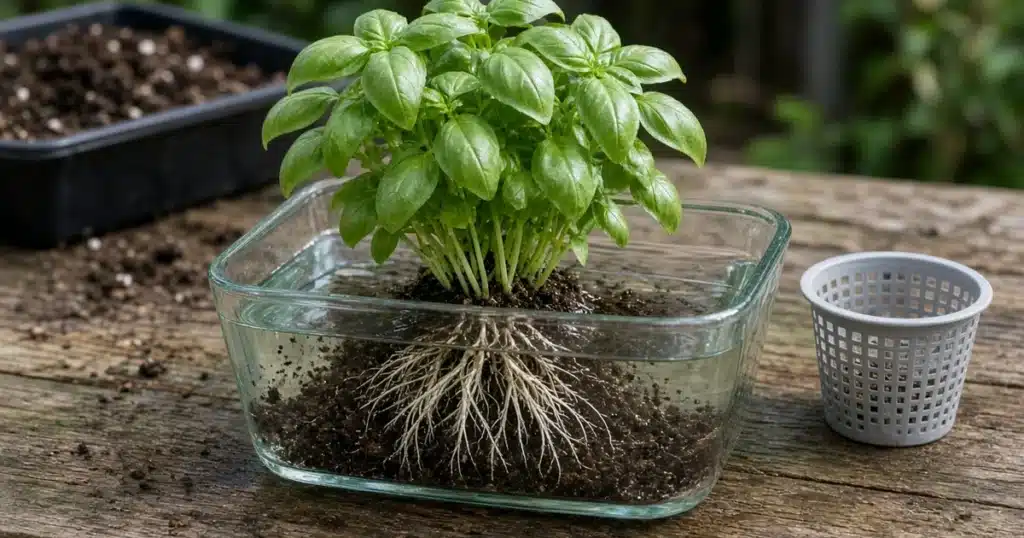
A soil to hydro transfer starts with gently washing all the soil off the roots so it does not cloud the water or carry pests. Trim damaged roots, set the plant in inert media in a net cup and start with a mild solution. Expect some wilting while new water roots grow, and give light shade at first.
The move takes some care, but many plants settle in within a week or two.
Why move a plant from soil to hydroponics?
Sometimes you have a favorite plant in a pot and want it in your system. Sometimes seedlings started in soil need a new home. Either way, the plant has to swap soil roots for water roots.
The University of Minnesota Extension page on small scale hydroponics explains that hydroponic plants grow in an inert medium with nutrients supplied in water. Soil has no place in that setup. Even a little left on the roots can break down, cloud the water and clog pumps.
Young plants make the move most easily. Older plants with big root balls take longer to adjust and may lose more roots on the way.
How do you wash soil off roots?
Water the plant well the day before. Moist soil slides off roots more easily than dry soil.
Ease the plant out of its pot. Loosen the root ball with your fingers and shake off as much soil as you can.
Fill a bucket with lukewarm water. Swish the roots gently until most soil falls away. Change the water and repeat. Finish with a gentle rinse under a tap or a hose on low.
| Step | Goal | Tip |
|---|---|---|
| Water the day before | Softens the root ball | Avoid soaking it to mud |
| Shake off soil | Removes the bulk | Work over a tarp |
| Swish in buckets | Removes fine soil | Use lukewarm water |
| Final rinse | Clears the last grains | Hold water pressure low |
| Trim roots | Removes damaged parts | Use clean shears |
Sources: University of Minnesota Extension, University of Tennessee Extension.
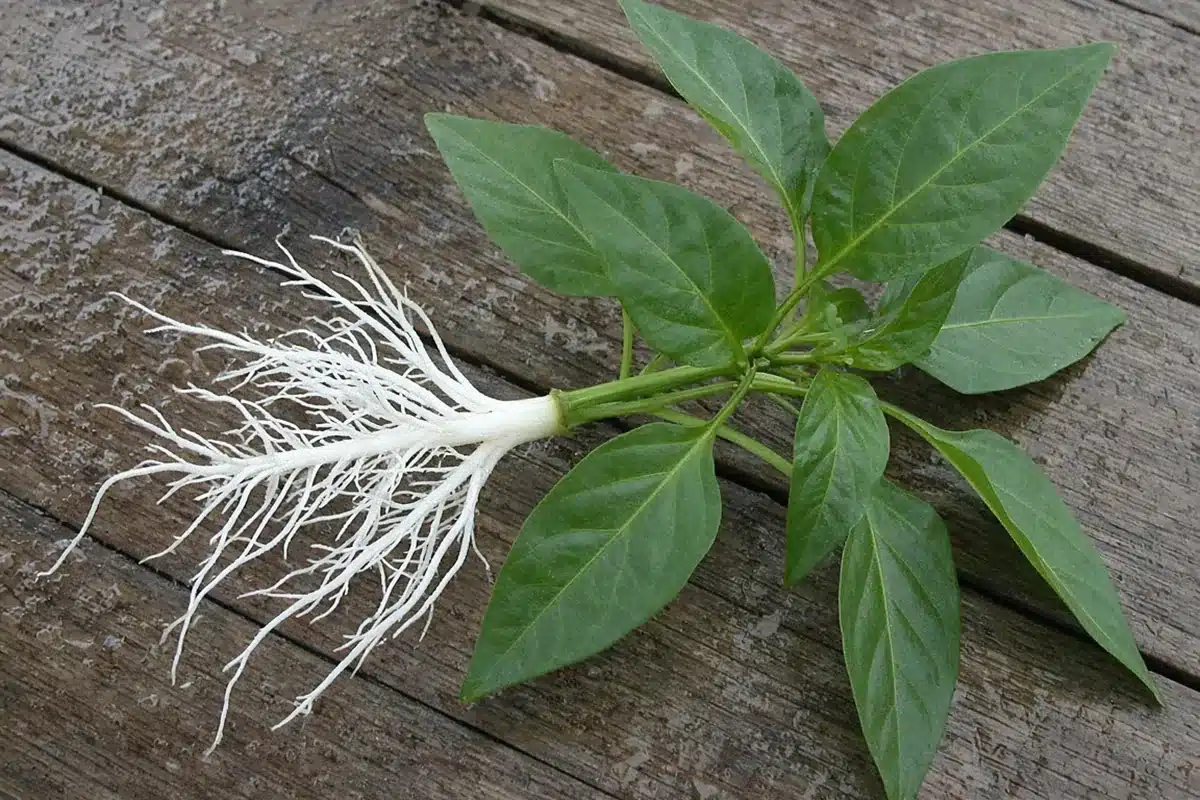
Look the roots over. Healthy roots are white or light tan and firm. Trim any that are brown, mushy or broken. Our post on sanitizing pruning shears for cannabis covers how to clean your blades between plants.
How do you set the plant in the system?
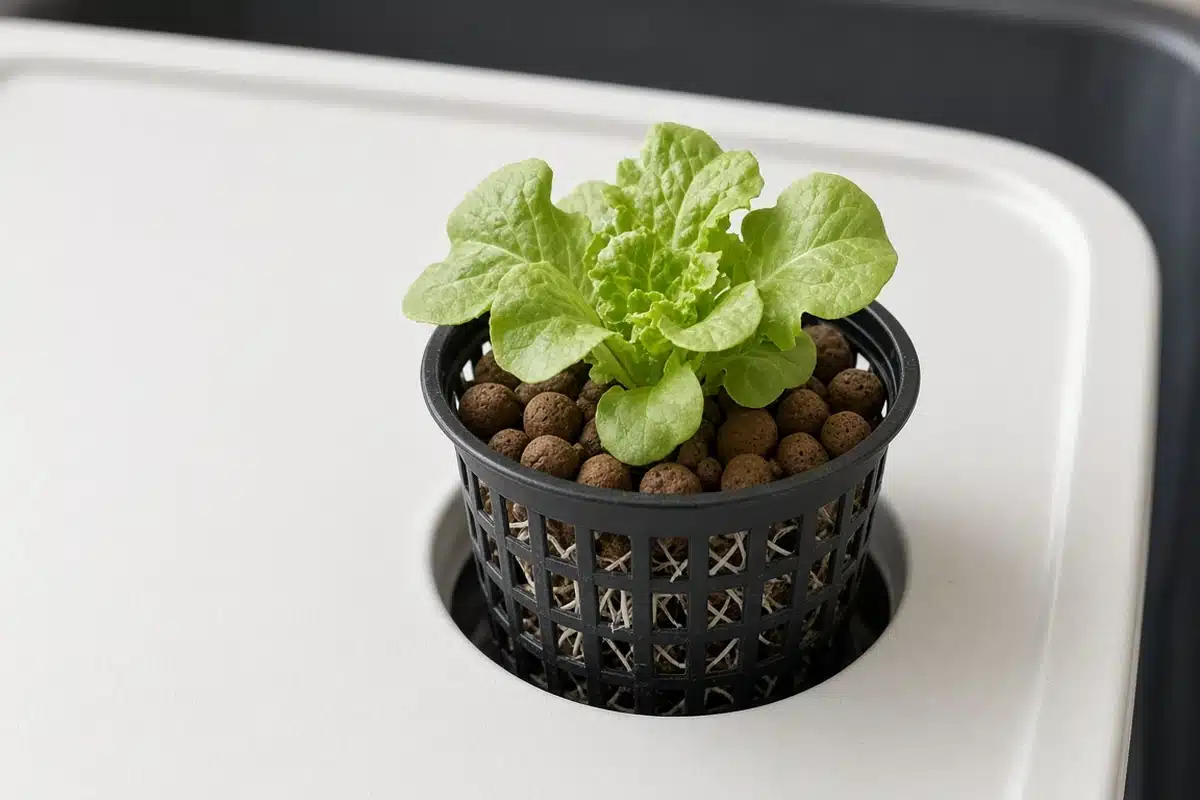
Pick a net cup big enough for the root mass. Thread the roots gently through the bottom of the cup.
Fill around the stem with rinsed clay pebbles or another inert medium. Our post on hydroponic in different mediums compares options. The medium should hold the plant upright without packing tight.
Set the cup in the system so the roots reach the water. Start with a mild nutrient solution, weaker than you would use for plants already settled. The roots need time to adjust.
The University of Tennessee Extension guide to tomatoes, peppers and cucumbers in small scale soilless and hydroponic systems covers fruiting crops in soilless setups. Transplants of these crops often start in plugs and move in young, which is the easiest path.
What should you expect after the move?
Some plants wilt briefly after the move. Soil roots aren’t built for water, and some die back. New roots often grow in their place over the following weeks.
Give the plant lower light or light shade for a few days. Hold the air mild and avoid hot spots. Check the roots through the lid. Firm, light colored new root tips are usually a good sign.
Once new growth appears on top, bring the nutrient solution up to the normal rate over a week or so. Our post on transplanting marijuana plants covers more on easing plants through moves.
Which plants handle the move well?
Leafy greens and herbs often make the switch with little trouble. Basil, mint and lettuce grow new water roots fast. Fruiting plants like tomatoes and peppers can make the move too, though they may pause for a week before growing again.
Plants with thick woody roots or deep taproots take it harder. Washing and trimming can remove a big share of their root system. For these, it’s often simpler to start a new plant from seed or a cutting right in the system.
Timing matters. Move plants while they’re young and growing actively, not while they’re in heavy fruit or flower. A plant putting energy into fruit has less to spare for new roots.
If you have the choice, take a cutting from the soil plant and root it in a plug. That skips root washing entirely and gives you a plant grown for water from day one.
How to: step by step
- Water the plant the day before.
- Remove it from the pot and shake off soil.
- Swish roots in lukewarm water until clean.
- Trim damaged roots with clean shears.
- Set roots in a net cup with inert media.
- Start with a mild solution and light shade.
Check the reservoir a day or two after the move. If the water looks cloudy, some soil got through. Change the solution and rinse the cup again.
Troubleshooting
Severe wilting. Too many roots were lost. Lower the light further and raise humidity.
Cloudy water. Soil was left on the roots. Rinse again and change the solution.
Brown slimy roots. The water may be too warm or still. Add air and cool the reservoir.
No new growth. The plant is still adjusting. Give it time and hold conditions steady.
Plant tipping. The cup is too small. Use a bigger cup or add a stake.
Patience is the main tool for this move. Kind Seed Co carries cannabis seeds for growers who want to start fresh in a hydroponic setup.
Sources
- Small scale hydroponics, University of Minnesota Extension, Small scale hydroponics
- Tomatoes, peppers and cucumbers in small scale soilless and hydroponic systems (W 844-C), University of Tennessee Extension, Tomatoes
FAQ
Can every plant move from soil to hydro?
Many can, but young plants adjust more easily. Large plants with big root balls take longer and may lose more roots.
Do you need to remove all soil?
As much as you can. Leftover soil can cloud the water and may clog small lines.
Should you add nutrients right away?
Yes, start mild. Increase nutrients gradually after new growth appears.
How long does wilting last?
Often a few days to a week. New water roots replace lost soil roots, and the plant perks up.
Is light shade needed after the move?
It helps. Lower light cuts water loss from the leaves while new roots grow in.



