
Carnivorous Plant Light: Venus Flytraps and Pitcher Plants Indoors
The short answer
Carnivorous plant light needs are high, since most species grow in open bogs with full sun. Venus flytraps and pitcher plants want many hours of bright light to stay colorful and compact. Indoors, a sunny window is often not enough, so a grow light set close above the plants on a timer gives them the light they need.
With bright light, rainwater and a winter rest, these plants can do well on a shelf.
Why do carnivorous plants need so much light?
Most carnivorous plants grown at home come from sunny wet places. The UF IFAS Gardening Solutions page on carnivorous plants describes how pitcher plants, sundews and Venus flytraps grow in open bogs and wet pine savannas with plenty of sun.
In the wild, these plants sit in full sun with little shade from taller plants. Their bright colors, sticky leaves and firm traps depend on that light.
Indoor light is much weaker than outdoor light. Even a bright window gives only part of what a sunny bog gets. Plants in weak light turn green, floppy and pale. Traps may stop forming or turn small.
How much light do they need indoors?
| Plant | Light need | Notes |
|---|---|---|
| Venus flytrap | Very bright | Red trap color shows good light |
| North American pitcher plant | Very bright | Pitchers grow tall in good light |
| Sundew | Bright | Dew forms well with good light |
| Tropical pitcher plant | Bright indirect | Can scorch in harsh sun |
| Butterwort | Bright | Many grow well on windowsills |
Sources: UF IFAS Gardening Solutions, University of Minnesota Extension, MU Extension.
A south window with direct sun is a good window choice. Many growers still add a grow light, since winter days and glass cut light a lot.
The University of Minnesota Extension page on lighting for indoor plants and starting seeds explains how light drops fast with distance from a window or lamp. For sun loving plants, the light needs to be close.
Our post on optimal lighting for growing indoors covers light levels in more depth.
Which grow lights work well?
White LED fixtures are a practical choice because they run cool and use little power. Many growers use LED shop lights or small panels hung above a tray.
The MU Extension guide to lighting indoor houseplants explains how fixture type and distance affect plant growth. For high light plants, hang the light a few inches to about a foot above the leaves.
Our post on LED light distance cannabis covers how to judge distance from an LED fixture, and the same thinking applies to bog plants.
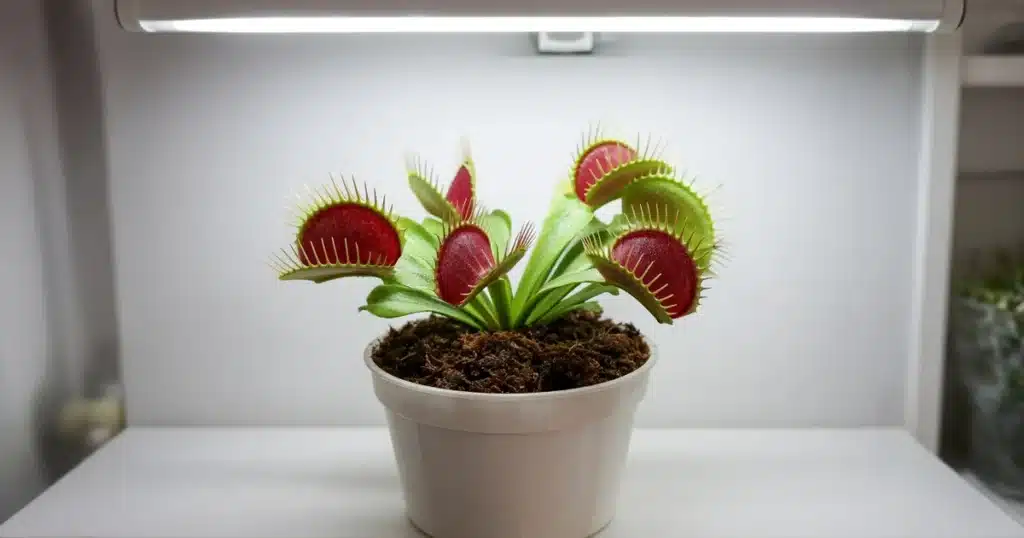
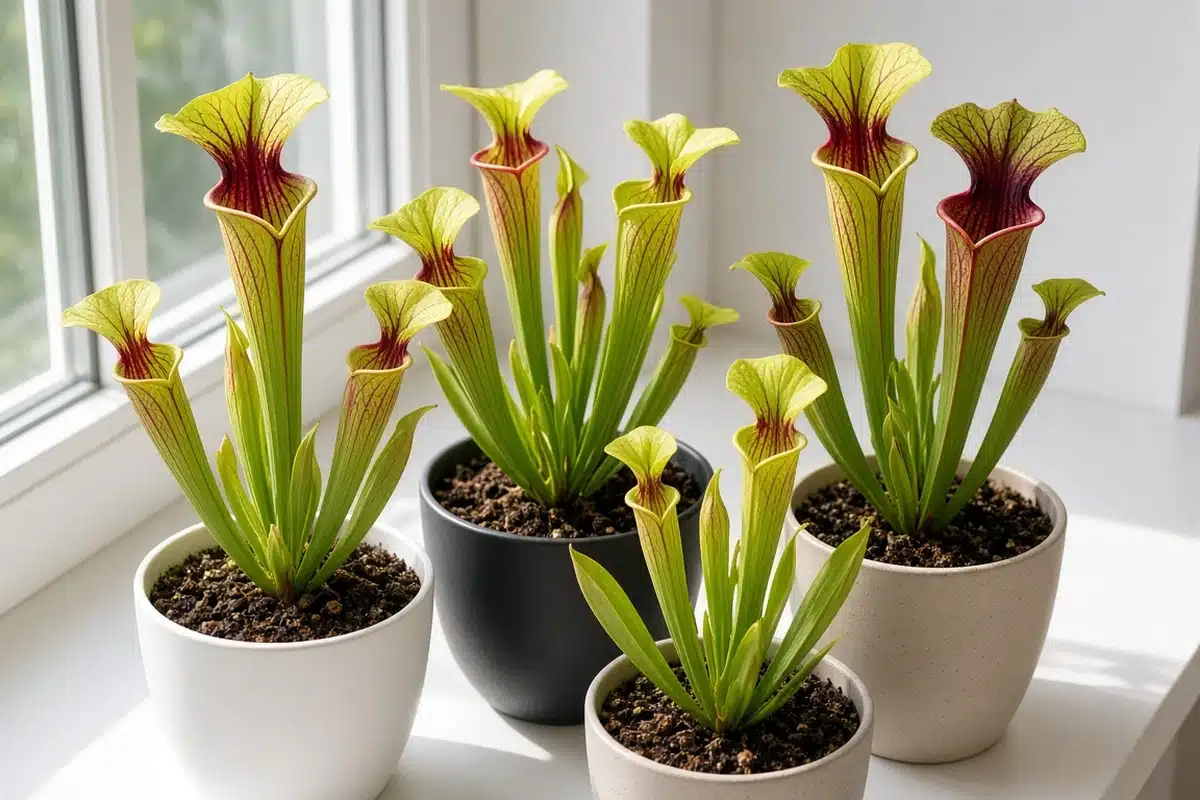
Watch the plants. Flytraps that turn red inside the traps and pitchers that stand upright are getting good light. Pale green, floppy growth means the light is too weak or too far away.
How long should lights run?
During the growing season, 14 to 16 hours of light per day suits most bog plants. A timer holds the day length steady. Our post on grow light timers explains how to set one up.
Many temperate carnivorous plants, including Venus flytraps and North American pitcher plants, need a winter rest. In fall, shorten light hours and move them to a cool spot. They slow down and some leaves die back. In spring, bring back long days and warmth.
Tropical pitcher plants and many sundews don’t need a winter rest. Hold their light steady all year.

What else do they need besides light?
Light comes first, but water matters too. Most carnivorous plants want pure water such as rainwater or distilled water. Tap water with minerals can build up in the soil and harm roots over time.
Most grow in a mix of peat and sand or perlite with no fertilizer. They get extra nutrients from insects, so feeding the soil isn’t needed.
Through the growing season, stand the pot in a tray of water. Bog plants like wet roots.
Can carnivorous plants go outside in summer?
Many temperate species grow better outdoors in summer than they ever do inside. A sunny porch or patio gives far more light than any window. Move plants out gradually over a week or so, starting in light shade, so leaves can adjust to full sun without scorching.
Stand the pots in trays of rainwater, since outdoor heat dries them fast. Bring tropical types back in before nights turn cold, and let temperate ones feel the cooler fall days that signal their winter rest.
How to: step by step
- Place plants in the brightest window you have.
- Add a white LED fixture a few inches to a foot above.
- Set a timer for 14 to 16 hours during the growing season.
- Water with rainwater or distilled water.
- Give temperate species a cool winter rest with shorter days.
- Watch color and shape to judge light.
Troubleshooting
Flytrap traps stay green. Light is too weak. Move the light closer or add hours.
Pitchers flop over. Light is too low. Raise intensity.
Leaf tips browning. Water may be hard. Switch to rainwater or distilled water.
Sundews lose dew. Air is too dry or light is weak. Raise humidity and light.
Plant declines in winter. It may need a rest. Shorten hours and cool the spot.
Bright light is the key to colorful, healthy bog plants. Kind Seed Co shares more garden ideas in outdoor growing.
Sources
- Carnivorous plants, UF IFAS Gardening Solutions, Carnivorous plants
- Lighting for indoor plants and starting seeds, University of Minnesota Extension, Lighting for indoor plants and starting seeds
- Lighting indoor houseplants (G6515), MU Extension, Lighting indoor houseplants (G6515)
FAQ
Can a Venus flytrap grow on a windowsill?
It can in a very sunny south window, but many growers add a grow light for enough brightness.
Do carnivorous plants need special grow lights?
No. White LED fixtures work well as long as they are close enough to the plants.
How many hours of light do flytraps need?
About 14 to 16 hours a day in the growing season, then shorter days during winter rest.
Why are my flytrap traps not red?
Weak light is the most common cause. Move the light closer or add more hours.
Do tropical pitcher plants need a winter rest?
No. They grow year round and do well with steady light and warmth.



