
What Are Epicormic Shoots? Trunk Sprouts After Stress
The short answer
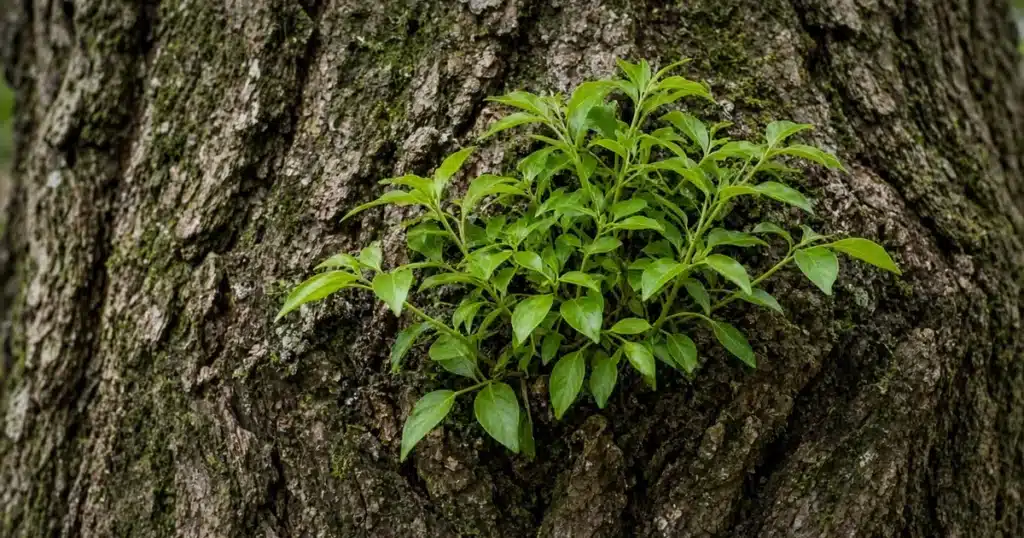
Epicormic shoots are new shoots that grow from dormant buds under the bark of a trunk or large branch. They often appear after stress, such as topping, storm damage or sudden exposure to sun. These shoots can attach weakly to the tree. Find the cause of the stress before removing many of them.
These sprouts indicate how a tree reacted to past stress. Understanding these signs helps you manage the tree better.
What are epicormic shoots?
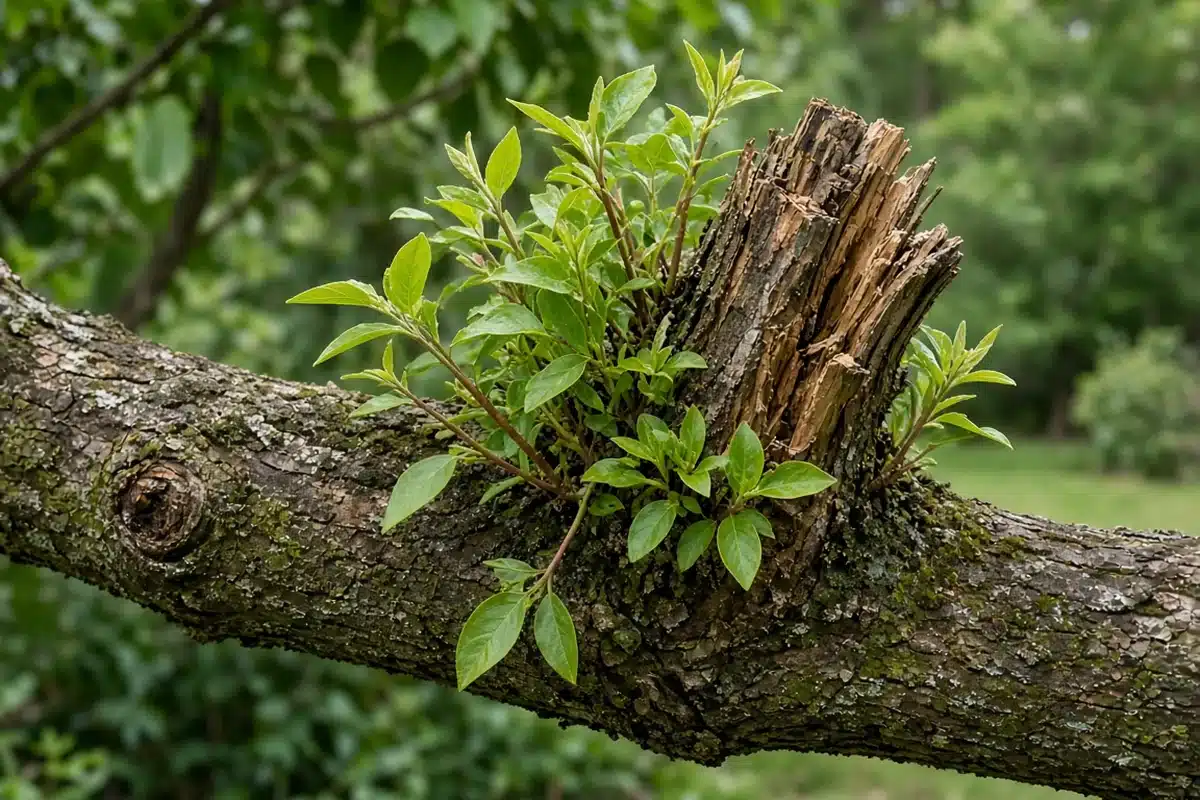
Trees hold many dormant buds hidden beneath their bark. These buds stay inactive for years. When something changes, they can wake up and grow into shoots.
The Virginia Department of Forestry glossary entry on epicormic sprouts defines them as shoots that arise from dormant buds on the stem of a woody plant. They often appear in clusters along the trunk or major limbs.
Epicormic shoots are closely related to water sprouts. Water sprouts often grow straight up from branches. Suckers grow from roots or the base of the trunk. All three are vigorous, upright shoots that grow after a tree is stressed or pruned.
The Purdue Extension Master Gardener illustrated glossary of plant identification terms shows terms like bud, node and shoot that help when describing these sprouts.
| Term | Meaning | Source |
|---|---|---|
| Epicormic sprout | Shoot from a dormant bud on the stem | Virginia Department of Forestry |
| Dormant bud | Bud under bark that has not grown | Virginia Department of Forestry |
| Water sprout | Upright shoot on a branch | Colorado State University Extension |
| Sucker | Shoot from roots or the trunk base | Colorado State University Extension |
Sources: Virginia Department of Forestry, Colorado State University Extension, Purdue Extension.
Why do trees produce them?
Epicormic shoots are a stress response from dormant buds on the trunk or branches. If a tree loses many leaves or branches, it pushes out new shoots to rebuild its canopy.
Common causes include heavy pruning or topping, storm damage that removes limbs, sudden exposure to sun when nearby trees are removed, drought, root damage from construction and insect or disease damage to leaves.
The Colorado State University Extension page on environmental disorders of woody plants explains how drought, root injury, sunscald and other stresses affect trees. Sprouting is one common response.
Our post on the effects of environmental stresses on weed plants covers how plants in general respond to stress.
Which trees produce them most?
Some trees sprout more readily than others. Oaks, lindens, maples, willows, crabapples and fruit trees often produce many epicormic shoots. Some conifers produce few or none.
Do they mean a tree is dying?
Not always. Many healthy trees produce a few. A sudden flush of many sprouts, mainly on the trunk, is a sign of stress. It may mean the tree is trying to recover from damage or decline.
Look at the rest of the tree. Thin crown, dead branches, cracks or fungi at the base all add to the picture.
How should you manage them?
Remove weak, crowded or crossing sprouts. Cut them close to where they emerge, without leaving a stub and without cutting into the trunk.
If the tree lost many leaves, consider saving some sprouts for a season or two. Their leaves can help the tree recover. Thin them over time, saving the well placed ones.
Avoid heavy pruning. Big cuts often trigger more sprouts.
Our post on pruning marijuana plants covers basic cuts that apply to many plants. Our post on sanitizing pruning shears for cannabis explains how to clean tools between cuts.
Why avoid topping?
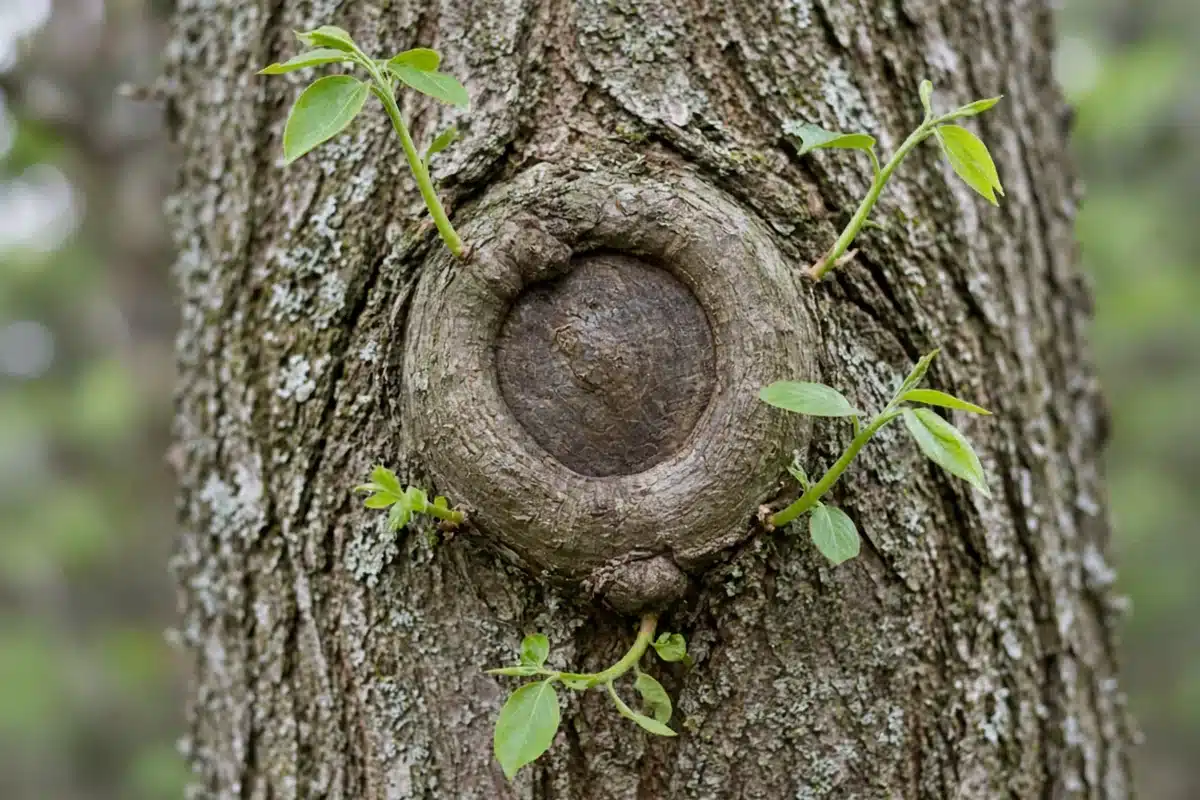
Topping cuts big branches back to stubs. Trees respond with dense clusters of epicormic shoots at each cut. Those shoots attach weakly and can break off as they grow heavy.
Topped trees often need more work over time, not less. Thinning cuts that remove branches back to a side branch or the trunk are a better choice.
When should you call an arborist?
For big trees, sprouts high in the canopy or signs of decline, call a certified arborist. They can assess the cause and suggest a plan.
Do epicormic shoots attach well?
Shoots from dormant buds grow from the outer layers of wood. They aren’t anchored as deeply as branches that formed when the tree was young. As they grow big and heavy, they can split away.
That matters most on topped trees, where many sprouts grow at each cut. A few thinned, well spaced sprouts grow sturdier than a crowded cluster.
How to: step by step
- Look for clusters of sprouts on the trunk or limbs.
- Think about recent stress or pruning.
- Remove weak or crowded sprouts.
- Save a few if the tree needs leaf area.
- Avoid topping trees.
- Call a certified arborist for large trees.
Remove sprouts while they’re small. Small cuts close over faster.
Troubleshooting
Many sprouts after pruning. Cuts were heavy. Prune lighter.
Sprouts after storm. There’s damage. Assess tree health.
Sprouts continue returning. Stress is ongoing. Find the cause.
Sprouts on one side. That side received sudden sun. Give the tree time to adjust.
Sprouts at the base. These are suckers. Clip them at the root or trunk.
Epicormic shoots are a tree’s way of rebuilding. Reading them well helps you guide its recovery. Kind Seed Co shares more garden projects in outdoor growing.
Sources
- Epicormic sprout (glossary), Virginia Department of Forestry, Epicormic sprout (glossary)
- Environmental disorders of woody plants, Colorado State University Extension, Environmental disorders of woody plants
- Plant identification terminology: an illustrated glossary, Purdue Extension Master Gardener Program, Plant identification terminology
FAQ
Are epicormic shoots the same as water sprouts?
They are closely related. Water sprouts usually grow upright from branches.
Should all epicormic shoots be removed?
No. Save a few if the tree lost many leaves.
Do they mean a tree is dying?
Not always. A sudden flush signals stress, so look at the whole tree.
Which trees produce them most?
Oaks, lindens, maples, willows and fruit trees often do.
Does topping cause them?
Yes. Topped trees often sprout heavily at each cut.



