
Biointensive Garden Beds: Close Spacing and Deep Beds
The short answer
Biointensive gardening grows crops in deeply loosened beds with close, staggered spacing so leaves just touch as plants mature. The method uses double digging, compost and planting in a hexagon pattern. The leaf canopy shades soil and holds moisture. It takes work up front and steady soil building, but it yields a lot from a small space.
This approach traces back to French and English market gardens, later refined by a California nonprofit. Home gardeners use it to grow more food in less space.
What is biointensive gardening?
Biointensive gardening combines a few practices. Beds are loosened deeply. Compost is added each season, and plants are set close together in an offset pattern. Beds are never walked on.
The Grow Biointensive farmer’s handbook from Ecology Action lays out the method in detail. It covers deep soil preparation, composting, close spacing, carbon and calorie crops, open pollinated seed and whole system planning.
The method aims to build soil while producing a substantial harvest in a small space.
How does double digging work?
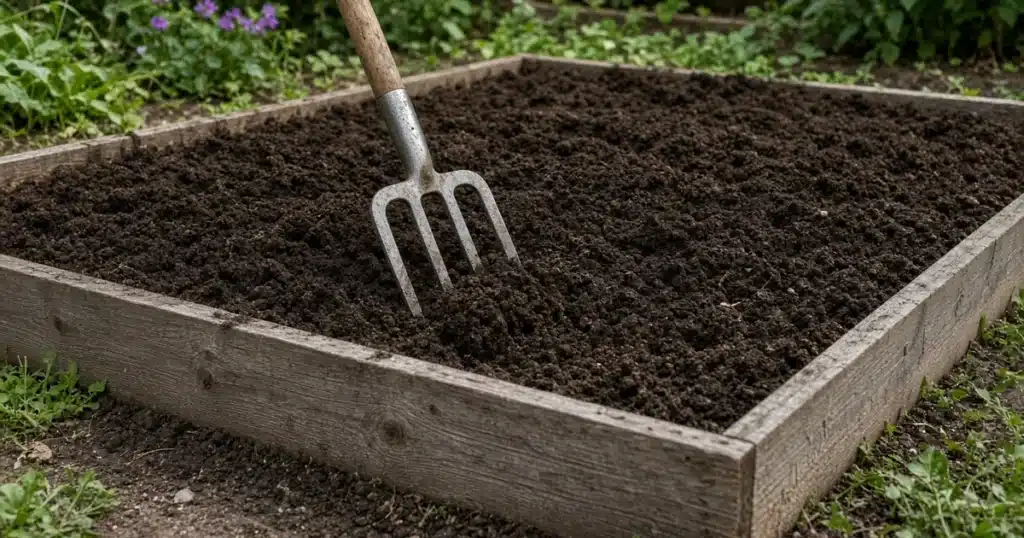
Double digging loosens soil about two spade depths deep. You dig a trench one spade deep across the bed and set the soil aside. Then you loosen the soil at the bottom of the trench with a fork, without turning it over. Next, you dig the topsoil from the next strip into the first trench and repeat down the bed.
The result is a deep, loose bed where roots grow freely. Water soaks in and air reaches the root zone.
Double digging takes a lot of effort at first. Once beds are built and never walked on, later loosening is much easier.
Our post on soil compaction in cannabis beds explains why loose soil matters for roots.
Is double digging necessary?
Not always. Gardeners with loose, rich soil may skip it. Some prefer broadforks, which loosen soil without turning it. Raised beds filled with good soil can work too.
Our post on raised beds for cannabis covers building deep beds above ground.
Why use close spacing?
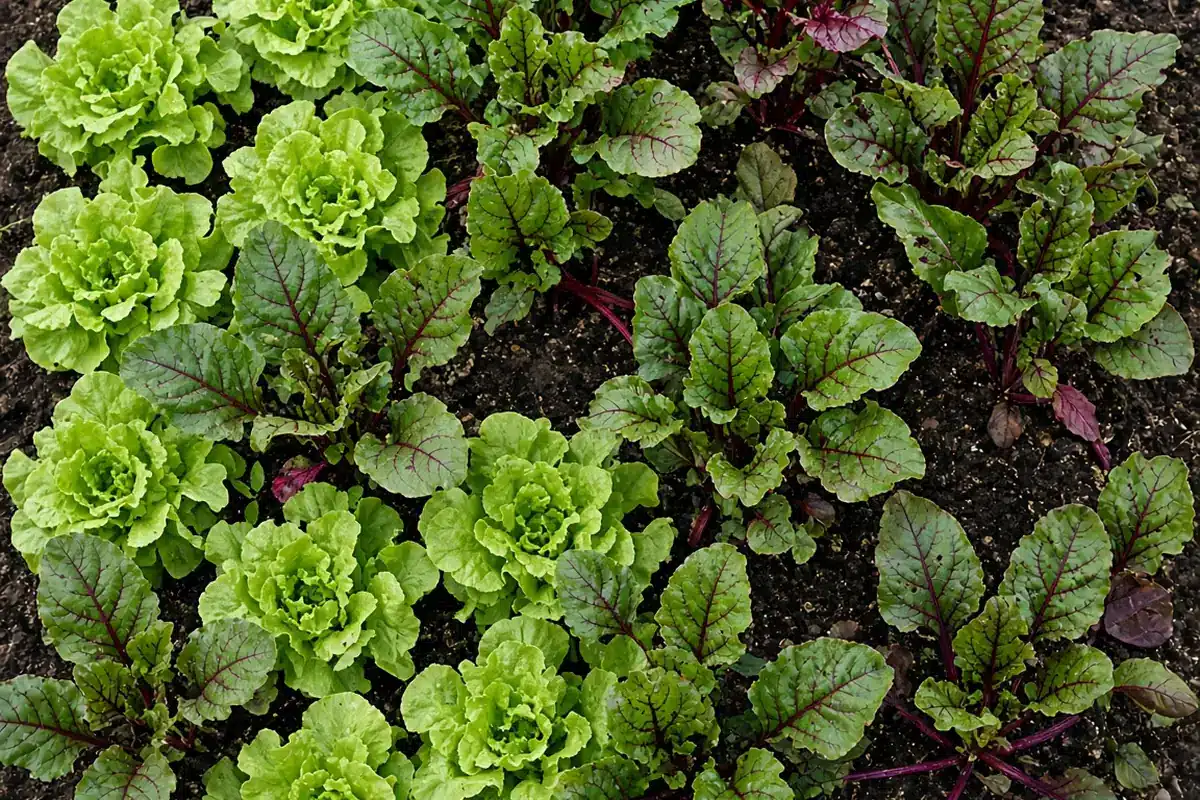
In biointensive beds, plants are spaced so their leaves touch at maturity. This forms a living mulch. The leaf canopy shades soil, holds moisture, leaves soil cooler and blocks weeds.
Plants are set in a hexagon pattern. Each row is offset from the next, so every plant sits the same distance from its neighbors. That can fit more plants in a bed than straight rows.
| Practice | Purpose | Notes |
|---|---|---|
| Deep soil preparation | Loose soil for roots | Double digging or broadfork |
| Compost | Feeds soil life and plants | Added each season |
| Close hexagon spacing | Leaf canopy shades soil | Leaves just touch at maturity |
| Stay off beds | Holds soil loose | Use paths |
| Carbon crops | Grow compost material | Grains and cover crops |
Sources: Ecology Action.
Is it the same as square foot gardening?
They share ideas but differ. Square foot gardening uses a grid of square sections in a raised bed, often with a soil mix. Biointensive uses deep native soil, hexagon spacing and compost grown on site.
Our post on square foot gardening for cannabis explains that method in detail.
How does compost fit in?
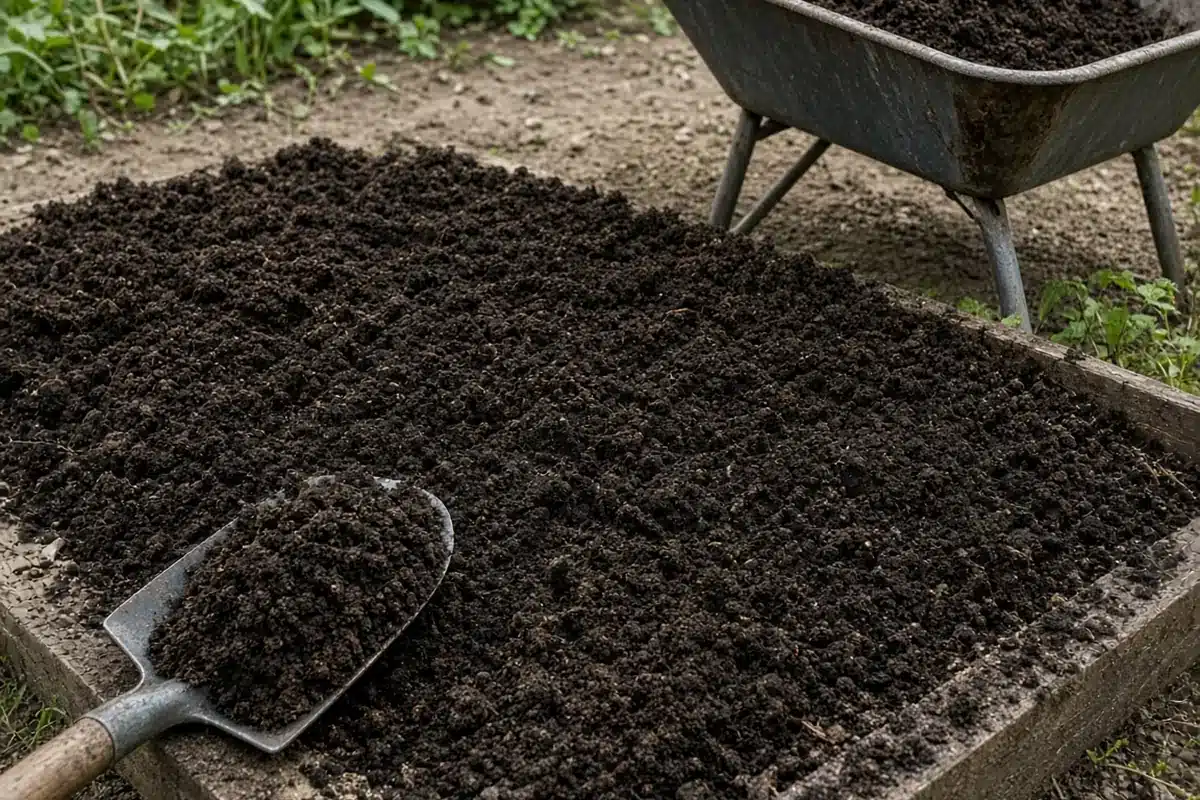
Compost is central. Biointensive gardeners grow crops like grains and cover crops partly to make compost material. Those stalks and leaves feed the pile, which then feeds the beds.
That closed loop builds soil fertility over time with fewer outside inputs.
How does permaculture relate?
Both systems aim for productive gardens that build soil. The Oregon State University Extension permaculture basics guide covers design ideas that pair well with intensive beds.
The UMass Amherst Extension permaculture fact sheet explains patterns like stacking plants by height and building soil with organic matter.
Does biointensive save water?
The leaf canopy shades soil and cuts evaporation. Deep, loose soil soaks up water and holds it, and many gardeners report needing less watering than with wider spacing.
What are carbon and calorie crops?
Biointensive plans split beds among crop types. Carbon crops such as grains, sunflowers and cover crops grow lots of stalks for the compost pile. Calorie crops such as potatoes, sweet potatoes, garlic and leeks give a lot of food energy per square foot.
The rest of the space grows vegetables for vitamins and variety. A small home garden can follow a looser version, setting aside a bed or two for compost crops each year.
This mix feeds the soil from the garden itself, which is the heart of the method.
How to: step by step
- Mark beds about as wide as you can reach.
- Loosen the soil deeply.
- Work in compost.
- Plant in a staggered hexagon pattern.
- Space so mature leaves just touch.
- Stay off beds to hold soil loose.
Beds about four to five feet wide let most people reach the center from either side.
Troubleshooting
Crowded, weak plants. They’re too close. Check spacing charts.
Soil compacts. People walk on beds. Use paths.
Low yields. Soil is thin. Add compost.
Disease spreads. Airflow may be low. Widen spacing a little for those crops.
Beds dry fast. Canopy isn’t yet closed. Mulch until leaves meet.
Deep, loose beds and close spacing let a small garden grow a lot of food. Kind Seed Co shares more garden projects in outdoor growing.
Sources
- Grow Biointensive farmer’s handbook, Ecology Action (US nonprofit), Grow Biointensive farmer’s handbook
- Permaculture basics for Master Gardeners, Oregon State University Extension, Permaculture basics for Master Gardeners
- Permaculture fact sheet, UMass Amherst Extension, Permaculture fact sheet
FAQ
Is double digging necessary?
Not always. Loose, rich soil or a broadfork can work instead.
How close should plants be?
Close enough that leaves just touch at maturity. Spacing charts give distances by crop.
Does biointensive save water?
Often. The leaf canopy shades soil and cuts evaporation.
Is it the same as square foot gardening?
No. They share ideas but use different spacing and soil methods.
How wide should beds be?
About four to five feet, so you can reach the center.



