
Codling Moth: Wormy Apples, Traps and Bagging
The short answer
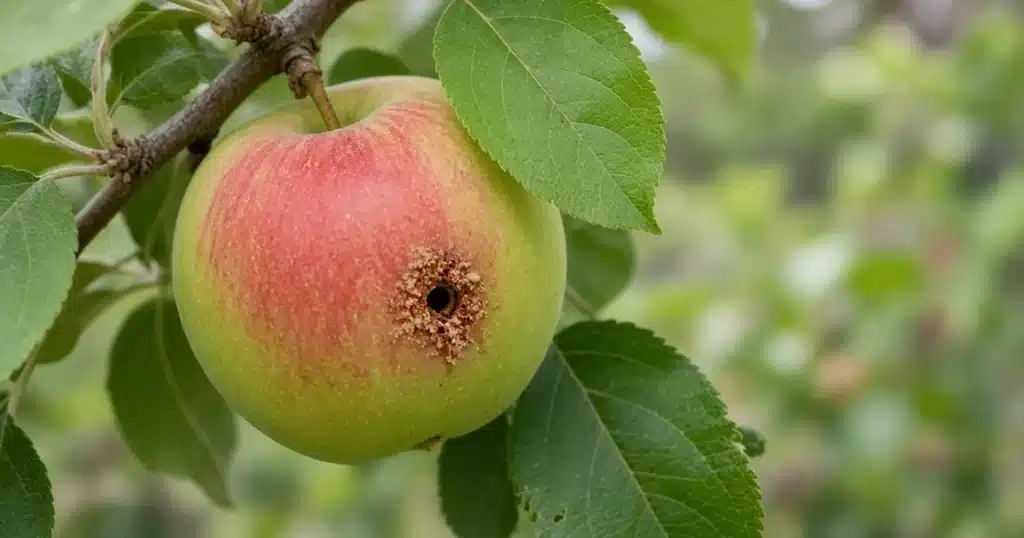
Codling moth is the classic worm in the apple. Codling moth larvae tunnel to the core of apples and pears and leave brown frass at the entry hole. Pheromone traps for timing, picking up dropped fruit and bagging young fruit after thinning are the main home orchard tools.
A few simple habits can bring wormy fruit down to a handful each season, even without sprays.
How do you spot codling moth damage?
Look for a small entry hole on the side or at the blossom end of the fruit. Brown, crumbly frass often sits around the hole. That frass is larval waste.
Cut the fruit open. A tunnel leads to the core, where the larva feeds on seeds. Mature larvae are pinkish white with a dark head.
Shallow surface marks called stings show where a young larva started to enter and then died.
The UC Statewide IPM Program page on codling moth shows damage and the life cycle in home orchards.
What is the codling moth life cycle?
Larvae spend winter in cocoons under loose bark or in debris near the tree. They become adults in spring around bloom. Moths lay eggs on leaves and young fruit. Larvae hatch and bore into fruit.
After feeding, larvae leave the fruit and spin cocoons. In many areas there are two or three generations each year, so fruit faces pressure all summer.
The University of Wisconsin Extension Horticulture article on codling moth describes the generations and timing in home orchards.
How do traps help?
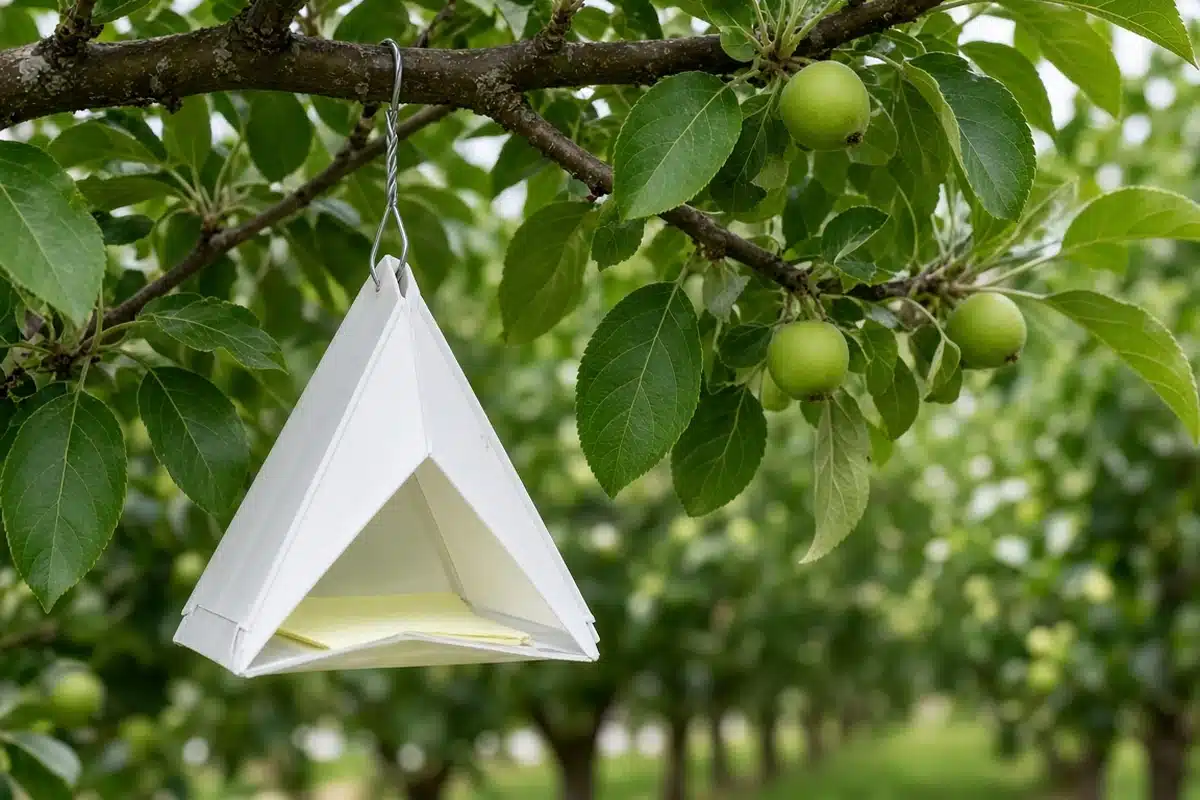
Pheromone traps attract male moths. They show when moths are flying so you can time other steps. Hang them in the tree around bloom.
Traps don’t control codling moth on their own. A few traps catch only some males. Use catches as a guide.
| Tool | Purpose | Notes |
|---|---|---|
| Pheromone trap | Tracks moth flights | Does not control alone |
| Fruit thinning | Leaves one fruit per cluster | Makes bagging easier |
| Fruit bags | Block larvae from fruit | Bag young fruit after thinning |
| Dropped fruit removal | Removes larvae | Pick up through the season |
| Cleanup of infested fruit | Cuts the next generation | Dispose off site or in trash |
Sources: UC Statewide IPM Program, University of Wisconsin Extension, WSU Hortsense.
How does bagging shield fruit?
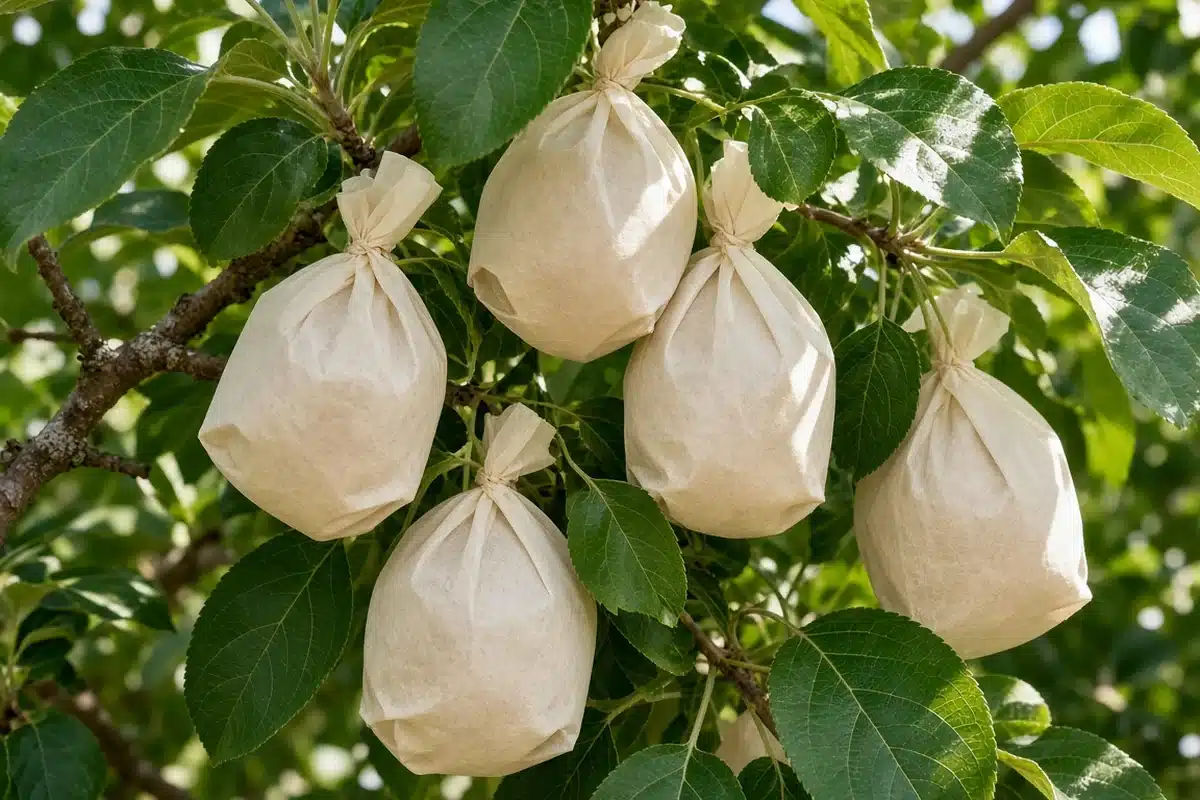
Bags create a barrier larvae can’t cross. Bag fruit when it’s small, soon after thinning. Paper bags, nylon footies and small plastic bags all work.
Thin fruit to one per cluster, then slip a bag over each and close it around the stem.
The WSU Hortsense fact sheet on apple codling moth lists bagging and sanitation among home orchard options.
Why does sanitation matter?
Infested fruit often drops early. Larvae inside will leave and pupate. Pick up dropped fruit every few days and dispose of it in the trash.
Pull infested fruit from the tree when you see it to cut the next generation.
Do pears get codling moth?
Yes. Pears, quince and walnuts are also hosts, though apples usually see the most damage.
Can you eat wormy apples?
Yes. Cut away the damaged part and eat the rest. The flavor near the tunnel is poor.
How does this compare with other fruit pests?
Codling moth is like corn earworm in that larvae bore into the part you want to harvest. Our post on corn earworm and budworms in cannabis covers a similar pest. Our post on ways to stop pests on cannabis plants shares more ideas. Stressed trees also crop poorly, as our post on the effects of environmental stresses on weed plants explains.
Which apple trees suffer most?
Late ripening varieties hang on the tree longer and face more generations of larvae. Early varieties often escape the later flights.
Trees near abandoned or unmanaged apple trees see more pressure, since moths fly in from nearby. Sharing tips with neighbors helps everyone.
How do you bag fruit well?
Pick bags sized for full grown fruit. Slip each bag over a small fruit, gather the opening around the stem and close it with a twist tie or staple.
Nylon footies stretch as fruit grows and let light through. Paper bags block more light, so fruit may color less. Remove paper bags a couple of weeks before harvest if you want full color.
Bagging takes time, so start with your favorite tree.
How to: step by step
- Look for entry holes with brown frass.
- Hang pheromone traps at bloom to track flights.
- Thin fruit to one per cluster.
- Bag young fruit after thinning.
- Pick up and remove dropped fruit.
- Clean up infested fruit through the season.
Take notes on trap catches and damage each year to plan your timing.
Troubleshooting
Wormy fruit. Fruit had no barrier. Bag fruit early.
Traps catch many moths. Pressure is high. Bag and sanitize.
Damage under bags. Bagging was late. Bag sooner.
Bags tear or fall. Ties are loose. Close them firmly at the stem.
Damage returns each year. Larvae spend winter nearby. Clear debris and loose bark.
Steady habits through the season hold codling moth in check and your apples clean. Kind Seed Co shares more garden projects in outdoor growing.
Sources
- Codling moth, UC Statewide IPM Program, Codling moth
- Codling moth, University of Wisconsin Extension Horticulture, Codling moth
- Apple: codling moth, WSU Hortsense, Apple
FAQ
Do traps control codling moth?
No. They track flights for timing.
When should apples be bagged?
Soon after thinning, while fruit is small.
Do pears get codling moth?
Yes. Pears, quince and walnuts are hosts too.
Can you eat wormy apples?
Yes. Cut away the damaged part first.
How many generations occur each year?
Often two or three, depending on the area.



